





 Portuguese
  English
  Spanish
 4 min of reading
  0 comments


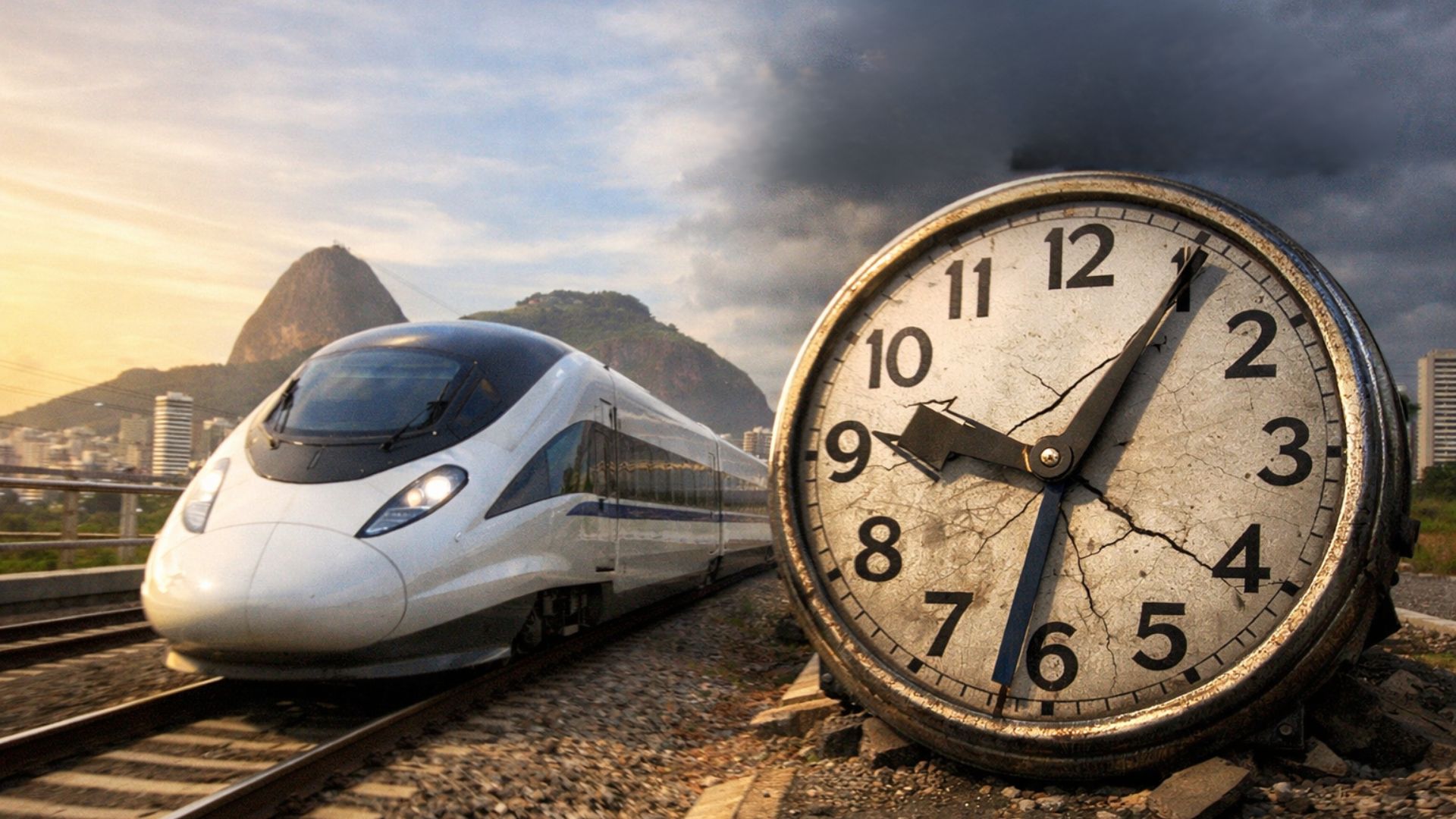
High-Speed Train Project Between Rio and São Paulo Has Revised Schedule After Hurdles in Environmental Licensing, With Start of Works Expected for 2029 and Commercial Operation Projected for 2033, Keeping Promise of Transformation in the Mobility of the Main Economic Axis of the Country.
The promised inauguration of the high-speed train between São Paulo and Rio de Janeiro is further away: commercial operation is now projected for 2033, after a schedule adjustment related to environmental licensing, which pushes the start of works to 2029.
With 417 kilometers in length, the railway aims to connect the two largest metropolitan areas in the country and reduce travel time, but the revised calendar adds about a year compared to the previous forecast, which indicated 2032 as the launch date.
According to TAV Brasil, the delay is due to the environmental steps required by law and does not change the financial structure of the project, which is said to have been designed to absorb schedule variations without generating additional costs, even with the more compressed construction.
-
The government requests the Federal Revenue Service for a new system to automate the income tax declaration, reducing errors, time, and bureaucracy for millions of Brazilians.

-
Pix in installments, international Pix, and contactless payment without internet: the Central Bank revealed the new features coming to the tool that is already used by almost every adult in Brazil.

-
Mercado Livre has just started selling medications with delivery in up to three hours to your door, and this move could completely change the way Brazilians buy medicines on a daily basis.

-
In Dubai, rising tensions from the war in the Middle East are causing super-rich individuals to leave the Gulf and direct their fortunes to a new financial refuge in Asia.


Environmental Licensing and Impact on the TAV Schedule
The new timeline emerged after the process at Ibama progressed more slowly than planned, leading the company to request an extension to obtain the preliminary license and, consequently, to readjust the entire implementation sequence.
While reporting the delay, executive director Bernardo Figueiredo attributed the holdup to the definition of the Terms of Reference for licensing, a stage that, according to him, took about a year and a half longer than expected and was only concluded at the end of 2025.

The agency, for its part, informed that the licensing is in progress in a process opened on April 10, 2024 and that, due to the scale of the project, it was required to prepare an EIA/RIMA, with the Terms of Reference sent to the entrepreneur on March 12, 2025.
In the same note, Ibama stated that, since then, it has had no pending issues in this stage and is awaiting the submission of the environmental study by the entrepreneur, a document considered essential for the continuation of technical analysis, within the procedures established by law.
Works Scheduled for 2029 and Execution Challenges
With the environmental phase still ongoing, the window for executing the work becomes tighter, as the start of construction, previously mentioned for 2028 in earlier interviews, is now expected to concentrate between the end of 2028 and 2029, according to the company itself.
This shortening puts pressure on coordinating typical fronts of a high-speed railway, such as expropriations, construction sites, civil works, and systems, although those responsible maintain that the financial planning already considered fluctuations in the schedule.
Even without going into details about each stage, the change reinforces a common pattern for projects of this scale in the country, where the time for licensing, institutional dialogue, and conditions often redefine the final deadline for delivery.
Route, Stations, and Exploitation Model for 99 Years
TAV Brasil claims to have authorization to plan, build, and operate the line for 99 years, with the possibility of extending for another 99, in an arrangement that gained traction from the railway legal framework and the authorization model for private operators.
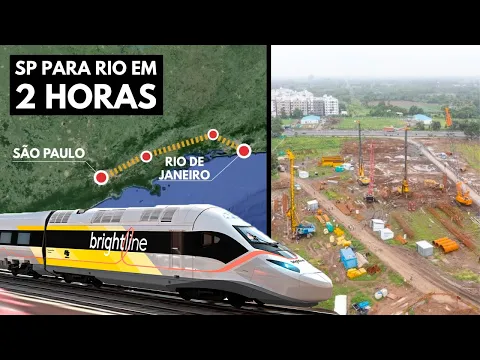
In previous interviews and reports, the company described four stations in the initial design, with planned stops in the capitals and in São José dos Campos and Volta Redonda, although exact locations depend on local approvals and definitions that accompany the advancement of studies.
The proposal, regarded as one of the largest infrastructure projects under discussion in Brazil, aims to reorganize movements along an axis that concentrates high demand for travel, currently primarily served by highways and air travel.
Promise of Level Change and Demand for Predictability
The project’s managers maintain that the delay does not alter the estimates because costs and funding have been sized to accommodate schedule variations, an argument reiterated to justify that the change is due to licensing and not a revision of scope.
Still, the very history of the bullet train in Brazil shows that deadlines are often recalculated amid regulatory challenges, model revisions, and technical hurdles, increasing the demand for transparency regarding stages, milestones, and responsibilities.
In this scenario, the promise of “changing levels” coexists with the need to comply with the environmental process and to turn forecasts into work, in a path where institutional decisions and project governance often weigh as much as engineering.
With the operation pointed to 2033 and the start of works concentrated in 2029, what will determine whether this schedule will finally be the definitive one for the railway connection between Rio and São Paulo?








-

Uma pessoa reagiu a isso.