





 Portuguese
  English
  Spanish
  3 min of reading
  1 comment


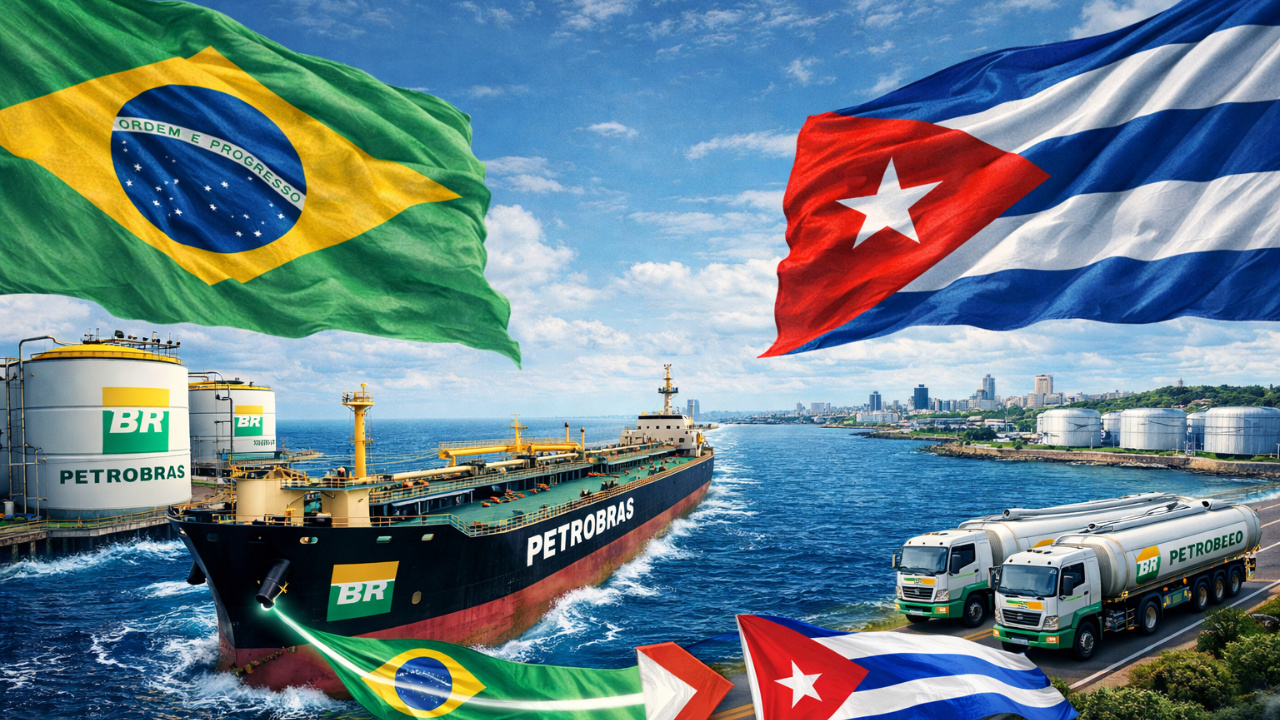


Campaign Pressures Petrobras to Send Oil to Cuba. Entities, Oil Workers, and Social Movements Warn of Risk of Energy Collapse and Humanitarian Crisis.
The oil crisis affecting Cuba has ceased to be just a regional issue and has begun to provoke a direct reaction in Brazil.
In light of the tightening of U.S. sanctions, a broad social mobilization is pressuring Petrobras to authorize the emergency shipment of fuel to the island.
The campaign, titled Oil for Cuba, brings together unions, popular movements, political parties, and international solidarity entities.
-
Petrobras evaluates suspension of sales to distributors and considers canceling the cooking gas auction following guidelines from the Federal Government.
-
Lula reveals a masterstroke by Petrobras to undo a deal made by Bolsonaro, which involves the return of an important refinery that currently produces less than half of what was expected and makes Brazil dependent on international diesel.
-
A study confirms that the natural gas sector will reduce greenhouse gas emissions in Brazil by 0.5% and accelerate the energy transition by 2026.

-
Petrobras implements a severe adjustment and confirms a 55% increase in the price of aviation kerosene with a proposal for installment payments for the companies.


Who Is Behind the Campaign for Oil
The articulation involves the Brazilian Movement for Solidarity with Cuba and Just Causes, federations of oil workers, and popular organizations. In addition, labor unions and political leaders have also joined the movement.

The strategy, on the other hand, is simple: use Petrobras’ technical capacity to supply crude or refined oil to Cuba. According to the organizers, Brazil would have the means to meet part of Cuba’s demand without compromising internal supply.
The National Federation of Oil Workers (FNP) and the Unified Federation of Oil Workers (FUP) are directly involved in negotiations with Petrobras’ board. Meanwhile, meetings and political contacts seek to unlock the legal and administrative obstacles that still hinder the operation.
U.S. Sanctions Tighten the Screws on Oil
The U.S. offensive against Cuba has intensified with Donald Trump’s return to the White House. On January 29, the president signed a decree authorizing the imposition of tariffs on countries that “sell or supply oil to Cuba.”
This measure has tightened the economic blockade and struck hard at energy supplies. As a result, the Cuban government has faced difficulties in keeping basic activities functioning.
Moreover, the new tightening is seen by analysts as part of a broader pressure policy in Latin America, aligned with the old Monroe Doctrine.
Oil Workers and Movements Try to Speed Up Shipments
The labor federations in the oil sector are negotiating technical alternatives to facilitate transportation. At the same time, solidarity movements maintain dialogue with the Cuban embassy in Brasília and with lawmakers.
The first secretary of the José Martí Cultural Association of Rio Grande do Sul, Senira Beledelli, explained the urgency of the situation:
“We know that the bureaucratic issue is not easy, it takes time, but Cuba’s need is urgent, it is for yesterday. The people from the National Federation informed us that they are capable of sending oil to meet Cuba’s need.”
Therefore, even with institutional slowness, political pressure only increases.
The manifestos released by the FNP, MST, and other entities highlight a striking fact: Cuba’s annual oil need would be equivalent to just six days of production under Petrobras’ control.
The federation states: “In other words, it is feasible and plausible for our country to lead this campaign for international solidarity.”
The MST also reinforced the humanitarian discourse: “Without energy, there are no hospitals, there are no schools, there is no food production. Denying energy to a people is a systematic violation of human rights.”
And it concluded in an official note: “The tightening constitutes prolonged genocide, causing fuel shortages that paralyze hospitals, schools, and transport. An international campaign for the shipment of fuel, food, and medicines is urgent. We call on the Lula government to follow Mexico’s example and send oil to Cuba, in a humanitarian, political, and historical decision to avoid a human catastrophe and reaffirm commitment to sovereignty, peace, and solidarity.”
In your opinion, should Brazil send oil to Cuba even with the risk of facing U.S. sanctions, or is this a fight that is not ours?









NÃO, o Povo tem que derrubar aqueles esquerdistas, como temos que fazer aqui.