





 Portuguese
  English
  Spanish
  5 min of reading
  24 comments


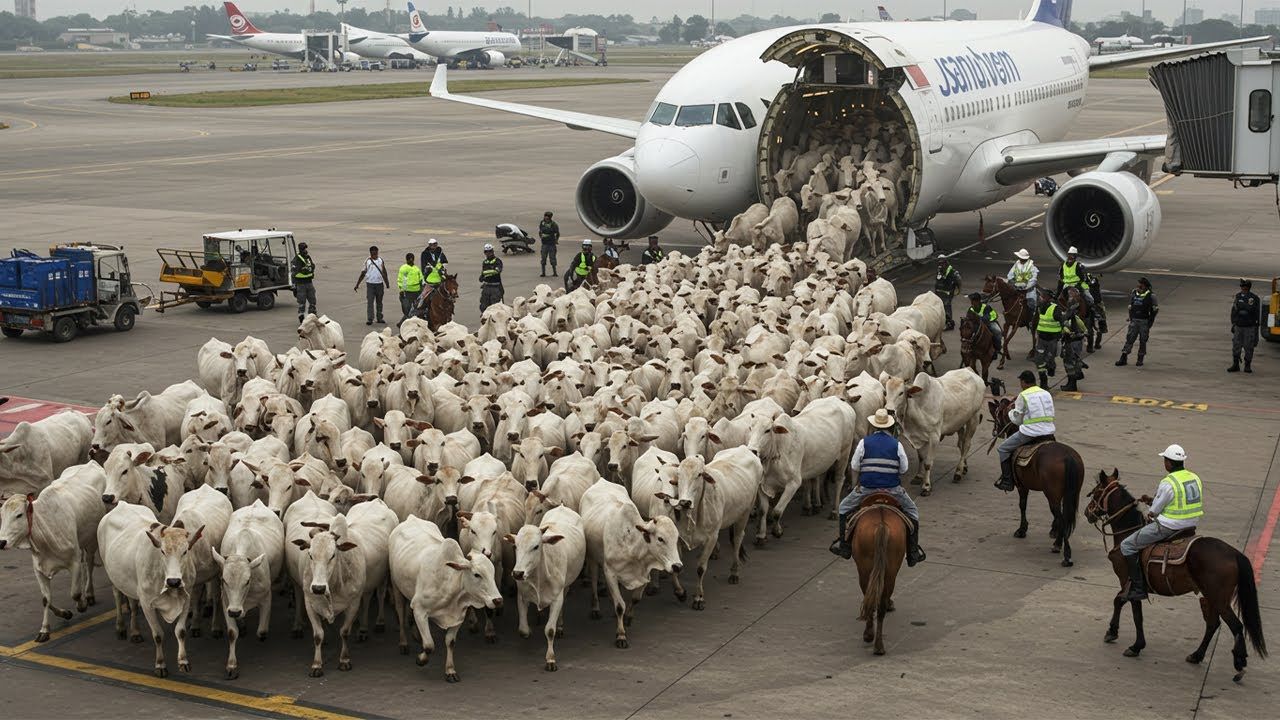


The Case in Santos, with More Than 27 Thousand Heads, Puts the Topic at the Center of Debate While Brazil Records the Largest Cattle Shipment in the World and Transport by Ship and Even by Boeing 747 Becomes a Showcase and Controversy.
The largest cattle shipment in the world is recorded in Brazil in a story that seems impossible at first glance: thousands of animals leaving the countryside, arriving at the port, and entering a structure that functions as a floating mini-farm. It’s not just about size. It’s about how live cattle export operates on an industrial scale, with international routes, specialized teams, and inspection protocols.
At the same time, the topic explodes in controversy. The market drives livestock, but it also ignites criticism about confinement, duration of trips, and real economic returns. And when the subject leaves the sea and reaches the skies, with the use of the cargo Boeing 747, the discussion gains even more attention.
What It Means When Brazil Records the Largest Cattle Shipment in the World
The transportation of live cattle in Brazil is frequently seen in trucks and trailers, but what draws attention here is the scale. The base text describes a milestone: in 2017, at the port of Santos, there was a shipment of more than 27,000 heads of cattle, noted as an impressive record.
-
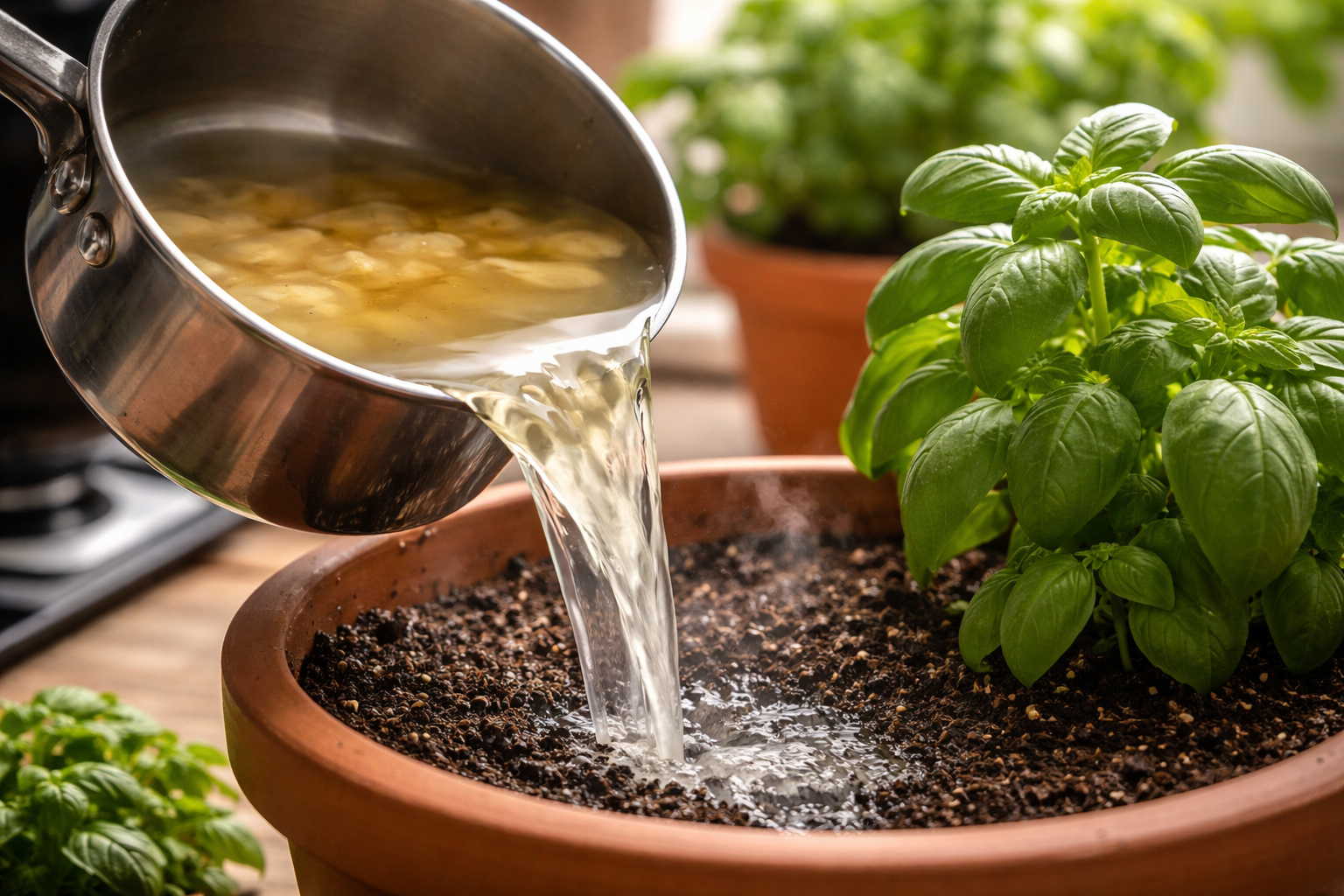
The water that almost everyone throws away after cooking potatoes carries nutrients released during the preparation and can be reused to help in the development of plants when used correctly at the base of gardens and pots, at no additional cost and without changing the routine.
-
The sea water temperature rose from 28 to 34 degrees in Santa Catarina and killed up to 90% of the oysters: producers who planted over 1 million seeds lost practically everything and say that if it happens again, production is doomed to end.

-
An Indian tree that grows in the Brazilian Northeast produces an oil capable of acting against more than 200 species of pests and interrupting the insect cycle, gaining ground as a natural alternative in soybean, cotton, and vegetable crops.

-
The rise in oil prices in the Middle East is already affecting Brazilian sugar: mills in the Central-South are seeing their margins shrink just as ethanol gains strength.

This type of operation involves days of work and heavy logistics, with more than 300 trailers transporting animals mainly from the countryside of São Paulo.
Inside the ship, the environment is designed to keep the operation functioning like a continuous structure of care and monitoring, because the journey does not end at the boarding site.
The Mega-Ship That Becomes a “Mini-Farm” at Sea

The base text presents the largest ship in the world designed for the transportation of live animals, measuring 201 meters in length and 32 meters in width, with a capacity for 30,000 cattle.
Built in 1993 and operating under the Panama flag, this giant is described as capable of carrying 27,000 tons.
Inside, the operation is treated like a mini-farm: veterinarians, cowboys, and more than 80 people accompany the animals.
Additionally, there are fiscal auditors who monitor the process, checking documentation and general conditions, with a focus on minimizing stress during transport.
Destinations and Why This Market Draws So Much Attention
According to the base, about 86% of live animal exports from Brazil are destined for the Middle East, with Turkey and Lebanon among the main buyers.
This makes the topic relevant not only for livestock farming but also for the economic agenda tied to exports and global supply chains.
It is at this point that Brazil recording the largest cattle shipment in the world ceases to be just a curiosity and becomes an indicator of how the country operates in international markets that demand scale, predictability, and complex logistics.
When Transport Moves from Sea to Sky with the Boeing 747

The base also describes the air transport of animals, highlighting the Boeing 747 cargo as the main model used for these exports.
It states that there are 41 aircraft of this type worldwide, including 35 cargo planes and six passenger in the Intercontinental version.
Air transport is presented as expensive, ranging from 50,000 to 1 million dollars, and the animals travel in wooden boxes, with males and females separated, in structures described as around 3 meters by 2.3 meters, with floors covered in rice straw for comfort.
The base text mentions a recent shipment of 190 Guzerat cattle to Senegal, departing from Viracopos in Campinas, on a Cargolux Boeing 747. It also presents a historical curiosity: the first bovine cited as having traveled by plane was Nico, in 1942, on a KLM flight from the Netherlands to Paris.
Brazil in the Sea Ranking and the Weight of Scale
The base states that Brazil is the second-largest exporter of live cattle by sea, behind only Australia. It notes that in the first half of 2020, Brazil exported more than 146,000 heads of cattle.
These figures help understand why Brazil records the largest cattle shipment in the world makes headlines: the country is already part of a large export route for live animals, and a record shipment amplifies the debate about costs, oversight, and risks.
Animal Welfare, Risks, and the Controversy That Continues to Grow
Even with inspection protocols and oversight by agencies mentioned in the base, the issue of animal welfare remains central.
Travel can last more than a month, with cattle confined, which generates criticism about space and conditions of stay.
The base text states that, according to MFA, each animal would have on average 1.55 m² of space, compared to the size of an ordinary door.
This scenario fuels protests and opposing positions, citing associations and NGOs such as the National Forum for Animal Protection and Defense, which question whether care is always applied as it should be.
Economic Advantages Under Dispute and the “Low Return” Argument
The economic discussion also appears strongly in the base text. It states that the transport of live cattle represents only 1% of livestock production destined for human consumption and raises the criticism that many buying countries also import already processed meat, which would weaken part of the argument in favor of shipping live animals.
The base also states that the export of live cattle is not taxed, which would reduce the return of wealth for Brazil, in addition to pointing out that jobs and part of the added value remain in the buying countries, where slaughter may not follow what is considered humane practices.
As a reference for economic scale, the base text mentions that, in 2018, more than 700,000 animals were exported alive, generating 470 million dollars in revenue, while the export of meat and by-products would exceed 6 billion dollars per year, representing 7% in the cited comparison.
Why Brazil Recording the Largest Cattle Shipment in the World Becomes a Divisive Debate
In the end, the story brings together three forces that rarely walk in peace: colossal logistics, economic interests, and ethical questions.
Brazil records the largest cattle shipment in the world and, along with the record in Santos and the use of air transport with Boeing 747, shines a light on a market that is large but highly controversial.
In your opinion, should Brazil continue to expand this model of live cattle export or should it prioritize shipping already processed meat to reduce controversy and increase added value?








Dezenas de comentários e nenhum tocou no assunto que mais deveria ter sido prioridade para o Brasil e brasileiros.
A única coisa que se perde do **** no abate é o seu berro.
Além da carne e do couro, mais de 50 produtos são fabricados a partir da carcaça do ****.
Da pasta dental a tintas.
Do esmalte a remédios. Vitamina B-12 é um exemplo.
Do beiço ao pelos da cauda, incluindo os cascos.
Tudo pode ser aproveitado, gerando milhares de empresas e empregos e divisas.
Tudo isso é desperdiçado com a exportação de animais vivos.
Absurdo para com os animais! Tudo em prol da ganância dos milionários. Isto precisa acabar!!
Os pecuaristas e agricultores chorões produzem com benefícios do governo enchem os bolsos aos milhões depois vendem para confinamentos e frigoríficos exportar. E temos que pagar em casa o preço de exportação em produto nacional.