





 Portuguese
  English
  Spanish
  6 min of reading
  0 comments



With the New Income Tax Exemption Until 5 Thousand in 2026, the Government Benefits the Brazilian Middle Class, Reinforces Consumption Taxation, Delays a More In-Depth Income Tax Reform, and Preserves Loopholes for Profits and Dividends in a System That Continues Unequal and Regressive.
On December 6, 2025, President Luiz Inácio Lula da Silva sanctioned the expansion of the income tax exemption for salaries of up to 5 thousand reais, to be effective from 2026, a move that is expected to remove around 10 million people from the tax declaration base and reshape the map of taxpayers in the country.
At the same time that the new income tax exemption primarily relieves the middle class in an election year, Brazil moves further away from the standard of developed countries, where the majority of the economically active population pays income tax, while here the burden remains concentrated on consumption taxes, which disproportionately affect the poorest.
What Changes with the New Exemption Threshold
According to estimates from the economic team, the expansion of the income tax exemption for those earning up to 5 thousand reais per month will reduce the number of taxpayers by approximately 10 million people in 2026.
-
Havan buys historic football land in Blumenau for a million-dollar amount protected by a confidentiality clause and is already planning to change even the layout of streets to build a megastore in half-timbered style costing 80 million reais.

-
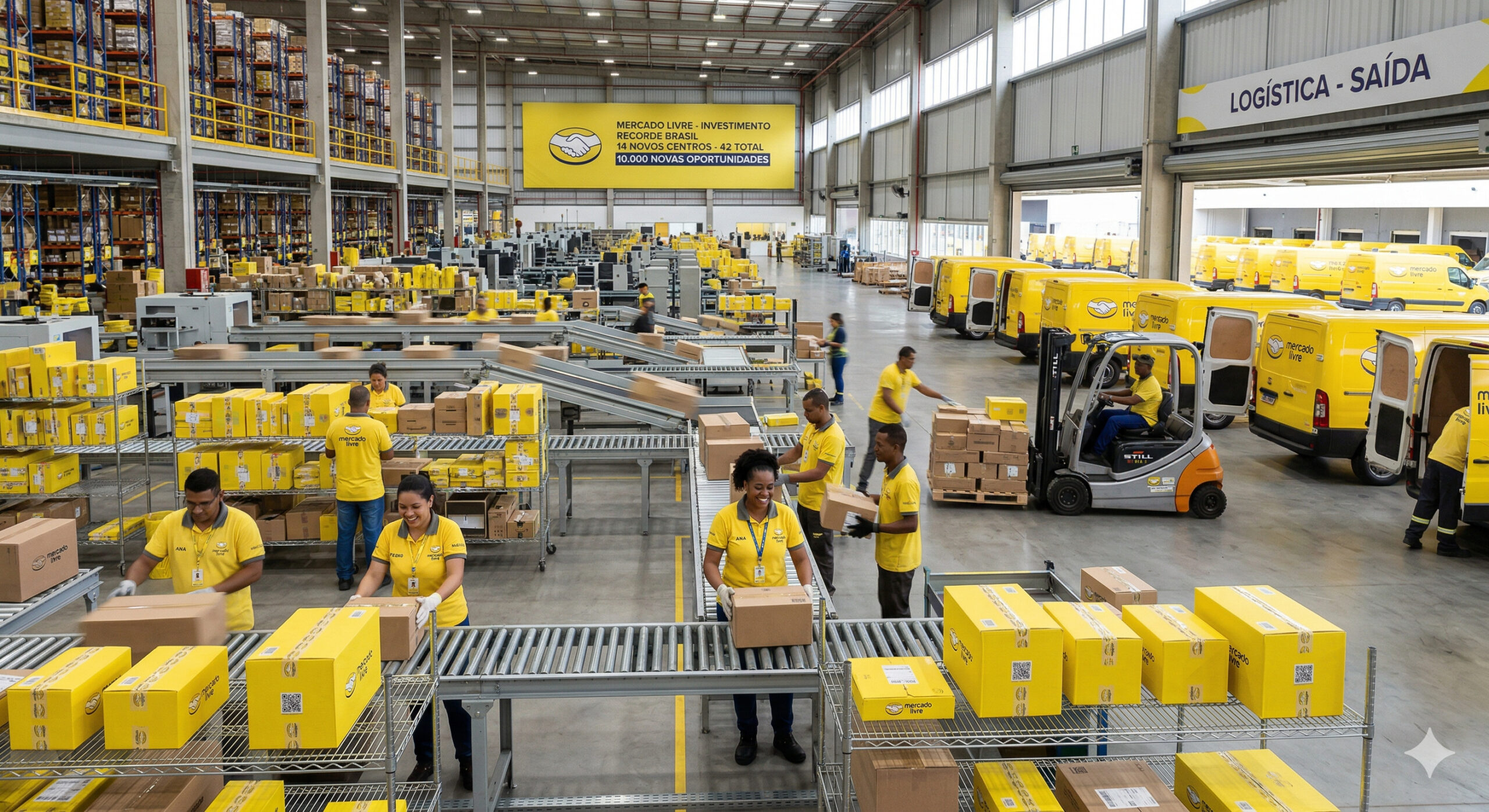
Mercado Livre “opens the vault” and announces a record investment of R$ 57 billion in Brazil in 2026, a value 50% higher than the previous year, with an expansion plan that includes 14 new logistics centers, totaling 42 units in the country and hiring an additional 10,000 employees.
-
How investment in technology can revolutionize the national economy and enhance industrial gains, according to a study that highlights the direct impact on productivity, innovation, and wealth retention within Brazil.

-
The largest food company on the planet, JBS, has just opened a 4,000 square meter laboratory in Florianópolis to develop customized proteins that modulate muscle mass gain, immune response, and metabolic performance.

In 2025, the base year 2024, 45.64 million submitted tax returns, which corresponded to about 41% of the economically active population of 110.7 million people.
In practice, those earning up to 5 thousand reais per month will no longer pay income tax, and for those earning up to 7,350 reais, there is a reduction in the effective rate.
To make this work, the government approved a charge of 10% on incomes above 50 thousand reais per month, including profits, dividends, rents, and other earnings currently concentrated at the top of the distribution.
The announced design combines relief for the middle range and additional taxation on very high incomes, but without altering the central structure of the tax system, which continues to rely on indirect taxes on consumption and services.
The new income tax exemption is, therefore, a relevant adjustment within a model that remains basically the same.
Fewer Taxpayers Than in Rich Countries
Data from the Federal Revenue Service already showed, before the change, a relatively narrow base of taxpayers compared to the size of the workforce.
With the new income tax exemption, the proportion of those paying income tax within the economically active population is likely to decline even further, deepening the gap compared to advanced economies.
In countries like the United States, the United Kingdom, and Germany, nearly the entire workforce is part of the personal income tax system.
In the U.S., more than 140 million individual taxpayers for a workforce of about 174 million means close to 81% of the working-age population paying tax.
In the United Kingdom and Germany, the number of taxpayers nearly equals the total number of workers.
When the comparison is made with the total population, Brazil also appears at the lower end of the table.
OECD data for 2023 indicates that only about 22% of Brazilians paid income tax, a percentage well below that of countries like Norway, Denmark, Canada, or France, which record shares above 50% and, in some cases, over 90% of the population.
Government Arguments for the New Exemption
The Ministry of Finance argues that the Brazilian context is very different from that observed in advanced economies.
The strong concentration of income at the top and the high levels of informality distort any direct comparison between the income tax exemption here and abroad, according to the ministry.
The official assessment is that small changes in the exemption threshold intensely alter the number of people required to declare, precisely because the majority of the population receives low and very similar incomes, while a smaller group concentrates high and highly diversified earnings.
This is compounded by informality, which makes control and oversight over personal income tax difficult.
The government itself admits that the ratio of declared taxpayers to the economically active population was already below 40% in 2023, before the change in the income tax table.
In the ministry’s view, the new income tax exemption deepens a characteristic that already existed but is not the sole factor in explaining the gap compared to rich countries.
Brutal Weight on Consumption and Impact on the Poorest
Despite the expansion of the exemption threshold, the Brazilian tax structure remains heavily based on consumption taxes, which are considered regressive because they disproportionately charge those who earn less.
The ongoing tax reform reorganizes these taxes but does not alter the fact that most revenue still comes from consumption.
Economists point out that to promote a broader distribution of income, the focus should be elsewhere: taxing more on profits and dividends, high wealth, and financial income, using this additional revenue to reduce corporate income tax, social contribution on net income, or indirect taxes that increase the prices of basic goods and services.
Estimates cited in technical studies suggest a potential revenue of over 100 billion reais per year just with a more robust taxation on profits and dividends.
In the assessment of civil society organizations, the richest continue to be protected by significant exemptions and tax loopholes, such as the more lenient treatment given to agribusiness income and the under-taxation of large fortunes.
Meanwhile, most of the population continues to bear taxes embedded in food, energy, transportation, and everyday consumption, making the system globally regressive even with the new income tax exemption.
Greater Progressivity, But System Still Unequal
Tax consultancy firms see positive aspects in the expansion of the exemption threshold.
From the perspective of progressivity, removing low- and middle-income taxpayers from the income tax base may reduce inequalities, especially when combined with additional charges on incomes above 50 thousand reais monthly.
At the same time, specialists remind us that the ideal scenario would be one where national income was better distributed, so that a much larger share of the workforce had sufficient remuneration to enter the income tax base without compromising their livelihood.
In those countries, nearly everyone works, pays income tax, and receives public services and social protection in return.
Organizations like Inesc observe that the expansion of the income tax exemption is an important achievement, but insufficient to correct the overall design of the system, which continues to spare profits, dividends, and large fortunes while maintaining the bulk of the burden on consumption.
The risk, they argue, is to crystallize a model where the poor pay heavily through prices and the rich pay relatively little through income declarations.
What Is Missing in the Income Tax Reform
The project approved by the Lula government did not include a specific and stronger tax on the distribution of profits and dividends, nor did it bring a concrete reduction of corporate income tax rates.
These two fronts had been discussed and voted on in the Chamber of Deputies in 2021, during the previous government, but ultimately did not advance in the Senate.
The Ministry recognizes that a broader income tax reform would be necessary to increase progressivity, bringing Brazil closer to the standard of developed countries, where the richest pay proportionally more.
However, the economic team itself believes that structural changes of this type usually have a higher chance of approval only at the beginning of each government, when more political capital is available.
In practice, the current combination is as follows: the new income tax exemption reduces the burden of personal income tax for the base and part of the middle class, increases taxation on very high incomes, but does not touch the heart of tax privileges and does not significantly reduce the burden on consumption.
The result is an immediate gain for millions of taxpayers, with limited effects on the structure of inequality.
In light of this scenario, is the income tax exemption up to 5 thousand reais a step in the right direction for you, or a temporary relief that distracts from the need to reduce consumption taxes that weigh much more on your pocket every month?








-

Uma pessoa reagiu a isso.