





 Portuguese
  English
  Spanish
  5 min of reading
  0 comments


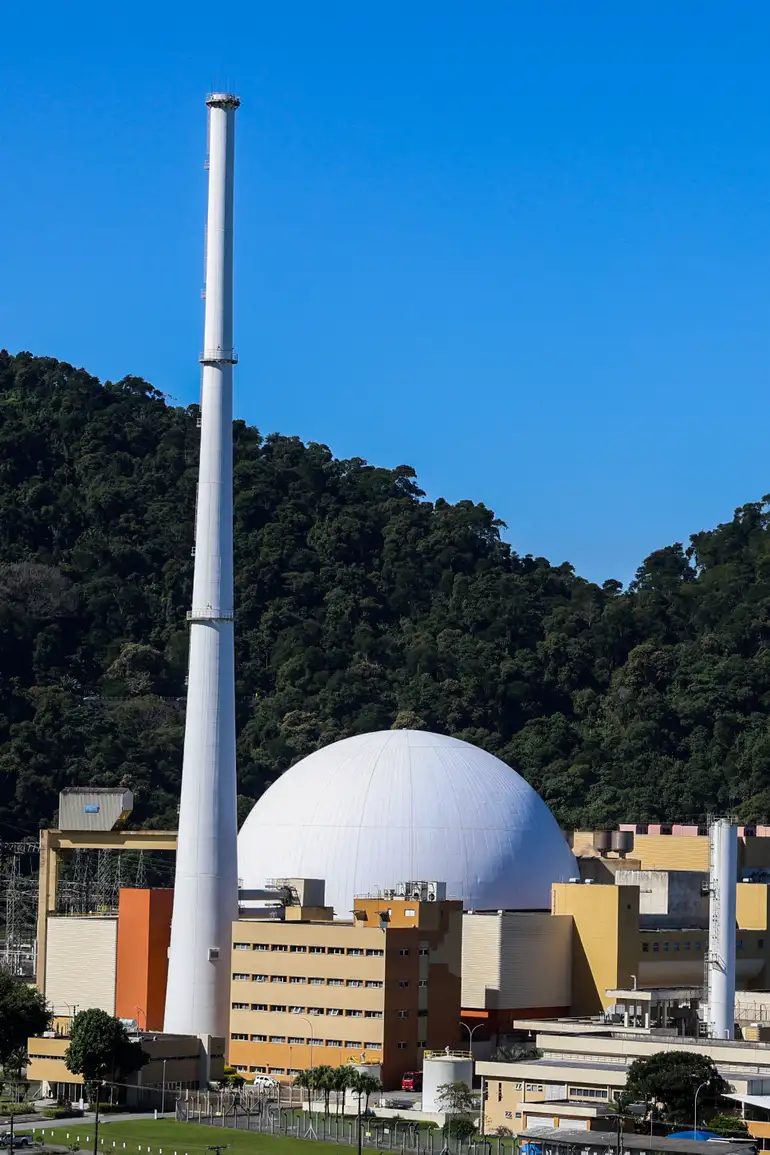
Treaty Signed in 1975 Promised to Turn Brazil into Nuclear Power, but Only One Plant Got Beyond the Paper — and Problems Accumulate Until Today
On June 27, 1975, an unexpected news item surprised the Brazilian press. In Bonn, West Germany, authorities from the Brazilian military regime and representatives from the German government announced the signing of a nuclear agreement. The treaty provided for the construction of eight nuclear plants in Brazil, divided between the states of Rio de Janeiro and São Paulo.
It was an ambitious plan, involving technology transfer and the promise of placing the country among the world’s nuclear powers.
A Partnership Surrounded by Expectations
The proposal involved the plants Angra 2, 3, 4, and 5, in Rio de Janeiro, and Iguapé 1, 2, 3, and 4, in São Paulo. The expectations were high. The agreement seemed advantageous for both countries.
-
Fukushima Marks A Turning Point In Japan’s Energy Policy: After The Disaster, The Country Shut Down Its 54 Nuclear Reactors And, 15 Years Later, Only A Small Portion Have Returned To Operation
-
How Japan Overcame The Nuclear Bomb And Now Houses Millions In Hiroshima, While Ukraine Lost Chernobyl?
-
Bill Gates Receives Historic Approval to Build Giant 345 MW Nuclear Plant in the U.S. and Promises to Generate Up to 500 MW of Energy with Innovative Technology

-
India Opens Nuclear Energy to Private Capital to Accelerate Projects and Attract Billions, While Brazil Remains Stalled at Angra 3 and Discusses Who Will Foot the Bill for Completion

Germany was facing a severe economic crisis and was seeking markets for its nuclear industry. Brazil, pressured by rising oil prices and with inflation close to 30%, wanted to diversify its energy matrix.
The German press dubbed the treaty the “deal of the century.” It was estimated that Germany would receive about 10 billion dollars from nuclear product exports to Brazil.
It was also a way for both countries to escape dependence on the United States, which until then dominated the supply of nuclear technology in Latin America.
Only One Plant Completed in Fifty Years
Despite the initial enthusiasm, the practical result of the agreement is frustrating. Of the eight plants envisioned, only Angra 2 began operation, in 2001.
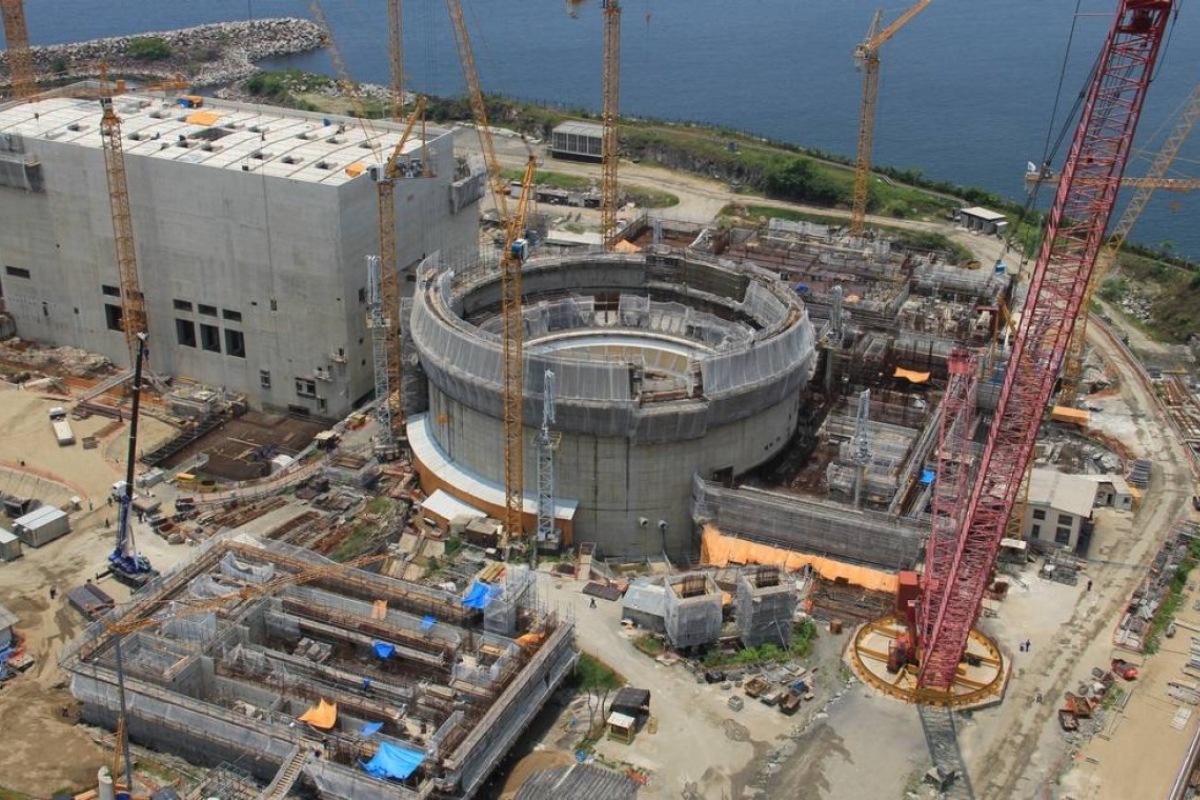
Angra 3, started in 1986, remains unfinished and has already consumed over R$ 20 billion. The others never got beyond the paper. Fifty years later, the treaty is still active but is seen as an unfinished project.
Who Went Wrong?
The question about the failure of the program prompted research by the Federal University of Minas Gerais (UFMG). Political scientists Dawisson Belém Lopes and João Paulo Nicolini published a study in the journal Science and Public Policy, which included interviews and document analysis. The article questions: “Who is to blame for the Brazilian nuclear program never maturing?”
The researchers’ response is clear. The biggest mistake was that of the Brazilian military management itself. According to Nicolini, those responsible did not engage in dialogue with society, academia, and the private sector. There was a lack of planning and an excess of ambition.
“The biggest problem was the lack of dialogue with the academic community, the business sector, and society. We took a step greater than our capacity and the lack of planning by the military led to this,” he stated.
Context of the Era
The treaty was signed during the government of General Ernesto Geisel, but the researchers also point out failures in the governments of Emilio Médici and João Figueiredo.
For both countries, the moment seemed ideal. Brazil sought energy autonomy. Germany needed to boost its industry and alleviate unemployment. In 1975, over a million Germans were unemployed.
Both governments also wanted to reduce dependence on the United States. Germany had been barred from nuclear development after World War II. Brazil, on the other hand, had bought the Angra 1 plant from the Americans in a “turnkey” model, without technology transfer.
Resistance from the United States
The United States did not approve the agreement. There were fears that another Latin American nation would develop independent nuclear capability. There was pressure on suppliers.
Urenco, the company that would supply the equipment, was prevented from completing the sale. Brazil then received an experimental technology from Germany: the jet-nozzle. The system did not work well. The country spent more energy than it could generate.
South African Example
Despite the criticism, the Germans provided this same technology to South Africa, which managed to develop nuclear warheads. For Brazilian researchers, the problem was not only the technology.
There was a lack of structure in Brazil. Without participation from society and the innovation system, the country could not use what it learned for large-scale production.
Parallel Program and Nuclear Submarine
Even so, some knowledge was repurposed. The parallel nuclear program emerged, kept secret until 1985. One of the results is the project for the nuclear-powered submarine.
Launched in partnership with France in 2009, the submarine is expected to be ready by 2040. The current cost is around R$ 1 billion per year.
Lack of Public Debate
The authoritarian nature of the military regime was also decisive. As historian Helen Miranda Nunes explains, the lack of transparency prevented a public debate. The press only reported the signing of the treaty on the day it occurred. When the jet-nozzle technology was revealed, many scientists criticized the choice.
The historian points out that if Brazil had been a democracy at that time, the agreement might have advanced. Secrecy and the absence of popular participation weakened the process. Some of the works were left to Odebrecht without bidding. The construction company gained experience in state works, and its involvement raised suspicions in the Lava Jato operation years later.
“The choice of the jet-nozzle technology was heavily criticized by nuclear scientists when it came to light. If we had been in a democracy at the time, it is possible that the agreement would not have progressed, because it was secret and relied on the deprivation of rights of the population,” Helen Miranda stated.
German Companies Were the Biggest Beneficiaries
For the experts, the ones who profited the most from the treaty were the German companies. Kraftwerk Union, a subsidiary of Siemens, supplied the reactors and technology for Angra 2 and Angra 3.
German banks also lent resources to Brazil. While environmental movements pressured against the use of nuclear energy in Germany, business flowed with the Brazilians.
Rafael Brandão, a professor at UERJ, recalls that Nuclep, a state-owned company created with the Germans, had final decisions in the hands of the German side. For him, there is no doubt: “It is clear that the last word was with KWU-Siemens.”
Accusations and Impunity
Reports from that time already denounced irregularities. Jornal do Brasil reported in 1979 that the inputs sold by KWU were overpriced. The magazine Der Spiegel also brought corruption allegations. The pressure led to the creation of a CPI on the agreement, but nothing resulted.
Agreement Remains in Force
To this day, the treaty remains alive. Every five years, the German Parliament has the chance to revoke it. In 2024, there was a new attempt, with pressure from the Green Party. Even so, nothing changed.
For Brazil, ending the agreement would mean abandoning Angra 3. According to Nicolini, this explains the treaty’s persistence: “The agreement is alive also due to our difficulty in completing what was planned. The blame lies with the inefficiency of Brazilian nuclear planning.”
Five decades later, what remains of the treaty is a scenario of unfinished works, high costs, and frustrated expectations. The biggest mark of the so-called “deal of the century” may not be technological advancement, but rather a portrait of poorly executed planning that still leaves its consequences today.
With information from DW.com.








Seja o primeiro a reagir!