





 Portuguese
  English
  Spanish
  4 min of reading
  1 comment


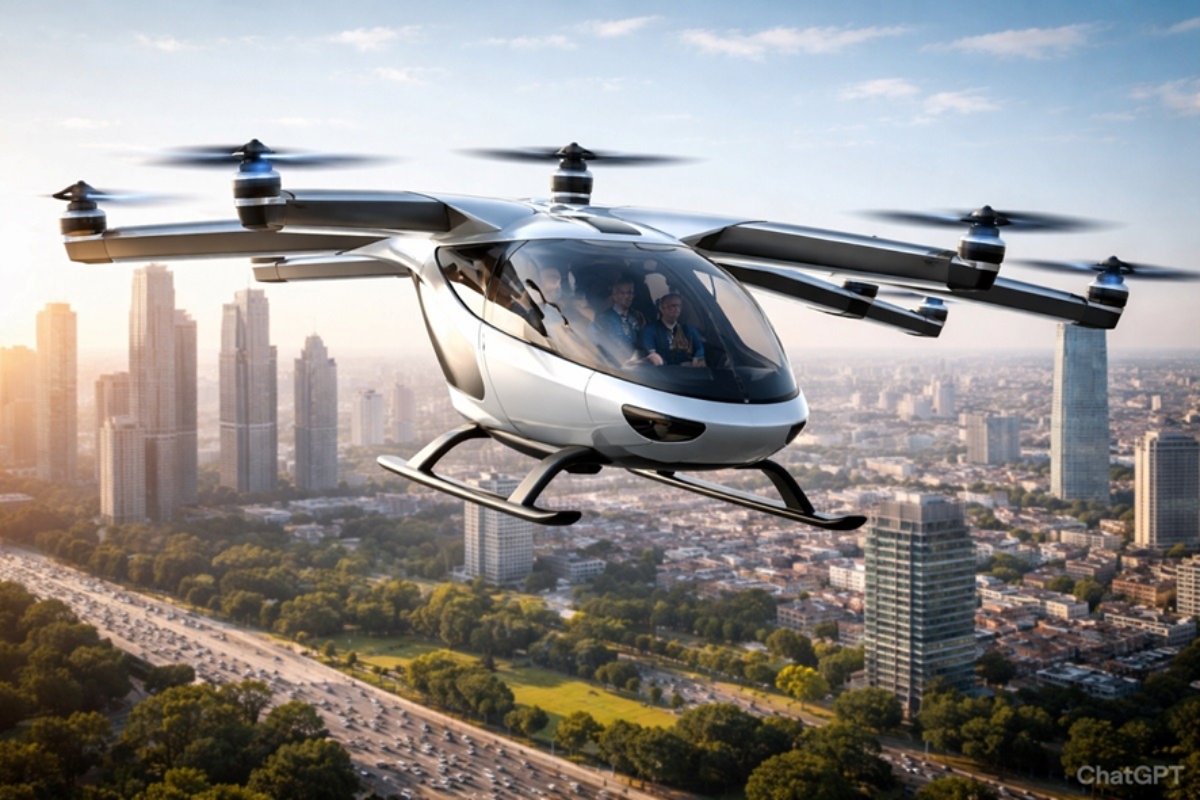


In Brazil, Anac Opened Public Consultation Until March 16 to Create New Specific License for eVTOL Pilots, with Own Training Rules, Causing Change in the Qualification System and Catching the Attention of Pilots and Manufacturers
Brazil may be about to take a decisive step towards so-called flying cars. The National Civil Aviation Agency opened a public consultation to create a specific category of license for eVTOL pilots, electric aircraft with vertical takeoff and landing.
The measure signals that advanced air mobility has moved beyond mere promise. Now, it enters the regulatory field, with specific rules and targeted training.
The impact goes beyond traditional aviation. It is a structural change in how pilots will be trained to operate a new type of aircraft.
-
Friends have been building a small “town” for 30 years to grow old together, with compact houses, a common area, nature surrounding it, and a collective life project designed for friendship, coexistence, and simplicity.

-
This small town in Germany created its own currency 24 years ago, today it circulates millions per year, is accepted in over 300 stores, and the German government allowed all of this to happen under one condition.

-
Curitiba is shrinking and is expected to lose 97,000 residents by 2050, while inland cities in Paraná such as Sarandi, Araucária, and Toledo are experiencing accelerated growth that is changing the entire state’s map.

-
Tourists were poisoned on Everest in a million-dollar fraud scheme involving helicopters that diverted over $19 million and shocked international authorities.


Anac Prepares New Qualification Category for eVTOL Pilots in Brazil

The proposal involves changes to the Brazilian Civil Aviation Regulation number 61, which defines requirements for licenses, qualifications, and certificates for civil aviation professionals.
The idea is to create a specific qualification for eVTOL pilots, with targeted training and supervised experience in typical operations of these aircraft.
At the end of the process, the professional must undergo a practical skill verification exam.
The public consultation is open until March 16 and accepts contributions through the Participatory Brazil Portal. The expectation is to hear from pilots, training organizations, manufacturers, operators, and industry specialists.
Transition Period Will Allow Airplane and Helicopter Pilots to Migrate to Flying Cars
Anac foresees an initial transition phase. In this first moment, already licensed pilots of airplanes and helicopters will be able to adapt to the new model.
This period will serve to accumulate operational experience and regulatory evidence. With this, it will be possible to structure complete specific training requirements for eVTOL, including without future need for prior experience in other categories.
The goal is to gradually and safely prepare the Brazilian licensing system for the so-called new aircraft concepts.
Pilots Association Sees New Market, but Predicts Future Without Professionals on Board
The Brazilian Association of Civil Aviation Pilots evaluates that the arrival of flying cars opens a new job market.
According to the entity, there will be theoretical and practical adaptation according to Anac’s regulation.
However, the long-term projection is different. The assessment is that eVTOL transportation may evolve to unmanned operations.
The presence of a pilot in the initial versions would help reduce the cultural barrier of the public. After market acceptance, the trend would be the adoption of remotely controlled aircraft, with only passengers on board.
Electric Technology and Safety Criteria Make eVTOL a Green Bet for Aviation
eVTOLs are in the final prototype and testing phase but are already pointed out as one of the future paths of aviation.
Fully electric, they do not use fossil fuel such as gasoline, oil, or kerosene. Therefore, they are considered green technology and allies of the transition to a low-carbon economy.
In 2024, Anac published the final airworthiness criteria for this type of aircraft. The document establishes standards related to structure, control systems, propulsion, and battery, critical factors to ensure flight safety.
Embraer Advances with Eve, Signs International Contract and Expects Deliveries by 2029
The Brazilian Embraer positions itself as one of the global pioneers in the development of eVTOL through the subsidiary Eve Air Mobility.
The factory located in Gavião Peixoto, in the interior of São Paulo, is working to commercially enable flying cars.
At the end of December, Eve conducted the first flight of its own prototype.
On February 5, the company announced a contract for the sale of two units to the Japanese company AirX, which currently operates helicopters. The delivery is expected in 2029, with an option to expand to up to 50 aircraft.
The project has financial support from BNDES and Finep, agencies linked to the federal government, reinforcing national leadership in the race for flying cars.
Anac’s movement and Embraer’s progress show that what seemed impossible is beginning to take concrete shape in Brazil, with regulation, public investment, and international contracts putting the country at the center of advanced air mobility.
Do you believe that flying cars will become common in Brazilian cities in the coming years, or do they still seem far from reality? Leave your opinion in the comments.










Acredito que Dakila Pesquisas está a frente e com seu carro voador top