





 Portuguese
  English
  Spanish
  6 min of reading
  0 comments


Does Brazil Want to Control What You See on Social Media? New STF Ruling Reignites the Debate: Regulation or Censorship? Understand What is at Stake for Millions of Brazilians
In recent months, the debate over social media regulation has returned with full force in Brazil. And, as expected, it is generating a lot of controversy. On one side, the government and part of the Supreme Federal Court (STF) argue that it is urgent to create clear rules to hold digital platforms accountable. On the other, critics warn of the risk of censorship and violation of freedom of expression.
But after all, what is at stake in this story? What does the government really want with this new attempt to regulate social media? And how much could this affect your right to post, share, and consume content online?
In this article, we will unpack the topic with all its sensitive points. Get ready, because there is a lot to understand.
-
Friends have been building a small “town” for 30 years to grow old together, with compact houses, a common area, nature surrounding it, and a collective life project designed for friendship, coexistence, and simplicity.

-
This small town in Germany created its own currency 24 years ago, today it circulates millions per year, is accepted in over 300 stores, and the German government allowed all of this to happen under one condition.

-
Curitiba is shrinking and is expected to lose 97,000 residents by 2050, while inland cities in Paraná such as Sarandi, Araucária, and Toledo are experiencing accelerated growth that is changing the entire state’s map.

-
Tourists were poisoned on Everest in a million-dollar fraud scheme involving helicopters that diverted over $19 million and shocked international authorities.


The Background: Article 19 of the Civil Framework of the Internet
To begin, we need to go back in time a bit. Since 2014, Brazil has had the Civil Framework of the Internet, a kind of Constitution for the internet in the country. This law defines, among other things, the responsibilities of platforms concerning content published by users.
The famous Article 19 of the Civil Framework states that networks can only be held liable for third-party content if they disobey a court order to remove it. In other words: Facebook, X (formerly Twitter), Instagram, YouTube, and other platforms are not required to monitor or censor everything users post on their own. They should only act when the Justice system commands.
This model was considered an advance at the time, as it sought to protect freedom of expression. However, with the rise of misinformation, hate speech, and political polarization on social media, it has begun to be seen by some as insufficient.
The STF Enters the Scene
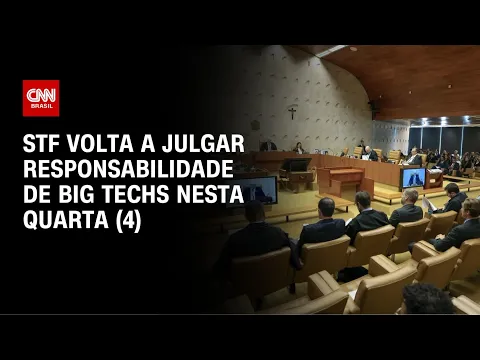
Now, in 2025, the Supreme Federal Court has decided to revisit this article. The trial was resumed in June and already includes significant votes.
The STF president, Luís Roberto Barroso, advocated for a middle-ground position. According to him, it is not about imposing censorship but about requiring platforms to have mechanisms to act quickly in cases considered extremely serious, even without a court decision, when there are contents that threaten fundamental rights and the safety of society.
“It is not authorizing prior censorship, but rather establishing a minimum responsibility to protect democracy, human rights, and the integrity of the digital space,” Barroso stated in his vote, according to a report by Agência Brasil.
The focus, according to him, would be on publications related to:
- exploitation of minors
- encouragement of self-destructive behaviors
- criminal practices involving vulnerable individuals
- organization of violent actions
- content that threatens democratic institutions
In other words, what Barroso proposes is that networks be required to act proactively in these cases, without waiting for a formal court order.
The Criticism: The Risk of Prior Censorship
Not everyone agrees. Minister André Mendonça was one of those who voted against this flexibilization.
For Mendonça, the responsibility to change the Civil Framework lies with Congress, not the STF. Furthermore, he warns that requiring platforms to filter and remove content without a court order could indeed constitute prior censorship, something prohibited by the Brazilian Constitution.
“The role of the STF is not to replace the Legislative in such a delicate debate. Any loophole for censorship needs to be treated with extreme caution,” Mendonça stated in a vote recorded by the portal Migalhas.
This view is shared by many civil society organizations. The Coalition for Rights on the Internet, which brings together dozens of entities, published a manifesto warning that changing the logic of Article 19 could open a dangerous precedent.
According to the text: “Private self-regulation, without judicial oversight, tends to encourage excessive content removal and stifle legitimate public debate.”
Congress Also Tries to Advance: The Fake News Bill
While the STF discusses the matter, Congress is trying to approve PL 2630/2020, the so-called Fake News Bill.
The bill, which has been in progress since 2020, aims to create a legal framework for combating online misinformation. It includes measures such as:
- requiring platforms to publish transparency reports
- identifying automated accounts (bots)
- tracing the origin of mass messages
- providing penalties for non-compliance with the rules
However, the bill also faces resistance. Critics argue that the current text grants excessive powers to platforms and creates risks to freedom of expression.
The bill’s rapporteur, Senator Angelo Coronel (PSD-BA), acknowledged in an interview with Folha de S.Paulo that there are still many controversial points and that the text needs adjustments.
“We cannot create a regime of censorship or surveillance that harms the right to free expression. But we can no longer leave platforms unchecked, profiting from misinformation,” Coronel said.
What Do Big Techs Think?
The tech giants are watching everything closely — and with concern.
In April, companies like Meta, Google, and X mobilized against PL 2630. They claim that Brazilian law could be excessively strict and require platforms to censor content preventively to avoid penalties.
In an official statement, Meta stated:
“It is essential that any regulation preserves the right to freedom of expression and innovation in the digital environment.”
Google even warned that the project, if approved as is, could make it unfeasible to offer certain services in Brazil.
The Dilemma: Balance Between Rights
As seen, the debate is complex and does not have a simple solution.
On one hand, it is undeniable that the internet has become a space where misinformation and hate speech thrive. It is fair to expect platforms to take more responsibility.
On the other hand, the Brazilian Constitution prohibits prior censorship. And giving private companies the power to decide what can or cannot be said online opens the door to abuse.
Moreover, as lawyer Carlos Affonso Souza from FGV warns:
“The risk is that a scenario is created in which platforms, to protect themselves from liability, start removing legitimate content out of caution. This impoverishes democratic debate.”
And Now?
The STF trial has been suspended and is expected to resume soon. PL 2630 is also still under negotiation in Congress.
In the meantime, pressure from all sides — government, judiciary, civil society, and big techs — is likely to make the debate even more heated.
One thing is certain: the way Brazil decides to regulate social media will be watched closely around the world. The country currently has one of the largest internet markets on the planet, and any new legal framework could serve as an example — either positive or negative — for other nations.
Regulate or Not Regulate?
Regulate or not regulate? Censorship or protection? The dilemma of social media regulation in Brazil is far from resolved.
It is essential to find a balance that preserves both the fight against abuses and respect for freedom of expression — one of the pillars of democracy.
Whether in the STF or Congress, the responsibility is enormous. And it is up to civil society to closely monitor, pressure, and ensure that the debate is not captured by either authoritarianism or corporate interests.
In the coming months, we will have new chapters in this story. And it is worth staying alert — after all, the decisions made now will impact how you express yourself and get information online in the coming years.










Seja o primeiro a reagir!