





 Portuguese
  English
  Spanish
  4 min of reading
  0 comments


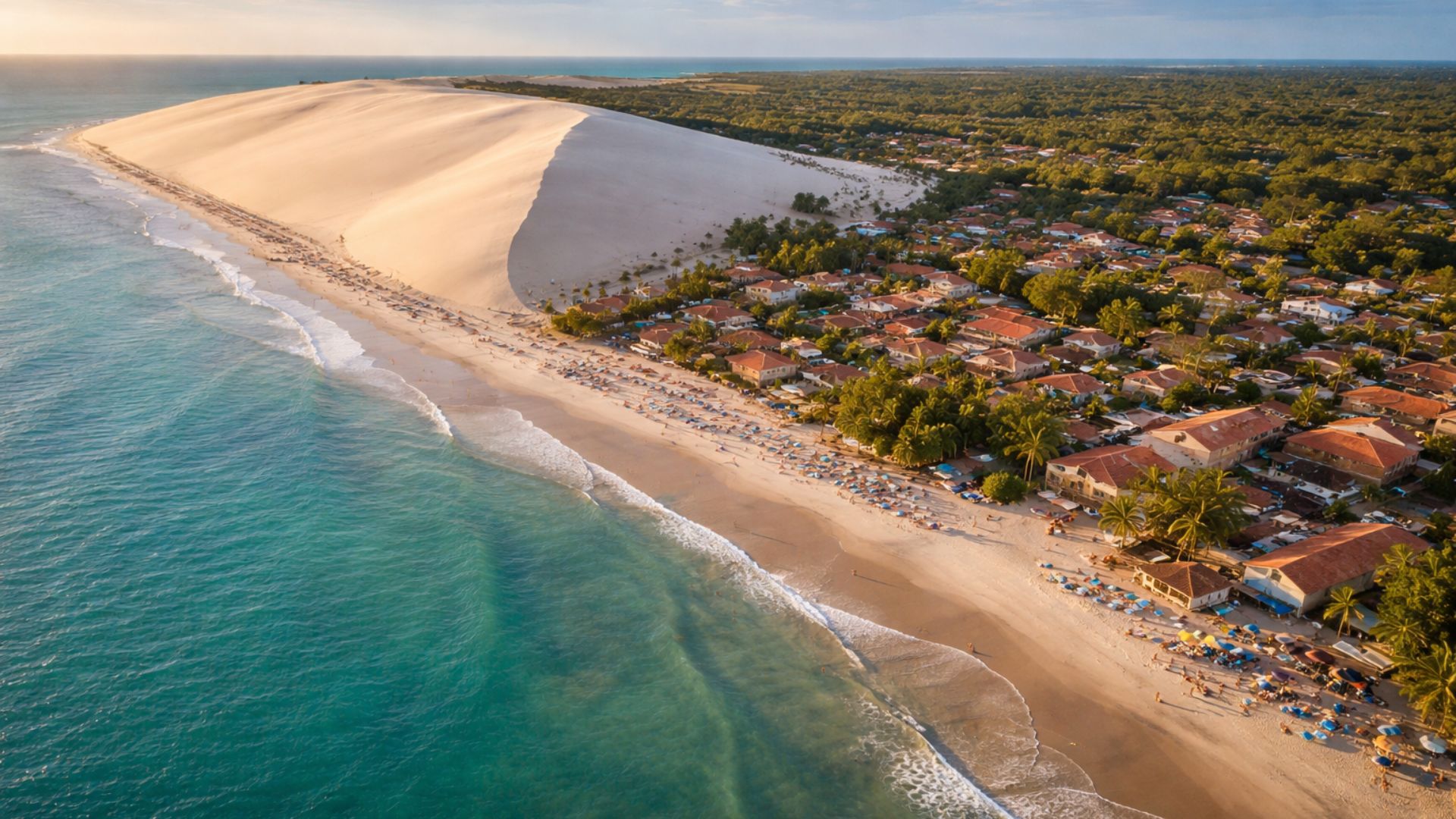
Fee to Enter Jericoacoara Totals R$ 41.50 for Up to 10 Days, Provides Daily Additional Charge After Deadline and Funds Public Services in One of Ceará’s Most Visited Destinations, with Specific Exemption Rules and Tourist Flow Control.
Those who visit the Village of Jericoacoara, in the municipality of Jijoca de Jericoacoara, on the coast of Ceará, need to pay a Sustainable Tourism Fee (TTS), currently at R$ 41.50, which allows a stay of up to 10 days.
If the stay exceeds this period, the city charges an additional R$ 4.15 per visitor for each additional day, according to guidance released by the municipality since the change implemented in February 2023.
Although access to beaches is traditionally free in Brazil, Jijoca maintains the fee to organize the entry of visitors and fund tourism-related services in a destination that receives large volumes during the high season.
-
Friends have been building a small “town” for 30 years to grow old together, with compact houses, a common area, nature surrounding it, and a collective life project designed for friendship, coexistence, and simplicity.

-
This small town in Germany created its own currency 24 years ago, today it circulates millions per year, is accepted in over 300 stores, and the German government allowed all of this to happen under one condition.

-
Curitiba is shrinking and is expected to lose 97,000 residents by 2050, while inland cities in Paraná such as Sarandi, Araucária, and Toledo are experiencing accelerated growth that is changing the entire state’s map.

-
Tourists were poisoned on Everest in a million-dollar fraud scheme involving helicopters that diverted over $19 million and shocked international authorities.


How the Tourism Fee Works in Jericoacoara
The model adopted in the village requires a one-time payment of R$ 41.50 per person, valid for ten days, with a daily supplement when the tourist stays longer, without the need for a new full amount.
The municipal administration relates the fee to a local tax unit and advises that the tax document and voucher be issued by the visitor in advance, using official channels or service points.
In recent days, the municipal authority responsible for issues related to the village also released a clarification to address doubts about new charges, stating that the only current fee remains the TTS, at the same amount and duration.
This statement also indicated that a charge related to access to the Jericoacoara National Park, attributed to a concession proposal, had been suspended by judicial decision and, therefore, was not being applied.
Who Is Entitled to Exemption from the TTS
Exemption rules are established by municipal regulation and published on visitor guidance pages, requiring proof upon arrival through documents that confirm the reported condition.
Among the exempt groups are individuals with disabilities upon providing medical reports and official documents, children up to 12 years old with birth certificates or identification, and seniors over 60 years old with photo identification.
Residents and inhabitants of Jijoca de Jericoacoara are also exempt from payment, provided they present proof of residence in the municipality, as well as workers in the village who can demonstrate employment ties in the area.
Collection of the Fee and Destination of the Resources
The fee, created by municipal law in the mid-2010s and adjusted over the years, is cited as a source for funding measures related to environmental maintenance, sanitation, and organization of services in the village.
Data published by Diário do Nordeste indicate that the collection reached R$ 16 million in 2024, with resources directed to a tourism development fund administered in the municipality and linked to local management.
According to the report, part of the money flows through the structure of Adejeri, an authority linked to tourism and mobility, which gained greater autonomy to execute actions and access a share of the revenue generated by the fee.
In the same context, experts consulted indicate that the fee, when anticipated and applied by the government, should reflect improvements that fall under municipal responsibility, such as sanitation, waste, and basic services.
“There is the issue of basic sanitation, waste management, everything that falls under the municipality of Jijoca de Jericoacoara,” said Juliana Melo, a professor of Environmental Law at Labomar of the Federal University of Ceará, in an interview with the newspaper.
Residents also associate the fee with the return in works and services, although they emphasize that transparency about the execution and pace of improvements influences the perception of the utility of the fee in the daily life of the village.
“The fee is being useful for the village,” asserted Lucimar Marques, president of the Jericoacoara Community Council, commenting on the expectation that the amount collected will result in visible improvements.
Tourist Flow Control in High-Demand Destinations
The logic behind the TTS combines funding and tourism management, as the record of payment helps to assess the number of visitors and guide decisions regarding cleaning, mobility, and service organization.
In addition to the cost, tourists need to observe deadlines and documents, as the amount only covers a period of ten days, and the exemption status requires immediate proof, with verification by municipal inspection.









Seja o primeiro a reagir!