





 Portuguese
  English
  Spanish
  6 min of reading
  0 comments


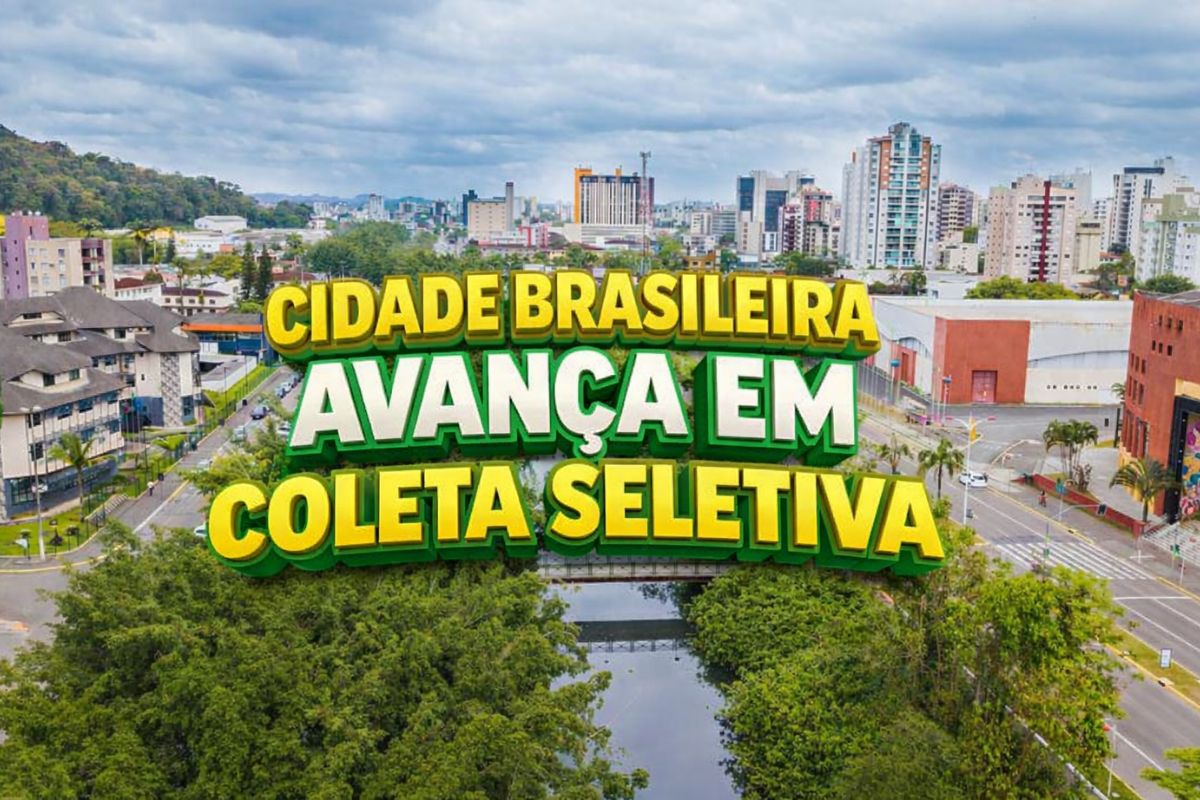
Brazilian City That Is Growing the Most in Recycling in the Country Expands Selective Collection, Installs New Ecopoints, Strengthens Cooperatives and Calls on the Population to Separate Waste Every Day.
In Joinville, a Brazilian city in the South decided to treat selective collection as an absolute priority, reorganized operations and practically doubled its capacity to collect recyclable materials in just a few years. The numbers show the leap: there were 5,157 loads of recyclables in 2022, 8,386 in 2023, and 11,482 in 2024. By September of this year alone, more than 9.2 thousand loads had already been registered, a direct result of a restructuring that balanced the service with the actual demand from neighborhoods.
At the same time, this Brazilian city invested in the installation of Ecopoints, multiplication of voluntary delivery locations and strengthening of cooperatives and associations of waste pickers.
The message is clear: it is not enough to have a truck and a functioning concession contract; it is necessary for each resident to do their part, to properly separate waste and direct recyclable material to those who turn waste into income, work, and social inclusion.
-
Church from 1888 becomes a mansion of over 330 m² in Canada after a renovation of R$ 3.4 million and is eventually sold for nearly R$ 4.3 million.

-
How an innovative city combines high technology, well-being, and sustainability to become the largest reference in clean energy on the planet.
-
Couple buys 1846 church in ruins for R$ 660,000, invests R$ 3.2 million in renovations, transforms it into a millionaire mansion, and even preserved a historic cemetery with over 300 graves.

-
He started running at 66 years old, broke records at 82, and is now a subject of study for having a metabolic age comparable to that of a 20-year-old, in a case that is intriguing scientists and inspiring the world.


How the Brazilian City Reorganized Selective Collection
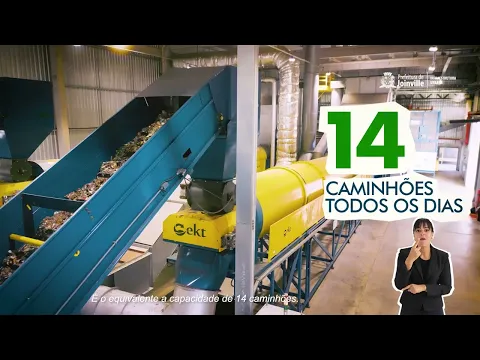

The selective collection in Joinville is operated by the Urban Cleaning and Sanitation Environmental Concessionaire, under a contract managed by the Urban Infrastructure Department.
The Brazilian city that decided to take recycling seriously restructured its operation in 2024, focusing on efficiency and coverage.
According to the director of the Urban Cleaning Unit, the collection capacity was practically doubled, with route adjustments, frequency, and logistics to match the real volume of recyclable waste generated in the neighborhoods.
This redesign avoided bottlenecks, increased load utilization, and ensured that residents’ efforts in separating waste actually arrived at the cooperatives.
Ecopoints and Delivery Points Change the Routine of the Population
In practice, selective collection in this Brazilian city works in two main ways: door-to-door and through voluntary delivery points, known as Ecopoints.
In addition to the truck that travels the streets on pre-defined days and shifts, Joinville maintains permanent Ecopoints in Parque São Francisco, in the Adhemar Garcia neighborhood, and in Praça Tiradentes, in the Floresta neighborhood.
These Ecopoints are booths with separate compartments for plastic, paper, glass, metal, batteries, and rechargeable batteries, available 24 hours a day for those who want to dispose of waste correctly.
The structure doesn’t stop there. There are 220 specific points for glass scattered throughout the territory, with detailed locations available on the City Hall website.
In the central area, there are also 30 containers for selective collection and 50 containers for common waste, in the form of large trash bins in gray and green colors, with stickers guiding proper disposal. Everything has been designed to make the daily act of separating waste easier.
Strengthened Cooperatives: Recycling That Generates Income and Inclusion
Another pillar of the strategy is the strengthening of cooperatives and associations. Today, the Brazilian city of Joinville has ten cooperatives and associations able to receive materials from selective collection, in an explicit effort to expand the network of formal waste pickers.
In 2023, the City Hall initiated an active search that identified informal waste pickers interested in legalizing their activity.
They received guidance on documentation, models for legal constitution, and, facing financial and organizational difficulties, a partnership was established with the Catholic University of Santa Catarina to provide accounting advice and legal-accounting support.
In 2025, Joinville began to integrate the Pró-Catadores Project, in partnership with Sebrae. This took the cooperatives to another level, with support in formalization as well as in administrative, technical, and financial management.
One of the institutions benefited is the Cooperativa de Trabalho dos Recicladores de Joinville, with about ten years of history and 28 members, which directly depends on the quality of waste separation in households.
Separating at Home Is Key to the Success of the Brazilian City
In the view of the cooperators themselves, the biggest challenge is not the quantity, but the quality of the material that arrives.
Organic waste such as food scraps and diapers, which should go to regular trash and landfills, often appear mixed with recyclable packaging, reducing the value of the material and delaying sorting.
Therefore, the Brazilian city that has become a reference in recycling always reinforces the same message. Correctly separating at home increases the value of the material, reduces rejects, and allows for much more sorting, in addition to ensuring safety and better working conditions for those who live off recycling.
The disposal of recyclables to registered cooperatives and associations is not just an environmental issue, but also a social and economic one, as it helps maintain jobs, income, and inclusion for entire families in the recycling chain.
Public Notices, Warehouses, and Open Channels for New Cooperatives
Joinville maintains permanent channels for the admission of new cooperatives into the system, with open registration and specific public notices for accreditation.
In 2024, City Hall launched a Accreditation Public Notice focusing on the incubation of groups, using warehouses donated by the municipality.
The first cooperative was approved in August 2025, reinforcing the idea that the city wants to grow alongside those who work in the recycling front line.
This movement confirms that the Brazilian city is not only expanding trucks and containers, but also structuring physical spaces, training, and technical support so that recyclable material truly closes the loop to the industry.
Digital Services Help Organize Collection Routine
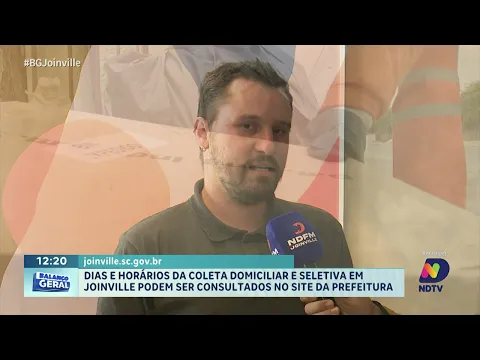
In addition to actions on the streets, the city offers digital tools to guide the population. Those who live in Joinville can check the days and shifts of home and selective collection directly on the City Hall website, searching for waste collection maps.
This enables residents to organize disposal close to the truck arrival time, avoiding accumulation on sidewalks and exposure to animals.
The same platform gathers detailed instructions on how to dispose of organic waste, recyclables, and special items, such as cooking oil, tires, expired medications, sharp materials, batteries, and light bulbs.
The idea is for each resident to find, in just a few clicks, the step-by-step process for correctly disposing of almost all types of waste generated at home.
Practical Tips for Separating Waste and Supporting Recycling
For the strategy to work, the participation of the population is as important as trucks, contracts, and Ecopoints. Separating dry waste from wet waste is the first step.
Dry waste, such as paper, plastic, glass, and metal, forms the group of recyclables. Wet waste, such as food scraps and general rejects, makes up the common trash that goes to the landfill.
It is also important to do a minimum cleaning of the packaging, especially food and beverage containers, to avoid bad smells, insects, and microorganisms.
This simple care improves working conditions for those who work in cooperatives and increases the utilization of recyclable material.
In the case of cardboard packaging, such as pizza boxes, the guideline is to separate the clean part from the greasy or sauce-stained part.
The clean surface can be recycled, while the dirty part should be discarded as non-recyclable waste.
Glass packaging requires special attention, especially when broken. They need to be well wrapped and packaged to avoid accidents with workers during collection and sorting. It is best to always indicate that there is glass inside and avoid mixing it loosely with other materials.
Used cooking oil should be stored in well-sealed and labeled PET bottles. These bottles must be kept separate from other recyclables to prevent any leaks that might contaminate other materials and compromise the entire load.
Finally, recyclable waste should be placed in proper bins or protected from animals, on the sidewalk or public road, always close to the time of selective collection.
This reduces damage caused by rain, wind, or animals and increases the chances of the material arriving in good condition at cooperatives and associations.
When these simple precautions become routine, the Brazilian city strengthens selective collection, reduces rejects, increases income for waste pickers, and consolidates recycling as one of the fastest-growing sectors in the country.
What about you, do you separate your waste at home every day, or is there still some incentive needed to follow the example of this Brazilian city that decided to take selective collection seriously?






-

-

-

-

-

-

30 pessoas reagiram a isso.