





 Portuguese
  English
  Spanish
  6 min of reading
  3 comments





The Ghost Towns of Brazil: Forgotten Treasures That Reveal an Amazing Value for the Country. Far From Being Just Ruins, These Once Prosperous Places Now Shine with New Brilliance, Attracting Gaze and Investments, Redefining the Concept of Fortune.
Brazil, with its vast territorial expanse and rich history, hides within its confines an intriguing phenomenon: that of Brazilian ghost towns.
Once prosperous places, abandoned for various reasons, now resurge with surprising value.
Far From Being Just Dusty Ruins, These Forgotten Villages Shed Their Past and Gain New Brilliance, Attracting Gazes and Investments.
-
Friends have been building a small “town” for 30 years to grow old together, with compact houses, a common area, nature surrounding it, and a collective life project designed for friendship, coexistence, and simplicity.

-
This small town in Germany created its own currency 24 years ago, today it circulates millions per year, is accepted in over 300 stores, and the German government allowed all of this to happen under one condition.

-
Curitiba is shrinking and is expected to lose 97,000 residents by 2050, while inland cities in Paraná such as Sarandi, Araucária, and Toledo are experiencing accelerated growth that is changing the entire state’s map.

-
Tourists were poisoned on Everest in a million-dollar fraud scheme involving helicopters that diverted over $19 million and shocked international authorities.


They Redefine the Concept of Fortune. This Reality Challenges Common Perception. A Scene of Mystery and Desolation Transforms into Potential for Tourism and Preservation of National Memory.
Why Does a Town Become a Ghost Town?
Brazilian ghost towns do not appear suddenly. They are the result of drastic economic, social, or environmental transformations.
During the cycles of gold, diamonds, and rubber, many villages flourished rapidly. However, when resources were depleted or demand decreased, the population migrated.
There are other cases involving natural disasters, large infrastructure projects, or even government decisions.
The construction of dams, for example, often submerges entire villages. Life Pulses and Then, Suddenly, Ceases.
Left Behind Are the Buildings, Streets, and the Aura of a Lost Time. This Legacy, However, Is Precisely What Makes Them Valuable Today.
Hidden Treasures: Real Examples of Abandoned Towns in Brazil
The Brazilian territory is full of stories of places that were and are no longer. With Each Ruin, a Chapter of the Nation Is Revealed.
Fordlândia, Pará
One of the most emblematic examples is Fordlândia, in Pará. Founded by Henry Ford in the 1920s, the village represented an ambitious project to cultivate rubber trees, aiming to guarantee the supply of rubber for the Ford Motor Company.
Despite Massive Investments and Attempts to Replicate the American Lifestyle in the Amazon, the venture faced several challenges.
Issues Such as Pests in Plantations, Worker Adaptation Problems, and Cultural Conflicts Led to Its Abandonment by Ford.
The town then became a set of Amazonian ruins.
Its modernist buildings, including the hospital, school, and managers’ houses, as well as the industrial structures, are now a destination for historians, researchers, and adventurers seeking to understand this industrial utopia in the heart of the jungle.


Velho Airão, Amazonas
Another fascinating case is Velho Airão, in Amazonas. Founded in the 17th century, this ancient village thrived during the height of the Rubber Cycle.
By the banks of the Rio Negro, it stood out as an important commercial and latex extraction center.
However, with the decline of rubber activity in the early 20th century and local legends about devouring ants that supposedly invaded the city — a probable metaphor for economic decay — the place was gradually abandoned.
The population moved to a new settlement, Novo Airão.
Its ruins, partially swallowed by the forest and vegetation, were classified by the National Historical and Artistic Heritage Institute (Iphan).
Thus, they represent a point of interest in the exotic tourism of the Amazon, accessible mainly by boat.

São João Marcos, Rio de Janeiro
In Rio de Janeiro, the historic town of São João Marcos had an even more dramatic fate. Founded in the 18th century, the town was an important coffee center and a strategic point in the Paraíba Valley.
However, in the 1940s, it was expropriated and submerged for the construction of the Ribeirão das Lajes Hydroelectric Plant.
The goal of the plant was to supply energy to the then capital of the country.
Today, an archaeological park allows visitors to see the submerged ruins of the old town, visible during dry periods, and offers trails around it.
This underwater scene provides a unique experience and a vivid reminder of the impact of progress on memory and heritage.
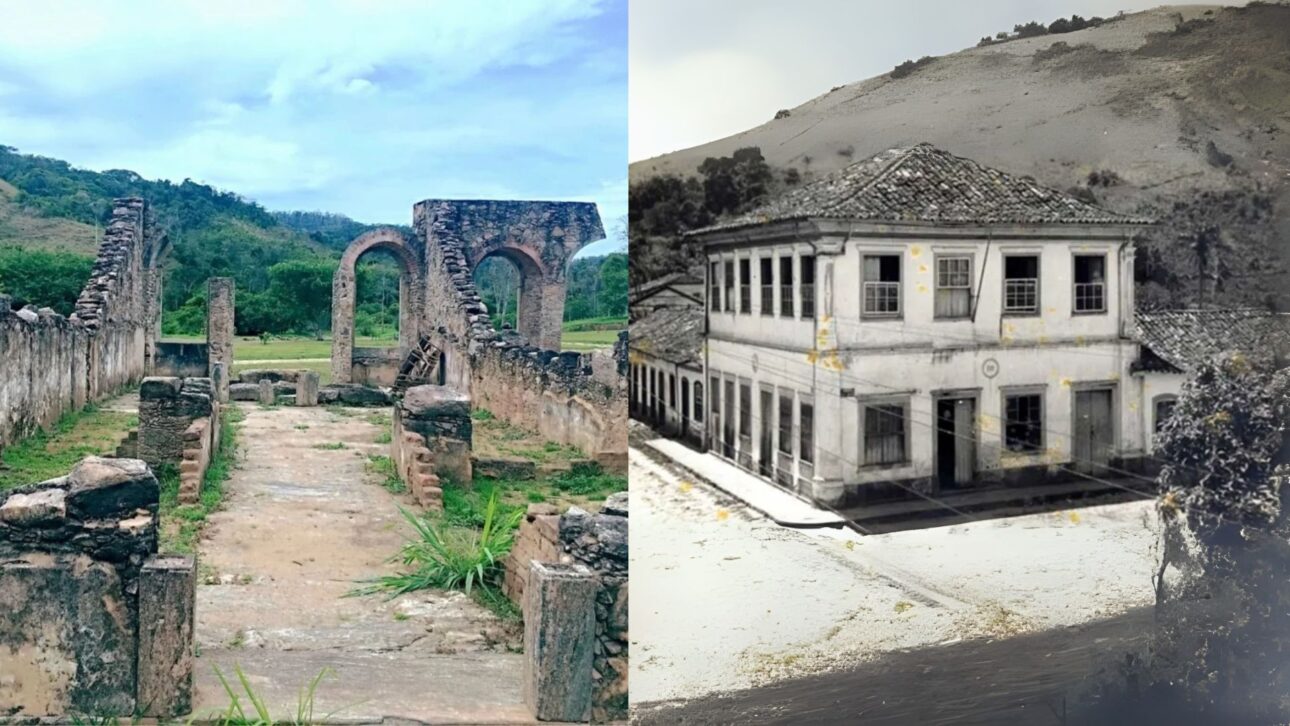
Igatu, Bahia
In Bahia, the village of Igatu, in the Chapada Diamantina, is affectionately known as the “Baiana Machu Picchu.” It Thrived Intently During the Diamond Cycle in the 19th Century, Attracting Miners from Various Parts of Brazil.
Despite This, with the Decline in Mining, Much of the Population Left the Place.
The Stone Architecture of Its Houses and the Arid and Mountainous Landscape, However, Remained.
Today, Igatu is a charming village that attracts tourists looking for history, trails, waterfalls, and stunning views of the Chapada Diamantina.
Its Stone Constructions and the Ruins of the Old Diamond Extraction Sites Are a Testament to the Wealth and Life That Once Existed There.

Cococi, Ceará
Ceará also has its own Brazilian ghost town, Cococi. Founded in the 18th century in the Ceará hinterland, the town was an important commercial and religious center.
However, throughout the 20th century, it was gradually abandoned.
Factors such as water scarcity, long droughts, and administrative and political challenges led to the migration of the population in search of better living conditions.
In 1979, Cococi lost its status as a municipality.
Today, few families remain and many ruins of old constructions, such as the church and mansions, arouse curiosity among visitors and researchers about the region’s past.

Ararapira, Paraná/São Paulo
Paraná and São Paulo share the history of Ararapira, an ancient settlement that, according to some narratives, was partially submerged or abandoned due to geographical and economic changes in the coastal region.
Located on the border between the two states, the village was a strategic point for navigation and trade in the past.
Its Ruins, Including an Old Cemetery and Remnants of Constructions, Are Still Visited by Those Who Seek to Unravel the Legends and History of This Isolated Place.
Accessible Mainly by Boat, Ararapira Carries Historical Value and Some Mysticism.

Vila de Biribiri, Minas Gerais
Finally, Vila de Biribiri, in Minas Gerais, was born in the 19th century around a textile factory. It Was Driven by the Industrialization of the Time.
The village was self-sufficient, with houses, church, school, and commerce for the factory workers.
With the end of factory operations in the second half of the 20th century, the village was abandoned by most of its residents.
Today, a small number of residents still live in the area.
Its Preserved Architecture, Amidst the Lush Nature of the Biribiri State Park, Makes It a Tourist and Cultural Destination.
The Village Is an Example of How Industrial Heritage Can Be Revitalized and Become an Attraction.

How Abandonment Generates Value and Fortune?
The Concept That These Abandoned Cities in Brazil Are Worth a Fortune Does Not Restrict Itself to Direct Monetary Values.
It Encompasses Multiple Aspects That Make Them Precious. First, The Historical and Cultural Value Is Invaluable.
These Places Are Time Capsules. They Offer an Authentic Glimpse of Past Eras, with Their Architecture and Lifestyle.
Preservation Agencies Invest in Conservation. Researchers and Students Seek Data in These Ruins for Understanding Brazil.
Secondly, The Tourism Potential Is a Growing Source of Revenue. Curiosity About Unusual Places Fuels Adventure and Historical Tourism.
Visitors Spend on Transportation, Accommodation, Food, and Local Guides. This Injects Money into Regions That Otherwise Would Have Few Economic Opportunities. Sustainable Tourism in These Areas Can Be a Tool for Regional Development.
Thirdly, Real Estate Speculation and Revitalization Are Factors of Value. Land and Structures in Strategic Locations, Even When Abandoned, Can Attract Interest.
Investors Seek the Possibility of Restoring Old Constructions into Inns. They May Also Transform Them into Cultural Centers or Even Exclusive Residences.
The Appreciation of Historical Heritage Attracts Resources for Restoration Projects. These Projects Create Jobs and Dignify Remaining Communities.
Additionally, The Value Lies in Scientific and Environmental Research.
Some of These Areas, Once Abandoned, Become Natural Laboratories. Scientists Study the Recovery of Flora and Fauna.
Archaeologists and Historians Unravel Secrets. This Generated Knowledge Also Represents a Form of Intellectual and Scientific Fortune.
The Brazilian Ghost Towns Are, Therefore, More Than Silent Ruins. They Are Multifaceted Assets.
They Represent the Living History of the Country, Potential Tourist Destinations, and Opportunities for Investment and Research. They Prove That, Sometimes, What Was Forgotten Can Indeed Be Worth a Fortune.









Valem uma fortuna? Imagino… Sem infraestrutura alguma, onde morcegos, cobras e corujas habitam, essas cidades fantasmas valem tanto quanto oferecem, ou seja, nada.
O turismo “bate e volta” costuma funcionar, como em Pripyat na Ucrânia, local bastante visitado por pessoas de todo mundo antes do início da guerra por conta do que aconteceu em Chernobyl. Aqui no Brasil existe um nicho para esse tipo de turismo, assim como para a visitação em cavernas.
Entenderam? É algo pontual, sem muito espaço para o crescimento. Via de regra as pessoas querem fazer turismo em locais com um mínimo de infraestrutura.
Deixemos portanto essas cidades abandonadas para os morcegos, as cobras e as corujas. Eles merecem viver em paz, sem turistas para perturbá-los.
Vale tambem visitar a Vila Maria Zélia no bairro do Belém em São Paulo que foi tombada e tem muita história, porém abandonada pelo Iphan e mantida por seus moradores.
Grato pela dica. Infelizmente o poder público não atua na preservação da memória arquitetônica como deveria. Vou ver se pelo menos faço uma visita virtual, se for possível.