





 Portuguese
  English
  Spanish
  3 min of reading
  0 comments


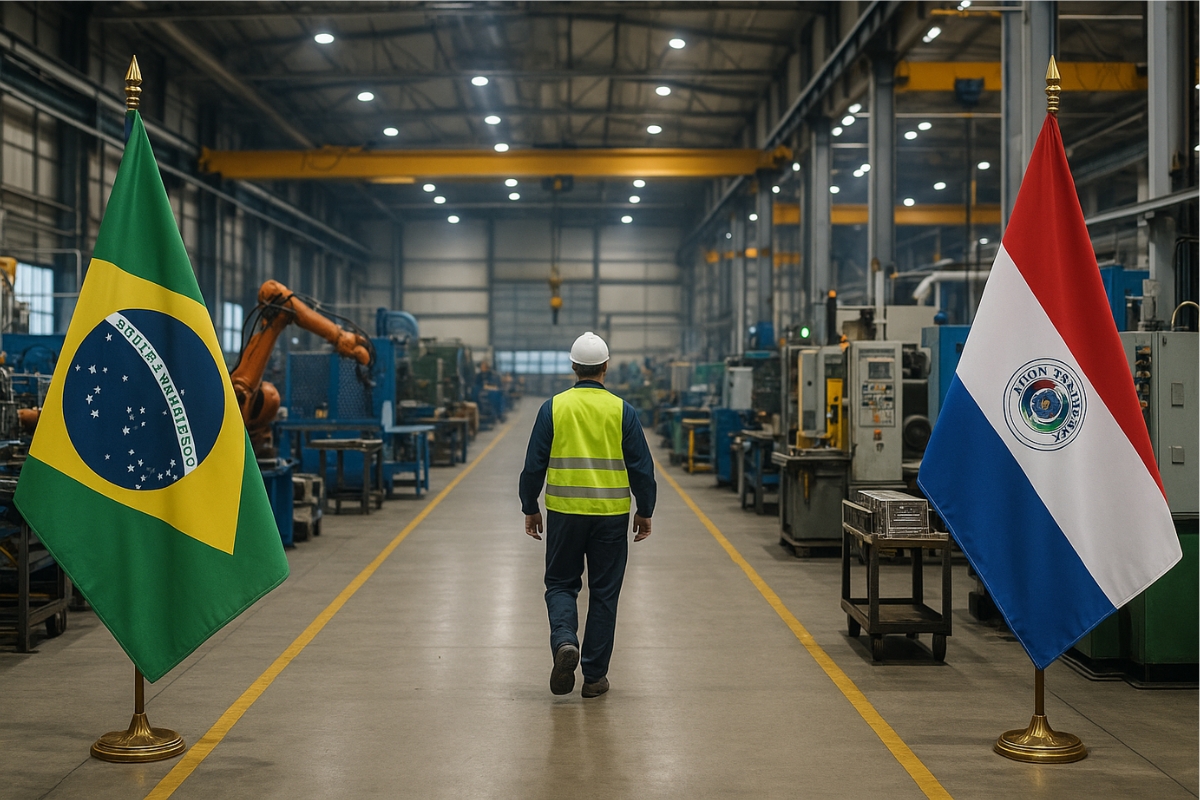
Brazilian Industries Consider Transferring Factories to Paraguay to Escape 50% Tariffs Imposed by the U.S., Lured by Tax Incentives, Short Logistics, and New Competitiveness Law
The tax pressure from the United States against Brazilian products is opening a new industrial route in the region.
Large companies based in Brazil are beginning to look at Paraguay as a production and export platform, a move confirmed by the Deputy Minister of Industry of the neighboring country, Marco Riquelme, after the Paraguay Business Week held in Ciudad del Este.
According to Riquelme, more than half of the event’s participants were Paraguayans, demonstrating a new local industrial dynamism.
-
Pix in installments, international Pix, and contactless payment without internet: the Central Bank revealed the new features coming to the tool that is already used by almost every adult in Brazil.

-
Mercado Livre has just started selling medications with delivery in up to three hours to your door, and this move could completely change the way Brazilians buy medicines on a daily basis.

-
In Dubai, rising tensions from the war in the Middle East are causing super-rich individuals to leave the Gulf and direct their fortunes to a new financial refuge in Asia.

-
“No one will make us change the Pix,” says Lula after the US report.


This opening, he emphasized, is strategic for attracting external investors, as it facilitates partnerships with Paraguayan entrepreneurs who understand the nuances of the national market, offering security for factory establishment and job creation.
“It is the union of technical knowledge of what product to manufacture with the local knowledge of our professionals. This combination represents a solid bet on investment, where both parties emerge strengthened,” he highlighted.
The Threat of New U.S. Taxes
The warning comes from the new American taxation, which has imposed tariffs of up to 50% on Brazilian products. In this scenario, several Brazilian entrepreneurs who sell directly to the U.S. are already expressing concern and analyzing the possibility of transferring operations to Paraguay.
This way, they could maintain their international clients without bearing the additional costs now impacting production on Brazilian territory.
“There are large Brazilian industries scared by this measure and seeing Paraguay as a future refuge for their factories,” the deputy minister said.
Regional Relations and Deficit in Mercosur
Asked about how this movement might impact relations with Brazil and Argentina, Riquelme dismissed negative effects.
According to him, Paraguay still has a deficit in the trade balance of manufactured goods within Mercosur and is far from balancing exchanges with countries that concentrate the largest markets.
However, he assured that communication with neighbors is constant and that the path taken strengthens productive integration.
Incentive Law and Strategic Logistics
Another pillar of this shift is the new industrial incentive law, which promises to elevate Paraguayan competitiveness. Riquelme compared the legislation to regimes already existing in regions like Manaus, Brazil, and Tierra del Fuego, Argentina, but emphasized that Paraguay has an undeniable logistical advantage.
While the distance between Encarnación and Buenos Aires reaches a thousand kilometers, the route from Ciudad del Este to São Paulo is four times shorter, reducing costs and timelines. This condition, combined with tax stimuli, transforms the country into a faster and more economical alternative to serve the main consumer centers in the region.
Mercosur as One Market
For Riquelme, the strategy to attract foreign industries should be linked to an integrated view of the regional bloc.
“We need to conceive Mercosur as a single country. Often, even when talking to Brazilian or Argentine entrepreneurs, we emphasize that for us there is no division. Mercosur was created precisely for this,” he stated.
With this practical mindset, Paraguay is betting on becoming a hub for industrial support within the bloc, leveraging fiscal and logistical advantages to attract investments, generate jobs, and, at the same time, contribute to increasing the productivity of its neighbors.









-

-

-

7 pessoas reagiram a isso.