





 Portuguese
  English
  Spanish
 4 min of reading


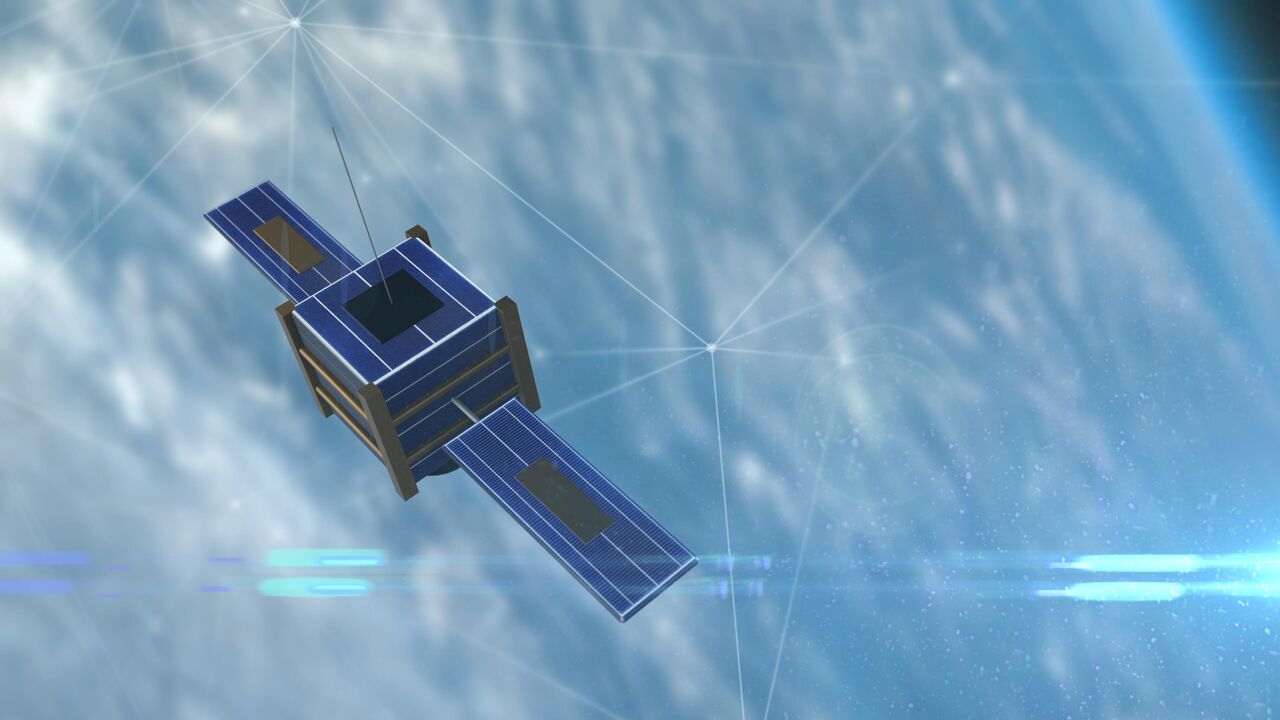
A Brazilian Nanosatellite, VCUB1, Was Launched Last Saturday (15) into Earth Orbit in California, United States.
VCUB1, produced by Visiona Space Technology, is the first nanosatellite fully developed by a national company and represents a milestone in the Brazilian aerospace industry. With highly sophisticated architecture and state-of-the-art equipment, VCUB1 is an Earth Observation and Data Collection satellite, aimed at demonstrating Brazil’s capability to carry out advanced space missions.
History of the Launch of the Brazilian Nanosatellite
Visiona Space Technology is a joint venture between Embraer and Telebras, headquartered in the Technology Park of São José dos Campos, and has been investing in space technology for years. VCUB1 underwent extensive testing at Inpe’s Integration and Testing Laboratory before being sent to the U.S. The launch of VCUB1 was contracted with the space logistics and transportation company D-Orbit and was launched by the Falcon 9 rocket, as part of the Transporter 7 mission, which will place several small microsatellites and nanosatellites into orbit for commercial and governmental clients.
Capabilities of the Brazilian Nanosatellite
After the launch, VCUB1 will be accurately taken to its final orbit by D-Orbit’s ION orbital transfer vehicle and will undergo a stabilization and preliminary testing period. The Brazilian nanosatellite is a high-performance platform with architecture similar to large satellites, which may be used in larger satellites in the future, allowing the incorporation of more national technologies into the Brazilian Space Program missions.
-
Motorola launched the Signature with a gold seal from DxOMark, tying with the iPhone 17 Pro in camera performance, Snapdragon 8 Gen 5 that surpassed 3 million in benchmarks, and a zoom that impresses even at night.

-
Satellites reveal beneath the Sahara a giant river buried for thousands of kilometers: study shows that the largest hot desert on the planet was once traversed by a river system comparable to the largest on Earth.

-
Scientists have captured something never seen in space: newly born stars are creating gigantic rings of light a thousand times larger than the distance between the Earth and the Sun, and this changes everything we knew about stellar birth.

-
Geologists find traces of a continent that disappeared 155 million years ago after separating from Australia and reveal that it did not sink, but broke into fragments scattered across Southeast Asia.

Development and Validation of Space Technologies
For VCUB1 to enter into full operation in providing remote sensing and data collection services, the mission will allow for the development and validation of space technologies developed by Visiona, particularly the Orbit and Attitude Control System for satellites, the main technological gap of the Brazilian space industry, as well as the Onboard Data Management System software and the Software Defined Radio.
Partnership with the City Hall of São José dos Campos
In 2021, the City Hall of São José dos Campos was invited to participate in the validation of the nanosatellite’s products through a partnership contract with Visiona. The agreement stipulates the receipt of high-resolution images collected by the nanosatellite that will allow mapping of land use and coverage, potentially preventing, for example, environmental irregularities. The technical analysis of the images will be conducted by employees of the Urbanism and Sustainability Secretariat.
Potential of the Brazilian Nanosatellite for Environmental Solutions
The partnership between the City Hall of São José dos Campos and Visiona enhances the city’s capacity to create new solutions for the continuous improvement of urban and rural environmental planning and quality, as well as to stimulate the technological and socioeconomic development of the city. The analysis of the images collected by VCUB1 could prevent, for example, environmental irregularities.
High-Tech Projects Using Remote Sensing Images
Since 2017, the City Hall of São José dos Campos has been developing high-tech projects using remote sensing images. The Observa Project, also in partnership with Visiona, consists of using extremely high-resolution images for monitoring, oversight, and environmental control of the territory aimed at combating environmental degradation, illegal land parceling, and construction in risk areas.
The city also has Geosanja, a platform that gathers geographic data of the municipality, all technical mappings, public services, facilities, monitoring of public works, among others, for consultation at citizens’ fingertips and for data download.
Characteristics of the Brazilian Nanosatellite
The VCUB1 nanosatellite is based on a 12kg 6U CubeSat platform with dimensions of 30 x 20 x 10 cm and features state-of-the-art technologies for small satellites. Visiona has implemented and will test on VCUB1 all the software that integrates the onboard computer, the brain of the satellite, including the orbit and attitude control system, a first in the country, and the onboard data management system, which allows control of all satellite components.
The mission will also allow qualification in space of the first reflective camera designed and produced in Brazil, the OPTO 3UCAM, an optical multispectral camera with a resolution of 3.5 meters and 4 spectral bands, and a software reconfigurable data collection system; the satellite will be capable of performing missions previously intended for much larger satellites.
The launch of the Brazilian nanosatellite VCUB1 marks a new technological advance for the country’s aerospace industry. Visiona Space Technology has been investing in space technology for years, and the partnership with the City Hall of São José dos Campos enhances the city’s capacity to create new solutions for the continuous improvement of urban and rural environmental planning and quality.
VCUB1 represents a milestone for the industry, as it places Brazil in a select group of nations that master the entire satellite development process, which enables us for even greater pursuits in the aerospace industry.







Seja o primeiro a reagir!