





 Portuguese
  English
  Spanish
  4 min of reading
  0 comments


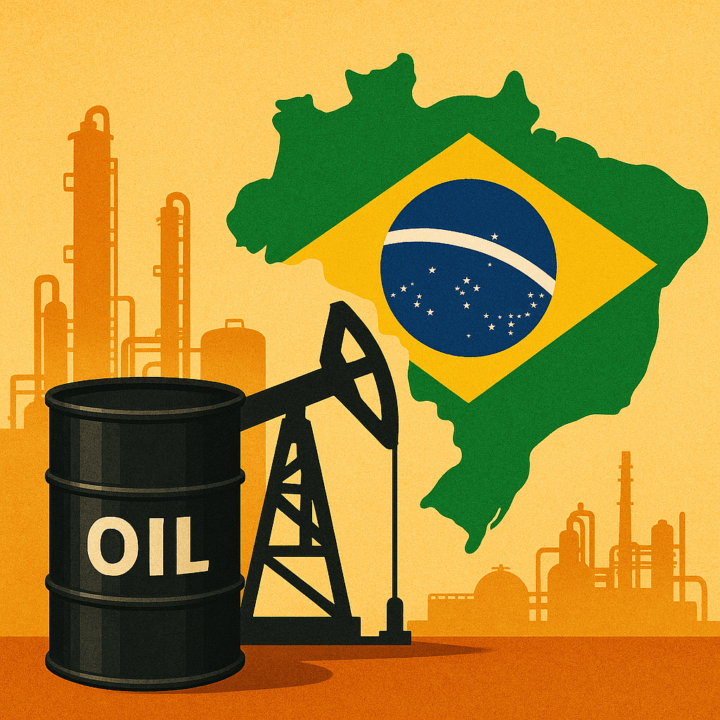
Strategic Sector Moves Billions and Influences Prices, Jobs, and Political Decisions Nationwide
The Brazil oil market is one of the most strategic in Latin America. It moves billions, involves large companies, and directly influences the national economy. Understanding how this market works is essential for anyone looking to keep up with the directions of the energy sector in the country.
The Role of Oil in the Brazilian Economy
Oil has a huge weight in Brazil’s Gross Domestic Product. It represents a large part of exports and generates many jobs. Petrobras, a state-owned company created in 1953, is the largest company in the sector and a symbol of this industry in the country.
With the pre-salt layer, the Brazil oil market gained even more importance. This layer, which is several meters below the seabed, contains large reserves. Exploring it requires high technology but has shown impressive results.
-
The rise in oil prices could ensure an extra revenue of R$ 100 billion for the Federal Government, indicates a recent economic study.

-
Naturgy begins an investment of R$ 1.6 million to expand the gas network in Niterói and benefit thousands of new residences and businesses.

-
A major turn in the Justice system suspends tax increases and directly impacts oil and gas companies in Brazil by affecting costs, contracts, and financial planning, leaving uncertain what could happen to the sector if these costs had increased.

-
Brava Energia begins drilling in Papa-Terra and Atlanta and could change the game by reducing costs in oil while increasing production and strengthening competitiveness in the offshore market.


History of Oil Production in Brazil
Oil production in Brazil began modestly. The first significant discovery occurred in 1939, in Bahia. However, it was with the creation of Petrobras in 1953 that the sector began to develop in earnest.
In the 1970s, the oil crisis led Brazil to invest even more in the quest for self-sufficiency. In the 2000s, the discovery of the pre-salt changed the game. Today, the country produces more than 3 million barrels per day.
Pre-Salt: The Watershed Moment
The pre-salt is the star of the Brazil oil market. It was discovered in 2006 and has since attracted heavy investments. The reserves are primarily located in the Santos Basin, in the Southeast of the country.
Production in the pre-salt is expensive and complex but extremely profitable. The pre-salt fields already represent more than 75% of national production. This shows how this layer has become a key player.
Market Regulation
The Brazil oil market is regulated by the National Agency of Petroleum, Natural Gas, and Biofuels (ANP). It is responsible for authorizing operations, overseeing companies, and organizing bids for exploratory areas.
These bids are called licensing rounds. National and foreign companies compete for the right to explore certain areas. The government receives a portion of the profits through royalties and special participations.
The Major Companies in the Sector
Petrobras dominates the Brazil oil market. But it is not alone. Other companies also operate here, such as Shell, Equinor, TotalEnergies, and Repsol Sinopec. These companies entered after the deregulation of the monopoly in 1997.
This opening helped modernize the sector. With more companies came more competition, innovation, and investments. Today, the market is considered mature and attractive for international investors.
Export and Refining
Brazil exports crude oil, primarily to China and the United States. However, it still imports refined products, such as gasoline and diesel, due to limitations in refineries.
The national refining park is concentrated, with old units. Petrobras controls most of these refineries, but the government has encouraged the sale of some of them to stimulate competition.
Environmental and Social Impacts
The oil activity brings impacts. In the Brazil oil market, this is a constant concern. The risks range from spills at sea to air pollution in urban areas.
Additionally, there are impacts on traditional communities, especially in coastal areas. Therefore, environmental licensing is rigorous. Companies must follow regulations and present contingency plans.
The Role of Royalties
Oil royalties are an important source of revenue for states and municipalities. In the Brazil oil market, these resource transfers help fund health, education, and infrastructure.
Rio de Janeiro is the state that receives the most royalties, followed by São Paulo and Espírito Santo. However, there are debates about redistributing these amounts, with other regions demanding a larger share of the pie.
Oil and Energy Transition
The world is moving towards cleaner sources. But the Brazil oil market still has many years ahead. Oil will remain essential, especially in transportation, fertilizers, and petrochemical products.
At the same time, Brazil is investing in renewable energy. Petrobras has even announced plans to diversify its operations, focusing on offshore wind, green hydrogen, and carbon capture.
Fuel Prices and Politics
Fuel prices have always been a sensitive issue. In Brazil, the price of gasoline and diesel depends on the international market, exchange rates, and taxes. This generates controversy.
Petrobras’ pricing policy has changed several times. At times, the government intervened to contain increases. At other times, it allowed the company to follow the market. Each decision has economic and political impacts.
Outlook for the Future
The Brazil oil market has challenges and opportunities. Global demand may change with the energy transition. However, the pre-salt reserves still ensure decades of production.
Modernizing the refining park, diversifying sources, and respecting the environment are central points. Brazil has the potential to be an energy powerhouse, balancing oil and clean energy.
Understanding the Brazil oil market is understanding part of the country’s economic soul. The sector is dynamic, strategic, and constantly evolving. It mixes high technology, politics, and environmental challenges.
With new discoveries, investments, and a population increasingly aware of energy issues, oil will remain at the center of national decisions. And Brazil, with its riches and expertise, will continue to be a key player on this global chessboard.











Seja o primeiro a reagir!