





 Portuguese
  English
  Spanish
  6 min of reading
  0 comments


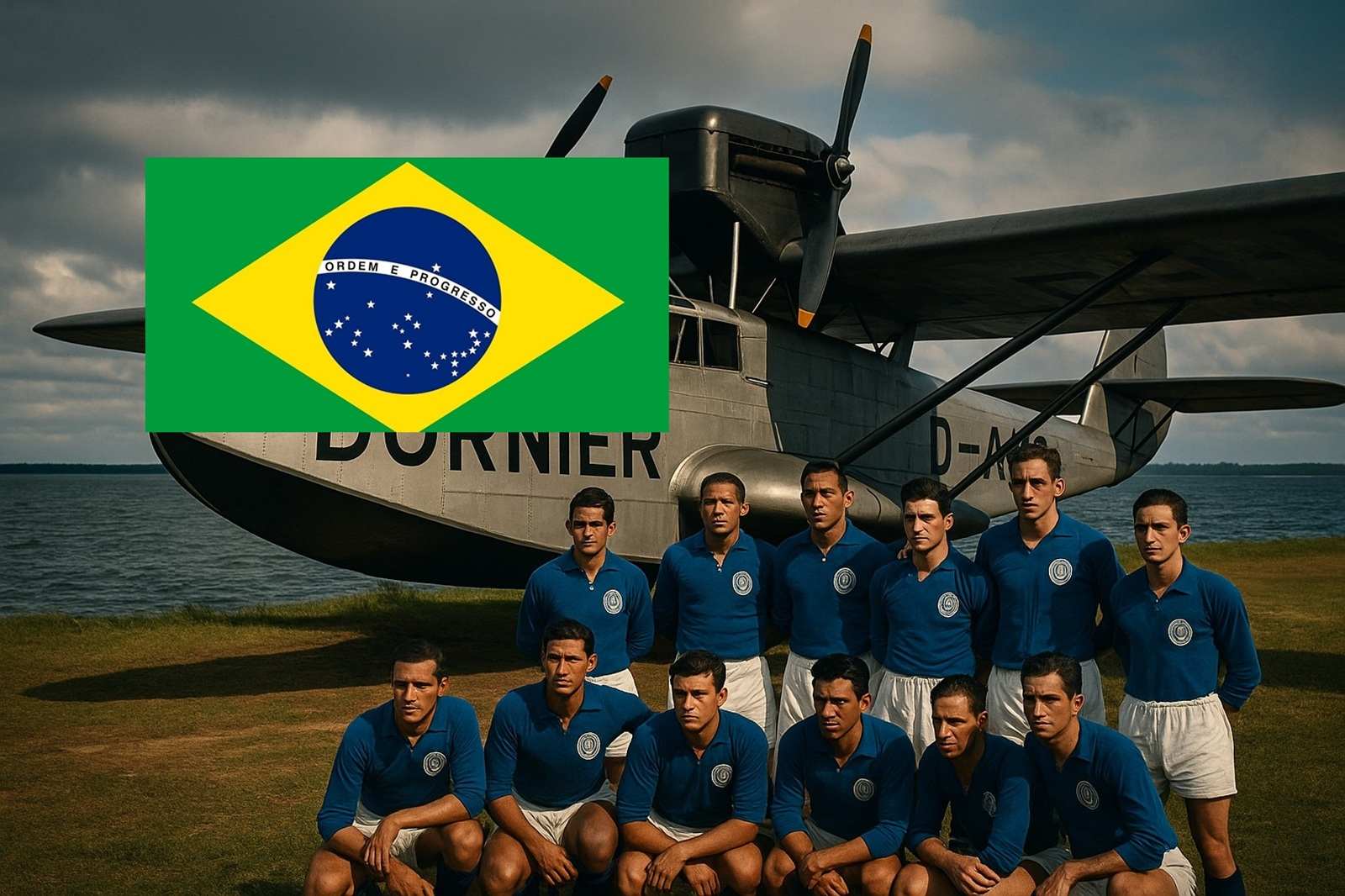
Almost A Century Later, Brazilian Pioneering Still Impresses: The Boldness Of A Soccer Team That Faced Weather, Technical Limitations, And Fear To Make The First Registered Sports Airplane Journey In World History.
98 Years Ago, On A Cold And Rainy Sunday Morning, June 5, 1927, A Historic Scene Took Shape On The Banks Of The Guaíba River, On The Ilha Grande Dos Marinheiros. It Was The First Time A Soccer Team Managed To Travel By Plane.
The Esporte Clube São José, A Traditional Club In Porto Alegre, Was Boarding The Seaplane Dornier Do J Wal “Atlântico” From Varig To Face The Esporte Clube Pelotas In A Friendly Match.
At That Moment, They Had No Idea They Were Doing Something That Had Never Been Done Before In The World: A Soccer Delegation Traveling By Plane To Compete In A Match.
-
Friends have been building a small “town” for 30 years to grow old together, with compact houses, a common area, nature surrounding it, and a collective life project designed for friendship, coexistence, and simplicity.

-
This small town in Germany created its own currency 24 years ago, today it circulates millions per year, is accepted in over 300 stores, and the German government allowed all of this to happen under one condition.

-
Curitiba is shrinking and is expected to lose 97,000 residents by 2050, while inland cities in Paraná such as Sarandi, Araucária, and Toledo are experiencing accelerated growth that is changing the entire state’s map.

-
Tourists were poisoned on Everest in a million-dollar fraud scheme involving helicopters that diverted over $19 million and shocked international authorities.


The Accomplishment Would Only Gain Official Recognition Decades Later, When In 1992, FIFA Confirmed The Pioneering Achievement And Recorded The Event In Its Archives. However, Long Before The Honors, That Trip Already Symbolized Boldness, Innovation, And A Spirit Of Adventure Absolutely Uncommon For The Time.
The Flight Lasted Two And A Half Hours Between Porto Alegre And Pelotas.
The Logistics Followed The Standard Of Varig, Which Carried Out Its Embarkations On The Guaíba, Where The Seaplane Taxis Over The Water Before Taking Off. But That Morning Would Be Anything But A Routine Flight.

The Concern Before Takeoff And The Weight Challenge
Commander Rudolf Cramer Von Clausbruch Expressed Concern While Assessing The Weather Conditions. It Was Raining, It Was Cold, And The Aircraft Was At Risk Of Excess Weight.
Days Before, Varig Had Asked São José For The Exact Weight Of Each Passenger. However, The Cold Weather Forced Everyone To Wear Heavy Wool Coats, Raising The Total Load Above The Expected.
Since The Dornier Do J Wal Could Only Accommodate Nine Passengers, An Impasse Arose. The Solution Found Would Be Almost Unthinkable Today: Goalkeeper Alberto Moreira Haanzel, “Bagre,” And Antônio Pedro Netto Traveled In The Baggage Compartment.
With Them Improvisedly Accommodated, The Flight Could Finally Take Off. In The Cabin, The Other Passengers Distributed Themselves Across The Wicker Seats.
To Mitigate The Deafening Noise Of The Engines, The Crew Handed Out Pieces Of Cotton To Protect Their Ears. The Players Álvaro Kessler, Dirceu Silva, Alfredo Cezaro (Pinho), César Cezaro, João Nicanor Leite (Nona), Clóvis Carneiro Cunha, And Walter Raabe Traveled There, Along With The Delegation Leader, Carlos Albino Müller Pires, And The Club Secretary, Moisés Antunes Da Cunha.
The Club President, Waldemar Zapp, Asked A Photographer To Capture The Group Next To The Aircraft Before The Takeoff.
This Was Not Just A Commemorative Gesture: Zapp Feared That Something Might Go Wrong On This Airplane Trip. Should A Tragedy Occur, The Image Would At Least Ensure A Last Record Of The Delegation.
In The Photo, A Curiosity Stands Out. Antônio Pedro Netto Appears With A Bundle Between His Legs Containing 30 Copies Of The Newspaper Correio Do Povo.
Since Saturday Newspapers Only Arrived In Pelotas On Wednesday, He Saw An Opportunity There. He Took Them By Plane And Sold Everything On Sunday, Ensuring Enough Income To Pay For Dinner After The Match.

The Pioneering Seaplane: The Dornier Do J Wal
To Understand The Importance Of That Flight, It’s Necessary To Understand The Plane That Made Everything Possible.
The Dornier Do J Wal (“Wal” In German Means “Whale”) Is One Of The Most Iconic Seaplanes In Aviation History. Designed By Dornier Flugzeugwerke, It Entered Service In The 1920s And Quickly Became A Symbol Of Global Maritime Aviation.
The Model Had A Fully Metal Hull And Utilized Integrated Side Floats, Called Sponsons, Which Increased Stability On Water. Its High Parasol Wing Configuration Facilitated Landings And Takeoffs On Seas, Rivers, Or Lagoons.
One Of The Most Striking Features Of The Wal Was The Set Of Engines Mounted Over The Wing In A Dual Nacelle, Configured In Push-Pull – One engine In Front Pulling And Another Behind Pushing. This Innovative Arrangement Reduced Vibration, Improved Stability, And Made The Seaplane More Efficient Over Long Distances.
The Dornier Do J Wal Was Not Only Robust: It Was Versatile. It Served For Both Civil Operations — Such As Passenger Transport And Air Mail — And For Military Purposes, Maritime Patrol, And Exploration.
Its History Is Impressive:
- More Than 250 Units Produced;
- Civil And Military Versions Operating On Various Continents;
- Participation In Expeditions, Such As Explorer Roald Amundsen’s Arctic Expedition In 1925;
- Use In South Atlantic Crossings By Deutsche Lufthansa;
- High Reliability, With Only One Major Accident Recorded In Hundreds Of Ocean Flights.
The Flight Usually Occurred At Only 20 To 50 Meters Above The Water, Maintaining An Approximate Speed Of 160 Km/h. The Crossing Between Porto Alegre And Pelotas Took About Two Hours, While The Segment Between Pelotas And Rio Grande Lasted On Average 20 Minutes.
It Operated In VARIG Until July 2, 1930, When It Was Transferred To Syndicato Condor Ltda. In 1933, Already In Rio de Janeiro, The Aircraft Was Dismantled And Its Parts Were Eventually Sold As Scrap.

The Parallel Journey And The Friendly Match In Pelotas
Before The Delegation That Traveled By Plane, Treasurer João Leal Da Silva Embarked Two Days Earlier To Pelotas, Traveling By Steamer.
He Was Accompanied By Players Odorico Monteiro, Benedito, And Walter Kennemann (Berlina). They Were Responsible For Organizing The Match Details And Lodging.
The Friendly Match Ended In A 2-2 Draw. But, As History Itself Shows, This Score Was Never The Relevant Element Of The Journey. The Moment That Truly Remained Forever Was The Aerial Crossing.
After The Match, Leal Da Silva And The Three Players Returned To Porto Alegre On The Same Dornier Do J Wal, Occupying The Seats Of Four Other Passengers Who Returned By Steamer.
The Other Historical Link Between The Club And Aviation
The Connection Between Esporte Clube São José And The World Of Aviation Does Not End There. The Land Where The Club’s Stadium Now Stands, At Avenida Assis Brasil, 1200, Belonged To Rubem Berta – A Historical Figure Of Varig.
Berta Intended To Build A Landing Strip There, But Urban Development Made The Project Unfeasible. As A Result, He Decided To Sell The Land. In 1939, São José Acquired The Area For Below Market Value. The Following Year, On May 24, 1940, The Stadium Passo D’Areia Was Officially Inaugurated, Still The Club’s Home Today.
Thus, Two Parallel Stories Cross: The First Air Journey Of A Soccer Delegation And The Origin Of The São José Stadium – Both Connected To The History Of Brazilian Aviation.
An Eternal Chapter Of Sport And Aviation
The 1927 Flight Was Not Just Bold. It Represented A Break With The Limits Of The Time. It Was The Marriage Between Soccer, Which Was Gaining Popularity In Brazil, And Aviation, Which Was Just Starting Out As A Transport Technology.
Esporte Clube São José Made History Not Only For The game It Played, But For The Path It Chose To Get There. And The Dornier Do J Wal, With Its Metal Imposance And Advanced Engineering, Was The Machine That Made The Impossible Possible.
The Score Of That Friendly Match Was Lost To Time. But The Image Of The Seaplane Taking Off Over The Guaíba, Carrying A Soccer Team Toward The Unprecedented, Remains One Of The Most Extraordinary Stories Of Brazilian Sport – And One Of The Most Fascinating In Aviation In The Country.










-

-

3 pessoas reagiram a isso.