





 Portuguese
  English
  Spanish
  3 min of reading
  0 comments



In 12 Northern and Northeastern States, the number of families in Bolsa Família exceeds the total of registered formal jobs, revealing persistent economic and social contrasts, even with signs of recovery in the labor market in the country.
Maranhão currently has 1.2 million families benefiting from Bolsa Família and 669,000 registered formal jobs in the private sector, according to data from the General Registry of Employed and Unemployed (Caged), released on May 28.
This number represents a volume 79% higher of families served compared to the total of formal employment contracts.
In addition to Maranhão, 11 other Brazilian states exhibit the same type of imbalance, all located in the Northern and Northeastern regions of the country.
-
The Argentine government celebrates the lowest poverty rate in 7 years, but experts warn that the methodology has changed, real wages have fallen, unemployment has risen, and the number of people on the streets of Buenos Aires has increased by 57% since Milei took office.

-
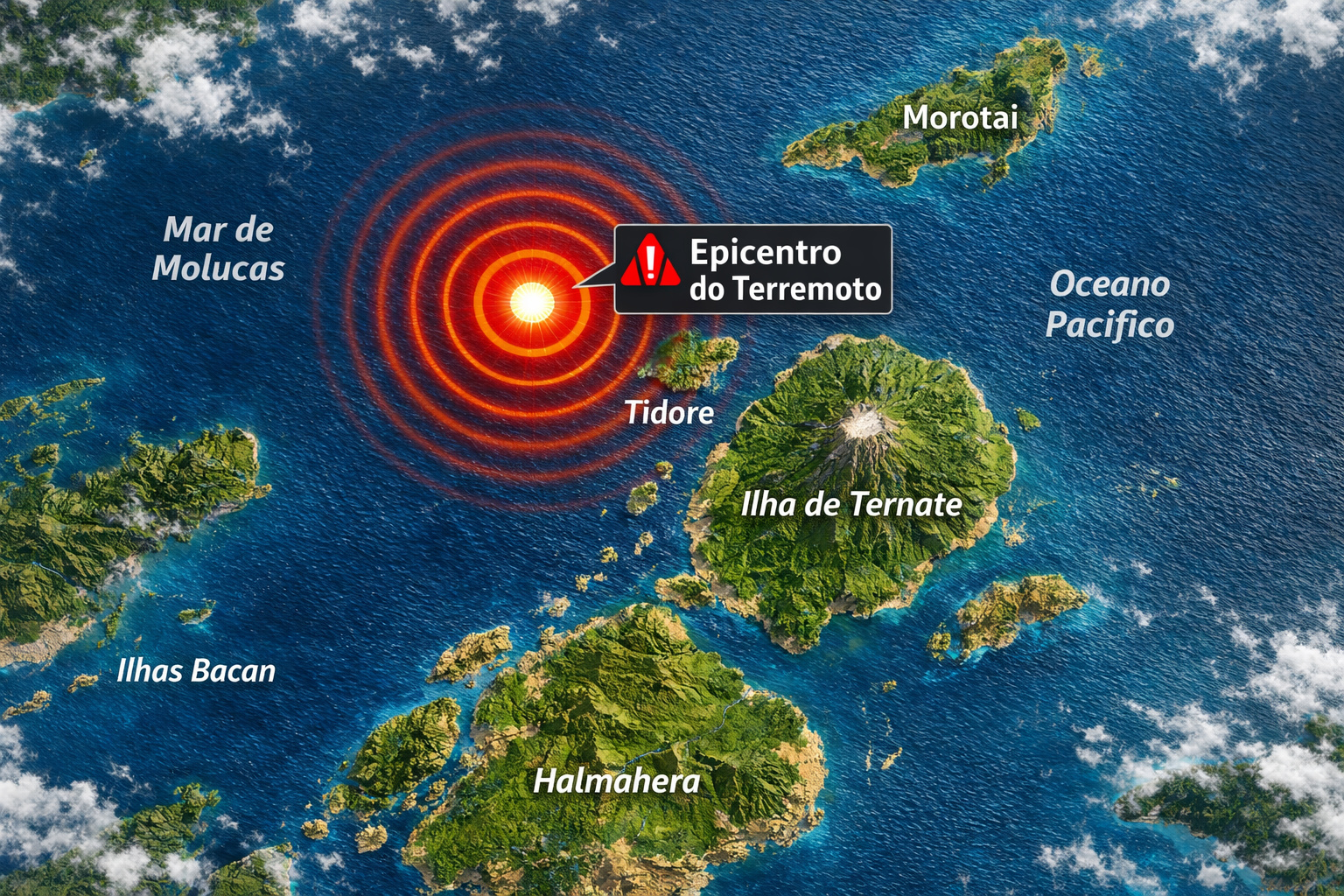
7.8 magnitude earthquake in Indonesia frightens the population, triggers tsunami alert, and hits an island with over 200,000 inhabitants this Thursday.
-
Google will finally let you change that embarrassing Gmail address you created in your teenage years without losing any accounts, logins, or old emails: the feature is already available in the United States.

-
The institute that trained the greatest aerospace engineers in Brazil has just opened its first campus outside São Paulo after 75 years: ITA Ceará will have R$ 445 million, new courses in energy and systems, and classes are expected to start in 2027.


States With More Beneficiaries Than Formal Jobs
The states that register more families in Bolsa Família than formal workers are: Amazonas, Acre, Pará, Amapá, Piauí, Ceará, Bahia, Alagoas, Pernambuco, Paraíba, Maranhão, and Sergipe.
According to the survey, the data consider only jobs in the private sector, excluding public servants.
Santa Catarina presents the opposite situation.
According to the same survey, there are 11 formally employed workers for each family served by the cash transfer program.
Comparison with Previous Years
In 2019, eight states recorded more Bolsa Família beneficiaries than formal jobs.
During the Covid-19 pandemic and with the expansion of emergency aids, this number reached 13 in 2022.
With the restructuring of the program and the gradual recovery of the economy, the total increased to 12 states in 2024.
The proportion between Bolsa Família beneficiaries and formally employed workers also varied in the national scenario.
In January 2023, the ratio was 49.6%, equivalent to almost one beneficiary for every two formal employees.
In August 2024, this rate fell to 42.6%.
Changes to the Bolsa Família Program Since 2022
In 2022, the federal government made changes to the cash transfer program.
During the administration of then-president Jair Bolsonaro, Bolsa Família was rebranded as Auxílio Brasil.
There was a 49% increase in the number of beneficiaries, and the benefit amount was raised to R$ 600.
In 2023, with the return of Luiz Inácio Lula da Silva to the presidency, the original name was restored.
The average amount paid became R$ 681 per family, according to the Ministry of Development and Social Assistance.
A review of registrations was also implemented.
As a result, about 1.1 million people were excluded for not meeting the established criteria, such as income and family composition.
Informality and Regional Imbalance
According to data from the Brazilian Institute of Geography and Statistics (IBGE), the Northern and Northeastern states have the highest rates of informality in the country.
In places such as Maranhão, Piauí, and Alagoas, more than 50% of the economically active population works without formal contracts.
This rate contributes to the difference between the number of families that depend on Bolsa Família and the number of formal jobs.
Information from the Institute for Applied Economic Research (Ipea) indicates that the highest rates of poverty and extreme poverty in the country are also concentrated in these two regions.
The Ministry of Development reports that about 70% of Bolsa Família beneficiaries live in the North and Northeast.
Indicators of the Bolsa Família Program in 2025
In May 2025, more than 20 million families received Bolsa Família across the country.
Monthly transfers exceeded R$ 14 billion.
According to the federal government, the program remains one of the main public policies for cash transfer aimed at poverty reduction in Brazil.
The information shows that, despite the reassessment of registrations and the increase in formal jobs in part of the country, the recovery of the labor market in the North and Northeast continues at a slower pace.
In your view, what strategies can be adopted to reduce the gap between formal work and dependence on social programs in regions with greater vulnerability?









-

Uma pessoa reagiu a isso.