





 Portuguese
  English
  Spanish
  3 min of reading
  0 comments


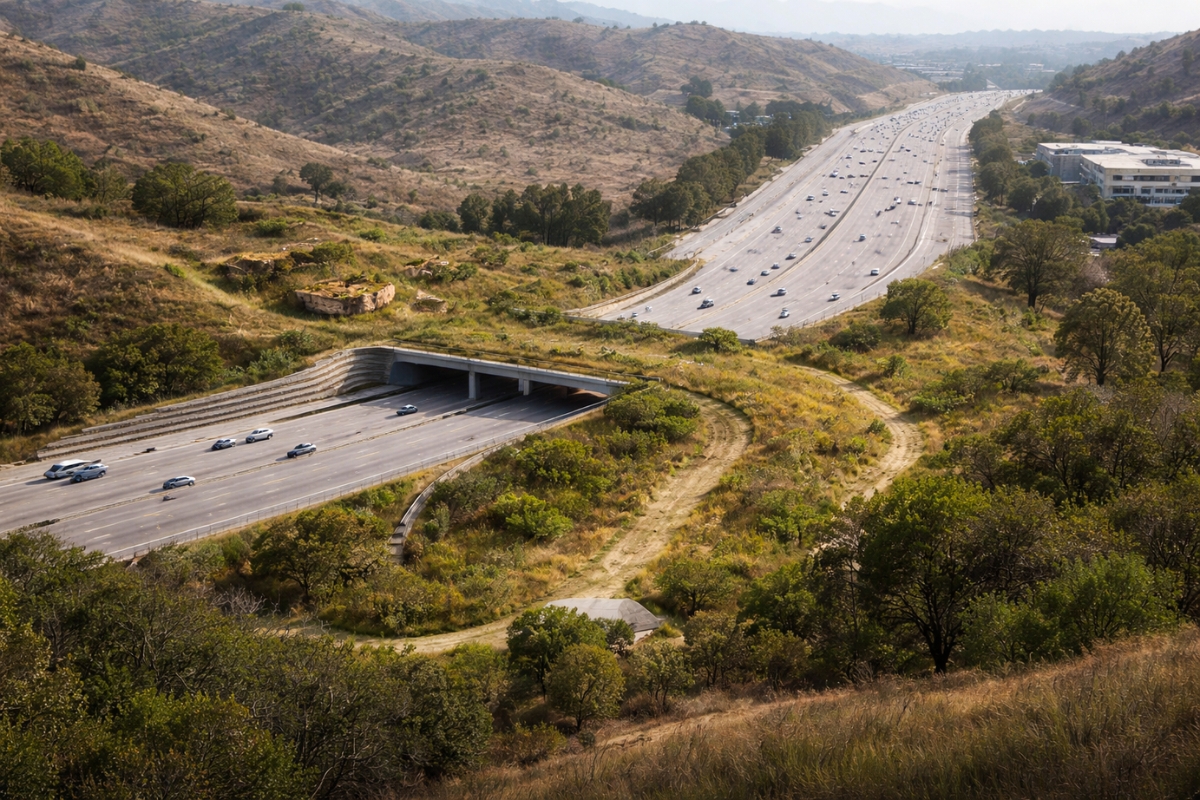
A Work That Seems Simple, but Changes Everything: California Builds a “Nature Carpet” Over the US-101 for Animals to Cross Safely, Reduce Collisions, Restore Ecological Corridors, and Test Whether a Major City Can Give Real Space Back to Wildlife by 2026
California has entered the final phase of construction of the Wallis Annenberg Wildlife Crossing, considered the largest urban wildlife overpass on the planet. The structure spans the US-101, one of the busiest highways in the Los Angeles area, and is designed to return a path to nature that asphalt has interrupted for decades.
The project has become a global reference for combining engineering and conservation at an unusual scale within a metropolis. More than just a symbolic work, the crossing aims to reduce animal fatalities, decrease accidents involving drivers, and restore the connection between natural areas that have been isolated by traffic.
Why the US-101 Became a Barrier to Wildlife
For years, the highway has acted as a “wall” separating animal populations on either side of the territory. For species such as California cougars, this fragmentation makes movement difficult, reduces breeding encounters, and increases the risk of genetic diversity loss over time.
-
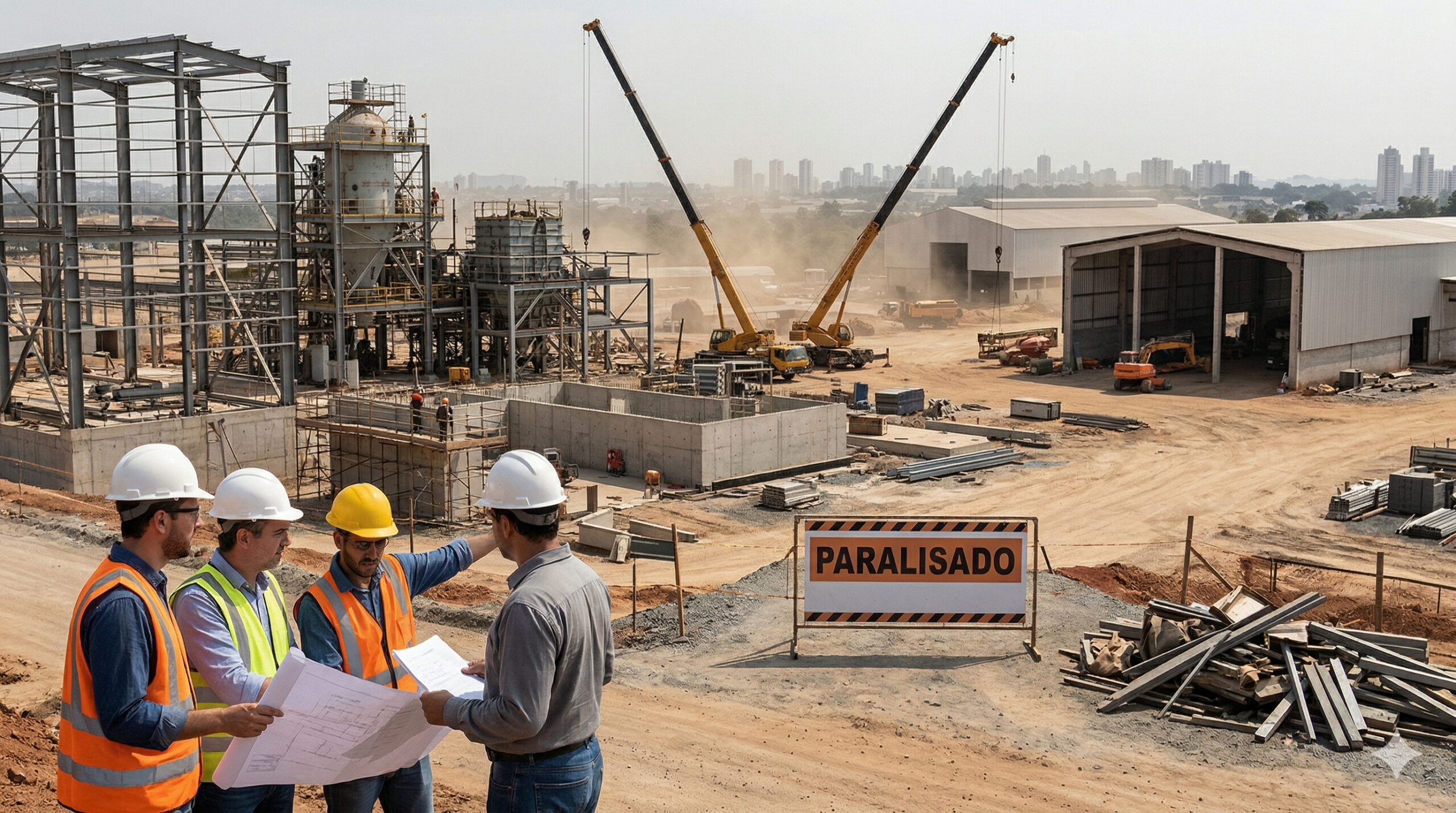
The lack of welders, electricians, and operators becomes a structural threat in 2025, with the construction industry and manufacturing already suffering from delays, cost pressures, and labor shortages in Brazil.
-
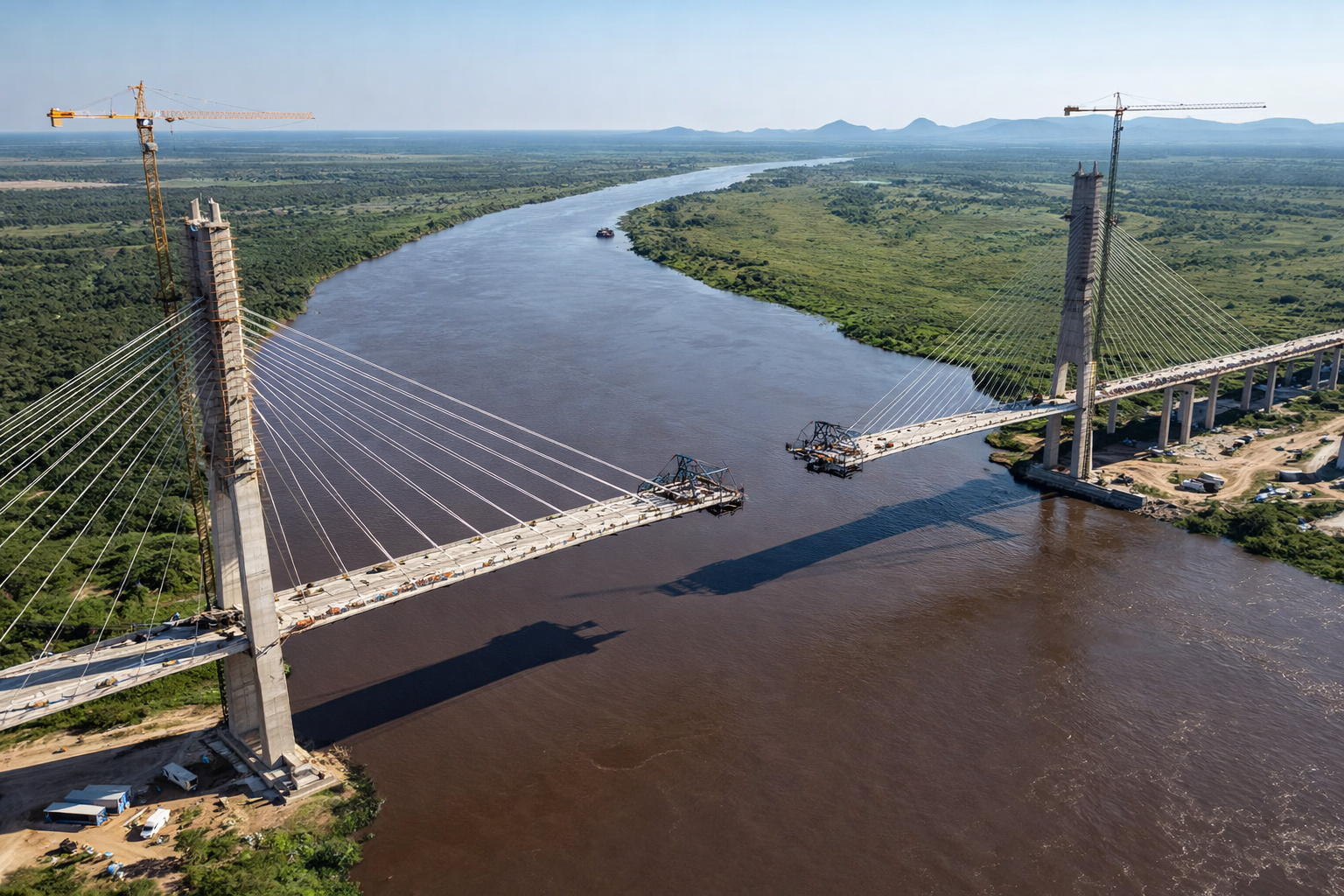
Brazil and Paraguay are just 46 meters away from a historic union on the bioceanic bridge that promises to revolutionize trade between the Atlantic and the Pacific.
-
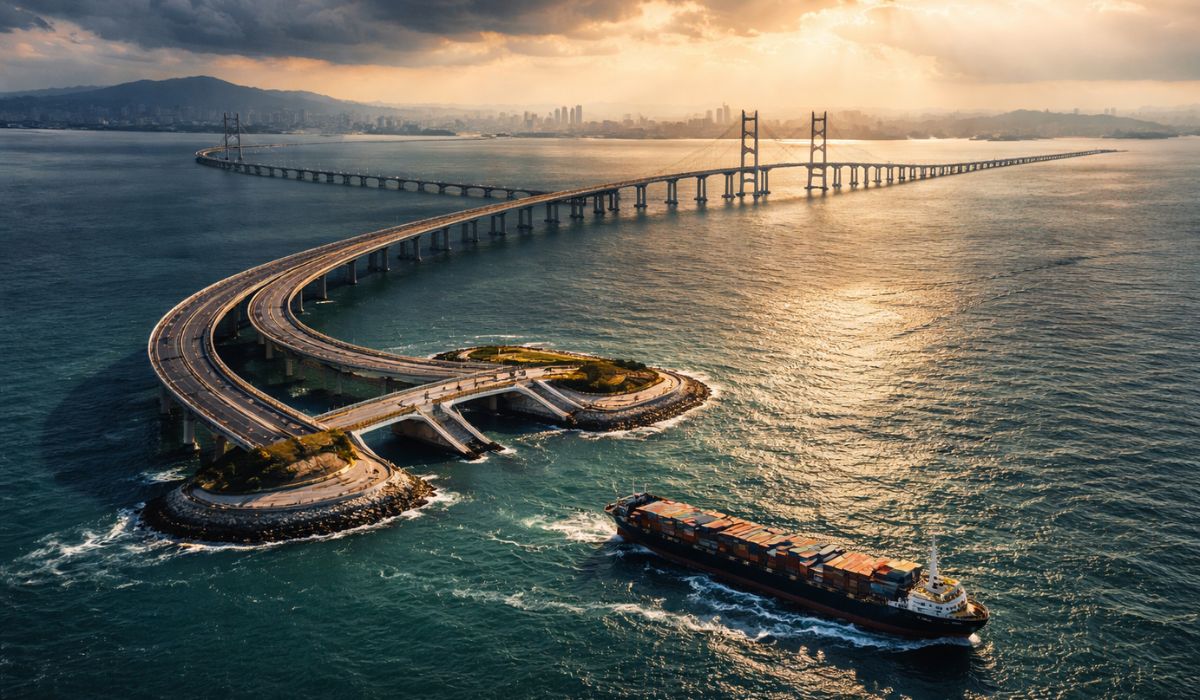
With 55 km over the sea, a cost of US$ 20 billion, and enough steel to build 60 Eiffel Towers, China’s largest project has connected Hong Kong, Zhuhai, and Macau in a colossal bridge that defies the logic of engineering.
-
A trick with joint compound transforms a Styrofoam ceiling into a plaster-like ceiling: leveled panels, wires and mesh at the joints, sand, paint, and change the environment while spending little today.


When habitats become disconnected, the impact doesn’t appear overnight but silently accumulates. The result can be a more fragile population, more susceptible to diseases and less prepared for environmental changes, even when protected areas still exist nearby.
What the Green Corridor Above the Traffic Will Look Like

The Wallis Annenberg Wildlife Crossing is designed to resemble a continuous stretch of landscape, not a conventional bridge. The idea is for animals to cross without realizing they are on a highway, with native vegetation, suitable soil, and a design that reduces noise and traffic interference.
In addition to facilitating crossings, the overpass creates an ecological corridor that reconnects important natural areas. In practice, it reconnects protected territories in the Santa Monica Mountains and the Sierra Madre Range, helping to restore routes interrupted by urban expansion.
The Project Receives US$ 18.8 Million and Enters the Final Stretch
The final stages of the construction received a decisive boost after the California Transportation Commission (CTC) approved US$ 18.8 million in funds to ensure the project’s completion. The funding came from the Environmental Enhancement and Mitigation Program, created in 1989 to mitigate environmental impacts associated with transportation projects.
With a projected completion date in the fall of 2026, the crossing also becomes a large-scale environmental restoration project. The plan includes 12 acres of restored open space and the planting of approximately 50,000 native plants, including coastal sage scrub species typical of the Santa Monica Mountains.
Information was released in an official statement from the Government of California (gov.ca.gov), which also contextualizes the investment within a broader package. According to the publication, the CTC also approved nearly US$ 1 billion for mobility actions, road safety, and climate goals in the state.

What Changes for Drivers, Wildlife, and the Future of Cities
In addition to protecting wildlife, such passages typically reduce collisions between vehicles and animals, which cause property damage and real risks for drivers. By creating a safe route, the project aims to tackle the problem at its source rather than relying solely on signage or piecemeal measures.
However, the deeper impact is what happens off the daily radar: the reconnection of habitats can restore movement flow and, over time, strengthen the viability of species in the region. In a world where cities encroach on natural areas, California bets that it is possible to coexist with infrastructure without eliminating wildlife corridors.
This article was produced based on official information released by the Government of California (gov.ca.gov) regarding the progress, funding, and objectives of the Wallis Annenberg Wildlife Crossing, including the expected completion and associated environmental restoration actions.









-

-

-

-

-

19 pessoas reagiram a isso.