





 Portuguese
  English
  Spanish
  5 min of reading
  0 comments


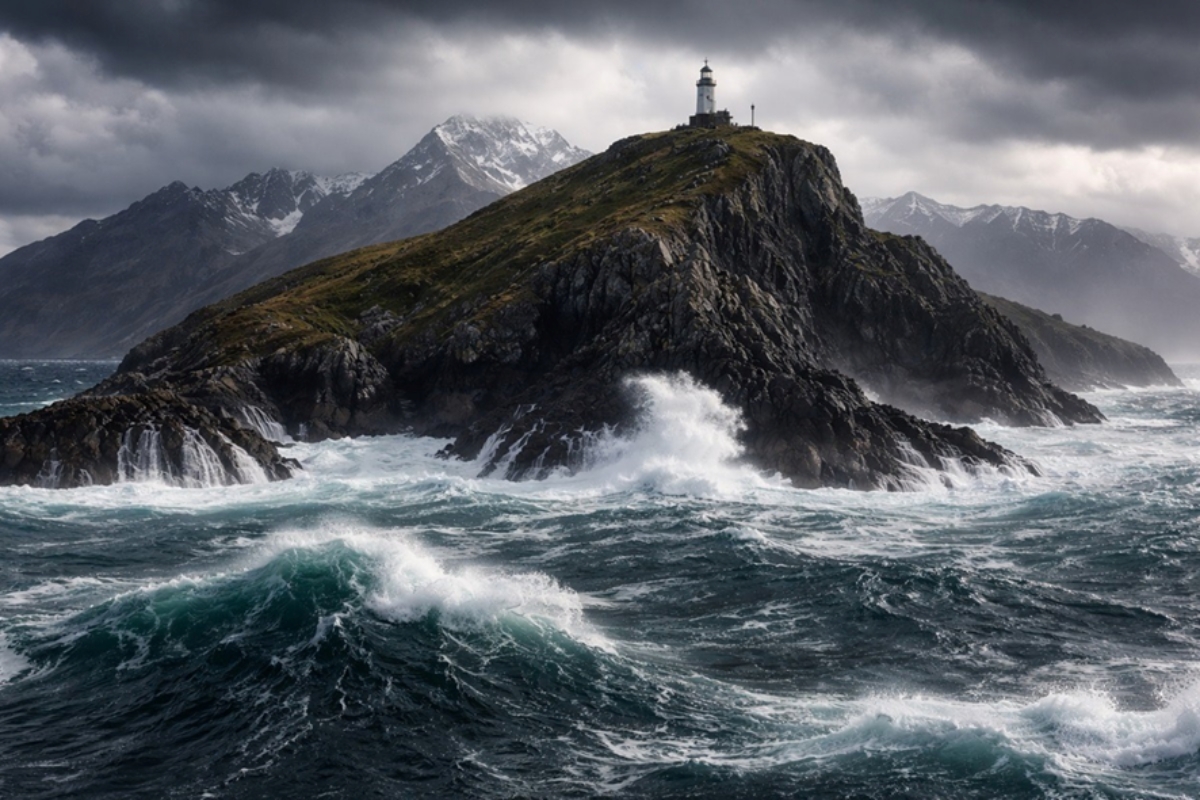
Cape Horn Is Synonymous with Dangerous Passage, A Place That Traverses Centuries Challenging Experienced Navigators and Imposing Real Limits on Human Navigation in One of the Most Extreme Points on the Planet.
There comes a moment when the map simply seems to end. It is there that Cape Horn, this dangerous and challenging passage, stands as a definitive test even for the most experienced navigators. It is not a place of conquest or permanence. It is a point where the land ends abruptly and the ocean takes control without asking for permission.
Those who get closer quickly notice that something changes. The feeling does not come from signs or warnings, but from the environment itself. The uneven ground, constant wind, and ever-moving sea make it clear that this passage was never made to make life easier for those who navigate. And perhaps it is precisely for this reason that Cape Horn carries a reputation that spans generations.
Over time, sailors have learned that there is no negotiation there. As the international nautical community often remarks, crossing Cape Horn is not about conquering the sea; it is simply about getting permission to pass.
-
Friends have been building a small “town” for 30 years to grow old together, with compact houses, a common area, nature surrounding it, and a collective life project designed for friendship, coexistence, and simplicity.

-
This small town in Germany created its own currency 24 years ago, today it circulates millions per year, is accepted in over 300 stores, and the German government allowed all of this to happen under one condition.

-
Curitiba is shrinking and is expected to lose 97,000 residents by 2050, while inland cities in Paraná such as Sarandi, Araucária, and Toledo are experiencing accelerated growth that is changing the entire state’s map.

-
Tourists were poisoned on Everest in a million-dollar fraud scheme involving helicopters that diverted over $19 million and shocked international authorities.


Where Cape Horn Begins and Land Gives Way to Sea
At the extreme end of an isolated island in Tierra del Fuego, south of Chile and Argentina, Cape Horn appears unceremoniously. There are no wide beaches or gentle transition areas. The land simply ends and gives way to an open, turbulent, and unpredictable ocean. The low vegetation grows twisted and stunted, always pressed by the wind that never seems to cease.
This configuration is not casual. The ground appears to be constantly damp, without stability to support large structures or permanent settlements. That is why this dangerous passage has never turned into a destination. It has always been just a point of crossing, quick and tense.
For experienced navigators, this landscape serves as a silent warning. The environment does not invite; it merely tolerates human presence for brief moments.
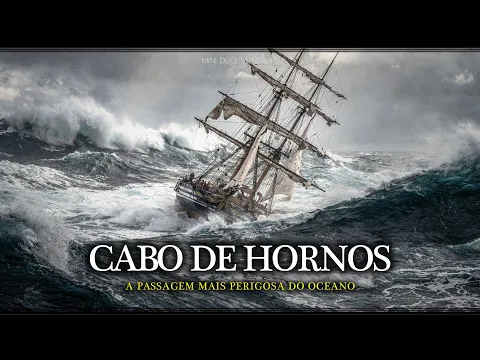

The Human Presence in Cape Horn Is Technical and Limited
Even in such a hostile scenario, there are clear signs of human presence. A lighthouse stands out on the terrain, firm, isolated, and functional. It is not there to challenge the environment, but to operate within it, offering guidance amid the maritime chaos.
The structure is simple and straightforward, without excesses. Everything indicates that its function is exclusively operational. There are no villages, roads, or support areas around. This reinforces the idea that, in this challenging passage, human occupation exists only for as long as necessary.
Next to the lighthouse, a metallic monument in the shape of a bird catches the eye. It is not decoration. It is memory. A permanent reminder that many experienced navigators failed to complete this crossing.
The Meeting of Oceans Transforms the Passage into a Natural Trap
What makes Cape Horn a dangerous passage lies not only in the land but mainly in the sea. To the south, the ocean opens up completely, with no islands or continents to contain the wind or organize the waves.
The currents meet without barriers. The wind blows continuously, pushing the water’s surface in different directions at the same time. The result is a sea that never calms. Waves arise quickly, cross each other, overlap, and change direction without warning.
Navigation experts often state that this is one of the few places on the planet where the sea never comes to rest. For navigators, this means total attention at all times.
Vessels Face Constant Wear and Tear When Crossing Cape Horn
The crossing of this challenging passage demands continuous adjustments. Sails remain tensioned, lines are corrected all the time, and the helm rarely stays still. Nothing happens automatically.
The pressure of the wind constantly tips vessels. The movement is never smooth. Everything seems to require extra strength, resilience, and quick reading of the environment. There is no room for small mistakes, because they grow too quickly.
That is why so many naval structures have been left behind. Cape Horn does not only punish recklessness. It also demands accountability for fatigue, accumulated failure, and invisible wear and tear.
Why Cape Horn Became a Symbol Among Experienced Navigators
Over time, crossing Cape Horn ceased to be merely a route. It became a personal landmark. Among experienced navigators, this passage has always been treated as a silent rite, something that changes the relationship with the sea.
Those who complete the crossing understand that there was no victory. There was survival. As the Chilean Navy has highlighted in institutional records, Cape Horn does not only test vessels; it tests human limits against nature.
Even today, with advanced technology, more accurate forecasts, and modern vessels, respect remains. The dangerous passage continues to demand caution, preparation, and humility.
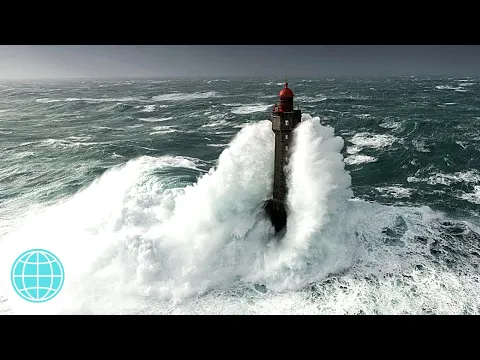
A Place That Was Not Made to Be Dominated
Cape Horn remains there, practically untouched. The human presence is brief, controlled, and conscious. There are no real attempts to adapt the environment to man. It is always the opposite.
This challenging passage clearly shows that not every space on the planet can be molded. Some exist only to remind us that nature still dictates rules that do not accept negotiation.
For experienced navigators, crossing this point is not a trophy. It is a lesson that lasts forever. On the Earth Observatory website by NASA, factors such as violent winds, huge waves, and ocean topography that make Cape Horn a dangerous and challenging passage are detailed, even for experienced navigators.
And you, would you have the courage to face Cape Horn?
Leave your comment below and share this content with anyone else who is also interested in the great challenges of navigation and maritime history.










-

-

2 pessoas reagiram a isso.