





 Portuguese
  English
  Spanish
  4 min of reading
  2 comments


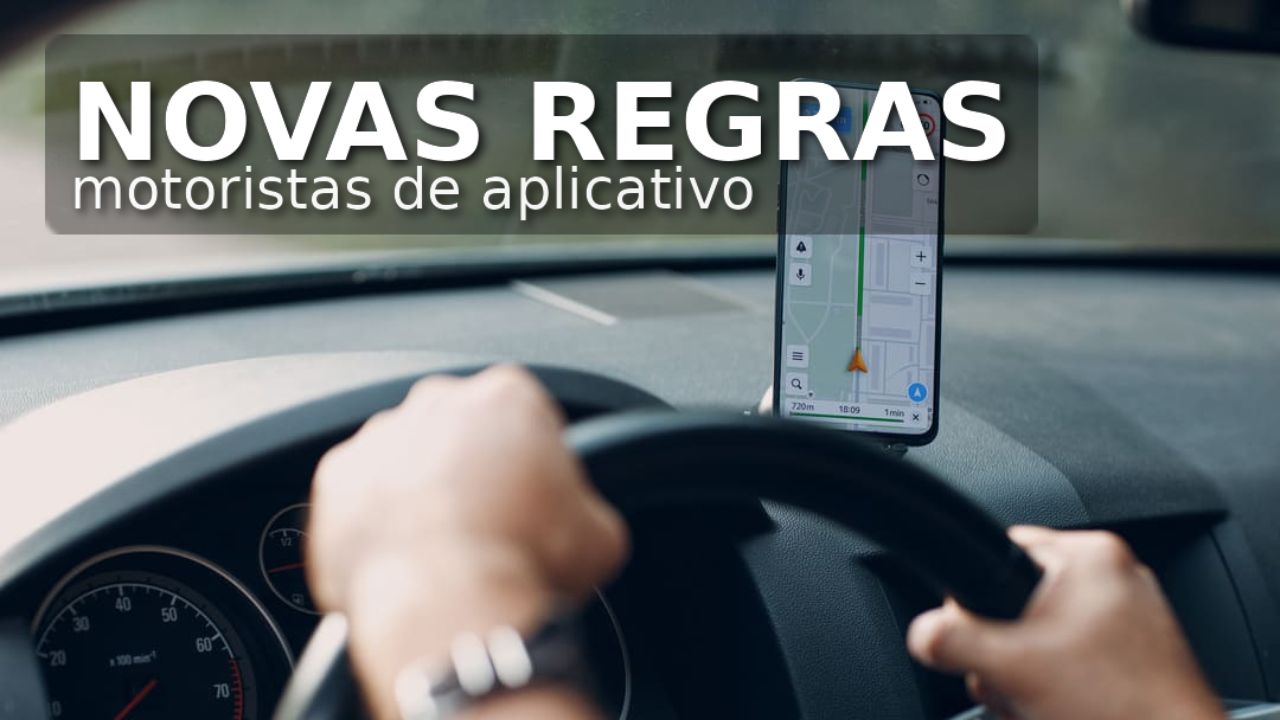


The Report Of The Relator Of PLP 152/2025 Details New Rules For App Drivers, Including Minimum Wage, Retention Limit, Formal Contract, Transparency, And Mandatory Social Security Contribution.
The rules for app drivers may change soon. The report of the relator of the Complementary Law Project 152/2025, aimed at app drivers and motorcyclists, has been released and will still be analyzed in the Chamber floor, but it already anticipates points that directly affect remuneration, platform fees, and rights to defense.
The text also seeks to address recurring complaints from the category, such as high retention, unexplained blocks, and lack of clarity about the algorithm. The proposal promises more predictability and a formal contract, but it still depends on a vote to become law.
Minimum Fare Of R$ 8.50 And The Debate On Remuneration
Among the highlights of the rules for app drivers is the establishment of a minimum fare of R$ 8.50 for trips up to 2 km. According to the report, workers were seeking at least R$ 10 for the minimum fare, but the report points out the amount of R$ 8.50 as a reference.
-
The noise law will no longer be in effect at 10 PM starting in June with a new rule valid during the 2026 World Cup.

-
The Chamber opens a debate on driver’s licenses at 16 years old as part of a reform that includes around 270 proposals to change the Brazilian Traffic Code and may redesign rules for licensing, enforcement, and circulation in the country.

-
The new Civil Code could revolutionize marriages in Brazil with “express divorce” and changes that could exclude spouses from inheritance.
-
Banco do Brasil sues famous influencer for million-dollar debt and intensifies debate on delinquency, risks of seizure, and direct impact on Gkay’s credibility.


The central point here is the impact on daily life. Minimum fare sets the floor for short trips, which is often one of the main sources of dissatisfaction when the earnings do not cover time, travel, and vehicle costs.
Cap On Platform Fees And An Even Lower Limit In The Hybrid Model


The report provides that apps cannot retain more than 30% in fees. The report emphasizes that there are currently cases where retention exceeds 50%, which makes the cap a relative relief for some workers.
For platforms with a hybrid model, where there is a base charge plus a variable percentage per trip, the mentioned limit is even lower: 15%. The intention is to curb the “double bite” and reduce space for models that compress final remuneration.
Platforms With Fixed Value And The Integral Pass-Through Rule
Another relevant section of the rules for app drivers addresses smaller platforms, usually regional, that operate with a monthly fee or fixed amount, such as a payment of R$ 300 to use the app. In these cases, the proposal stated is that the entire fare goes to the driver, with no additional retention.
In practice, the text seeks to separate different business models and prevent workers from paying twice, first in the fixed fee and then in the trip.
States Will Be Able To Increase The Driver Fare
One point that could change the game is the autonomy of states to raise the driver’s fare. The report emphasizes that it would no longer be a federal law or municipal decision, but rather state competence to define fare amounts.
This changes the landscape as it opens up room for app driver rules with regional variations, reflecting cost of living, fuel prices, and local market realities.
Transparency Of The Algorithm And Right To Broad Defense Against Blocks
The report also targets one of the most sensitive issues: blocks and exclusions. The text indicates that platforms like Uber could no longer block drivers without guaranteeing their right to defense, including in cases of preventive blocking.
Moreover, users and drivers could request information regarding platform usage, including how data is collected and processed. The proposal aims to reduce unilateral decisions and provide predictability, something that is currently a constant pain for those who depend on the app as their main income.
End Of “Forced Acceptance” And Formal Contract With Driver And Passenger
The report states that the text eliminates the imposition of terms and conditions accepted abruptly, when the driver is logged out and must accept to get back online. According to the proposal, the platform would have to create a formal contract with both the passenger and the driver, allowing prior review of the details.
This point reinforces the focus of the rules for app drivers on formality and clarity, based on the Civil Code cited in the report itself.
Mandatory Social Security Contribution Calculated On 25% Of Remuneration
The social security contribution would become compulsory, with mandatory deductions for those who have completed trips. The presented model considers that 75% of the amount received would be for costs and expenses, and 25% would be the portion treated as profit, the basis for the contribution incidence.
The report provides examples to illustrate: in a monthly income of R$ 4,000, the contribution would be R$ 50, and in a gross monthly income of R$ 2,800 for a delivery driver, it would be R$ 35. The logic is to charge based on a fraction of the total, and not on the entire gross remuneration.
What Happens Now And Why It Is Important To Follow
Despite the detailing, the text is not yet approved. The report emphasizes that this is the relator’s report, published on December 10, 2025, with a forecast for analysis in the chamber about a week later.
Until then, the scenario is one of expectation. The rules for app drivers may advance as a regulatory framework, but they may also undergo changes during the vote, amendments, and negotiations.
Do you think these rules for app drivers genuinely improve the lives of those who drive, or do they still fall short of what the category needs?









Cláudio Oliveira aqui de Salvador Ba
Sem dúvida é um avanço.
Porém pra corridas mínima no momento para viagem com carro.
O mínimo tem que ser de $10,00.
E repasse pelas Operadoras de Apps de 3 em 3 dias.
Obrigado.
Cláudio Oliveira
Certamente vai acabar com tudo!
O Governo só está interessado no dinheiro que vai entrar.
Certamente tanto a Uber, como os motoristas não vão concordar com isso.
Teria que estudar muito, para fazer qualquer mudança.
A população depende muito desse tipo de transporte, já que tanto o Governo estadual e federal, negliciearam o transporte público.
Algumas cidades do interior, só tem o transporte por aplicativo.
Agora eles querem regulamentar o que está funcionando.
No final, quem vai ser prejudicado é o povo, que vota nesse pessoal.
Obs: Eles poderiam colocar nas cidades, o transporte gratuito. Como algumas lugares já implementaram.
Na realidade o Governo federal só quer saber do dinheiro. É uma vergonha!