





 Portuguese
  English
  Spanish
  4 min of reading
  0 comments


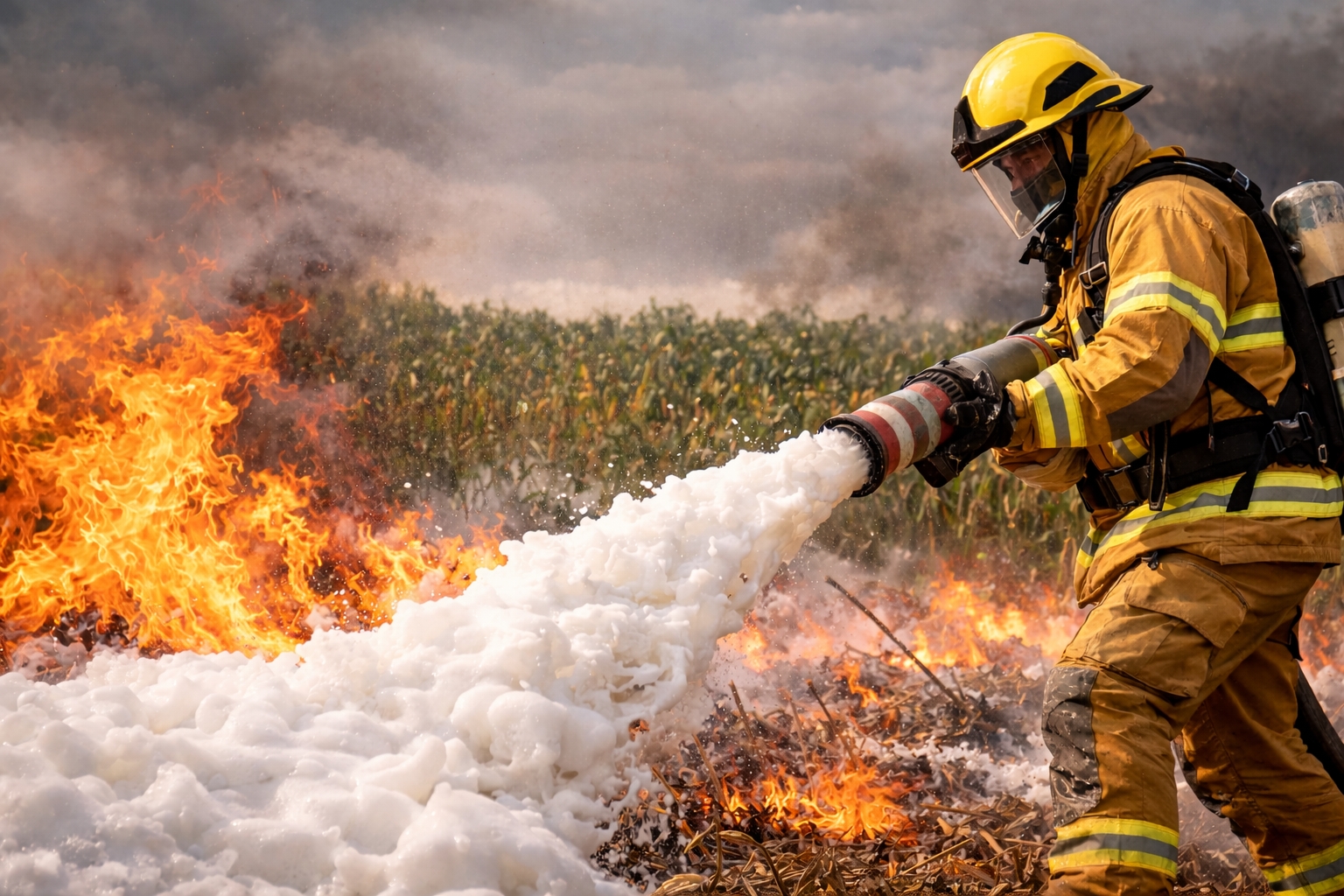
In The U.S., Senators In Iowa Review A Bill For Fire Districts And Cities To Consider Switching Traditional Chemical Foam For A Soy-Based Foam Without PFAS To Reduce Exposure To Persistent Chemicals And Protect Firefighters.
An apparently simple change is becoming a big issue in the United States: which foam should be used to extinguish fires in critical locations, such as airports and military bases, as well as in everyday operations.
The discussion has entered the Iowa Senate with a clear goal: to reduce exposure to a type of chemical compound known as forever chemicals, because they remain in the environment for a long time and are increasingly at the center of health alerts.
And here comes the eye-catching contrast. Instead of a foam based on these compounds, the proposal puts on the table an alternative made from soy, promising performance and without the same type of chemistry in the package.
-
Motorola launched the Signature with a gold seal from DxOMark, tying with the iPhone 17 Pro in camera performance, Snapdragon 8 Gen 5 that surpassed 3 million in benchmarks, and a zoom that impresses even at night.

-
Satellites reveal beneath the Sahara a giant river buried for thousands of kilometers: study shows that the largest hot desert on the planet was once traversed by a river system comparable to the largest on Earth.

-
Scientists have captured something never seen in space: newly born stars are creating gigantic rings of light a thousand times larger than the distance between the Earth and the Sun, and this changes everything we knew about stellar birth.

-
Geologists find traces of a continent that disappeared 155 million years ago after separating from Australia and reveal that it did not sink, but broke into fragments scattered across Southeast Asia.

The Bill Advancing In The Iowa Senate And What It Requires From Cities And Firefighters
The text under debate is Senate Study Bill 3099. It moved through the state Senate with an idea that initially would have been stricter: requiring state agencies to purchase soy-based fire-fighting foam, provided it did not contain PFAS.
However, the indicated course now is different. Senator Scott Webster stated that he intends to adjust the proposal so that it does not become a direct obligation, but rather a requirement for evaluation: fire districts and municipal councils would need to consider adopting soy foam and decide locally.
In practice, the bill does not mandate the switch, but rather creates formal pressure to bring the topic out of the drawer and put the discussion on the agenda.
What Are These Forever Chemicals And Why They Have Become A Concern Within The Fire Service
The traditional chemical foam mentioned in the debate typically includes per- and polyfluoroalkyl substances, known by the acronym PFAS. Some of the research cited in the debate associates exposure to PFAS with an increased risk of certain types of cancer.
During the hearing, Senator Cherielynn Westrich stated that exposure is so widespread that these substances have already been found in the bloodstream of newborn babies. She called this a tragedy and delivered a statement that became the heaviest point of discussion: even if the reduction starts now, a return to a scenario without this type of chemistry in the human body could take 200 years.
What stands out here is the message. The debate is no longer just about operational efficiency, but rather long-term risk for those combating fires.
The Soy Foam That Came Under The Spotlight And What It Promises To Extinguish In The Real World
The alternative presented to the senators was a PFAS-free product called soyfoam, linked to the group Cross Plains Solutions. Representative Dave Garlie stated that the foam is made from soybean meal coming from a facility in Cedar Rapids.
In the most straightforward explanation possible, the promise is to extinguish fires from two different groups. One group involves common materials such as paper, wood, straw, and vegetation. The other involves fuels like gasoline and oil.
Garlie also stated that in comparative tests with other foams, the product has performed well when facing competing alternatives.
Trains, Oil, And War Appear In The History Of Soy, And This Helped The Idea Resurface Now
The story used to lend weight to the argument pulls a well-known name in science. It was mentioned that during World War II, scientist Percy Julian developed a soy-based protein mix used to suppress oil and gas fires in aircraft and ships.
Later, PFAS-based foams gained popularity in the 1970s and spread in firefighting and military operations.
This contrast helps to understand why the discussion has become so direct: the sector adopted a solution for decades, and now an alternative with a different chemical base is beginning to emerge, promising to reduce risk.
Support From Firefighters, Water, And Producers And What Could Happen With The Change In The Law
The bill has received support from the Iowa Soybean Association, Central Iowa Water Works, and two firefighter-related groups.
Lon Anderson, from Iowa Professional Fire Fighters, stated that there are members of the group facing cancer and that evidence suggests that at least part of this may be linked to exposure to PFAS.
The International Association of Fire Fighters was also cited for pointing out occupational cancer as the leading cause of death in the fire service and for treating PFAS in protective equipment as an unnecessary occupational threat.
In this scenario, Senator Westrich herself stated that she would like to see a direct obligation to use the PFAS-free foam, but accepted to support the adjustment proposed by Webster, which places the final decision in the hands of districts and cities.
According to a report published by Agriculture.com, the political bet is to start requiring evaluation and open space for the switch to gain momentum with technical and local support.
In the end, the change at stake is simple to explain and hard to ignore: if a soy-based foam can extinguish difficult fires and reduce exposure to persistent chemicals, the pressure to switch from the standard used since the 1970s may grow quickly.
Tell us in the comments which point you think weighs more in this switch: firefighter health, cost, trust in testing, or industry resistance?







-

-

-

-

-

8 pessoas reagiram a isso.