





 Portuguese
  English
  Spanish
  4 min of reading
  1 comment


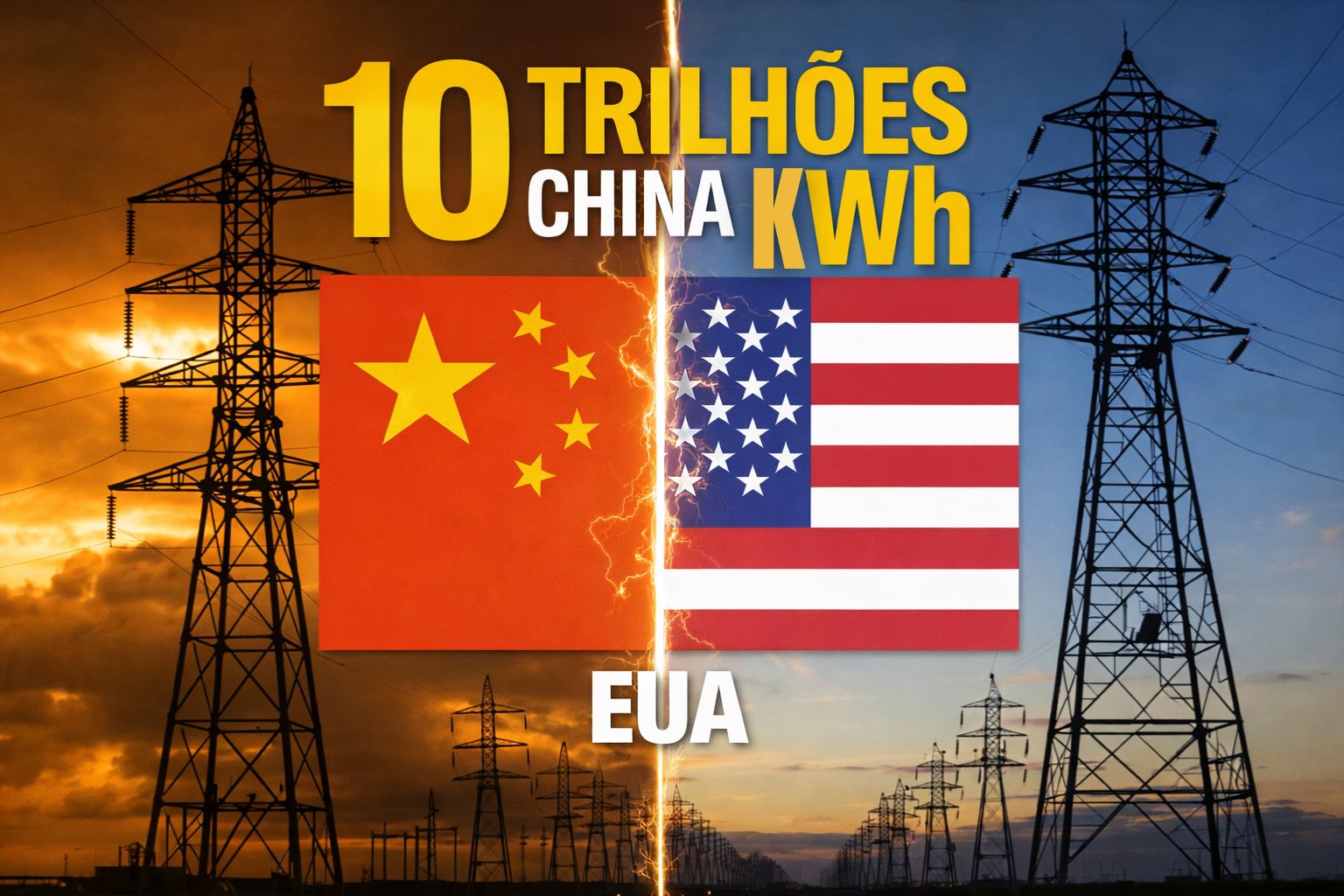


Driven By Industrialization, Urbanization, And Energy Transition, The Chinese Record Evidences Increasing Demand, Global Leadership In Electricity Consumption, And Strategic Challenges For Sustainability, Infrastructure, And Future Global Energy Security.
In an unprecedented milestone in the global energy sector, China surpassed the barrier of 10 trillion kilowatt-hours (kWh) of electricity consumption by 2025, according to official data released by the National Energy Administration (NEA) of Beijing. This level — equivalent to 10.4 trillion kWh — represents a growth of approximately 5% compared to 2024, making China the first country in the world to cross this historic limit, an unparalleled achievement among major global economies.
To put the magnitude of this number into perspective: Chinese annual consumption is more than twice that of the United States and exceeds the total electricity consumption of the entire European Union, Russia, India, and Japan combined, according to the NEA itself.
When Electricity Becomes History: 10.4 Trillion kWh And A New Industrial Benchmark
The leap in consumption is not just a numerical record, but a profound reflection of China’s economic and technological transformations. Traditionally dependent on large industrial sectors, the country has, in recent decades, been integrating high-tech sectors, urban services, and residential electrification at an accelerated pace. Data from the official 2025 report show that the increase is linked to several simultaneous vectors:
-
Historic bankruptcy of Centauro shocks the market, and the century-old company puts more than 500,000 products, machines, and complete infrastructure up for online auction.

-
New shoe factory in Ceará is expected to create 400 jobs and strengthen the local economy.
-
No one imagined it, but a mixture of sawdust with a mineral that fights fires surprises scientists with a result that changes the course of fire-resistant construction.

-
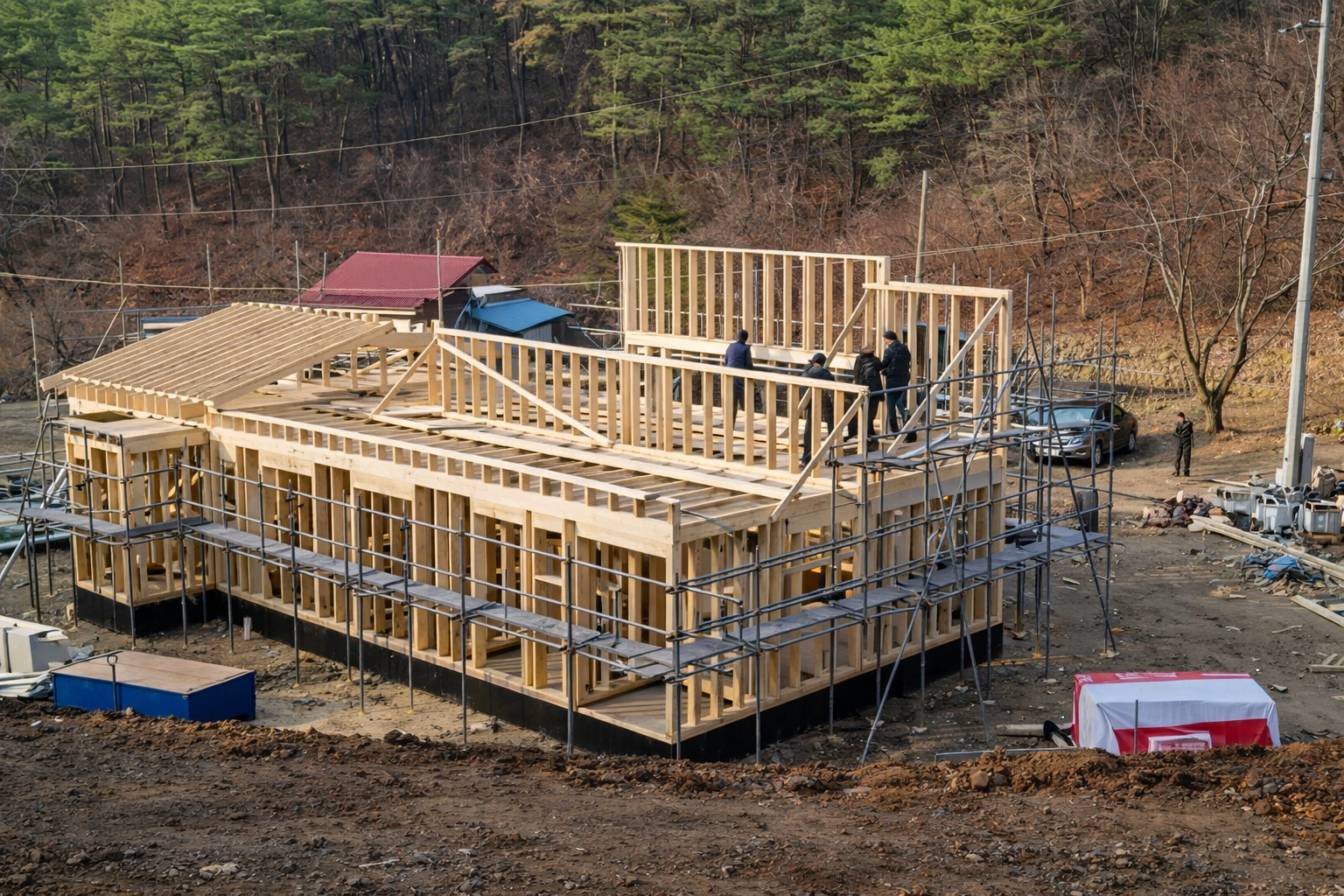
From empty land to a high-end house, wooden construction uses a lightweight system, metal structure for the foundation, ventilated ceramic cladding, and special windows to create an efficient and comfortable living space throughout the year.

- Electric Vehicle Industry And Charging Infrastructure, with consumption expanding over 40% in strategic segments.
- Growth In Demand For Digital Services, including data centers, artificial intelligence, and cloud computing, with electricity consumption increasing by double digits.
- Expansion Of Residential And Urban-Industrial Activity, reinforcing the role of electricity as a central vector of economic development.
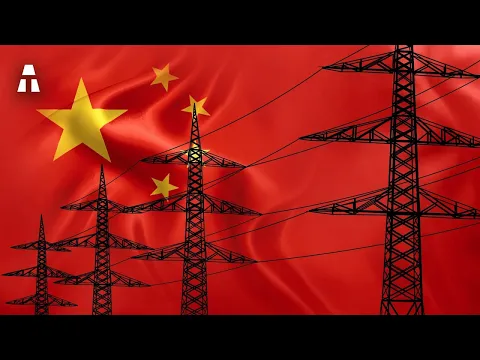

This colossal consumption further consolidates China’s position as the world’s largest economy in total electrification — an indicator that many countries monitor to calibrate infrastructure and energy transition policies.
Economy, Technology, And Electricity: An Energy Screening
The growth in electricity consumption is not only driven by heavy industries; service and technology sectors have played an increasing role. According to the NEA:
- Consumption in the service sector grew nearly 8%, with a focus on data centers and digital infrastructure.
- Residential demand increased by over 6%, reflecting the ongoing growth of urbanization and the use of appliances, air conditioning, electric heating, and electric vehicles in households.
At the same time, China’s energy transition shows two trends that generate technical and economic debates:
- Robust expansion of renewable energy, with installed capacity of solar and wind reaching historically high levels in 2025, and an increasing share in the energy mix.
- Continuity of thermal energy production from coal, although with a slight decrease in 2025, the first in decades, reflecting a structural change in generation.
This combination of high demand and changes in the energy matrix creates challenges of grid stability, renewable integration, and long-term planning.
China And The Challenges Of Massive Electrification
Surpassing 10 trillion kWh in annual consumption places China in a unique position from an energy perspective:
- Transmission Infrastructure Needs To Evolve constantly to avoid bottlenecks between production centers (especially in the west and north) and large urban areas in the east and south.
- Integration Of Renewables Requires Sophisticated Storage Systems And Smart Grids capable of handling variability in production.
- Climate Policies Come Under Pressure, as despite the growth of clean sources, there is still a significant dependence on fossil fuels — primarily coal.
Policymakers and electrical engineers face a classic crossroads: balancing increasing demand, emerging climate goals, and the need to ensure supply reliability.
Global Impacts And Geopolitical Implications
The Chinese achievement is not just a statistical figure; it directly influences global debates on energy, climate, and development:
- Energy Markets Are Affected, as China’s gigantic consumption impacts commodity prices, supply chains, and investments in global energy infrastructure.
- Clean Technologies Gain Momentum, as the need to supply billions of kWh accelerated investments in renewables and storage.
- Technological Competition Intensifies in fields like electrical grid infrastructure, electric vehicles, and data centers.

The historic milestone of Xi’an and Beijing also revives debates about global responsibility for emissions and the roles of countries in mitigating climate change, especially with carbon neutrality commitments by 2060 in effect.
More Than Numbers, A Reflection Of Economy And Energy Transition
By surpassing 10.4 trillion kWh in 2025, China not only established a new record but also provided a mirror of the country’s economic structure and technological priorities in rapid evolution.
This milestone reveals that electricity — previously seen as a basic input — has become a strategic terrain for development, industrial power, and global competitiveness, defining not only China’s energy future but also the contours of the global economy and technology in the coming decades.








A China liderará o mundo.
E não vai demorar muito tempo.