





 Portuguese
  English
  Spanish
  4 min of reading
  0 comments


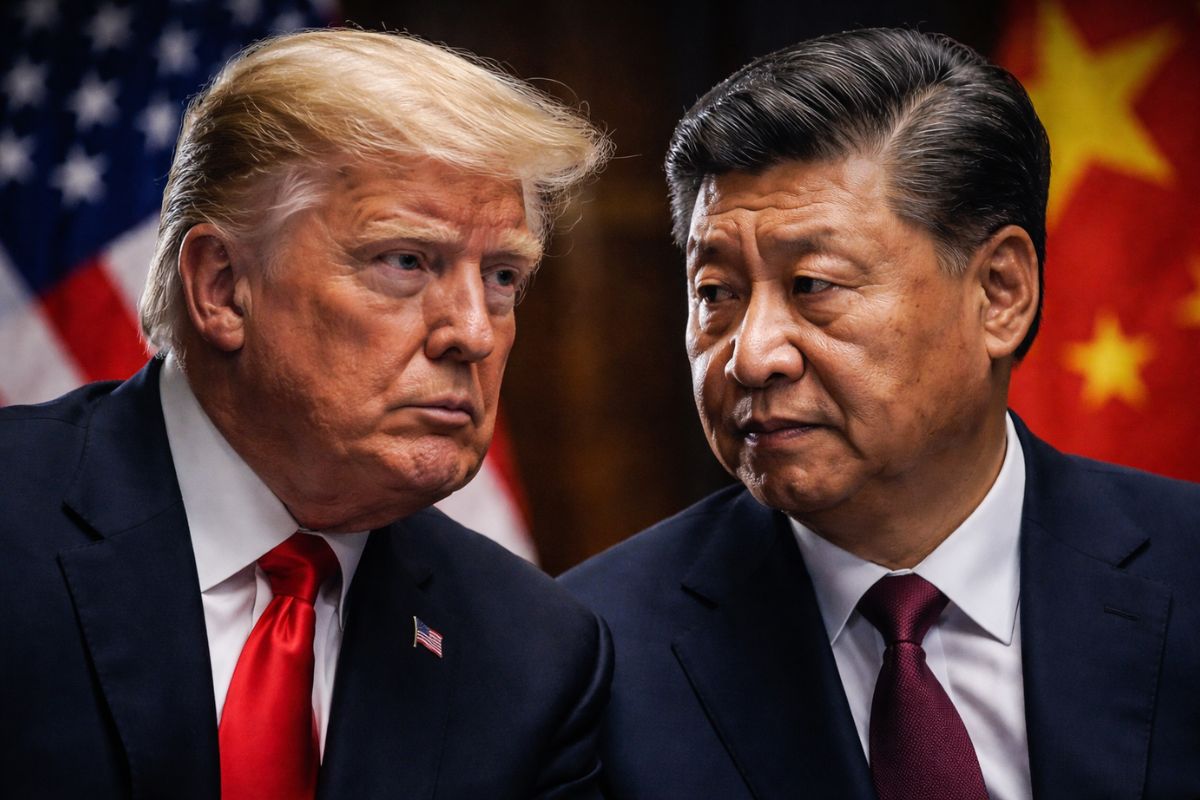
With Recommendation Attributed to China for Banks to Reduce Purchases of US Treasury Bonds, Investors Accelerated Reallocation Out of the Dollar on Monday, 09/02/2026. In Brazil, the Currency Closed at R$ 5.18, Lowest Since May 2024, While the Stock Market Advanced 1.8% and Passed 186 Thousand Points.
China returned to the center of the financial stage on Monday, 09/02/2026, after circulating in the market the information that banks should reduce investments in US Treasury bonds. The immediate effect was the loss of strength of the dollar on a global scale, in a move that reinforced the search for alternatives outside the United States.
In Brazil, the real gained traction on the same day: the dollar closed at R$ 5.18, the lowest rate since May 2024, and the appreciation of the Brazilian currency adds to a cumulative drop in the dollar of over 10% in 12 months. The adjustment also appeared in the stock markets, with the local market registering gains and renewing its historical level.
Treasury, Banks, and the Message That Markets Read
The signal attributed to China was interpreted as risk diversification, in the logic of not concentrating exposure in a single asset or country.
-
The government requests the Federal Revenue Service for a new system to automate the income tax declaration, reducing errors, time, and bureaucracy for millions of Brazilians.

-
Pix in installments, international Pix, and contactless payment without internet: the Central Bank revealed the new features coming to the tool that is already used by almost every adult in Brazil.

-
Mercado Livre has just started selling medications with delivery in up to three hours to your door, and this move could completely change the way Brazilians buy medicines on a daily basis.

-
In Dubai, rising tensions from the war in the Middle East are causing super-rich individuals to leave the Gulf and direct their fortunes to a new financial refuge in Asia.


However, in this case, the Treasury serves as both a political and financial piece at the same time because it is the heart of liquidity and government financing in the United States.
Professor Otto Nogami from Insper described the backdrop as a direct clash between China and the United States, with the potential to encourage other countries to also seek similar measures.
For the markets, the message is not just about profitability, but also about strategic alignment in the international financial system.
Dollar Falling, Real Rising, and the Number That Became Reference
The dollar closed at R$ 5.18, the lowest since May 2024, and this point became a reference by synthesizing two readings at once: the devaluation of the dollar and the influx of capital into emerging currencies.
In 12 months, the devaluation of the dollar against the real has already exceeded 10%, which enhances the perception of a change in the cycle in the short term.
Besides the real, the dollar has also lost value against the euro, the pound, and the Mexican peso.
This detail matters because it shows that the pressure was not restricted to Brazil: the movement was global, with simultaneous adjustments in several currency pairs, reinforcing the idea that markets were repositioning risk in a coordinated manner.
Risk Aversion: Why Capital Leaves the Center and Seeks the Periphery
Economists have described the environment as “risk aversion,” but in practice, the term is used to explain an impulse for reallocation: seeking opportunities in other countries beyond the United States in the face of political and economic uncertainties.
In this type of adjustment, the Treasury loses relative attractiveness and the dollar feels the impact because part of the market begins to prefer holding positions in other currencies and assets.
The chief economist of Ouribank, Cristiana Quartarolli, attributed the dollar’s loss of strength to a reallocation linked to the US government, citing statements and measures by Donald Trump as part of the noise that weighs on risk perception.
When political risk enters the price, the exchange rate becomes a thermometer, and markets react quickly.
Stock Market at Records and the Collateral Effect on Emerging Markets
The São Paulo Stock Exchange rose 1.8% on Monday (09/02/2026) and closed above 186 thousand points, at a new record level.
In terms of market readings, this data correlates with the exchange rate: when the dollar weakens and there is a portfolio rotation, emerging markets tend to receive flow, and local stock markets can capture part of this migration.
This does not eliminate risks, it only changes the type of risk that the investor chooses to carry.
The real can gain in one day and give back the next, and the Treasury itself remains a global reference, even when China suggests reducing exposure.
Still, this episode makes it clear that the monetary dispute against Washington is leaving increasingly visible signs in the markets.
What happened on 09/02/2026 combines three layers that are difficult to separate: China and Treasury in the same narrative, a globally weakening dollar, and the real hitting R$ 5.18 with emerging markets rising.
The central point is that markets do not wait for full confirmation to move, and any sign of disputes in the international financial system tends to produce chain adjustments.
In your view, if China continues to reduce exposure to the Treasury, do you think the real is likely to hold below R$ 5.20 for a longer time, or is this just a market bounce? And, looking at your day-to-day life, has the fall of the dollar changed any real decisions for you, such as travel, online purchases, investments, or prices in the market?









-

-

-

-

-

-

59 pessoas reagiram a isso.