





 Portuguese
  English
  Spanish
  5 min of reading
  0 comments


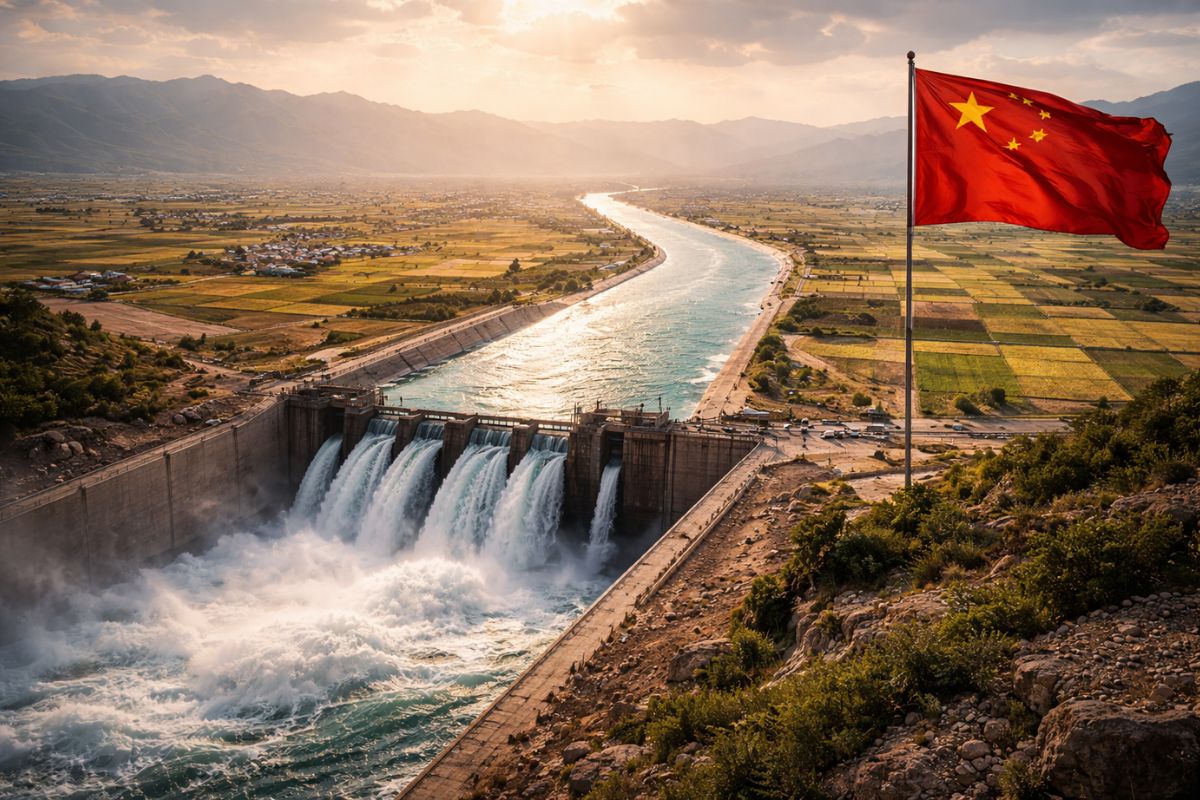
In China, The South-to-North Water Diversion Has Become a 4,350 Km Network and Promise of 45 Trillion Liters Per Year; On The Central Route, Gravity Makes The Flow Cross Channels, Aqueducts, and Tunnel Below The Yellow River Without Using Pumps to Beijing in 15 Days.
Beijing has become an uncomfortable laboratory for China to measure how far engineering can buy time. With over 21 million inhabitants and only 100 cubic meters of water per person per year, the city appears in the project’s own narrative as a symbol of scarcity and risk, with an aquifer so stressed that it already causes subsidence in urban areas.
The response chosen by China was literal: to move water. The plan for the South-to-North diversion, designed to traverse an entire country, has been described as a network that is expected to take up to 50 years to complete, with three routes and an announced annual delivery of 45 trillion liters.
The Water Crisis That Became a State Argument

Scarcity does not emerge as a technical detail but as a political and social premise.
-
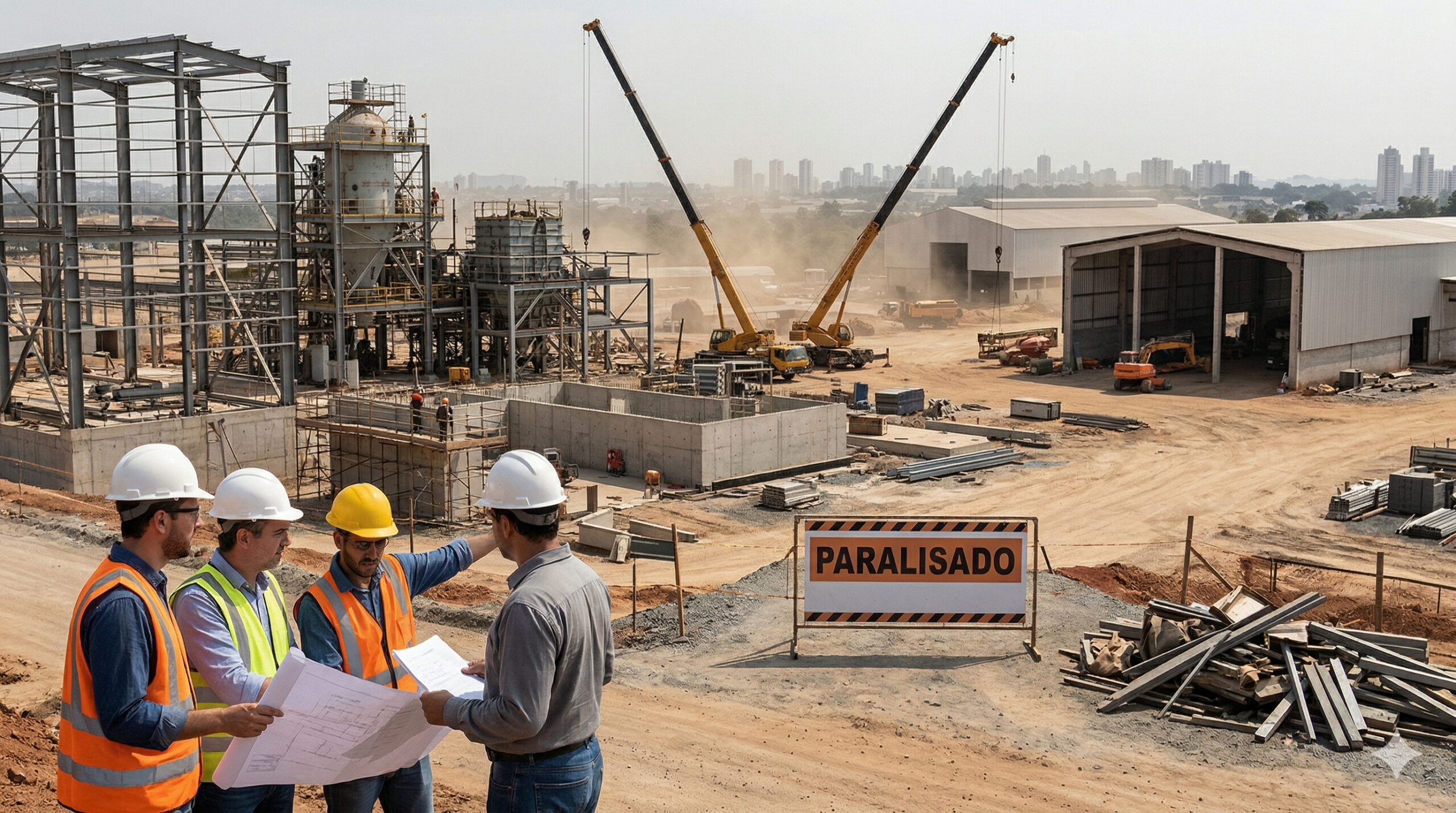
The lack of welders, electricians, and operators becomes a structural threat in 2025, with the construction industry and manufacturing already suffering from delays, cost pressures, and labor shortages in Brazil.
-
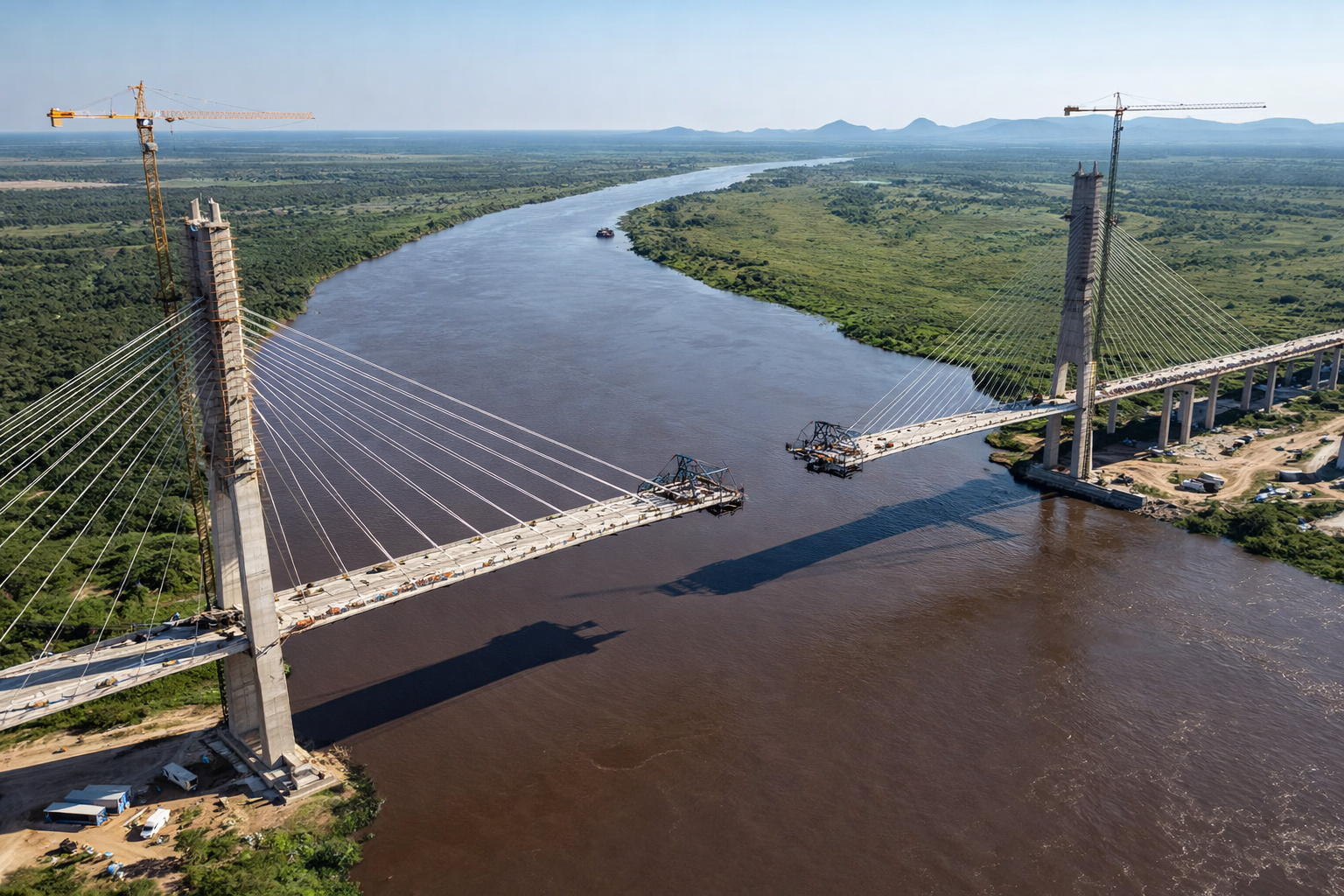
Brazil and Paraguay are just 46 meters away from a historic union on the bioceanic bridge that promises to revolutionize trade between the Atlantic and the Pacific.
-
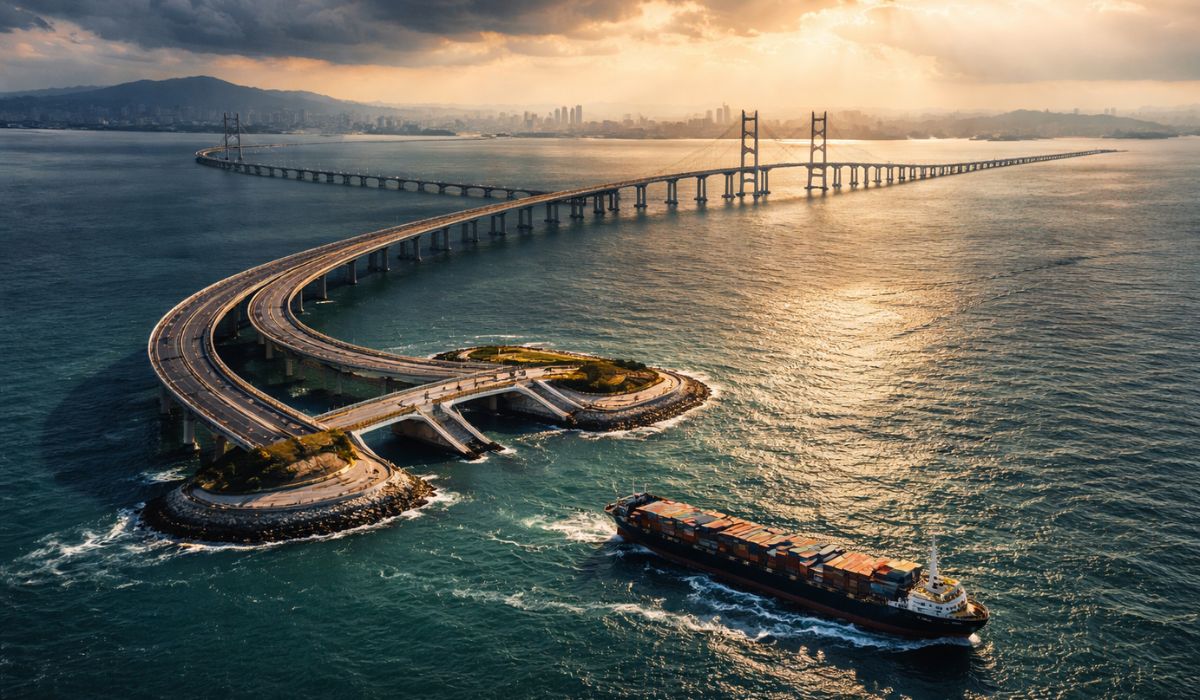
With 55 km over the sea, a cost of US$ 20 billion, and enough steel to build 60 Eiffel Towers, China’s largest project has connected Hong Kong, Zhuhai, and Macau in a colossal bridge that defies the logic of engineering.
-
A trick with joint compound transforms a Styrofoam ceiling into a plaster-like ceiling: leveled panels, wires and mesh at the joints, sand, paint, and change the environment while spending little today.


The picture presented for Beijing includes a decrease in precipitation since the 1950s and soil beginning to give way where the aquifer has been drained beyond reasonable limits.
When water becomes a limit, the city becomes a national problem.
The regional contrast appears as the engine of the plan: the south with a higher rainfall rate, the north drier and more populous.
By presenting this diagnosis, China also frames the project as infrastructure for stability, something that aims to reduce the vulnerability of a metropolis and, by extension, of an entire country.
Central Route, Gravity, and The Bet on The 15-Day Journey

Among the three routes, the central route is regarded as the most challenging because it needs to make the water travel 1,400 km solely by gravity, without the use of pumps.
It is in this choice that the project shows its ambition: a flow that depends on minimal inclination, continuous control, and low tolerance for error.
The journey begins at a large reservoir in the south, with storage noted at 29 trillion liters. To increase capacity, the dam associated with the reservoir was raised by 15 meters.
It is an intervention that deals with weight, pressure, and responsibility, especially in an environment with an estimated population of around 700,000 people.
The Numbers That Support The Narrative of The Megaproject

The design presented for China totals 4,350 km of network and the promise of 45 trillion liters per year when the three routes are complete.
It is a scale that attempts to fit into operational details: long aqueducts, open channels, tunnels, and the discipline of gradient, noted as 0.02% to keep the water flowing without turning turbulent.
On the central route, a 9 km aqueduct stands out, with a noted flow of 380,000 liters per second.
The scale jump is evident: China is not talking about a pipeline, it is discussing a system that crosses rivers, valleys, and mountains and which, according to its own description, delivers water to Beijing after 15 days of travel.
The Yellow River Below and The Control of Flow at a Distance
The crossing of the Yellow River is presented as a turning point.
Building above was not an option, so the central route was pushed below the bed, through a tunnel cited with 4 km in length, with an 8-meter difference between entry and exit to maintain the logic of gravity.
The described solution for pressure is a double-layer coating structure, with drainage mats between layers and drains at the base to relieve accumulation.
In projects of this scale, the risk is not abstract: it lies in the details. The construction of this section is presented as a task of years, with challenges in soil and stability.
In control, China also appears as a laboratory for management: a centralized system, operated remotely, capable of activating 64 curved gates to adjust flow.
It is an engineering project that relies as much on concrete as on monitoring, measuring, and remote control to prevent water from gaining speed and becoming a problem.
Excavate a Country and Stabilize The Ground Before Opening The Water
The central route has long stretches of open channel. The scale of earth movement appears in the figure of 820 million cubic meters, with 5,000 excavators operating along the fronts.
The goal is not only to dig but to maintain geometric standards so that the coating does not crack and gravity continues doing the work without loss of load.
In areas of expansive soil, the noted solution was to add 5% cement to alter the characteristics of the ground before the finish.
The project is not only about transporting water; it is about controlling soil behavior. Where the ground changes with moisture and dryness, the construction needs to anticipate cracking.
When it reaches Beijing, the water still needs to pass through the city underground.
The underground crossing is described as delicate, with existing pillars and structures and points where the distance between the tunnel and urban elements would be only one meter.
Discretion becomes part of the method: building without interrupting the surface.
What China Gains and What It Assumes By Moving a River
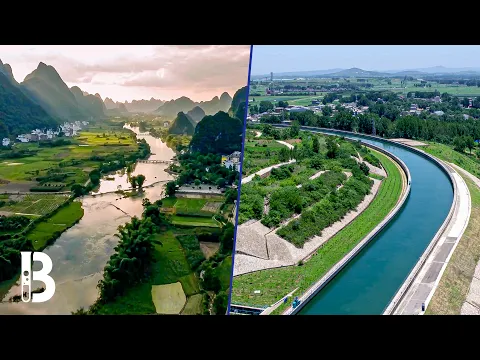

The megaproject’s discourse sells an idea of predictability: water arriving with a schedule, a central route operating by gravity, and the promise of 45 trillion liters as a buffer against scarcity.
It is a package that attempts to respond to the basics, which is the daily life of millions of people, without depending on local rain.
But there is a hidden cost in the scale. Raising a dam, creating a cited curtain of cement 65 meters deep, drilling, draining, measuring, and controlling requires constant maintenance and permanent risk management.
When infrastructure becomes permanent, failure also becomes permanent, because the system becomes critical enough to stop.
In the end, the question is not only whether China can complete the project in 50 years but whether it can govern the water after putting it into motion.
The central route, by relying on gravity and precision, is less a road and more an organism that needs to be monitored day and night to prevent turning the solution into a new crisis.
Do you trust solutions like the central route powered by gravity or changes in local consumption and management, and why, looking at Beijing and the scale of 45 trillion liters?









-

-

-

-

-

-

41 pessoas reagiram a isso.