





 Portuguese
  English
  Spanish
 5 min of reading
  21 comments


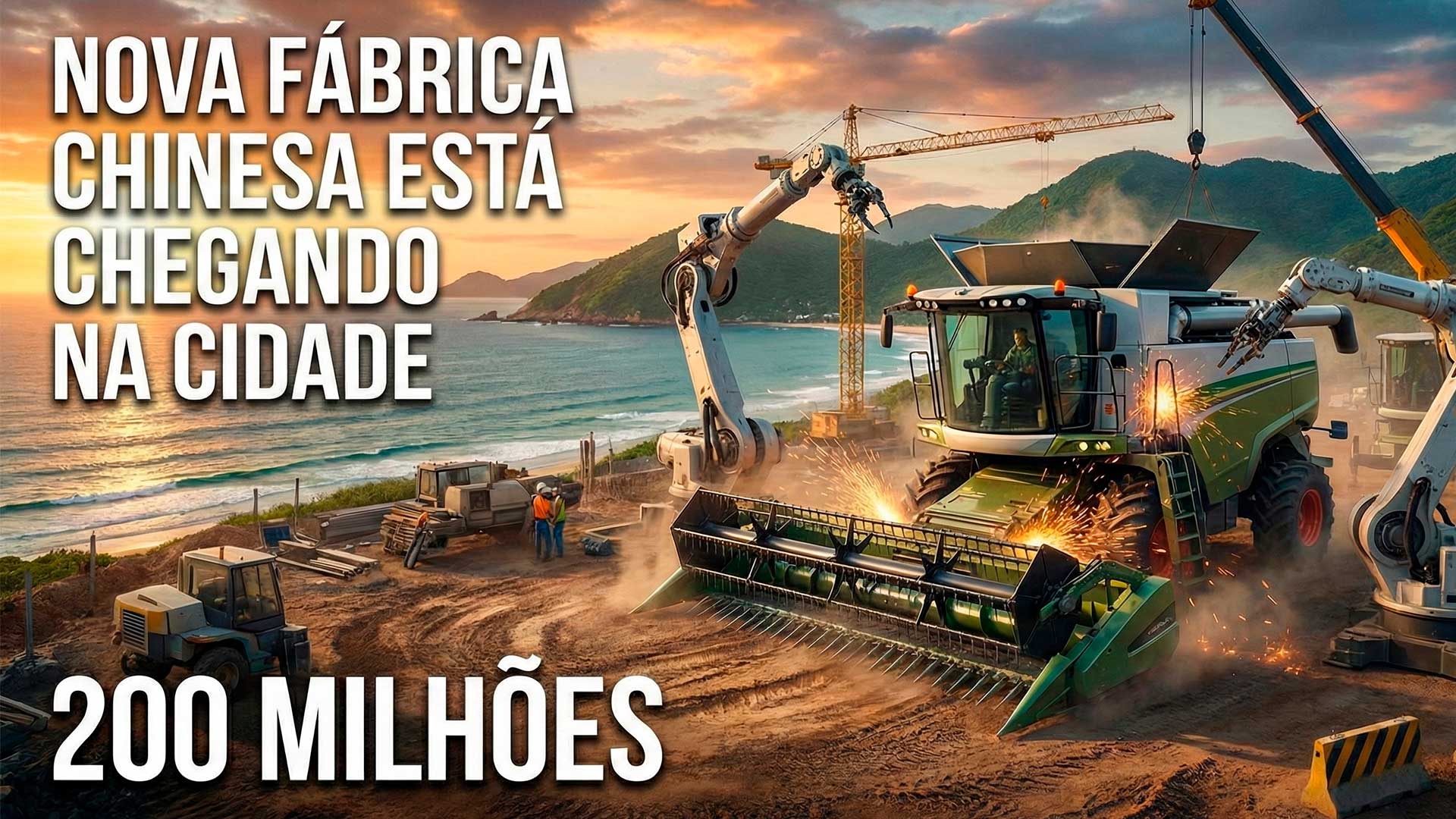


Project in Maricá, in the Southeast Region, Confirms First Chinese Tractor Factory in Brazil, Uses Oil Royalties as Investment Source and Targets Small Farmers with Unique Public-Private and Popular Partnership Model.
The city of Maricá, on the coast of Rio de Janeiro, with 212,470 inhabitants, according to IBGE information from 2025, confirmed an agreement with companies from China to install the first Chinese tractor factory in Brazil, with a projected investment of R$ 200 million and a direct focus on family farming.
The plant will be built in Ponta Negra, along the RJ 106, within a model dubbed public-private and popular partnership, known as PPPP.
According to the Maricá City Hall, the agreement was signed in November and involves a group of Chinese and Brazilian companies, with technological cooperation between Brazil and China and a commitment to produce small and medium-sized tractors. Production will be aimed at small and medium-sized rural properties, a typical profile of family farming that accounts for a large part of the food consumed in the country.
-
Mothers and daughters come together, create an ‘express’ beauty salon and turn the idea into a network with 21 units, revenue of R$ 16.7 million and 12,000 subscribers.

-
End of the 6×1 schedule: how the reduction of hours can affect service companies, industry, and agribusiness.

-
Brazil Ignores Trump’s threats to BRICS, Buys 42 tons of gold and reduces the Dollar’s share by 6.45% in international reserves.

-
Havan buys historic football land in Blumenau for a million-dollar amount protected by a confidentiality clause and is already planning to change even the layout of streets to build a megastore in half-timbered style costing 80 million reais.


The municipality reported that a significant portion of the funds will come from oil royalties, revenue that has placed Maricá among the largest beneficiaries of this source in Brazil and allowed it to multiply the local budget in recent years. The declared idea of the municipal government is to transform pre-salt income into productive bases, generating qualified jobs, tax revenue, and diversifying the economy beyond the oil industry.
The movement comes at a time when Chinese investments in Brazil grew by 113 percent in 2024, reaching around US$ 4.2 billion and making the country the third largest global destination for China’s productive capital, behind only the United Kingdom and Hungary.
Energy and infrastructure continue to lead the investments, but industrial projects, such as machinery and tractor factories, are beginning to gain ground in China’s strategy for the Brazilian market.
Investment of R$ 200 Million and New Industrial Plant in Maricá
According to the Maricá City Hall, the agreement was signed on November 22 and provides for a Brazil-China technological partnership to build the factory on land in the Ponta Negra district, near RJ 106, leveraging the road infrastructure that connects the municipality to the Metropolitan Region of Rio.

The total investment is estimated at R$ 200 million, in a corporate arrangement officially described as public-private and popular partnership.
The project was presented in a ceremony that brought together Mayor Washington Quaquá, representatives of Chinese companies, and leaders of popular movements. On that occasion, Quaquá stated that the factory takes the money from oil and converts it into a tractor industry, with the potential to revolutionize family farming, generate industrial jobs, and increase municipal revenue from a new local productive base.
Specialized reports highlight that the unit is expected to have the capacity to produce around 2,000 tractors annually, using technology from the Chinese state-owned company Sinomach, although the investment figures announced in earlier phases of the project varied between R$ 100 million and R$ 200 million.
In practice, the most recent announcement from the city hall consolidates the amount of R$ 200 million as an official reference for the establishment of the plant in Maricá.
PPPP Model Brings Together Government, Companies, and Popular Organizations
The arrangement adopted in Maricá has been described as PPPP, public-private and popular partnership, a variation of the traditional PPP that incorporates social movements and popular cooperatives as part of the project governance.
In practice, the model seeks to combine the role of the public authority and private capital with the participation of organizations that represent small farmers and rural workers.
While classic public-private partnerships are already utilized in Brazil in areas such as highways, sanitation, and public facilities, Maricá’s PPPP is presented by its supporters as a step forward, directly including the “P” for popular in the structure.
According to João Pedro Stédile, a leader of the MST who participated in the announcement, the model combines government, companies, and popular organizations in an arrangement aimed at increasing productive inclusion and economic growth with social participation.
Tractors for Family Farming and Small Producers
The new factory has been designed primarily to serve family farming, with small and medium-sized tractors suitable for properties that do not have the scale for large-power machines.
According to the Maricá City Hall, production will focus on machinery for small and medium-sized properties, precisely the profile that suffers most from a lack of mechanization and access to technology in Brazilian agriculture.
The project dialogues with federal rural credit policies, such as Pronaf, which facilitate financing for equipment but often stumble upon the limited availability of machines adapted to the realities of family farmers. With a line dedicated to this audience, the factory in Maricá aims to reduce this bottleneck and expand access to simpler tractors, with lower costs and maintenance compatible with the income of small producers.
In addition to tractor production, the agreement includes technology transfer and training programs for local workers and farmers, with an emphasis on operation, maintenance, and efficient use of machines in the daily work of the crops.
The expectation is that training centers and technical assistance will be structured in partnership with cooperatives and universities, bringing technological innovation closer to the reality of the rural areas of Rio de Janeiro.
For the municipality, the bet on the agricultural machinery industry adds to other initiatives financed with oil royalties and the local Sovereign Fund, created specifically to transform a finite revenue into long-term projects.
Public finance experts emphasize that Maricá has become a national leader in royalty collection and has been seeking to use these resources to reduce dependence on the oil cycle through investments in infrastructure, services, and industrial production.
China Expands Presence in Brazil and Targets New Niche in Agriculture
The case of Maricá fits into a scenario of strong expansion of Chinese investments in Brazil. Recent reports from the Brazil-China Business Council and ApexBrasil show that, in 2024, confirmed investments from Chinese companies in the country totaled around US$ 4.18 billion, a 113 percent increase over the previous year, making Brazil the third major global destination for China’s productive capital, behind only the United Kingdom and Hungary.
Historically concentrated in energy, oil, and infrastructure, these investments are beginning to push into industry, automotive, and, still timidly, into agriculture and the agricultural machinery industry.
Projects such as the tractor factory in Maricá indicate an attempt to diversify Chinese presence, entering strategic segments for food production and the modernization of family farming, while also reigniting debates about productive sovereignty, technological dependence, and the role of foreign capital in Brazilian development.
Do you think this type of Brazil-China partnership is a way to democratize technology and strengthen family farming, or does it deepen the country’s dependence on foreign capital and machinery? Do you consider transforming oil royalties into a tractor industry a strategic bet or a risk for the local economy? Share your opinion in the comments.






Não dá para saber. 200 milhões perto do que a China já tem investido, é muito pouco. Chineses pensam a longo prazo.
Trator é melhor que carro elétrico.
Trilhões circulam pelo mundo em investimentos e infelizmente só conseguimos captar e atrair parcela muito pequena dessa dinheirama toda. Enquanto o governo não trabalhar para aumentar nossa nota de crédito, para equilibrar as contas do país, para melhorar a especialização das escolas técnicas, o caminho do dinheiro não passará por aqui, e ficaremos chupando os dedos…
Sim, é muito positivo e de suma importância para o desenvolvimento da agricultura no tocante dos pequenos e médios produtores que não encontram no mercado brasileiro equipamentos que agilizem e facilitem a produção agrícola.