





 Portuguese
  English
  Spanish
  5 min of reading
  0 comments


From the Pearl River Delta to Artificial Islands, the Skyscraper Lying Down to the Self-Operating Port, the Giant Underwater Tunnel Became a Symbol of Absurd-Scale Engineering
Have you ever thought about working more than 100 m underwater, in total darkness, trying to align concrete the size of ships, knowing that a 1 cm mistake can turn months of work into dust? It was in this scenario that Chinese engineers assembled, piece by piece, a giant underwater tunnel at the bottom of the Pearl River Delta, in an operation repeated 32 times, against underwater currents capable of dragging equipment like paper.
And this is just the beginning. While other countries stop at the “paper project” phase, China chooses the harder path, ignores the chorus of “it’s not possible” and delivers structures that make the entire world stop to watch. The standard is always the same: the impossible becomes a schedule.
The Place Where the Crossing Became a Logistical Nightmare
In the middle of a turbulent sea, three regional powers were separated by hours of travel: Hong Kong, Macau, and Zhuhai.
-
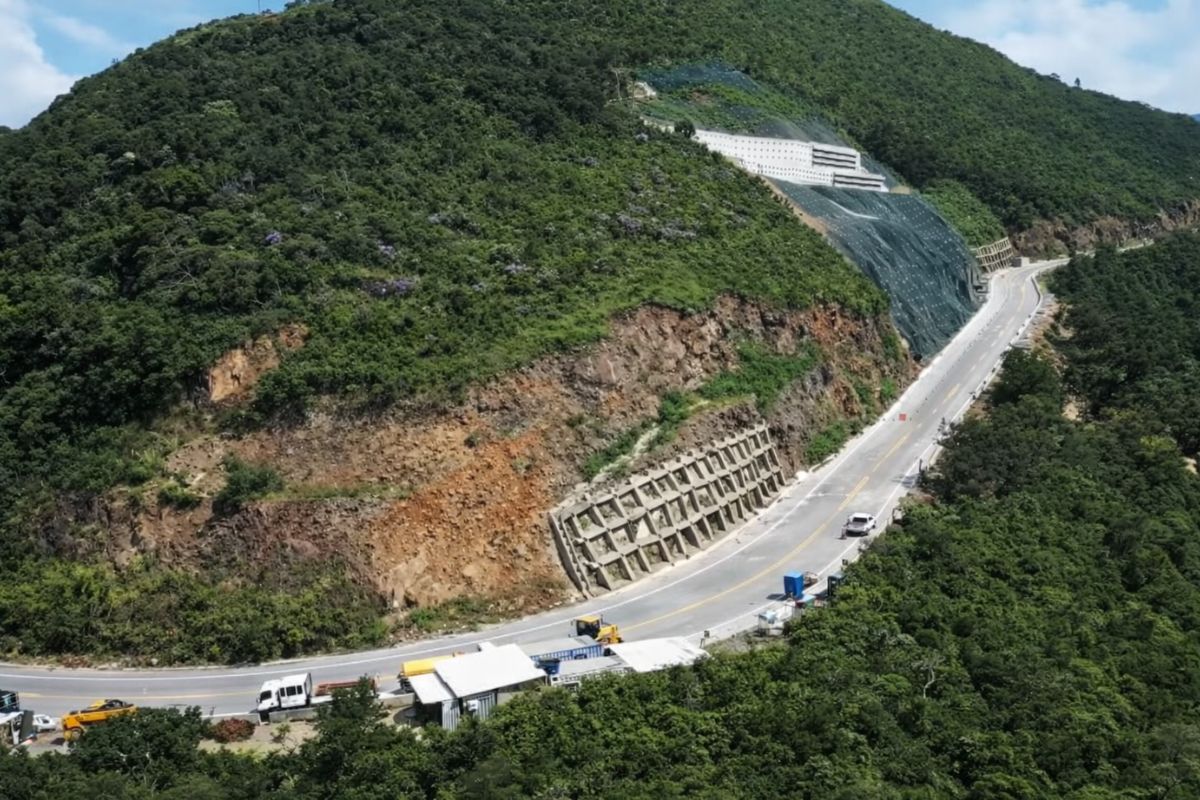
The section of Serra da Rocinha on BR-285 is now open in Timbé do Sul: 50 m tensioned curtains and top-down technique stabilize the slope, with a stairway duct controlling the water.
-
Scientists use sawdust mixed with clay to create a lighter brick, promising efficient thermal insulation and impressing by transforming waste into a solution for construction.

-
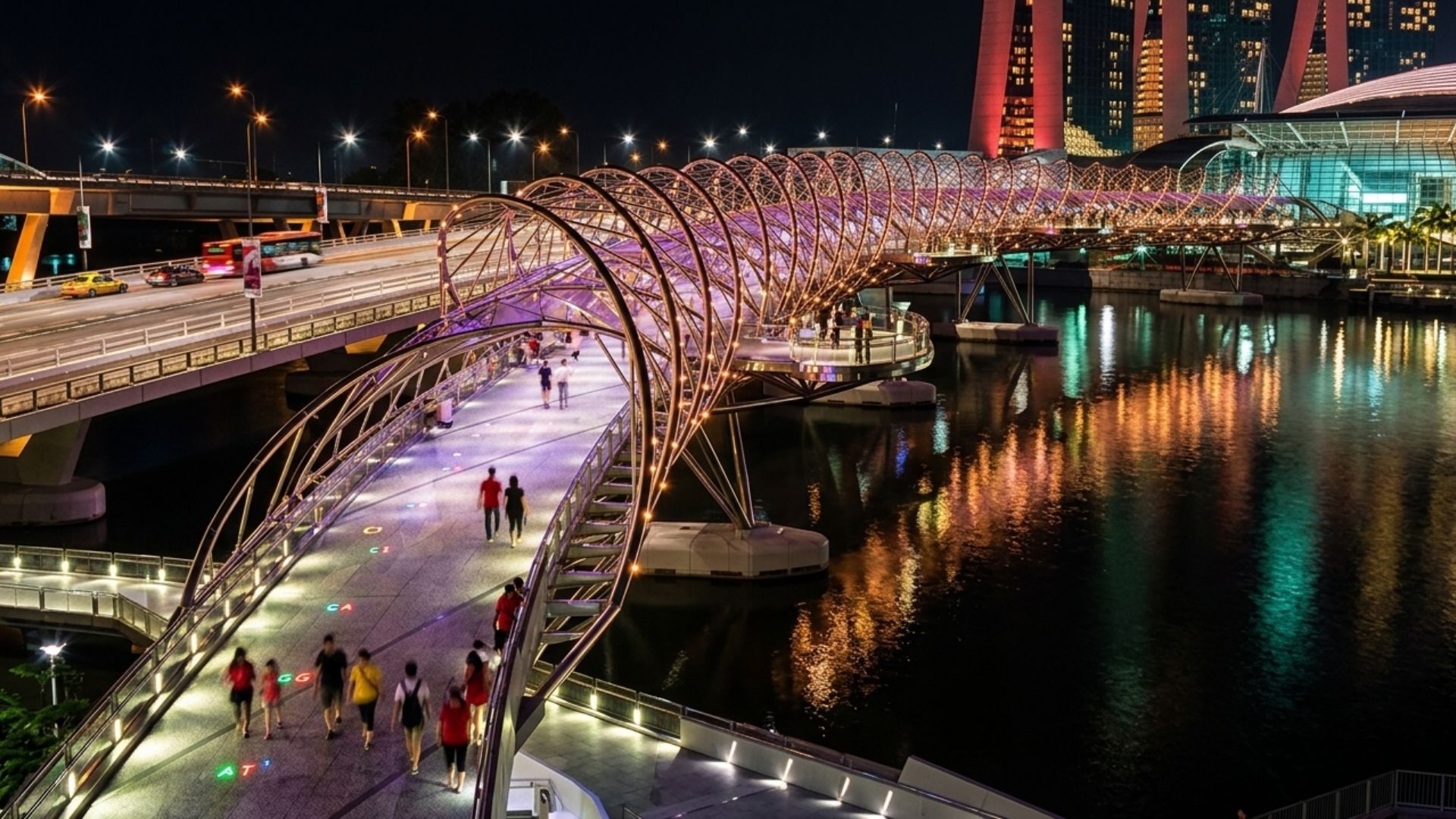
With a DNA shape, this bridge in Singapore draws attention in modern architecture and surprises tourists by transforming a simple crossing into an unforgettable visual experience in the urban heart.
-
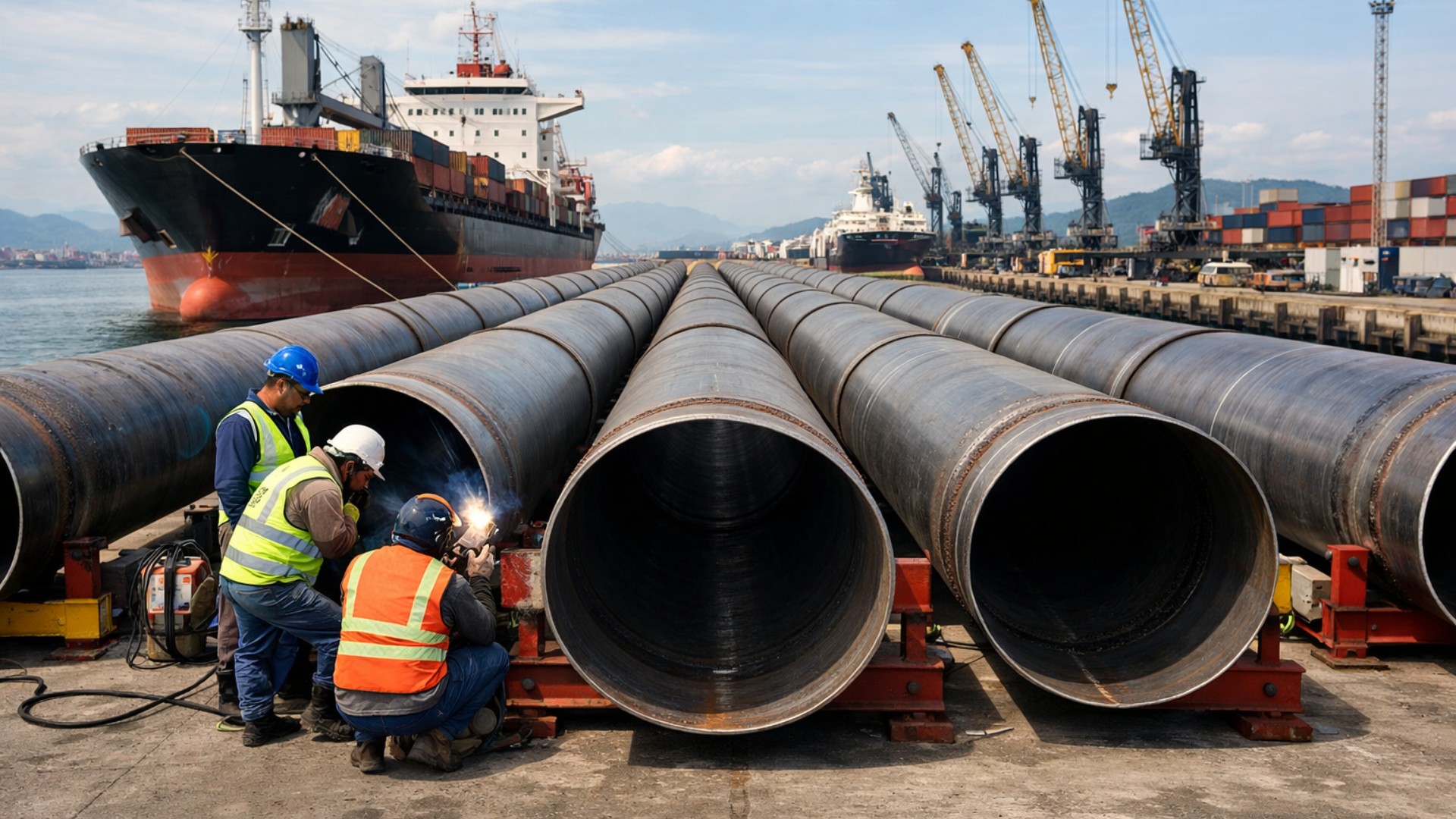
Giant underwater pipeline begins to take shape with a R$ 134.7 million project at the Port of Santos: the 1.7 km structure uses 12-meter and 700 mm pipes to supply water to 450,000 people in Guarujá.

The “obvious” solution would be a bridge, but there was a problem too big to ignore: one of the busiest shipping routes on the planet passes through there, with giant cargo ships crossing the path all the time. A bridge that is too high interferes with airplanes. A bridge that is too low interferes with ships.
It was at this point that China decided to do something that seems like science fiction: a highway that starts as a bridge, disappears into the ocean, and reappears on the other side.
The Highway That Disappears Under the Sea and Returns from Nowhere


The project spanned 55 km with a logic impossible to explain without seeing: sections as a bridge, controlled diving, crossing underwater, and returning to the surface as if the water were just a detail.
At the center of the solution is the giant underwater tunnel, created to allow ships to continue passing overhead, without halting air traffic and without interrupting the roadway corridor.
And for the tunnel to exist, it was necessary to invent what did not exist: solid ground in the middle of the sea.
Artificial Islands Created From Scratch to Serve as a “Portal”
Two artificial islands were created solely to become the entrance and exit of the tunnel. Giant steel cylinders were driven into the seabed and filled with rock and sand to form a solid base. It wasn’t “building on land.” It was creating the land itself.
These islands became the points where the road enters and exits the giant underwater tunnel, connecting what was previously separated by hours of crossing.
The Fit That Doesn’t Forgive Mistakes: 32 Pieces of 80,000 Tons
The real nightmare was underwater. Each section of the tunnel was built on solid ground, sealed like a submarine and floated to the sea, as if it were a concrete barge.
Then came the moment no one wants to mess up: sinking the block with surgical precision until it lands in a trench at the bottom of the sea.
Now let’s put the scale on the table: each piece was about 180 m long, over 30 m wide, and weighed approximately 80,000 tons.
And this didn’t happen once. The operation was repeated 32 times, with alignment checked millimeter by millimeter, and the connection requiring total sealing to withstand ocean pressure. One misalignment, a poorly made joint, and the entire system could fail.
When the last piece fit, the result was a giant underwater tunnel operating silently beneath one of the busiest shipping routes in Asia.
What Changed in Practice: Time, Integration, and Scale

After years of work, with stops and restarts whenever typhoons approached, the crossing that was torturous shortened drastically.
A trip that took hours is now done in minutes, and cities that operated on opposite sides of the sea now behave as parts of the same economic machine.
More than a construction project, the giant underwater tunnel becomes a symbol: the ability to transform an unsolvable physical problem into an engineering solution.
The Skyscraper Lying Down That Connects Towers in the Sky
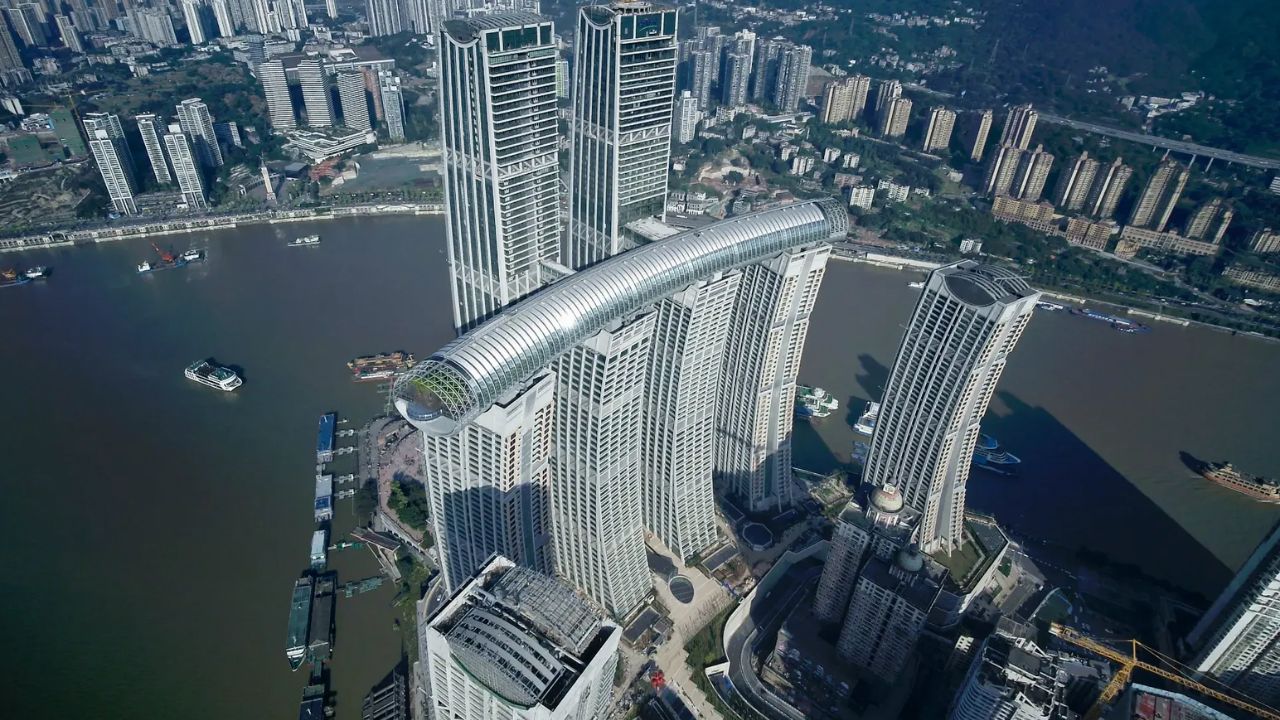
As if building on the ocean floor wasn’t enough, China also decided to challenge the vertical city from another angle. In Chongqing, where skyscrapers vie for centimeters of land, an idea that seems absurd emerged: connecting buildings not by the ground but by the sky.
The result was The Crystal, a horizontal structure of nearly 300 m, installed over 200 m high, connecting four towers. Inside, there are suspended gardens, restaurants, swimming pools, lounges, and an observation deck. From a distance, the image resembles a ship floating in the clouds. A lying skyscraper, assembled as if it were an impossible piece of aerial engineering.
The construction wasn’t “lifting everything at once.” The structure was divided into giant parts, some assembled on top of the towers and others raised from the ground with cranes under calm weather conditions, because a gust of wind could turn the lifting into disaster.
The Port Without Humans: Machines Communicating With Each Other
And then comes the step that changes the debate: the place where humans are no longer needed in the operation. South of Shanghai, a port was created on reclaimed land in the sea, with artificial islands, containment, and a “fabricated” coastline.
After that, the terminal becomes a scene that looks like choreography: cranes aligned, containers stacked in high towers, autonomous electric vehicles running day and night.
The heart of the system is bespoke software, operating like a brain that decides, in real-time, where each container goes, when it moves, and which machine executes each step. The port operates in the dark, in the rain, and in the fog with sensors, lasers, and algorithms.
What All This Says About the “Impossible”
In the end, it’s not just about records, grandeur, or money. It’s about a method: choosing the craziest challenge, accepting the technical risk, and executing until it becomes reality.
The giant underwater tunnel is the most symbolic piece of this pattern because it combines everything: extreme logistics, absolute precision, and a clear consequence in the real world.
Which project impresses you the most: the giant underwater tunnel with 32 blocks of 80,000 tons, the lying skyscraper in the Chongqing sky, or the automated port without humans? And, in your honest opinion, could Brazil build something of this level today? Why?









-

Uma pessoa reagiu a isso.