





 Portuguese
  English
  Spanish
  4 min of reading
  0 comments


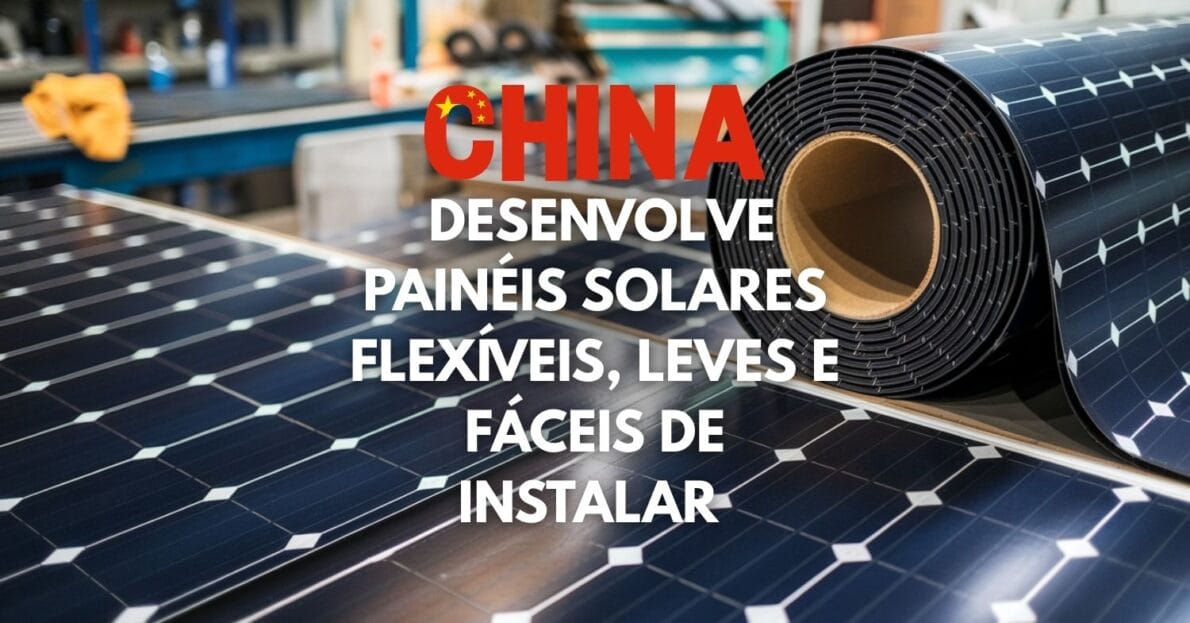
During Event In Japan, Chinese Company Reveals New Generation Of Flexible Solar Panels Designed For Easy Installation On Various Structures, Including Curved Surfaces Or With Low Load Capacity.
China has taken another step towards leadership in the global solar energy market by presenting a new generation of flexible solar panels during the World Smart Energy Week held in Tokyo. Developed by the Chinese company Polyshine Solar, the equipment was designed to facilitate installation on different types of structures, even on curved surfaces or those with low load capacity.
The innovation comes amid a backdrop of intense competition among solar panel manufacturers, driven by the expansion of solar energy as one of the primary alternatives for decarbonizing the global energy matrix. At the center of this competition is China, the world’s largest producer and exporter of photovoltaic equipment.
Innovation And Lightness As Differentials
Headquartered in Shanghai, Polyshine Solar has been investing in technologies aimed at producing lightweight and easy-to-apply modules. The new flexible solar panels presented by the company weigh only 7.5 kg—approximately 70% less than traditional glass modules—and can be installed using an adhesive surface, eliminating the need for supporting metal structures.
-
The Himalayas continue to grow to this day, with tectonic plates advancing 5 cm per year, mountains rising up to 10 mm annually, and the 2015 earthquake that killed 9,000 people may have increased the risk of an even larger seismic mega-event.

-
At an altitude of 400 km by astronauts from the International Space Station, Paris transforms at night into a golden mesh so precise that it reveals the outline of the Seine River, avenues, and entire neighborhoods like a luminous map drawn over the Earth.

-
iPhone 17 reaches historic low price with 256 GB, 120 Hz display, and drops to R$ 5,703 on Shopee, featuring A19 chip, dual 48 MP cameras, battery life of up to 30 hours, and advanced AI features.

-
Trip to Mars getting closer: Pulsar Fusion, from the UK, advances with plasma ignition in fusion engine and could drastically reduce space travel time, making crewed missions faster, safer, and economically viable.

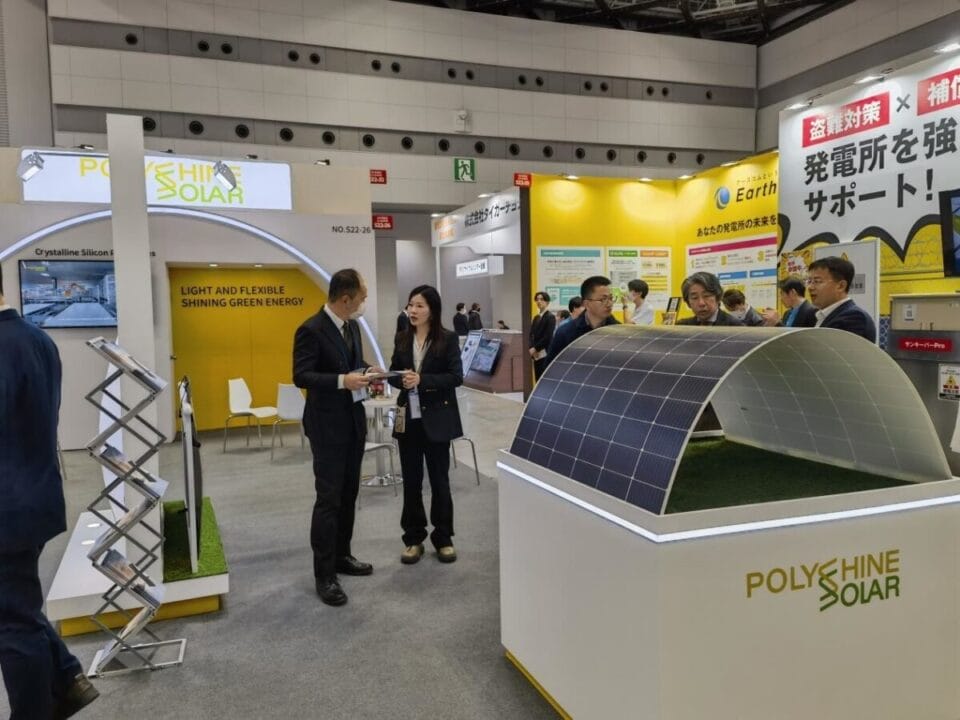
The company’s proposal is to simplify the solar energy adoption process, democratizing access through a product that can be installed on residential roofs, temporary structures, industrial warehouses, and even highway noise barriers. With a curvature radius of 0.5 meters, the panels are also adaptable to curved surfaces, a common limitation in traditional models.
Power And Durability In Focus
The solar panels from Polyshine are available in versions ranging between 505 W and 535 W of power, with solar energy conversion efficiency between 19% and 20.1%. Measuring 2,246 x 1,185 x 2.5 mm, the modules feature EVA encapsulation and IP68 certification, which guarantees protection against dust and water. Additionally, they are designed to operate in extreme temperatures, ranging from -40 °C to 85 °C.
According to the company, after 25 years of use, the flexible solar panels still maintain 84.8% of their original power, making them a viable alternative for long-term projects. Mounting can be done through adhesion, hanging, or using straps, which expands their application possibilities without incurring additional adaptation costs.
Practical Applications And Energy Efficiency
The lightness of the new solar panels has already allowed their installation in challenging urban contexts, such as noise barriers along highways, where constant exposure to vibrations and adverse conditions requires superior material performance. The use of highly transparent materials, according to the company, has enabled efficiency gains of up to 2% compared to similar models.
Although this number may seem small, Polyshine Solar estimates that, in an area of 1,000 m² covered by its panels, it is possible to generate about 5,000 kWh additional per year. This increase, when applied on a large scale, can represent a significant contribution to global solar energy production.
Tight Competition In China
The announcement of the new line of flexible solar panels comes at a time of intense competition among Chinese companies in the photovoltaic sector. The search for innovation has become a necessity in the face of the so-called “price war,” which has pressured profit margins and forced companies to invest in technical and logistical differentials.
China remains the main manufacturing hub for solar panels in the world, accounting for a large part of the global supply chain. However, the increase in supply and saturation of some markets has led manufacturers to focus on higher value-added products, such as the lightweight and adaptable panels launched by Polyshine.
Expected Impacts On The Global Market
The introduction of high-performance flexible solar panels with simplified installation can accelerate the adoption of solar energy in countries facing technical or financial challenges in deploying large photovoltaic structures. The model proposed by Polyshine can also stimulate new applications in urban, commercial, and industrial areas.
In the long term, experts predict that technologies like this will help expand the use of solar panels in regions with low infrastructure, promoting the decentralization of electricity generation and reinforcing the role of renewable sources in the global energy matrix.
Source: Xataka








-

-

-

9 pessoas reagiram a isso.