





 Portuguese
  English
  Spanish
  3 min of reading
  0 comments



Chinese Progress in Humanoid Robotics Highlights a Technological Leap by Creating a Machine with Performance Levels Close to Elite Athletes
China has created a life-sized humanoid robot capable of running at an impressive 10 meters per second, a performance that surpasses the speed of most human beings and repositioning the country at the center of global discussions about the future of advanced robotics. Named Bolt, in direct reference to the legendary Jamaican sprinter Usain Bolt, the android represents a technical milestone by combining locomotion control, dynamic balance, and high-performance propulsion systems into a single functional design.
The revelation occurred in Hangzhou, in eastern China, and quickly caught the attention of the international scientific community. This is because, until recently, humanoid robots still faced significant limitations when subjected to fast and unstable movements, such as high-speed running. However, Bolt breaks this barrier by demonstrating an extremely high cadence, even using shorter strides than those of an adult human.
The information was disclosed by Xinhua, the Chinese state agency, and resonated across various outlets specializing in science, technology, and artificial intelligence, expanding the debate on the practical use of humanoid robots in real environments.
-
Brazil is about to inaugurate the largest maritime surveillance system in its history, with radars, infrared cameras, and autonomous sensors installed on Ilha Grande to monitor the entire Brazilian coast in real time.

-
Archaeologists discover in China a 5,000-year-old tomb with over 350 artifacts, nearly 200 jades, and signs of intentional destruction, in a discovery that could be the gateway to a lost prehistoric kingdom.

-
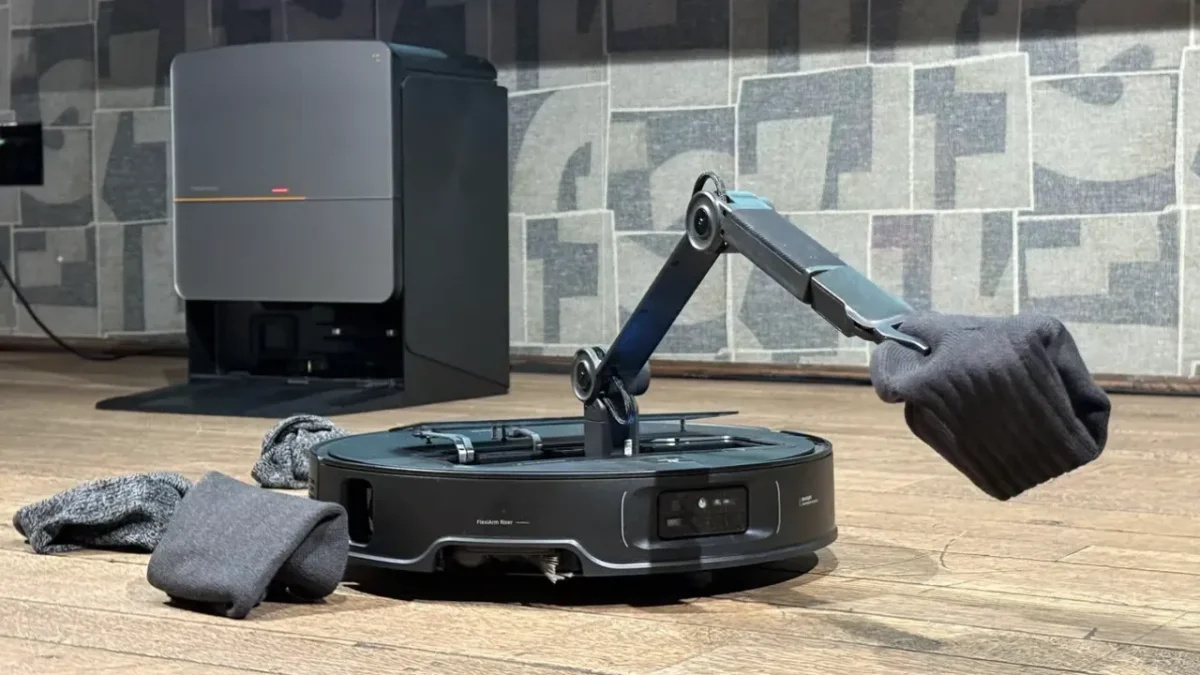
A vacuum robot with a five-axis mechanical arm capable of picking up objects from the floor, avoiding obstacles in real time, and continuing to clean on its own inaugurates a new generation of appliances that see, think, and act within the home.
-
Geographers redefine the Brazilian relief and confirm the presence of mountains in 14 states with a new system that changes historical criteria and alters the way the territory is classified.


Bolt Project Emerges from Collaboration Between University and Startups, Surpassing Traditional Robotics Limits
The humanoid robot Bolt was developed by a humanoid robotics innovation institute at Zhejiang University, in direct collaboration with two startups based in Hangzhou: Mirror Me and Kaierda. Both companies are involved in developing advanced robotic solutions and intelligent industrial systems, consolidating a highly integrated technological ecosystem in Zhejiang province.
According to the developers, the project represents a significant advancement in robotic locomotion control, dynamic balance at high speeds, and high-performance actuation systems, areas that have historically been complex within robotic engineering. Unlike traditional robots, which prioritize stability over speed, Bolt was designed to operate at the limit of mechanical performance.
The institute’s leader and founder of Mirror Me, Wang Hongtao, even symbolically competed with the robot on treadmills. In video footage released, it is possible to see that, although the human executes longer strides, the robot maintains a significantly higher movement frequency, allowing it to reach the mark of 10 meters per second with surprising stability.
This type of test not only evidences the robot’s mechanical capabilities but also the sophistication of the control algorithms, which must adjust the balance in fractions of a second to avoid falls or structural failures during the run.
Previous Records and Competitions Reinforce China’s Dominance in High-Speed Robots
Bolt does not emerge in isolation within the trajectory of the group responsible for its development. In 2025, the same team had already broken a record by presenting the Black Panther, a quadruped robot that surpassed the mark of 10 meters per second, establishing itself as one of the fastest robots ever recorded in its category.
Additionally, China’s progress in humanoid robotics has also been highlighted in competitive events. In August of last year, Beijing hosted the first edition of the Humanoid Robot World Games, a groundbreaking competition exclusively for humanoid machines. At the time, the robot Tien Kung won the 100-meter dash, completing the distance in 21.5 seconds, an impressive time for a bipedal android.
When analyzed collectively, these results demonstrate an accelerated evolution of Chinese robotics, especially in developing machines capable of performing complex physical tasks in dynamic environments. Consequently, experts point out that future applications could include logistics and rescue, as well as sports simulations, training, and mechanical endurance testing.
Thus, the Bolt robot represents not just a technological curiosity, but a clear signal that the race between humans and machines is entering a new phase — increasingly rapid, precise, and hard to ignore.
Source: XinhuaNet





-

-

-

-

-

-

64 pessoas reagiram a isso.