





 Portuguese
  English
  Spanish
  5 min of reading
  0 comments


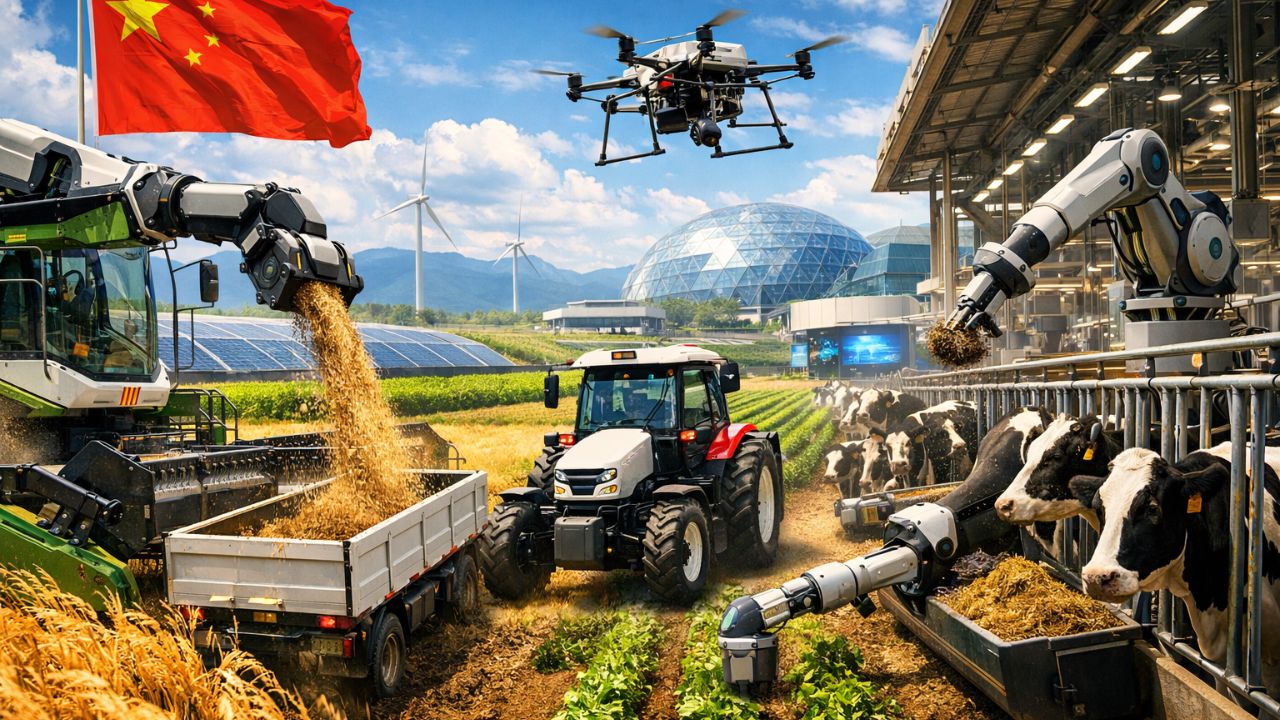
The Totally Robotic Farm Works As A Fully Robotic Farm, Using AI Agriculture, Autonomous Machines, And Advanced Sensors To Make Decisions And Execute Tasks Without Human Labor On A Daily Basis
The totally robotic farm inaugurated in China draws attention for a simple reason: it operates as a fully robotic farm, with automated decisions and execution performed by machines. In practice, the promise is clear: to plant, care for, monitor, and harvest without relying on human labor in field routines.
What supports this turnaround is the combination of AI agriculture, data integration, and automation. Instead of a single “intelligent” machine, the system relies on autonomous machines that are connected and on advanced sensors spread throughout the environment, forming a continuous circuit of measurement, analysis, and action.
How The Farm Totally Robotic Coordinates Everything Without People In The Field
The differential of the totally robotic farm is not just having robots, but coordinating them as a system. In a robotic farm, each piece of equipment has a specific role and operates based on data collected and processed in real time. The logic is to reduce improvisation and increase predictability, maintaining stable operations even when conditions vary.
-
The water that almost everyone throws away after cooking potatoes carries nutrients released during the preparation and can be reused to help in the development of plants when used correctly at the base of gardens and pots, at no additional cost and without changing the routine.

-
The sea water temperature rose from 28 to 34 degrees in Santa Catarina and killed up to 90% of the oysters: producers who planted over 1 million seeds lost practically everything and say that if it happens again, production is doomed to end.

-
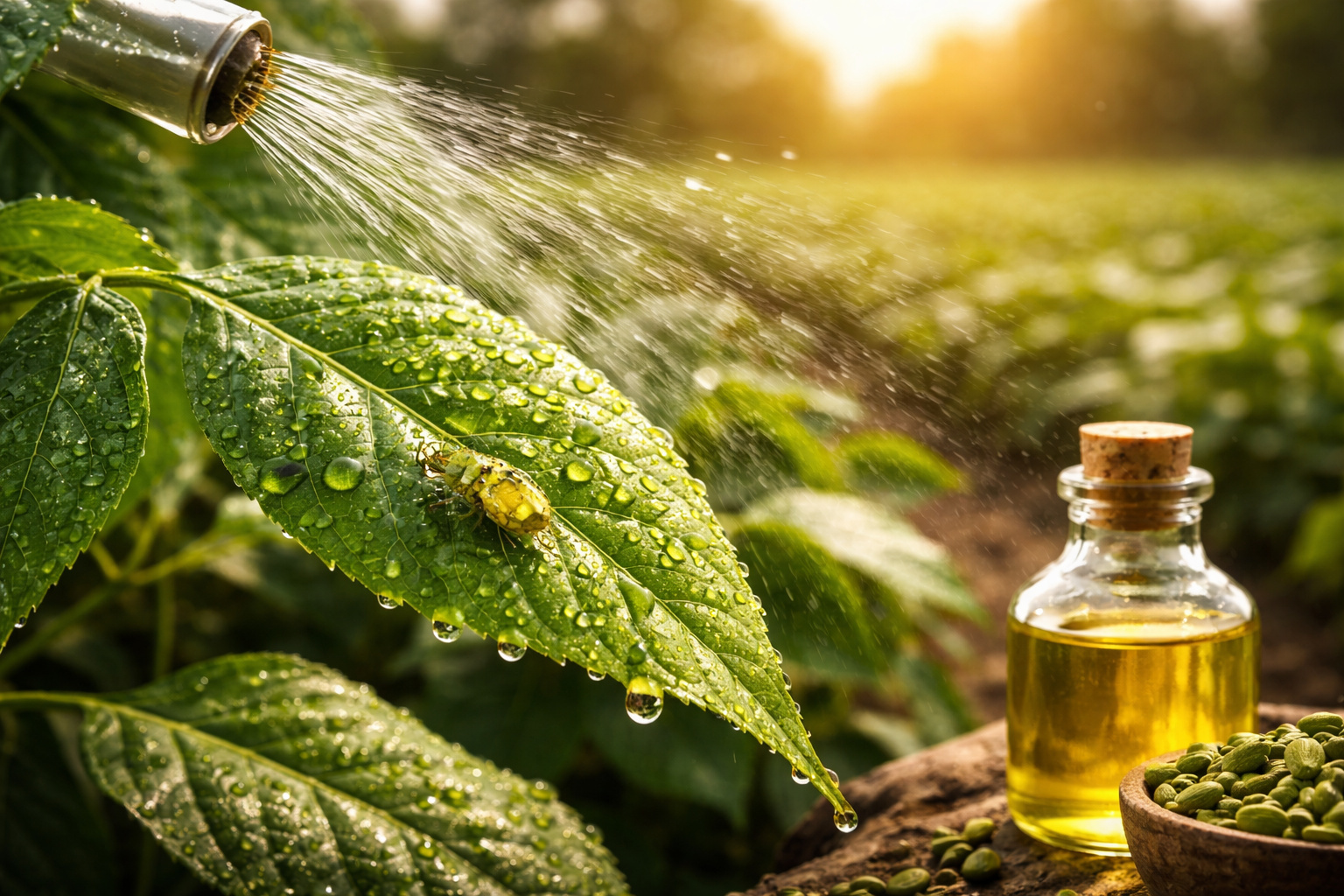
An Indian tree that grows in the Brazilian Northeast produces an oil capable of acting against more than 200 species of pests and interrupting the insect cycle, gaining ground as a natural alternative in soybean, cotton, and vegetable crops.
-
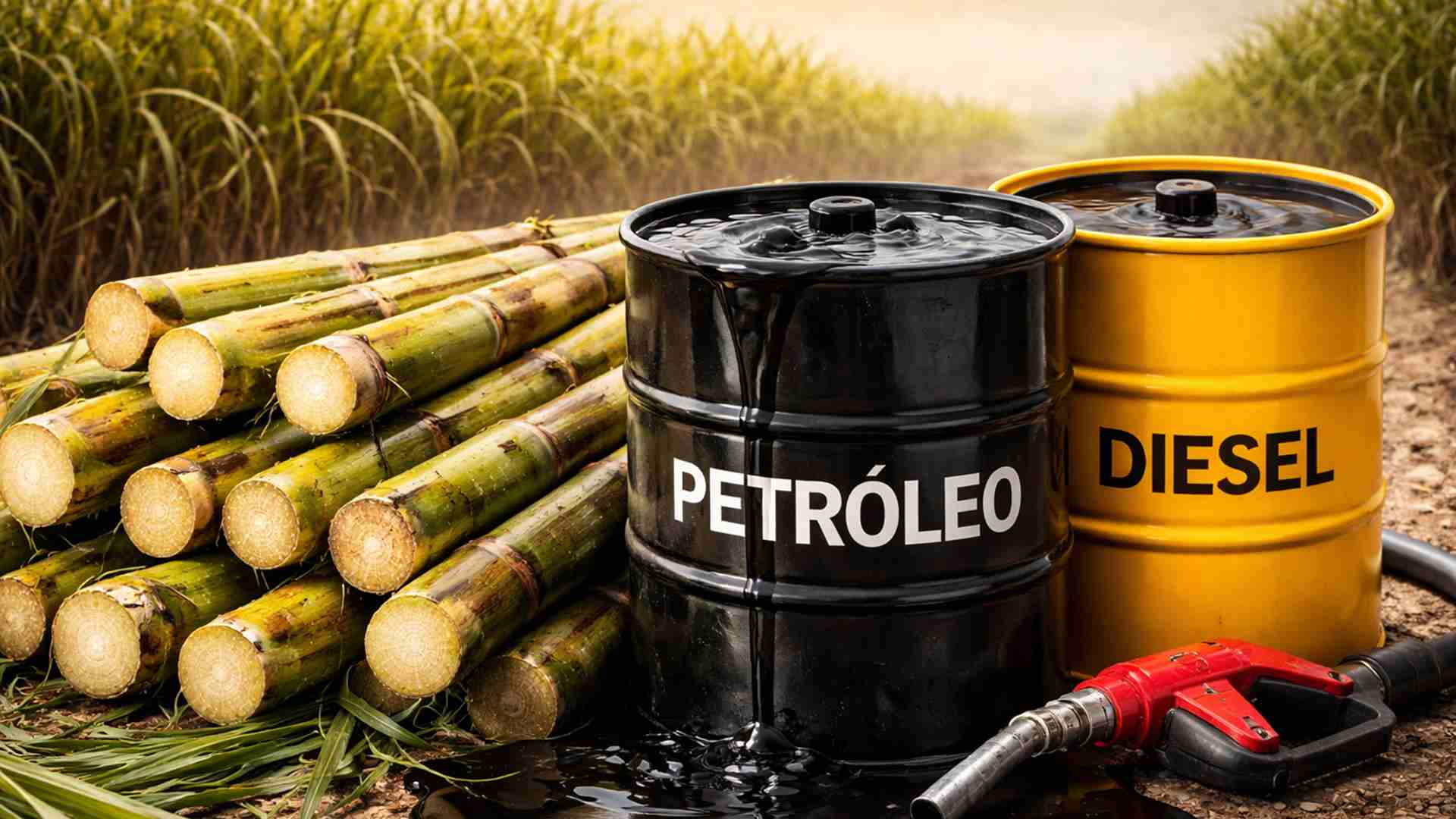
The rise in oil prices in the Middle East is already affecting Brazilian sugar: mills in the Central-South are seeing their margins shrink just as ethanol gains strength.

AI agriculture enters precisely this coordination layer. Instead of isolated decisions, AI evaluates the scenario, prioritizes tasks, and adjusts routines when something changes, such as soil moisture, planting windows, or harvest pace. This allows autonomous machines to work with shorter downtime and reduced rework.
The Role Of Advanced Sensors In Planting And Soil Management

In a totally robotic farm, planting depends on scenario reading, not on “feeling.” Advanced sensors, including in the soil, monitor conditions such as moisture and variables that affect crop development.
This constant monitoring is what allows actions to be calibrated precisely and avoid decisions based solely on routine or fixed calendar.
With advanced sensors feeding the system, the robotic farm can adjust operations dynamically.
AI agriculture interprets patterns and indicates changes in execution, such as adjustments to irrigation intensity and timing, as well as variations in management by area.
The expected result is to reduce waste and make the process more consistent, especially in scenarios of climatic variation.
Autonomous Machines In The Field And The Execution Of Day-To-Day Tasks

In practice, autonomous machines take on the heavy and repetitive work: movement, programmed operation, and execution of tasks in planned sequences.
In a totally robotic farm, this means that planting and part of the management can occur with little human intervention, because the system already knows the route, task, execution order, and operational parameters.
When the robotic farm operates in an integrated manner, the autonomous machines do not act as isolated units. They operate as a synchronized fleet, with central coordination and continuous adjustments made by AI agriculture.
The promise is to maintain efficiency even with rapid changes in the environment, as long as the data and energy infrastructure is stable.
AI Agriculture And The New Standard Of Decision-Making

The most sensitive point of the model is also the most transformative: AI agriculture takes on decisions that were previously human. In a totally robotic farm, AI does not just “recommend.”
It sets priorities, regulates operations, and influences operational planning based on signals captured by advanced sensors and on observed performance in tasks.
This changes the role of field knowledge. Instead of relying solely on local experience, the robotic farm seeks to standardize decisions at scale, using models to predict outcomes and reduce variation.
The gain, when it works, is the ability to repeat processes with greater consistency, even in successive cycles.
Livestock And Automation: Feeding, Monitoring, And Automated Routine
Automation does not stop at cultivation. In a totally robotic farm, livestock management can also be automated, with controlled feeding systems and continuous monitoring.
Advanced sensors and visual systems can track behavioral signals and patterns that help indicate changes in routine and possible problems.
In this scenario, the robotic farm integrates what happens in the barn with what happens in the field. AI agriculture can cross data on consumption, routine, and environment to adjust management parameters, maintaining a tighter control cycle.
The goal is to reduce operational failures and make care more predictable, without relying on a constant human presence in daily activities.
Energy, Maintenance, And The Operational Risk Of A Robotic Farm
Even with all the advancement, the totally robotic farm relies on a solid foundation to avoid stalling: energy, connectivity, and maintenance.
Autonomous machines require availability, replacement, and technical support, and advanced sensors need to function stably for AI agriculture to have reliable data.
Therefore, the model does not eliminate work, it changes the type of work. The robotic farm reduces daily manual effort but increases the importance of technical operation, maintenance, calibration, and system supervision.
When one link fails, the effect can spread, because the system is interdependent.
Vertical Farms And Automation In Controlled Environments

Beyond open fields, the discussion about the totally robotic farm connects to the advancement of controlled environments, such as vertical farms and hydroponic systems.
The logic is similar: advanced sensors monitor environmental variables, and AI agriculture adjusts parameters to maintain consistency.
In this type of operation, autonomous machines can take over internal routines of transportation and handling, while the robotic farm becomes a food production line with fine control of the process.
The main appeal is to reduce exposure to external variations, although costs and operational complexity remain critical factors.
What This Totally Robotic Farm Signals For The Future Of The Field
The totally robotic farm becomes a symbol of a larger change: the field as a data environment.
The robotic farm transforms decisions into measured, traceable, and adjustable processes, elevating the role of AI agriculture as the operational “brain.” Autonomous machines execute, advanced sensors measure, and AI decides.
At the same time, the advancement raises practical and social questions. The model suggests gains in efficiency and predictability, but also pressures for professional adaptation and data governance rules. When the decision moves from human hands to the algorithm, responsibility needs to be very clearly defined.
Do you think a totally robotic farm in Brazil would be an inevitable advancement or a risk due to reducing jobs, even promising more efficiency with AI agriculture, autonomous machines, and advanced sensors?









-

-

-

-

-

25 pessoas reagiram a isso.