





 Portuguese
  English
  Spanish
  5 min of reading
  0 comments


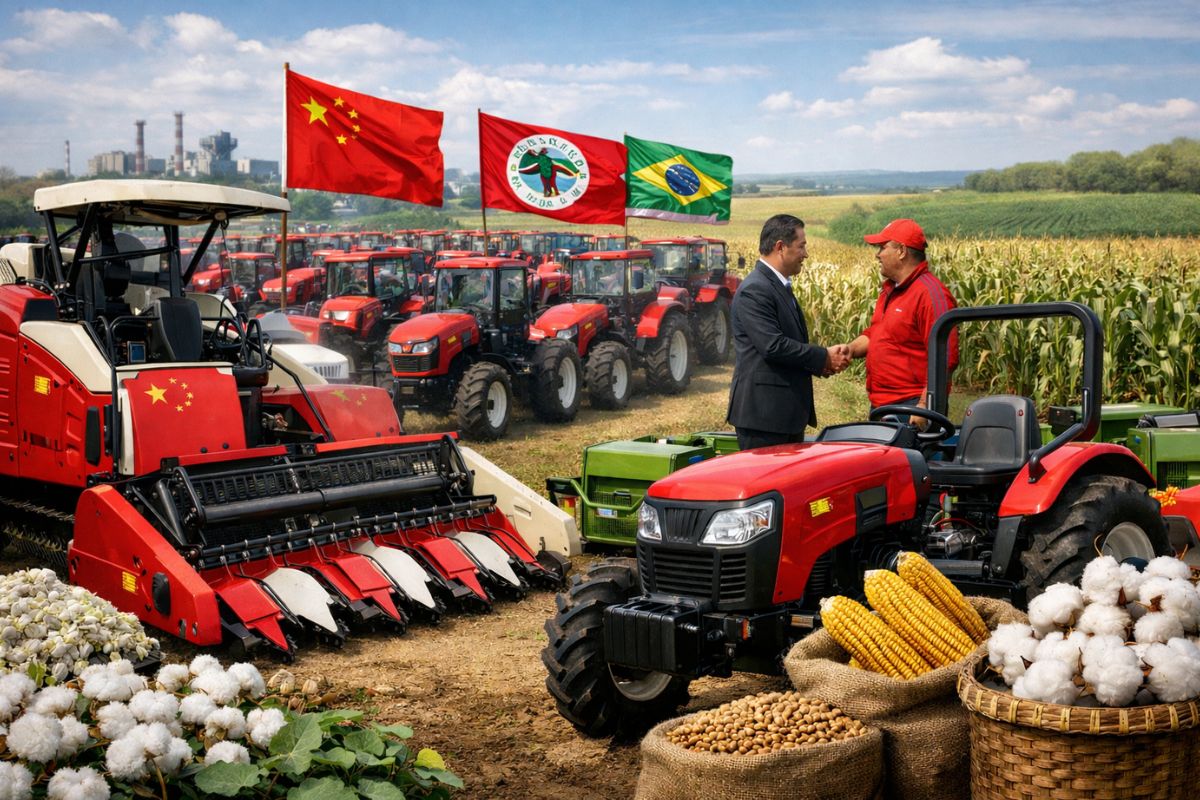
The Brazil–China Partnership Initiated in 2024 Distributed More Than 80 Small-Scale Agricultural Machines to Rural Communities, Focusing on the Northeast, Where the Lack of Technology Weighs. The Goal Is to Facilitate the Planting of Cotton, Beans, and Corn and Open a Debate on Manufacturing Equipment Locally for Small Brazilian Farmers.
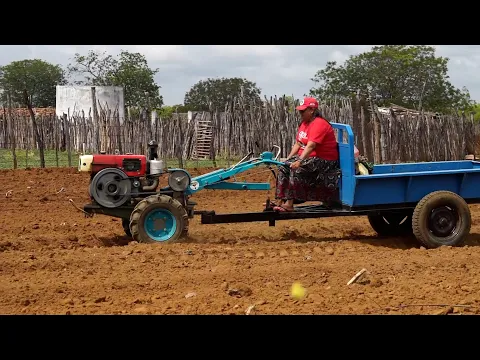
In the collective areas cultivated by the MST in the Northeast, small-scale agricultural machines began to change the pace of work for those who previously relied almost solely on human labor and improvisation. Creoa Marcolino, a member of a group producing in one of the country’s poorest regions, describes the turnaround simply: before it was “very difficult”; after the equipment, planting started to fit better into the day and the body.
The initiative launched in 2024 brought over 80 pieces of equipment imported from China, distributed to farming communities in different parts of Brazil. The proposal is not to “industrialize” the fields as if they were a large export farm, but rather to bring technology closer to the real size of those who produce much of the food consumed in the country.
The Right-Size Mechanization: Why Small Scale Is Not “Less” Technology
In Brazil, there are machines in surplus when it comes to giant crops aimed at commodities, but the standard changes completely when the property is small.
-
The sugar-energy sector advances with agricultural technology, but agricultural productivity still raises concerns.

-
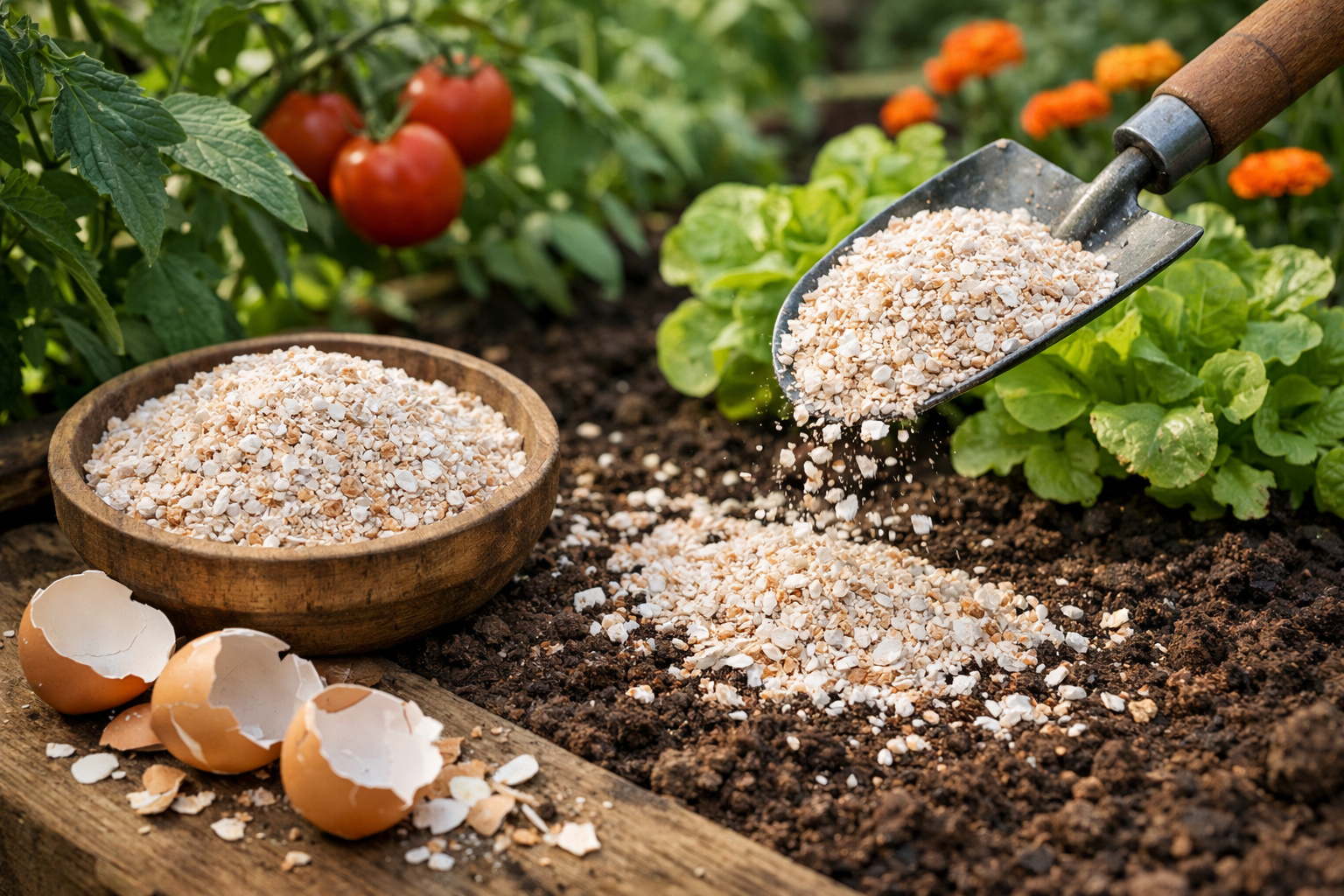
The eggshell that almost everyone throws away is made up of about 95% calcium carbonate and can help enrich the soil when crushed, slowly releasing nutrients and being reused in home gardens and vegetable patches.
-
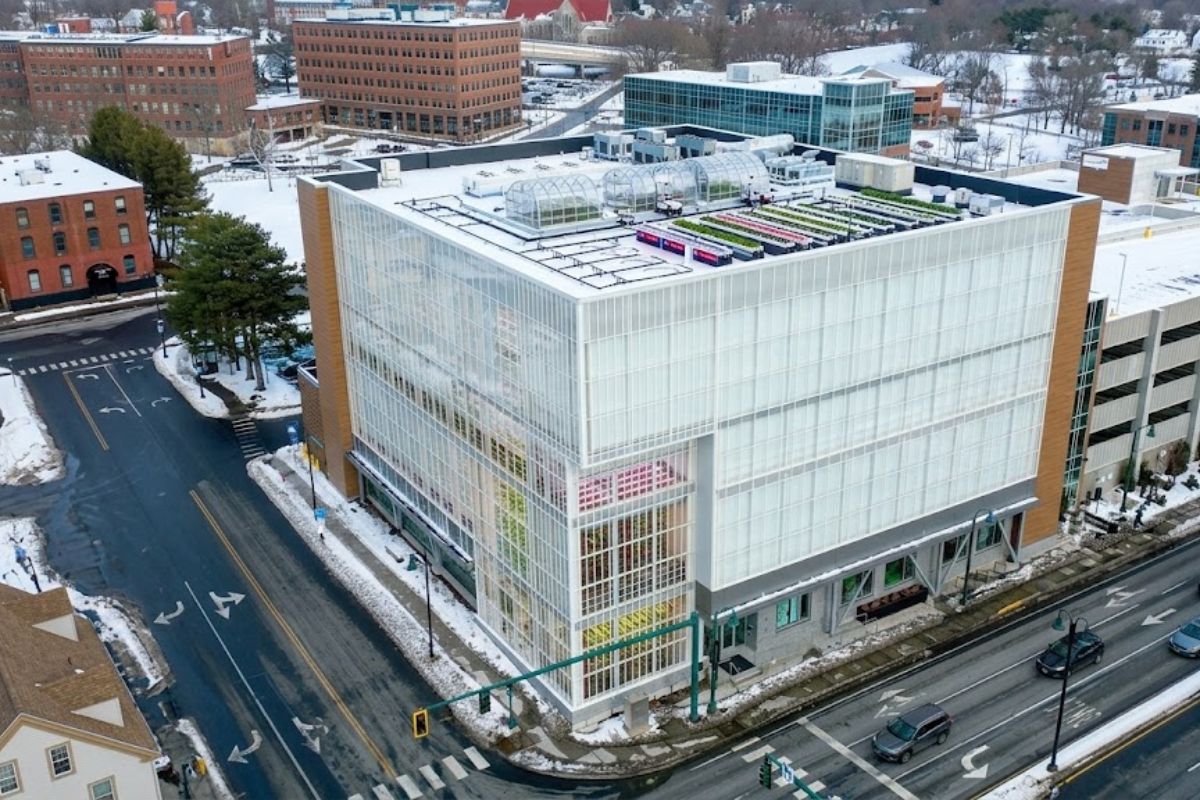
This farm in the United States does not use sunlight, does not use soil, and produces 500 times more food per square meter than traditional agriculture: the secret lies in 42,000 LEDs, hydroponics, and a system that recycles even the heat from the lamps.
-
The water that almost everyone throws away after cooking potatoes carries nutrients released during the preparation and can be reused to help in the development of plants when used correctly at the base of gardens and pots, at no additional cost and without changing the routine.


Those planting in small areas need equipment that can enter the land, work under varied environmental conditions, and, importantly, fit within the budget.
That’s where small-scale agricultural machines come in: they tend to address the most frequent bottleneck for small producers—the time and energy spent on the repetitive stages of cultivation.
When mechanization is compatible with the economic reality, it not only speeds up tasks but also reduces losses due to planting delays, soil preparation failures, and short management windows.
From Port to Field: What Changes When the Machine Arrives in the Community
The arrival of agricultural machines in rural communities usually has an immediate effect: the organization of work changes even before production increases. Instead of each family or group “making do” to complete heavy tasks, usage schedules, rotation, collective maintenance, and decisions about operational priorities according to the time of year emerge.
In daily life, light mechanization can mean more uniform planting, better bed preparation, and a greater capacity to handle more than one crop.
This is reflected in the reports from those in the field: today they plant cotton, beans, and corn, and whenever it is possible to plant, they plant. The machine does not create rain or resolve prices, but it reduces the friction that prevents the field from happening at the right time.
Cotton, Beans, and Corn: The Logic of Diversity and the Role of Equipment

Growing cotton, beans, and corn is not just a list of products: it is a strategy for security. Diversifying helps to cope with climate risk, pests, market variations, and internal consumption needs. Yet, diversity also requires more operations throughout the cycle: preparation, sowing, weeding, management, and harvesting at different times.
With agricultural machines suitable for the producer’s size, diversity stops being “heroism” and can become planning. When the tool matches the scale, the farmer can better choose what and when to plant, instead of being pushed into a single crop due to physical limitations and lack of time.
Experience Sharing: Study in China and Adaptation to Real Brazil

The partnership is not limited to sending equipment. There is a group of MST members in China studying how the mechanization process occurred there and to what extent this experience can contribute to Brazil.
This matters because mechanization is not just about buying a machine: it involves method, training, maintenance routine, choice of implements, and adjustment to soil type and community organization.
An economist studying poverty reduction strategies assesses that initiatives of this type can have a significant impact precisely because they target a structural point: access to the means of production.
When the equipment “fits” the economic conditions, it becomes a lever for productivity and income, rather than an impossible cost to maintain.
Manufacturing in the Northeast: Price, Maintenance, and the “Local Chain” Effect
Today, the machinery used in the communities arrived imported from China. But there is already discussion, at the state level, about plans with Chinese companies to manufacture the equipment locally.
This debate usually arises from a practical problem: buying is one step; keeping it running is the daily battle, and it depends on parts, maintenance, logistics, and cost.
There is a strong argument behind the idea of a factory in the Northeast: there is a market for small-scale agricultural machines because they fit the reality of around 60% of rural properties with up to 5 hectares.
Producing closer reduces replacement time, can lower costs, and facilitates the formation of a maintenance network, which is crucial for the machine not to become “stagnant junk” due to a simple component being unavailable.
What Needs to Go Right for It to Be a Durable Gain (and Not Just Spot Delivery)
For mechanization to truly “take control” of daily life as local coordinators advocate, several points need to progress together: training, preventive maintenance, governance of usage, and clear criteria for priority. Without this, the machine may generate conflict, become concentrated in a few hands, or operate below potential.
At the same time, when the community defines rules and creates a routine, the equipment becomes infrastructure. And infrastructure has an indirect effect: it improves quality of life by reducing extreme physical effort, opens space for production management, and strengthens the group’s autonomy in decision-making.
The gain, in this scenario, is not just to harvest more: it is to depend less on improvisation.
The arrival of more than 80 small-scale agricultural machines in Brazil, within a partnership initiated in 2024, highlights an old dilemma: technology exists, but it does not always arrive at the right size.
If the next step is to combine suitable equipment, collective organization, and the possibility of local manufacturing, mechanization in the Northeast can cease to be an exception and become a consistent path to produce more and live better.
And in your region: what is the stage of cultivation that most hinders the life of the small farmer soil preparation, planting, weeding, harvesting, or transportation?
Do you think that small machines shared by the community work, or do they always end up becoming a dispute?










-

-

-

-

23 pessoas reagiram a isso.