





 Portuguese
  English
  Spanish
  4 min of reading
  0 comments


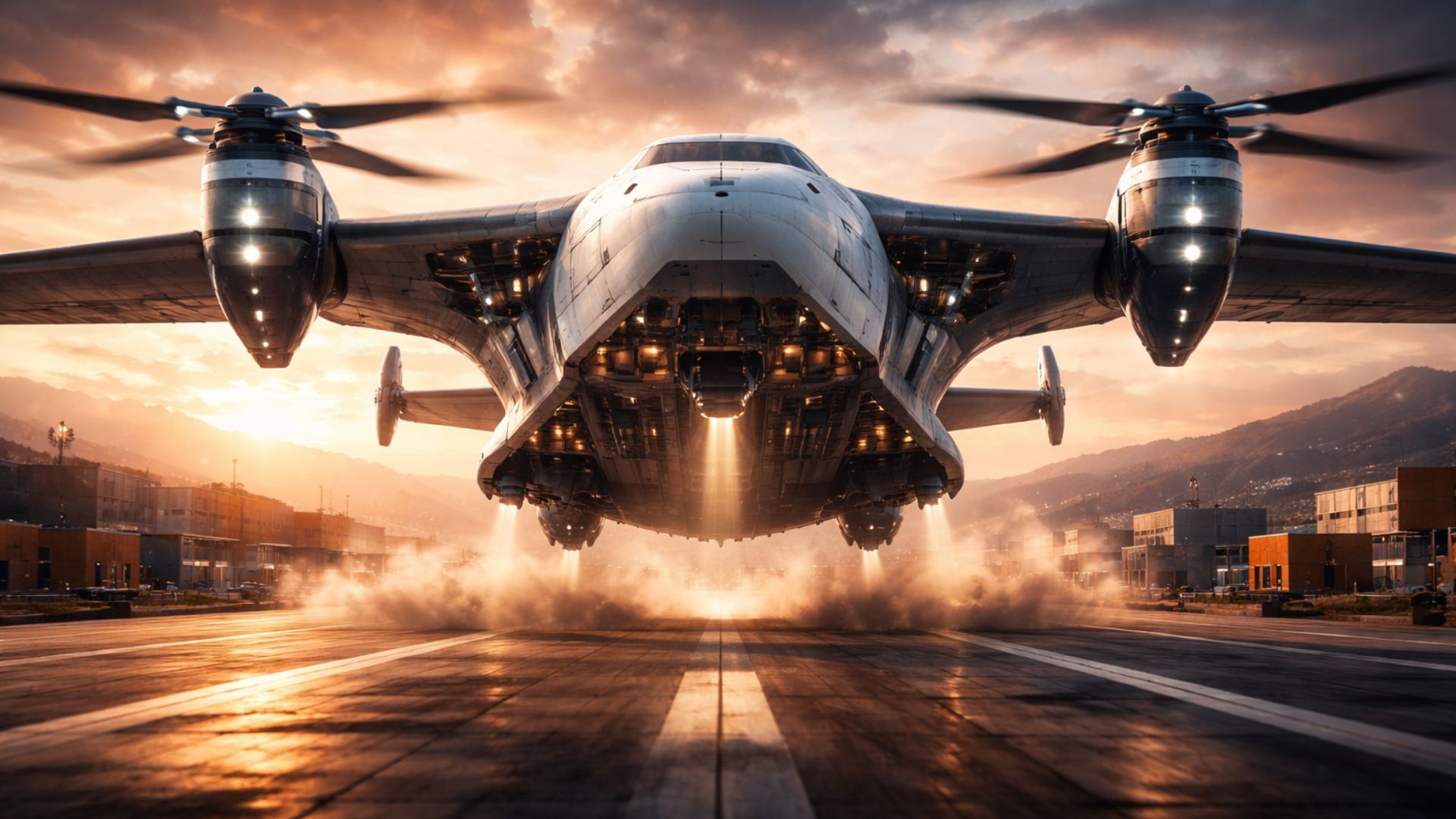
Inaugural Flight of Chinese Hybrid Cargo Drone Marks Unprecedented Integration Between Aerospace and Automotive Sectors, with Focus on Unmanned Long Range Logistics, Reduction of Operational Costs and Expansion of the So-Called Low-Altitude Economy, Considered Strategic by Authorities and Companies in the Country.
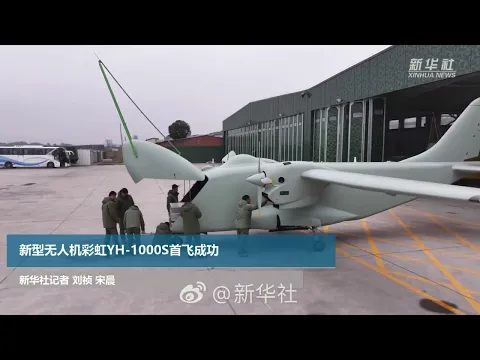
China conducted the inaugural flight of the Caihong YH-1000S, an unmanned cargo drone with hybrid propulsion, on February 1st, in Liangping, Chongqing, designed to enhance range and cargo capacity in logistics missions.
The test confirmed basic flight parameters, such as stability, control, and hybrid system operation.
Developed by the 11th Institute linked to the China Aerospace Science and Technology Corporation, the project highlights the integration between aerospace industry solutions and components used in the automotive sector for new energy vehicles.
-
Motorola launched the Signature with a gold seal from DxOMark, tying with the iPhone 17 Pro in camera performance, Snapdragon 8 Gen 5 that surpassed 3 million in benchmarks, and a zoom that impresses even at night.

-
Satellites reveal beneath the Sahara a giant river buried for thousands of kilometers: study shows that the largest hot desert on the planet was once traversed by a river system comparable to the largest on Earth.

-
Scientists have captured something never seen in space: newly born stars are creating gigantic rings of light a thousand times larger than the distance between the Earth and the Sun, and this changes everything we knew about stellar birth.

-
Geologists find traces of a continent that disappeared 155 million years ago after separating from Australia and reveal that it did not sink, but broke into fragments scattered across Southeast Asia.

This approach is presented as a way to accelerate technological maturity and reduce industrialization costs.
Initial Test Validated Stability and Control Under Real Conditions
The debut trial was described as a comprehensive performance check in flight, emphasizing the response of the hybrid power system and control systems.
In reports released by Chinese media, the aircraft took off and operated with stability, allowing engineers to check aerodynamic behavior and navigation commands under real conditions.
Although fine parameters of the flight profile were not detailed, the initial assessment was treated as a milestone for the advancement of the testing campaign.
The next phase should include longer flights, evaluations with payload, and simulations of typical transport missions, before any decision on large-scale production.

Integration with Electric Automotive Industry is Central Point of the Project
One of the axes of the YH-1000S is the adoption of a hybrid architecture developed in cooperation with a Chinese manufacturer from the electric automotive sector.
The combination of conventional and electric energy would aim to shorten takeoff and landing distances, extend range, and increase payload capacity compared to previous initiatives.
The choice of technologies widespread in the automotive sector tends to facilitate access to already consolidated supply chains.
This model prioritizes advanced energy management and production modularity, with potential to accelerate the transition from prototype to mass production.
The partner automotive manufacturer, however, has not been identified in a verifiable manner in publicly available information.
Project is Linked to Strategic Programs of the Chinese Aerospace Industry
The YH-1000S is attributed to the 11th Institute associated with CASC, a state conglomerate with a broad scope in China’s aerospace ecosystem.
The Caihong family includes different platforms of drones, and the new cargo aircraft appears as an attempt to occupy an intermediate space between light drones and manned air transport.
Focus is particularly on routes with limited infrastructure, where conventional solutions face operational restrictions or high costs.
The institutional framework helps explain the emphasis on civil and state applications.
Scenarios mentioned include logistics in remote areas, emergency support, and monitoring activities.
Expected Missions Include Logistics, Emergencies, and Monitoring
The mentioned uses for the YH-1000S encompass cargo transport, supply delivery in disaster situations, and civil support operations.
Tasks related to climatic events and maritime surveillance are also included.
The central logic is that an unmanned cargo aircraft, with greater autonomy and capacity, can reduce costs and shorten turnaround times in regions where roads, ports, or airports cannot meet demand.
On the other hand, widespread adoption depends on factors beyond aerodynamic performance.
Certification, traffic regulations, and safe integration into airspace remain bottlenecks for larger drones.
Low-Altitude Economy Boosts Development of Cargo Drones
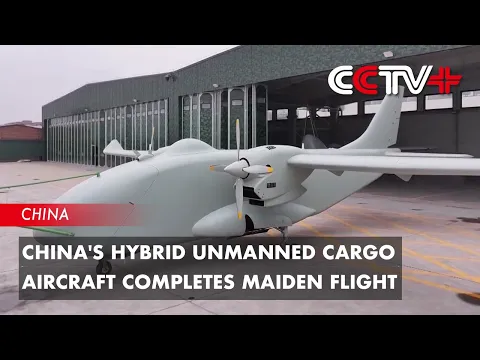
The presentation of the YH-1000S occurs in a context of government encouragement of the so-called low-altitude economy.
The term is used to describe economic activities involving drones and other aircraft operating at lower altitudes.
Among them are logistics, emergency responses, technical inspections, and public services.
This concept has gained recent traction in Chinese public policies.
Authorities have begun to associate it with industrial expansion goals and the need for clearer regulatory frameworks.
In recent months, revisions to civil aviation legislation included specific rules for unmanned aircraft.
Changes foresee certification and identification requirements, especially for medium and large drones.
The movement indicates that technological advancement is occurring in parallel with greater regulatory control.
Next Phase of Testing Should Increase Operational Requirements
After the inaugural flight, the trend is for the program to advance to more demanding testing, with longer mission durations.
Performance evaluations with different payload profiles are also planned.
The validation of the hybrid system in multiple operational regimes is considered a critical stage of development.
If results are confirmed, the YH-1000S could establish itself as a relevant piece in the emerging market for large cargo drones.
This segment aims to serve routes where speed, predictability, and access are decisive.
It remains to be seen how quickly the platform will evolve from the experimental stage to regular operations.
When these unmanned cargo aircraft begin to compete with traditional airplanes, how will the balance between logistical efficiency, operational cost, and safety control be maintained?






-

-

4 pessoas reagiram a isso.