





 Portuguese
  English
  Spanish
  4 min of reading
  52 comments


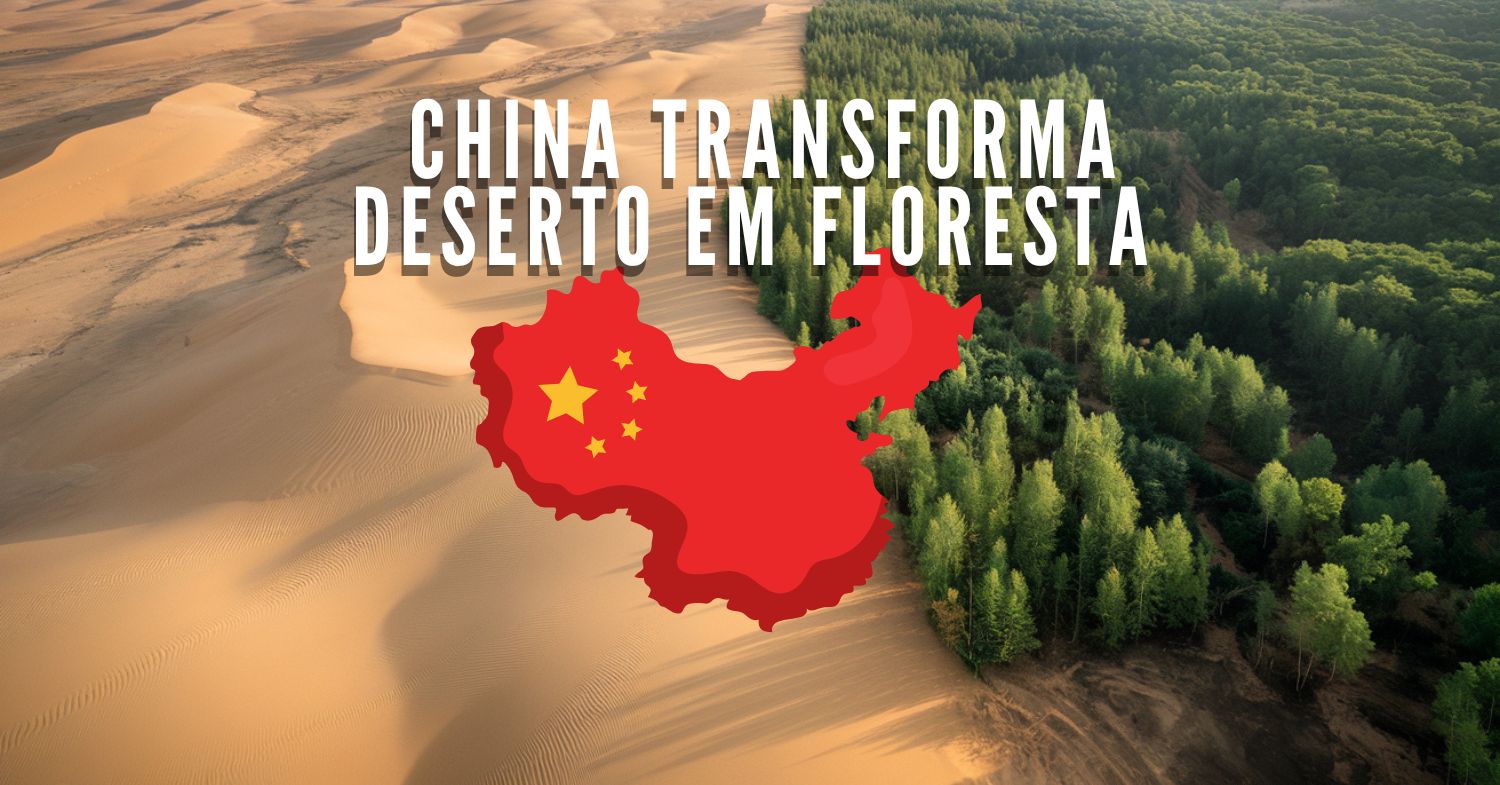


China Leads The Largest Reforestation Project In The World To Combat Desertification In The Taklamakan Desert, Transforming 3,000 Kilometers Of Arid Land Into Green And Sustainable Forests!
The largest reforestation project in the world: China is at the forefront of one of the most ambitious ecological projects in history. Known as the “Green Great Wall,” the plan involves planting billions of trees around deserts like Taklamakan and Gobi, aiming to contain desertification and reduce the impacts of sandstorms. This initiative promises to change the landscape of affected areas and protect millions of people from the consequences of advancing deserts.
What Is The Green Great Wall?


The “Green Great Wall” of China is a monumental effort to create a forest barrier along the borders of large deserts, such as Taklamakan. This “wall” is not made of stones but of trees, many of which are red willows and saxaul, planted to combat soil erosion and block winds that spread sand.
The largest reforestation project in the world began in 1978, and it is expected to be completed only by 2050. When finished, the green belt will have about 100 billion trees covering thousands of kilometers. This ecological engineering project aims to reduce the expansion of desertification, which today affects more than 27% of China’s land.
-
What if the Sun disappeared suddenly? Simulation shows Earth in darkness within minutes, extreme cold, and rapid collapse of life on the planet.

-
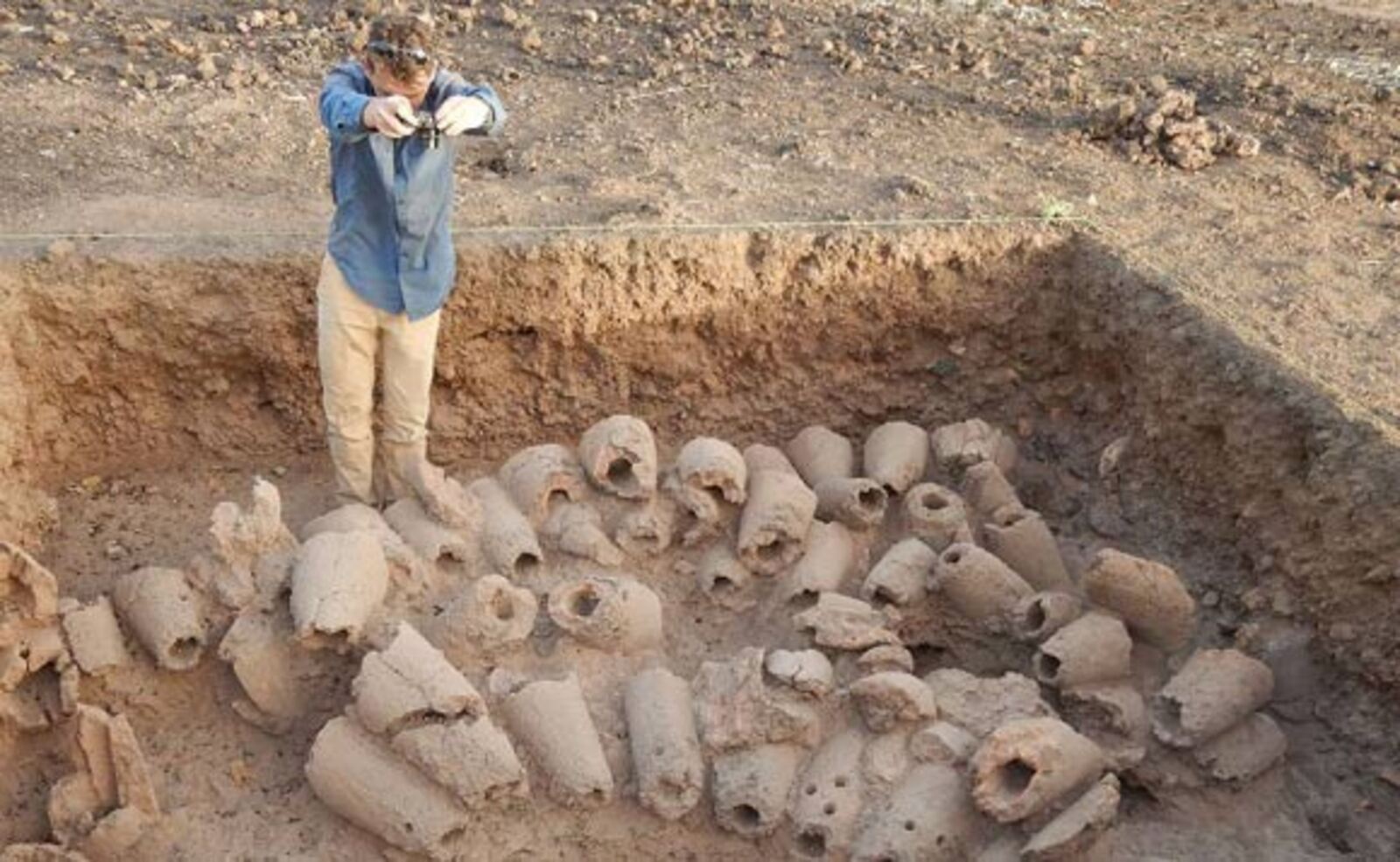
A 2,400-year-old iron foundry has been discovered in Senegal with 100 tons of slag, 35 furnace bases, and signs of nearly eight centuries of continuous metallurgical activity.
-
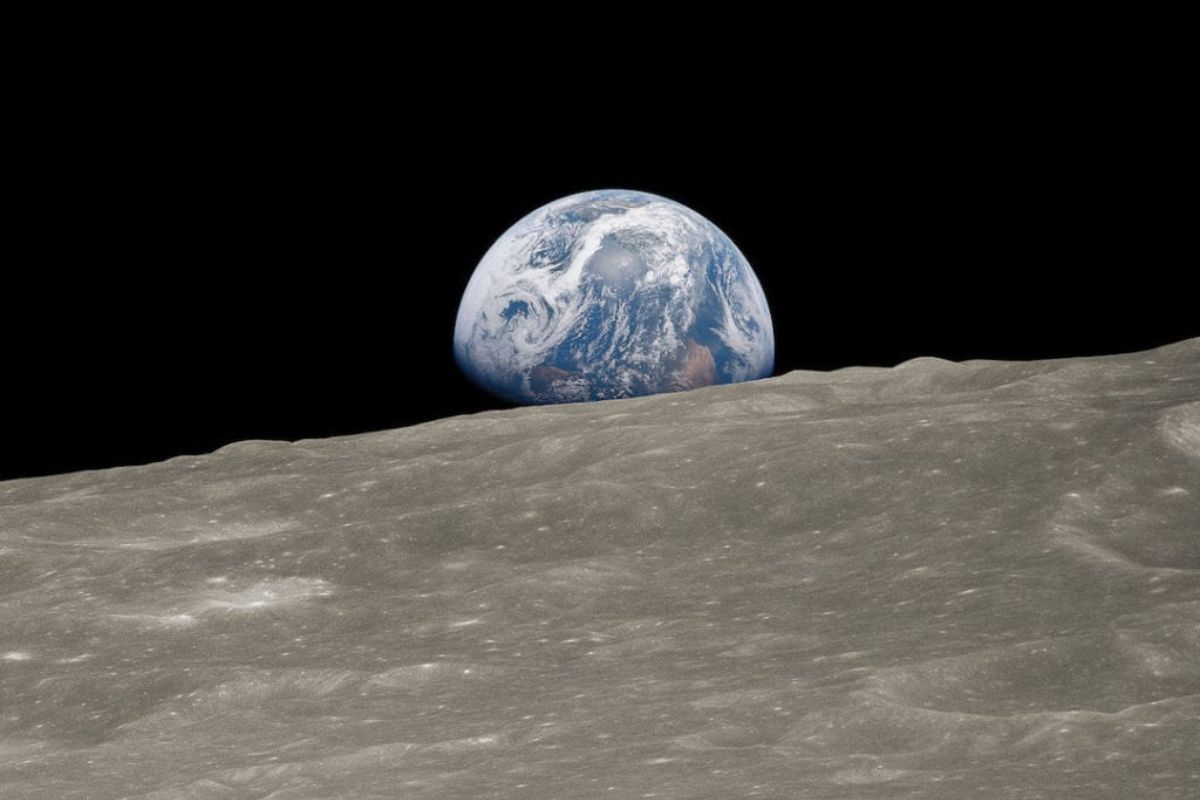
Four humans are flying towards the Moon inside the Orion capsule launched by the SLS rocket, and on April 6, Artemis II will disappear behind the far side of the Moon without communication with Earth for nearly an hour.
-
Worlds covered by water, atmospheres filled with hydrogen, and the possibility of life beyond Earth: ocean planets are rewriting the map of cosmic search and forcing scientists to rethink where to look.


Desertification: The Enemy Threatening Ecosystems And Populations In Various Parts Of The World
Desertification is a growing problem that transforms fertile land into arid areas. This process, caused by natural factors and human activities such as deforestation and unsustainable agricultural practices, threatens ecosystems and populations in various parts of the world.
In China, the problem is alarming. More than 400 million people are directly affected by the advance of deserts, which harms agriculture and quality of life. The sandstorms generated in these deserts do not limit themselves to Chinese territory: particles can cross continents, leading to respiratory problems in distant populations.
A recent report from the UN warned that 77.6% of the planet’s land was drier in 2020 than it had been three decades ago. The study states that desertification is a “global existential threat” and requires urgent and innovative solutions.
Progress In Desert Protection
The decision of China to build the Green Great Wall aims to halt the advance of sand and protect essential agricultural areas for the country. The Taklamakan Desert, for instance, is already completely surrounded by more than 3,000 kilometers of planted forests.
This green barrier reduces wind strength and minimizes damage caused by sandstorms, protecting the surrounding land. Additionally, reforestation helps stabilize the soil, reducing erosion and allowing the recovery of degraded areas.
Criticism Of The Largest Reforestation Project In The World
Despite its positive impact, the largest reforestation project in the world is also facing criticism. Many experts question the effectiveness of planting non-native trees in desert regions, arguing that it could lead to problems such as ecological imbalance and excessive water consumption in areas where the resource is scarce.
Some studies also point out that the so-called “green walls” are not always effective in containing sandstorms. This is because, depending on the species of tree planted, the belts may not be able to withstand the extreme conditions of the deserts.
Even so, the Chinese government remains determined. For Beijing, the project’s benefits outweigh the risks. The country sees the initiative as an opportunity to lead global efforts in combating desertification.
Positive Impacts Of The Largest Reforestation Project In The World
Although criticisms exist, the advances already recorded in China show that the project can bring various benefits. Among the main impacts are:
- Protection Of Agricultural Land: The green barrier helps preserve fertile areas essential for food production in the country;
- Reduction Of Sandstorms: By blocking strong winds, the planted forests decrease the intensity and frequency of storms;
- Soil Stabilization: With less erosion, the soil has a better chance of recovering and supporting new forms of life;
- Climate Benefits: The increase in forest cover contributes to carbon capture, helping to mitigate the effects of climate change.
These advances make the Green Great Wall an example of how local actions can have a global impact in combating environmental degradation.
An Inspiring Solution For The World
The Green Great Wall of China is more than a response to the advance of desertification in the country. It is also an example of how determination and investment in environmental projects can transform landscapes and protect populations.
With the Taklamakan Desert surrounded and plans to expand the belt to the Gobi Desert, China is showing that combating environmental degradation is possible, even on a large scale. Despite criticisms, the project remains an inspiration for other nations facing similar challenges.
The planet needs ambitious initiatives like this. And if the Green Great Wall can fulfill its promise, it will be a milestone in the fight against desertification and in preserving the future of the global environment.









Maravilhoso!!!!
O planeta precisa de iniciativas ambiciosas como essa
China! Que exemplo de responsabilidade!