





 Portuguese
  English
  Spanish
  5 min of reading
  114 comments


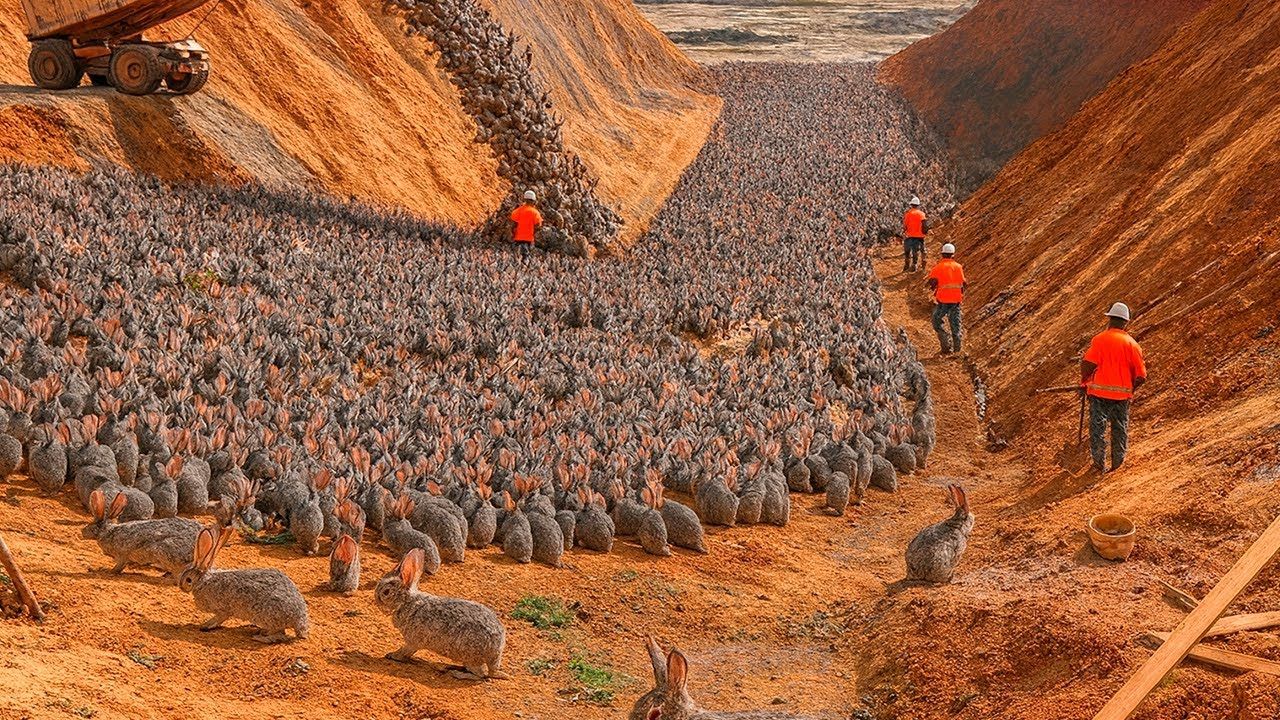


With 1.2 Million Rabbits, Deep-Rooted Willows, and a Mega Solar Energy Strategy, a Desert Encroaching on Homes and Farms Becomes a Living Laboratory of Ecological Engineering.
The idea seems absurd at first glance, but China has invested in 1.2 million rabbits as a practical piece of a larger plan to combat desertification and accelerate the transformation of sterile sand into nutrient-rich soil.
The project combines biology, logistics, and energy: trees to anchor dunes, animals to “produce” humus, and solar panels to generate electricity, create shade, and stabilize the microclimate. The result becomes a showcase of how engineering can reorganize a hostile environment.
The Real Problem: Dunes Advancing and Food Being Swallowed by Sand
The crisis was not aesthetic; it was structural. A significant portion of Chinese territory has been affected by desertification, and some regions have become synonymous with cutting winds, extreme cold in the winter, and scorching heat in the summer.
-
The Argentine government celebrates the lowest poverty rate in 7 years, but experts warn that the methodology has changed, real wages have fallen, unemployment has risen, and the number of people on the streets of Buenos Aires has increased by 57% since Milei took office.

-
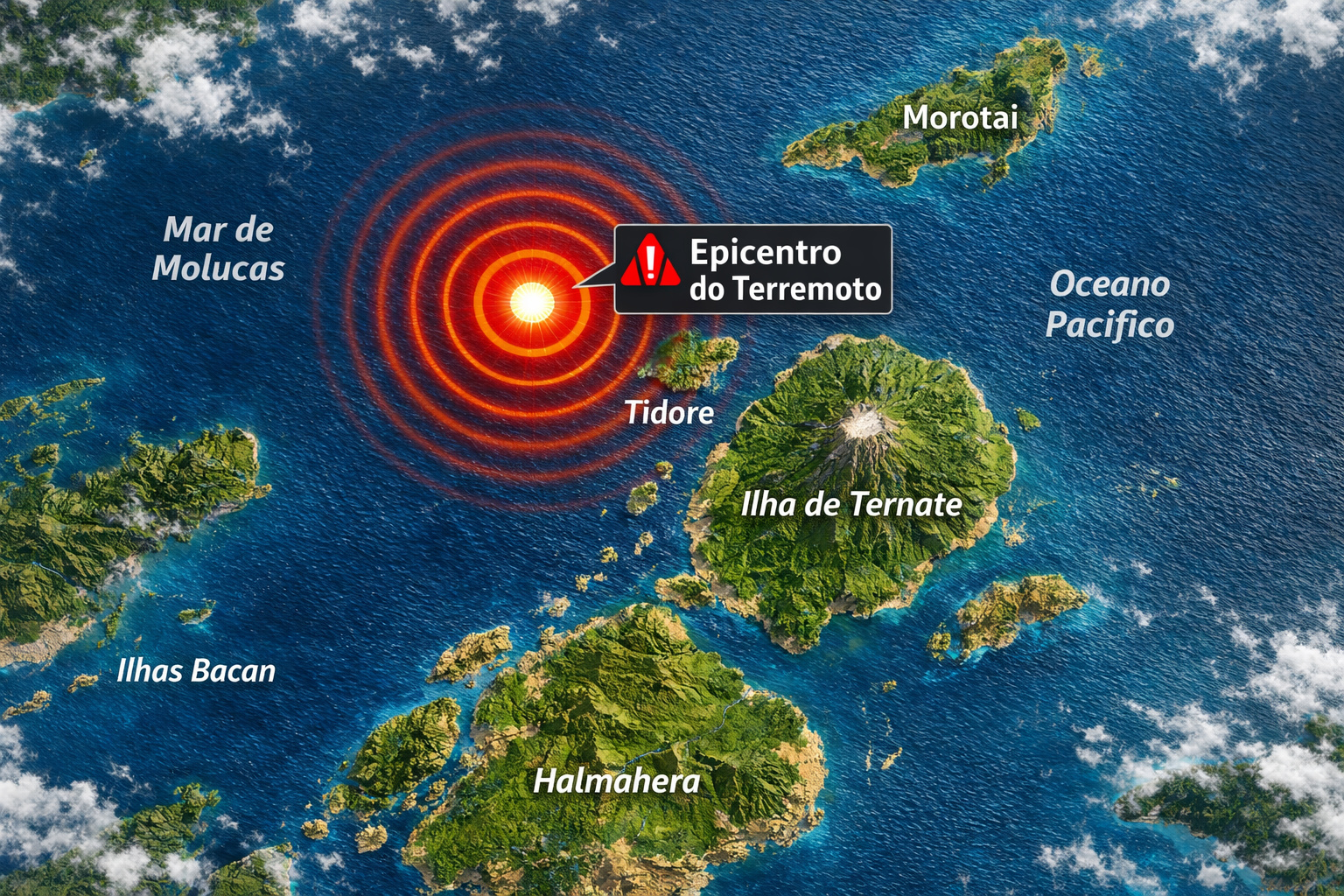
7.8 magnitude earthquake in Indonesia frightens the population, triggers tsunami alert, and hits an island with over 200,000 inhabitants this Thursday.
-
Google will finally let you change that embarrassing Gmail address you created in your teenage years without losing any accounts, logins, or old emails: the feature is already available in the United States.

-
Heading to Brazil in a Bonanza F33 single-engine aircraft: a couple departs from Florida on a visual flight, makes technical stops in the Caribbean to refuel and organize paperwork, and begins the staged crossing until they reach the country.

In places like the Kubuk Desert, the sand has advanced dozens of kilometers over decades, burying roads, farms, and productive areas.
The impact appears in a chain: loss of production, pressure on communities, and direct risk to infrastructure. The government tried to drill wells, ban grazing, and install barriers, but the advance of the desert continued like a slow catastrophe.
The Turn Begins with Trees that Act as “Living Anchors”

The foundation of the plan was to plant willows adapted to harsh conditions. The advantage is physical: these trees have roots capable of descending very deep in search of groundwater, and thus act as anchors to hold the dune in place.
However, planting in the desert isn’t just “dig and done.” The work requires mapping moisture, quickly creating holes in the sand with jets of water to reach wetter layers, inserting young seedlings, and protecting everything with fences and nets to reduce wind strength. Without this, the seedling is uprooted or buried within hours.
Why 1.2 Million Rabbits Enters the Story
The trees stabilize but do not “create land” by themselves. There was a need to accelerate soil enrichment. That’s where the most unexpected component comes in: 1.2 million rabbits of the Rex breed, used as a biological engine within a controlled system.
The point is not to release animals into the desert and hope for the best. The project operates as a closed cycle: the willows provide leaves and shelter, the rabbits live on farms and feed on these leaves, and the manure becomes a natural fertilizer rich in essential nutrients for the sand to start coming to life.
The “Miracle” is Soil Chemistry: Manure Becomes Humus and Attracts Vegetation
The desert is poor in nutrients. Manure, on the other hand, delivers nitrogen, phosphorus, and potassium, exactly the type of base that alters the soil dynamics.
With 1.2 million rabbits depositing fertilizer on a large scale, the sand begins to darken, retain moisture, and approach humus.
There is another practical effect: the rabbits spread seeds along with the manure, helping to “plant” new grasses. This accelerates the cycle because more vegetation improves moisture retention, reduces erosion, and opens up space for more tree growth.
Money Keeps the Engine Running: The “Rabbit Industry” Funds the Project

In addition to the environmental role, rabbits serve as an economic pillar. The project uses the sale of rabbit-related products, such as pelts and meat, to finance the ongoing work in the desert.
The base text describes this as a gear that transforms environmental recovery into a revenue model.
This part is crucial because long-term projects die when they rely solely on “goodwill.”
Here, the logic is different: the system itself begins to pay for itself, allowing for scaling up reforestation, fencing, logistics, and operations.
Solar Energy as a Second Leg: Electricity, Shade, and Wind Control
With the local economy more stable, the plan scales up with solar energy. The region has abundant sunshine, and the project takes advantage of this with a solar power plant built in the shape of a giant horse, containing hundreds of thousands of panels, noted as visible and record-breaking.
The ingenuity is not just in electricity generation. Under the panels, the shade reduces temperature and evaporation, while the structure also cuts wind. This creates a microenvironment where vegetation can grow, something rare in exposed dunes.
The Ecosystem Becomes a “Machine” of Management: Animals Control Vegetation Under the Panels
When grass grows under the panels, it can become an operational risk. To control this, animals are introduced for pasture management, such as sheep and geese, functioning as biological cutters.
The scenario is almost surreal: panels above, animals below, and a desert once called the “sea of death” sustaining a productive system.
This design reinforces the central thesis: it’s not wild nature; it’s guided nature, with biology functioning within a control engineering.
The Desert Recedes, and Groundwater Responds
One of the strongest results described in the material is the recovery of groundwater over time.
Cited reports indicate that, in about 20 years, the groundwater level in the region has risen between 1.5 m and 2 m. When water returns, life returns with it: more plants, more fauna, and more stability.
This point gives meaning to the project’s implicit slogan: engineering does not “defeat” the desert with brute force; it wins by reorganizing the mechanisms that keep the soil alive.
Why It Worked in China and Failed in Other Places
The text makes a direct contrast with Australia, where rabbits became a pest due to the absence of control and predators, with a devastating effect on vegetation and soil. The difference here is the word that defines the entire case: control.
In China, 1.2 million rabbits are not released to dominate the landscape. They remain on farms, within a designed system, with feeding and production integrated into the goal of “producing” fertile soil. The same animal changes roles when the management model changes.
What This Story Proves About “Ecological Engineering”
The case shows that containing desertification on a large scale does not depend on a single solution. It depends on layers: trees to hold, biology to enrich, energy to support infrastructure, and an economic model to avoid breaking down midway.
It also offers an implicit warning: any large intervention needs strategy, monitoring, and adaptation, because the desert is a dynamic system, not a static scenario.
Do you think a plan with 1.2 million rabbits is brilliant for combining nature and control, or dangerous for relying so much on rigorous management to stay on track?








Considero um projeto inovador, pautado no uso de conhecimentos científicos orientados por estratégias com foco na melhoria das condições ambientais contemplando o bem estar humano. Por que na China funciona e em outras regiões (por ex, na Austrália) não parece funcionar? Creio que na China o uso de conhecimento científico pelas ciências ambientais prioriza o ser humano, um indicador é o Livro Vermelho de Mao Tsé Tung, cujas metas para o desenvolvimento da China focam vencer a fome de dezenas de milhões de chineses e, por conseguinte, impulsiona até hoje os planos de desenvolvimento do país. Enquanto que no Ocidente e, nesse caso, o Brasil é um exemplo, as ciências ambientais é movida por uma espécie de ideologia conservacionista, que se assemelha à religião onde se prioriza a “espécie”, táxon, separando-a da relação com o(s) ser(es) humanos. O Brasil tem um patrimônio de recursos naturais, de biodiversidade, extraordinário e pode compatibilizar, equilibrar, desenvolvimento humano com a proteção da biodiversidade. Mas para isso precisa superar a ideologia que torna as ciências ambientais prejudicada por cientificismo com pouca aderência à realidade e necessidades das populações mais pobres. O referido exemplo chinês é uma excelente base de reflexão para pensarmos os projetos e políticas ambientais no Brasil, principalmente no Norte (Amazônia) e Nordeste brasileiros.
Claro o brasileiro é que só pensa em dança kkk e termina dançando
A cultura chinesa nos ensina muito , levam pesquisa a sério encontrando soluções magníficas