





 Portuguese
  English
  Spanish
  8 min of reading
  0 comments


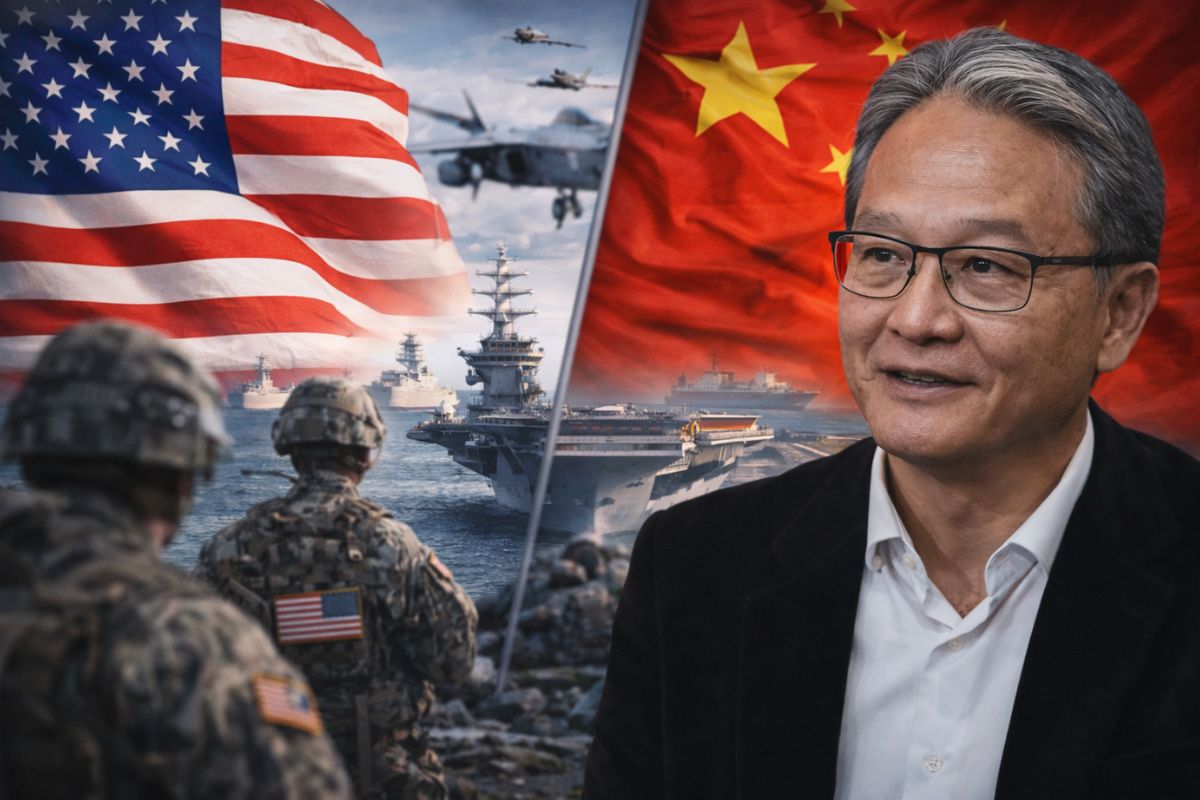
In the analysis attributed to José Kobori, China would not rush to assume global hegemony because the unipolar order led by the United States still functions, for Beijing, as a strategic buffer in Asia, containing regional tensions, immediate military costs, and dangerous historical reactions in a rapidly changing scenario.
China is often presented in public debate as the power that will inevitably try to replace the United States in global leadership. The interpretation put forth by José Kobori follows a different direction and proposes a less intuitive hypothesis: for Beijing, a sudden change in hegemony may be riskier than advantageous in the short and medium term.
The argument does not stem from sympathy for Washington, nor from denial of China’s advancement. It is based on strategic calculation, historical memory, and political cost. The central idea is simple and uncomfortable at the same time: leading the global system does not only mean power; it means taking on crises, expenditures, pressures, and enemies.
The Geopolitical Thesis That Reverses Expectations About China
In the presented interpretation, China is not rushing to assume the hegemonic position because the current arrangement still provides it with indirect benefits. While the United States bears most of the responsibility for global projection of power, conflict management, and alliance maintenance, Beijing preserves space to grow economically without carrying the same level of international political wear.
-
The government requests the Federal Revenue Service for a new system to automate the income tax declaration, reducing errors, time, and bureaucracy for millions of Brazilians.

-
Pix in installments, international Pix, and contactless payment without internet: the Central Bank revealed the new features coming to the tool that is already used by almost every adult in Brazil.

-
Mercado Livre has just started selling medications with delivery in up to three hours to your door, and this move could completely change the way Brazilians buy medicines on a daily basis.

-
In Dubai, rising tensions from the war in the Middle East are causing super-rich individuals to leave the Gulf and direct their fortunes to a new financial refuge in Asia.


This point helps to clarify who is at the center of the reasoning. On one side, China, thinking long-term and about regional stability. On the other, the United States, as the power that still sustains the unipolar architecture. In the middle of this board, Asia emerges as the territory where a hasty transition of power could trigger the most dangerous cascading effects.
Kobori also associates this behavior with a long-term historical Chinese view, citing the experience of a civilization with over 5,000 years of continuity. The implicit message is that Beijing does not need to transform economic ascension into immediate hegemony to achieve strategic goals.
Practically, this means separating two ideas that often appear mixed in the debate. China can expand influence, trade, military capacity, and diplomatic presence without necessarily wanting, at this moment, the complete package of global leadership costs. Growing is not the same as taking on the entire system’s bill.
Why Hegemony Can Be a Cost and Not Just a Prize
One of the keys to the analysis is economic. Hegemony, according to the presented argument, costs money, structure, and political capital. It requires the capacity to intervene, arbitrate crises, maintain alliances, sustain military presence, and manage conflicts that do not always yield direct gains for the leader.
At this point, China appears as a partial beneficiary of the current order. It still heavily relies on external demand and the stability of the international system to export, produce, and maintain growth. If the geopolitical arrangement collapses quickly, the adaptation cost may rise before the leadership gains appear.
The argument also touches on something sensitive: the difference between regional power and global power. Even acknowledging China’s strength, Kobori describes China as a very large military power, but regional, unable to project force on a global scale like the United States does today. This does not diminish Beijing’s importance but limits the type of responsibility it can realistically bear without overly increasing risk.
The comparison gains weight when citing numbers regarding American military presence, including reference to around 800 bases abroad. Regardless of political agreement, the technical point is that this infrastructure represents a capacity for response and coercion that China does not replicate globally to the same degree, and replicating it would require time, resources, and tough internal choices.
The Japan Factor and Historical Memory as Strategic Restraint in Asia
The strongest and least intuitive element of the thesis is the role of Japan in the Chinese perception. Kobori argues that, for China, the main historical concern on the Asian continent is not only the pressure from the United States but also the memory of invasions, massacres, and episodes related to imperialist and militaristic Japan.
This part of the reasoning shifts the focus. Instead of merely looking at Washington and Beijing as direct rivals, the analysis suggests that American hegemony also functions as a constraint on regional actors, including Japan, which remains under a strategic umbrella from the United States. In the logic presented, the permanence of this arrangement reduces the chance of an accelerated arms race in Asia.
When Kobori mentions Taiwan, increased defense spending, and the expansion of Japanese military capacity, he signals the type of scenario that worries Beijing. If the United States were to quickly retreat and transfer the full responsibility of balance to the region, China would, according to this argument, have to react in a tougher and more costly manner.
This is an important point to understand why there is supposedly no Chinese haste. It is not about passivity but calculation. An unorganized transition of the global order could create, for China, a regional environment worse than the current one, with more border tension, more militarization, and less predictability.
The Rise of China, Rivalry with Russia, and the Game of Convenience with the United States
The argument also brings back a historical aspect often overlooked in simplified debates. In previous decades, especially in the 70s and 80s, China had significant concerns about Russia due to the land border and strategic risks of proximity, which relativizes the idea that the central confrontation has always been solely with the United States.
In this context, the analysis suggests that Washington also had an interest in allowing or tolerating China’s rise at certain moments as a way to balance power in Eurasia. This reinforces an uncomfortable but recurring notion in geopolitics: adversaries can be useful at certain stages, as long as they serve a larger goal of containment.
The argument follows this line by mentioning American attempts to create a distancing between Russia and China in more recent phases. The reading is not one of friendship among powers but of permanent tactical rearrangements. Those who only observe the commercial or military dispute of the present may miss the historical layer of alternating conveniences.
Therefore, Kobori’s thesis does not describe a conforming China but a cautious China. It may compete for space, expand power, and respond to American pressure while assessing that a sudden fall of American hegemony would create a dangerous void within Asia itself. Caution, in this case, is not weakness; it is risk management.
Dollar, American Decline, and the Difference Between Hegemonic Crisis and System Collapse
Another central part of the analysis addresses the hegemony of the dollar as the basis of American power. Kobori links American external projection capacity to the role of the currency, noting that defending this monetary power is strategic for sustaining influence, financing, and income extraction on a global scale.
The discussion becomes more sensitive when signs of declining dollar strength and market reactions mentioned in the argument come into play, including the perceived impact on exchange indexes and fears of sharp movements. The message is that even those who wish for change in the world order may fear a transition too rapid, because complex financial systems tend to react poorly to abrupt shifts in power.
At this point, an internal critique of the United States emerges, especially regarding wealth concentration. Kobori cites the idea that the richest 0.1 percent of the population would concentrate half the wealth of the country and uses this insight to argue that part of American fragility is domestic, not just external. This broadens the debate, moving the analysis of war and diplomacy to economic modeling and income distribution.
At the same time, he advocates for a multipolar world as a more stable and collaborative horizon. The essential difference, however, lies in the pace of transition. The thesis does not say that China rejects influence; it suggests that Beijing would reject assuming the total costs of hegemony prematurely amid a still disorganized system.
What This Hypothesis Explains and Where It Encounters Resistance
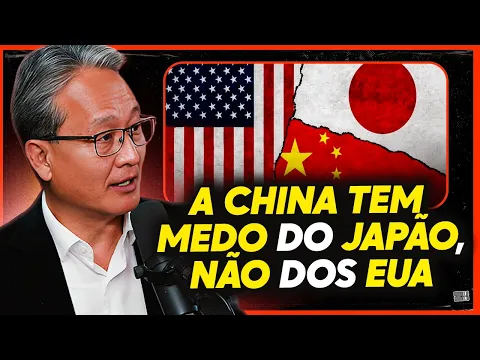

As a geopolitical reading, Kobori’s hypothesis helps explain why China can combine regional assertiveness, economic expansion, and cautious discourse regarding global leadership. It also offers a more complex answer to a common question of whether Beijing wants to immediately replace Washington. Following the logic presented, the answer tends to be less straightforward than common sense imagines.
The analysis also sheds light on a point that often gets overlooked. In geopolitics, the problem is not just who rises but who holds the structure while it changes. If the rising power does not yet want to take on that burden and the dominant power loses the capacity to sustain it without internal crisis, then the transition becomes the main factor of instability.
Still, this reading encounters resistance because it challenges simpler narratives, both those portraying China as an automatic candidate for total hegemony and those treating the United States merely as an external obstacle. Kobori’s own argument mixes history, military strategy, economics, and war memory, demanding a less emotional and more patient analysis.
In other words, the thesis does not eliminate rivalry between China and the United States. It reorganizes the question. Perhaps the most urgent question is not who will lead the world tomorrow but who has a real interest in preventing the transition of power from happening chaotically today.
The hypothesis presented by José Kobori places China in a less obvious position in the debate about global hegemony. Instead of rushing to reach the top, what emerges is a calculation of cost, regional risk, and historical memory, with particular attention to balance in Asia, the role of the United States as a constraint, and the effects of a hastened transition on Japan, Russia, the dollar, and regional security.
If you had to prioritize a risk for the coming years in Asia, would you choose a rapid withdrawal of the United States, a regional arms race, escalating tensions between China and Japan, or a financial crisis linked to monetary disputes? State which scenario you consider most likely and which would have the most immediate impact on people’s daily lives.









Seja o primeiro a reagir!