





 Portuguese
  English
  Spanish
  5 min of reading
  2 comments


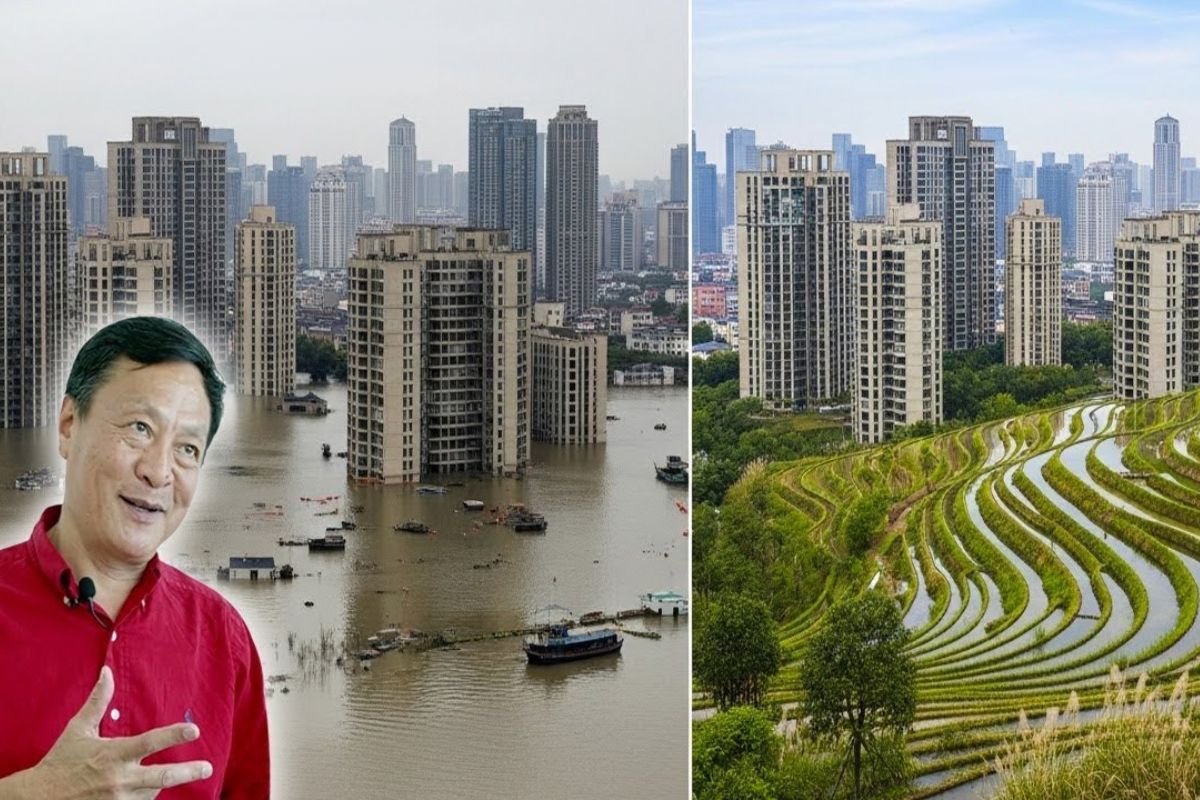


Inspired by Pre-Modern Rural China, Sponge Cities Recover Ancestral Water Knowledge to Face Floods, Pollution, and Extreme Heat. By Rejecting Rigid Concrete, the Model Utilizes Wetlands, Rain Gardens, and Permeable Surfaces to Absorb, Filter, and Reuse Water, Transforming Dozens of Cities After Decades of Technical and Political Skepticism.
Did you know that something extraordinary is already happening in cities around the world, driven by a Chinese landscape architect who decided to look back instead of insisting on futuristic solutions based solely on concrete? Kongjian Yu initiated an urban revolution by recovering traditional water knowledge and proving that sponge cities work on a real scale, even under intense rainfall and accelerated urbanization.
For over a decade, his ideas were ridiculed by authorities and engineers accustomed to gray infrastructure. Still, the advancement of flooding, river degradation, and increased urban heat forced a profound reassessment, placing sponge cities at the center of urban policies in China and global debates on climate adaptation.
Accelerated Urbanization and the Collapse of the Concrete Model

Since the mid-19th century, the world has undergone an accelerated transition from a rural lifestyle to modern urban styles, driven by industrialization, technology, and economic expansion. In China, this process was even faster and more intense, especially from the 1990s onward, when the country experienced unprecedented economic growth.
-
Oldest tree on the planet reappears after 130 years of searches: Wattieza, 385 million years old, was 10 meters tall and had no leaves or seeds; Gilboa fossils in New York solved the mystery in 2007.

-
A 48-square-meter house assembled in hours with 4,000 bricks made of recycled plastic that does not absorb moisture, has natural thermal insulation, and costs less than 90,000 reais in a complete kit.

-
Luciano Hang revealed that Havan’s air fleet has already accumulated more than 20,000 landings, 10,000 flight hours, and 6 million kilometers traveled, and he says that without the planes, the company would never have grown so quickly.

-
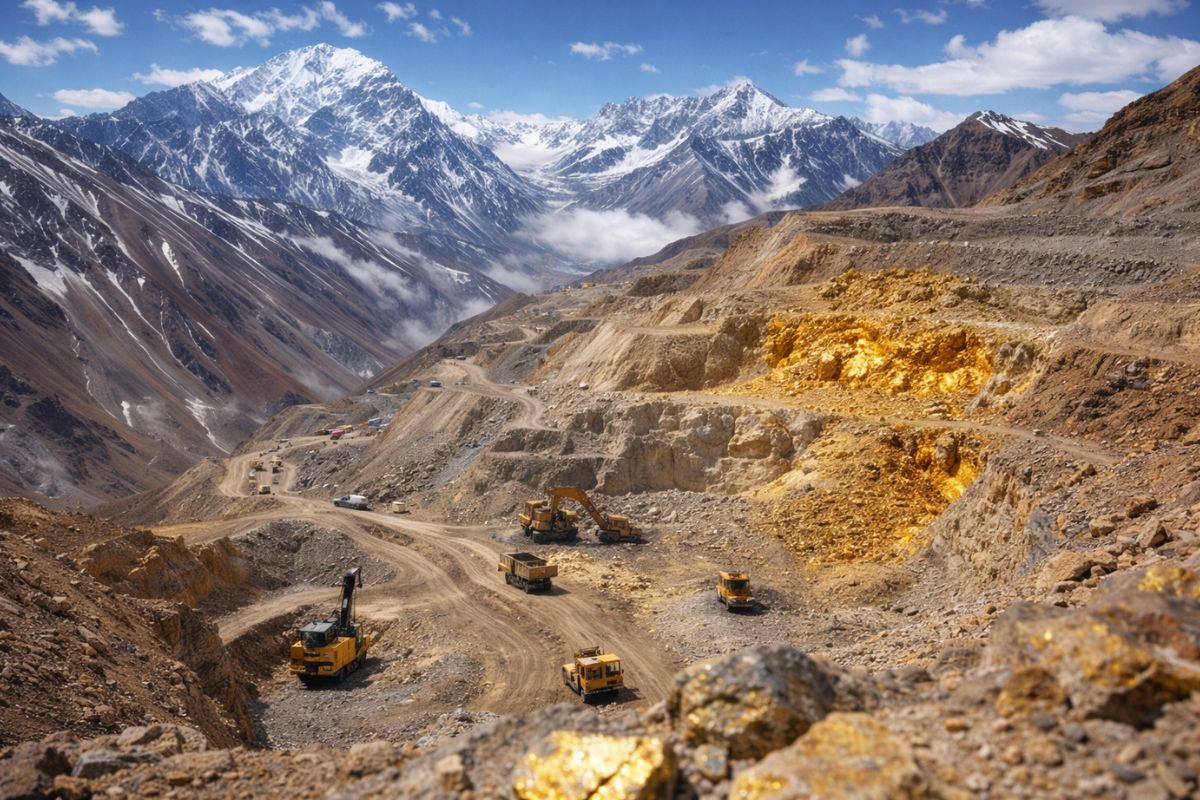
A historical discovery in the Andes Mountains reveals a gold deposit valued at 770 billion reais hidden over 4,000 meters above sea level on the border between Chile and Argentina, and the whole world is watching.

More than 125 million people migrated from the countryside to work in cities, drastically expanding impervious areas. Concrete began to dominate riverbanks, canals, and naturally flood-prone areas. This advancement eliminated the natural capacity for water absorption, resulting in an increase of over 30% in urban flooding, along with severe pollution of rivers and canals by industrial waste and sewage.
The consequences were multiple and simultaneous. Cities were shrouded in atmospheric pollution, causing widespread illness. The absence of vegetation and shade intensified urban heat, making city centers unbearably hot during the summer. Rivers lost their ecological function and became conduits for toxic waste, worsening the disconnection between urban populations and nature.
Rural China and the Ancestral Logic of Water

Before the rapid modernization of the 1990s, about 80% to 90% of the Chinese population lived in the countryside. Villages were largely self-sufficient, with houses built using traditional techniques and local materials. The rural landscape was not just a backdrop but an active part of survival.
In monsoon-prone regions, such as Zhejiang province, life was historically planned to live with seasonal floods, not to blindly combat them. Terraced fields, extensive networks of ancient canals, lagoon systems, and wetlands channeled and absorbed excess water, turning floods into opportunities for irrigation and soil fertility.
These traditional landscapes functioned as true natural sponge cities, where water was slowed down, distributed, and reused, reducing damage and strengthening the resilience of communities.
Kongjian Yu and the Formation of a New Urban Paradigm

Kongjian Yu grew up immersed in this rural environment, developing an intuitive understanding of the landscape and water from an early age. This experience led him to Beijing Forestry University, where he completed his bachelor’s and master’s degrees in landscape architecture. Despite his technical training, he recognized deep gaps in the dominant ecological approach.
In search of a broader understanding, Yu went to Harvard University, where he obtained his doctorate in design in 1995. There, he combined Western ecological theory with the ancestral wisdom learned in the Chinese countryside. This synthesis led him to a central conclusion: traditional water management was, in many respects, superior to modern gray infrastructure based on concrete, dams, and rigid channels.
The Birth of Sponge Cities as a Response to Floods
Upon returning to China in 1997, Yu decided to apply this vision in practice. In 1998, he founded the landscape architecture firm Turanscape. Despite initial skepticism, he began implementing projects that prioritized natural processes over purely engineered solutions.
The central concept advocated for a radical shift: replacing rigid gray infrastructure with flexible ecological solutions, such as permeable sidewalks, rain gardens, constructed wetlands, and revitalized rivers. These elements allow sponge cities to absorb water like a sponge, filtering pollutants and slowly releasing clean water.
Pioneering Projects and Real-Scale Evidence
In 2001, the restoration of Shan Shipyard Park marked a turning point. An old abandoned industrial site was transformed into an ecologically rich park, with wetlands capable of cleaning polluted water and absorbing rain, as well as creating an active public space. The project demonstrated that rivers and degraded areas could be recovered with ecology-based solutions, not just concrete.
The decisive test came in 2009 in the city of Harbin. Faced with severe stormwater runoff problems, the city was considering investing in enormous underground drainage systems. Yu proposed an alternative: to integrate a naturally low swamp into the urban fabric through a park designed to collect, filter, and store rainwater.
During storms, the park would fill up, preventing flooding. It would then slowly release clean water filtered by vegetation. The result was a dramatic reduction in flooding, purification of water, and creation of a popular urban amenity, all for a fraction of the cost of traditional concrete solutions.
From Political Resistance to National Recognition
Despite the results, institutional acceptance took time. For over a decade, Yu faced technical and political resistance. The turning point came after the catastrophic flooding in Beijing in 2012, which highlighted the failures of rigid concrete infrastructure and intensified public outrage.
In the face of the crisis, authorities began to seriously consider the concept of sponge cities. Yu’s ideas became the basis for national guidelines to tackle floods, river pollution, and urban heat islands.
Ambitious Goals and Measurable Results
Starting in 2016, 16 pilot cities were designated to implement sponge cities, followed by another 14 in 2017. Within a few years, over 1,000 projects were launched. The goals were clear: to reach 20% of urban areas with sponge city standards by 2020 and 80% by 2030, involving hundreds of thousands of square kilometers.
The initial results were impressive. Some cities recorded reductions of up to 50% in peak stormwater runoff. Other projects showed decreases between 30% and 80%, demonstrating a direct impact on flood reduction.
Additionally, constructed wetlands and permeable surfaces began to purify rivers and waterways, while the increase in green areas helped reduce the urban heat island effect, improve air quality, and create ecological corridors for wildlife.
A Model for the Global Urban Future
Sponge cities have shown that it is possible to tackle floods, recover rivers, and cool metropolises without solely relying on expensive and inefficient concrete. At the same time, they recharge aquifers, strengthen resilience during droughts, and provide quality public spaces.
Even with these results, global adoption remains limited, partly due to institutional inertia and historical dependence on gray infrastructure. Nonetheless, the Chinese experience has placed sponge cities at the center of the debate on urban climate adaptation.
In the face of advancing floods and extreme heat, do you believe your city should abandon excessive concrete and adopt sponge cities as a primary strategy for urban survival?







yes we need it here in Arizona….I love this. Thank you for combining the wisdom of the past, with the needs of today.
Definitely, concrete cities, factories &high rise apartments only add to the atmospheric polution. I live in the hills around a large city and I have clean fresh air, beautiful vegetation protection from the burning sun. Wouldn’t have it any other way