





 Portuguese
  English
  Spanish
  4 min of reading
  0 comments


Developed By Researchers At Rice University, The Multilayer Superhydrophobic Coating Maintains Repellency Even With Liquids Near 90°C, Reduces Residue To Less Than 1% In Prolonged Tests And Surpasses Limitations Of Technologies That Fail Above 40°C.
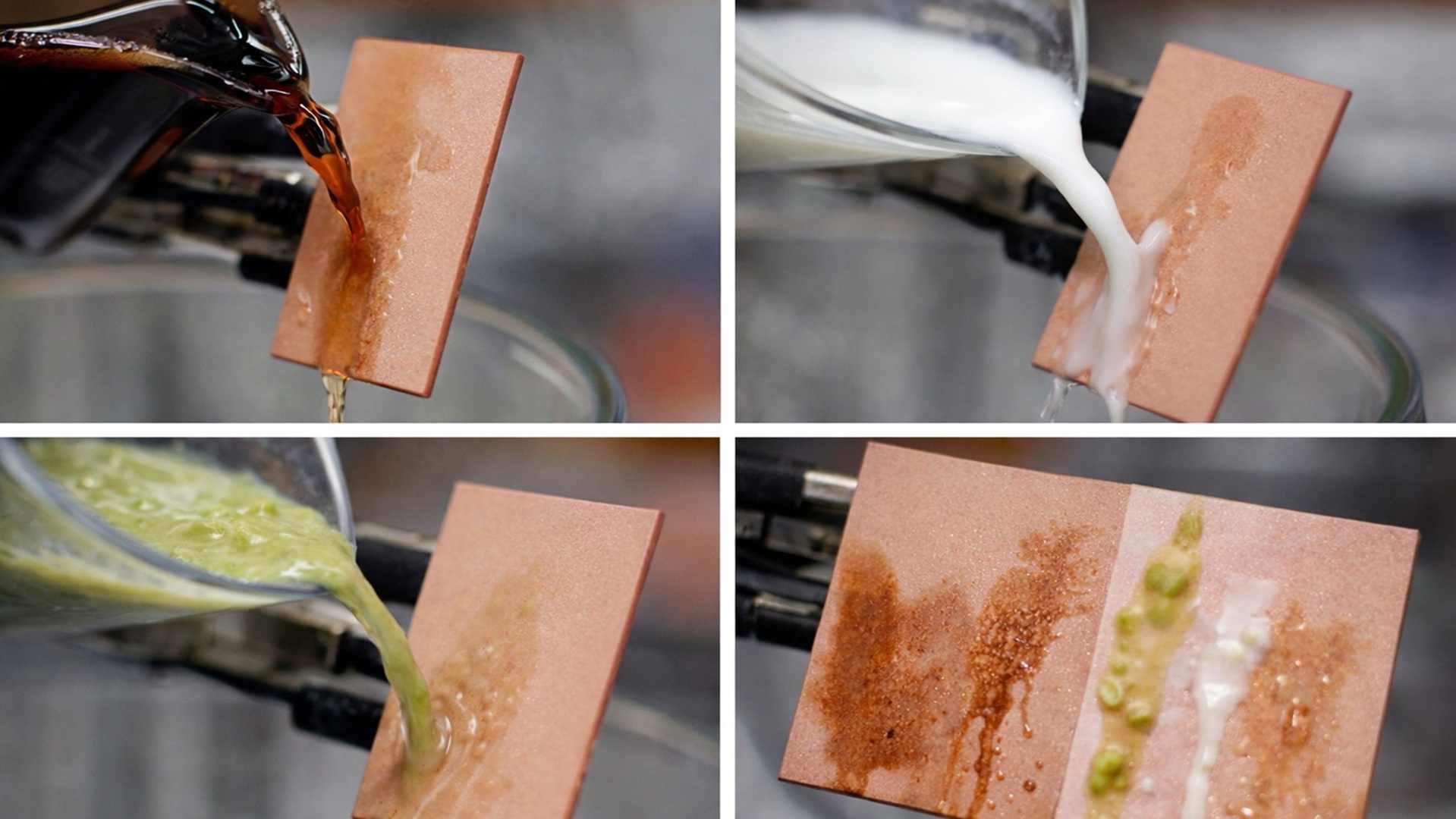
Researchers In The U.S. Developed A Multilayer Superhydrophobic Insulating Coating (MISH) Capable Of Repelling Almost Boiling Water, Hot Milk, Coffee, And Pea Soup, Keeping Surfaces That Should Not Be Wet Effective Even At High Temperatures.
The Advancement Was Achieved By Scientists At Rice University By Testing Heat Transfer In The Material, Instead Of Focusing Only On Chemistry And Texture. Superhydrophobic Surfaces, Inspired By The Lotus Leaf, Typically Allow Drops To Roll Off With A Slight Incline, But Fail With Hot Water.
When Temperatures Reach 40°C (104°F), Many Of These Coatings Abruptly Lose Their Ability To Repel Water. Hot Drops Begin To Adhere And Penetrate The Texture, Forming Wet Spots And Reducing Surface Efficiency.
-
Motorola launched the Signature with a gold seal from DxOMark, tying with the iPhone 17 Pro in camera performance, Snapdragon 8 Gen 5 that surpassed 3 million in benchmarks, and a zoom that impresses even at night.

-
Satellites reveal beneath the Sahara a giant river buried for thousands of kilometers: study shows that the largest hot desert on the planet was once traversed by a river system comparable to the largest on Earth.

-
Scientists have captured something never seen in space: newly born stars are creating gigantic rings of light a thousand times larger than the distance between the Earth and the Sun, and this changes everything we knew about stellar birth.

-
Geologists find traces of a continent that disappeared 155 million years ago after separating from Australia and reveal that it did not sink, but broke into fragments scattered across Southeast Asia.

Thermal Fragility Of Superhydrophobic Surfaces
The Central Problem, According To The Team, Is That Heat Triggers A Rapid Cycle Of Evaporation And Condensation At The Interface Between The Drop And The Surface. This Process Floods The Microtexture With Condensate, Creating Liquid Bridges That Nullify Repellency.
The MISH Proposal Aimed To Circumvent This Thermal Weakness Without Relying Solely On Chemical Alterations. The Team Sought To Slow Down Heat Transfer And Preserve The Trapped Air Pockets That Support Superhydrophobic Behavior.
The Goal Was To Maintain Slipperiness Even When Drops Approach 90°C (194°F). This Way, Hot Liquids Would Continue To Run Off Instead Of Sticking Or Spreading Across The Treated Surface.
How The MISH Two-Layer System Works
The MISH Design Consists Of Two Layers. The Bottom Layer Is Insulating, Made With Spray-Applied Polyurethane Foam. The Top Layer Is Microtextured Superhydrophobic, Formed By A Commercially Available Coating Also Applied By Spraying.
The Bottom Layer Slows Down Heat Transfer From The Drop To The Surface. By Reducing This Cooling At The Interface, It Prevents The Intense Formation Of Condensate That, In Traditional Coatings, Tends To Invade The Texture And Compromise Repellency.
Daniel J. Preston, PhD, Assistant Professor Of Mechanical Engineering At Rice University And Corresponding Author Of The Study, Stated That The Insulating Layer Reduces Evaporation And Recondensation Cycles. This Decreases The Volume Of Condensate In The Microtexture And Reduces Liquid Bridges.
With Fewer Condensate Bridges, Drops Near Boiling Point Continue To Slide. Preston Also Mentioned That The Task Was Previously Difficult And Could Cost Up To 4,000 Times More Than The Method Proposed By The Team.
Prolonged Tests And Performance Under Hot Drops
To Measure Resistance, The Scientists Subjected Samples Of The Coating To A Rain Of Hot Drops For A Week, Totaling Nearly Two Million Impacts. Traditional Coatings Deteriorated Almost Immediately In This Scenario.
In Contrast, The MISH Surfaces, Especially Those With Thicker Insulation, Maintained Repellency For Over 80 Hours. This Period Equated To About One Million Impacts Before Degradation Occurred Gradually.
According To The Researchers, The Identified Weak Point Was Not The Insulation Concept, But The Prefabricated Surface Coating Used In The Top Layer. The Insulation Strategy Remained Intact, Suggesting Potential To Increase Durability With More Resistant Outer Layers.
In Addition To The Rain Of Drops, The Team Fired Jets Of Hot Water Against The Coatings To Simulate Splashes And Continuous Exposure. The Objective Was To Reproduce More Aggressive Conditions And Verify The Behavior In Situations Beyond Static Tests.
Applications Outside The Laboratory And Residue Comparison
To Demonstrate Scalability, The Group Applied The Coating To Large Metal Plates, Curved Pipes, And Wide Surfaces. They Also Tested Common Kitchen Liquids Like Hot Milk, Coffee, And Pea Soup In Contact With The Treated Surfaces.
In These Tests, The Fluids Left Less Than 1% Residue On MISH Surfaces. In Comparison, They Left Over 31% On Conventional Coatings, According To The Results Reported By The Team.
Preston Stated That There Is Potential For Application On Large Curved Surfaces, Including Pipelines, Bowls, And Industrial Equipment. He Said That The Team Is Excited About The Possibilities, But Pointed Out Room For Improvements In The Top Layer.
The Researchers Are Now Exploring More Durable And Thermally Stable Top Layers, In Addition To Coating Architectures That Go Beyond Simple Spraying Methods. The Intention Is To Increase Resistance Without Losing The Superhydrophobic Effect At High Temperatures.
Commenting On The Practical Impact, Preston Declared That When Hot Liquids Are Prevented From Sticking, Various Subsequent Issues Begin To Disappear. For Him, This Paves The Way For Surfaces To Behave As Designed, Even Under Adverse Conditions.
The Study Was Published In The Journal ACS Applied Materials & Interfaces. The Material Also Recorded A Correction: A Previous Version Of The Article Had An Incorrect Conversion For Celsius, Reporting 40°F. The Correct Conversion Is 104°F (40°C), And The Text Has Been Updated.








Seja o primeiro a reagir!