





 Portuguese
  English
  Spanish
  4 min of reading
  0 comments


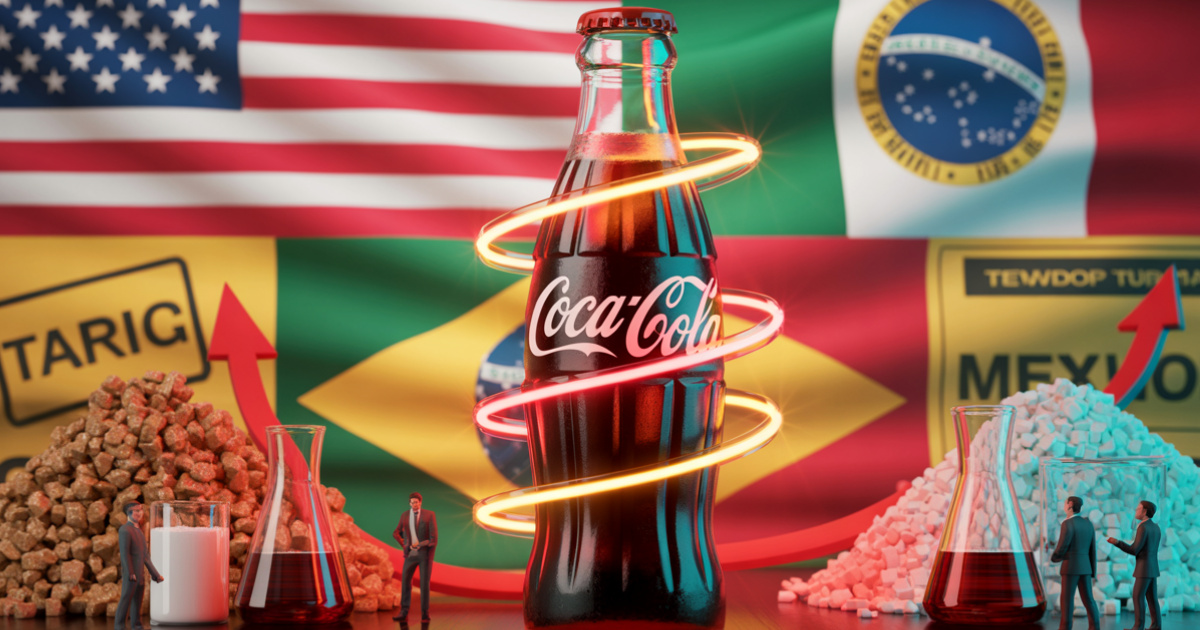
Coca-Cola’s Sweetener Change Faces Trade Barriers After U.S. Political Decision. Tariffs on Imported Sugar from Brazil and Mexico Hinder Transition and Put the Brand’s New Proposal at Risk in the Country.
Coca-Cola’s plans to replace high fructose corn syrup with cane sugar face trade obstacles that may render the change unfeasible
A proposal that could transform one of the world’s most iconic soft drinks runs into delicate trade issues.
In July 2023, then U.S. President Donald Trump announced he had negotiated an agreement with Coca-Cola to replace the use of high fructose corn syrup with cane sugar as the main sweetener in its products.
-
Tourists were poisoned on Everest in a million-dollar fraud scheme involving helicopters that diverted over $19 million and shocked international authorities.

-
Hidden beneath the dense forest of the Sierra Nevada, Betoma emerges in a neighbor of Brazil as the greatest archaeological discovery of the century, revealing a colossal ancestral city covering over 18 km², with 8,334 stone structures and the potential to rewrite the history of South American civilizations.

-
Goodbye iron: new technology from Xiaomi promises to revolutionize the way we iron clothes with 500 kPa steam, continuous flow of 120 g/min, heating in 65 seconds, and six smart modes for different fabrics.

-
Rio Pardo, the most mysterious city in Rio Grande do Sul: untouched Pampas castle, the missing treasure of the Devil Boy, bride’s saint, invisible tunnels, and a 200-year curse today.


The measure was part of the “Make America Healthy Again” policy, aimed at promoting healthier eating habits among American citizens.
Despite the potentially positive impact on public health, the proposal faces serious economic hurdles, mainly due to the threat of tariffs on imports from Mexico and Brazil, two of the largest sugar suppliers to the U.S. market.
Corn Syrup Still Dominates U.S. Market
Corn syrup has established itself as the predominant sweetener in the American industry due to its wide availability, low cost, and government subsidies.
According to data from GlobalData, the United States cultivated approximately 36.5 million hectares of corn in 2023, trailing only China in terms of agricultural production area.
This abundance allows the country to meet domestic demand for corn syrup without relying on imports, reducing costs and logistical risks.
On the other hand, domestic sugar production is not sufficient to supply the market, especially when it comes to cane-derived sugar.
External Dependence and the Impacts of the “Tariff”
The American dependence on exporting countries for cane sugar may undermine Coca-Cola’s reformulation proposal.
According to Observatory of Economic Complexity data, in 2023, the U.S. imported approximately US$ 2.4 billion in raw sugar, while exporting only US$ 230 million.
Mexico accounted for about 33% of those imports, while Brazil provided 23%.
However, in the weeks following the announcement of the measure, the U.S. government threatened to impose tariffs of 30% on Mexican products and up to 50% on Brazilian goods, which would make switching sweeteners much more expensive for Coca-Cola.
Rory Gopsill, senior consumer analyst at GlobalData, emphasizes that this strategy could economically compromise the proposed reform.
The Cost of Reformulation: Challenges for Coca-Cola
Abandoning corn syrup, which has strong support from U.S. agricultural producers, represents a risky move for Coca-Cola.
In addition to the costs associated with changing ingredients, the company would need to reformulate recipes, renegotiate contracts with suppliers, and adjust its production chain.
There are also risks regarding consumer acceptance in America, accustomed for decades to the current taste and formulation of the soft drink.
With the additional risk of tariffs increasing the cost of imported sugar, the strategy may ultimately become financially unviable, frustrating both the brand’s business objectives and the public policy goals championed by Trump.
Viable Alternatives: Production in Mexico May Be the Way
A solution considered by Coca-Cola itself is to shift part of the production to Mexico, where cane sugar is already the standard sweetener in the beverage industry.
This way, it would be possible to minimize the impacts of the reformulation and avoid the complex adaptation in U.S. production centers, according to Gopsill’s analysis.
However, this maneuver also depends on external factors, such as the maintenance of tariff exemptions set out in the U.S.-Mexico-Canada Agreement (USMCA).
If imported products from Mexico remain exempt from the new tariffs, Coca-Cola could increase the volume of beverages or inputs brought from there, within the parameters of the agreement.
If, on the other hand, the U.S. imposes the 30% tariff on Mexican imports, logistical and operational costs will rise again, reducing the chances of making the transition to cane sugar feasible.
Broader Implications for the Industry
The discussion surrounding Coca-Cola reflects a larger problem for the beverage and food industry in the United States.
The use of highly processed sweeteners, such as corn syrup, is often criticized by health experts, who associate the ingredient with diseases such as obesity and diabetes.
Switching to cane sugar is seen by many as a positive step, even if it does not resolve all issues related to excessive sugar consumption.
However, the conflict between public health policies and protectionist practices in agriculture and foreign trade creates a difficult contradiction to solve.
While the government attempts to encourage healthier habits, protectionist measures ultimately favor less healthy ingredients as they are cheaper and more abundant.
Outlook for the Future
The possibility of a Coca-Cola sweetened with cane sugar being sold on a large scale in the United States remains uncertain.
The debate encompasses economic, political, regulatory, and cultural issues, reflecting the complexity of the food industry in times of global change.
While there is pressure for healthier choices, logistics, costs, and business interests hinder the implementation of substantial changes.
Coca-Cola, which already sells versions with cane sugar in other markets – such as Mexico and Brazil – may continue testing regional alternatives until it finds a viable model in the United States.
Meanwhile, health-conscious consumers continue to push for greater transparency and more natural options on supermarket shelves.
And the future of food remains a battleground between economic interests, public policies, and individual choices.








-

-

2 pessoas reagiram a isso.