





 Portuguese
  English
  Spanish
  4 min of reading
  3 comments


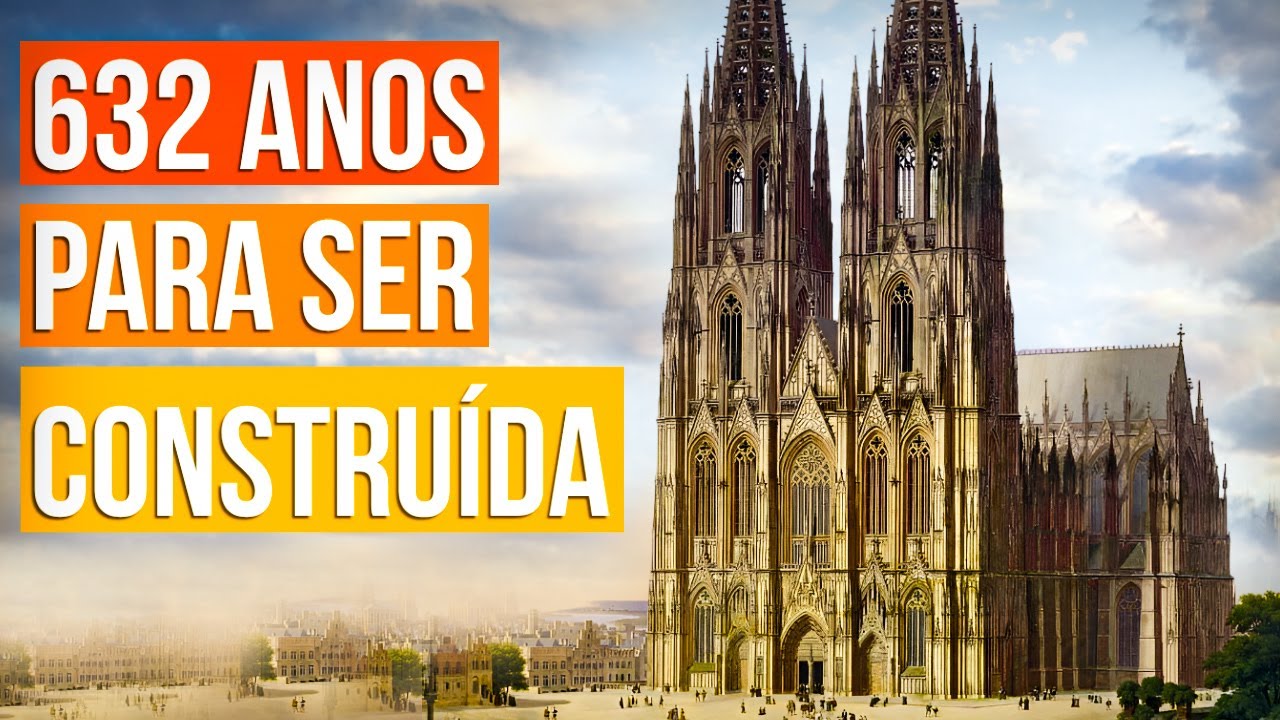


With Towers of 157 M, Internal Volume of 407 Thousand M³ and 10 Thousand M² of Stained Glass, the Cologne Cathedral Took Over 600 Years to Be Completed and Redefined European Gothic Engineering.
According to historical records preserved by the Catholic Church, modern architectural surveys, and documentation recognized by UNESCO, the Cologne Cathedral is not only a religious symbol of Germany but one of the greatest continuous construction achievements in European history. Unlike works completed in just a few decades, its construction spanned the Middle Ages, Renaissance, Industrial Revolution, and the 19th century, maintaining the same basic architectural design over more than six centuries.
The work began in 1248, when Cologne was one of the richest cities in the Holy Roman Empire. The goal was ambitious from the start: to erect a Gothic temple capable of rivaling the great French cathedrals in both scale and structural complexity.
A Construction Thought to Be Giant from the First Stroke
Unlike many churches that grew through successive additions, the Cologne Cathedral was conceived with a monumental master plan. The central nave, transepts, choir, and future towers were already defined in extremely detailed medieval drawings, known as facade plans — something rare for the time.
-
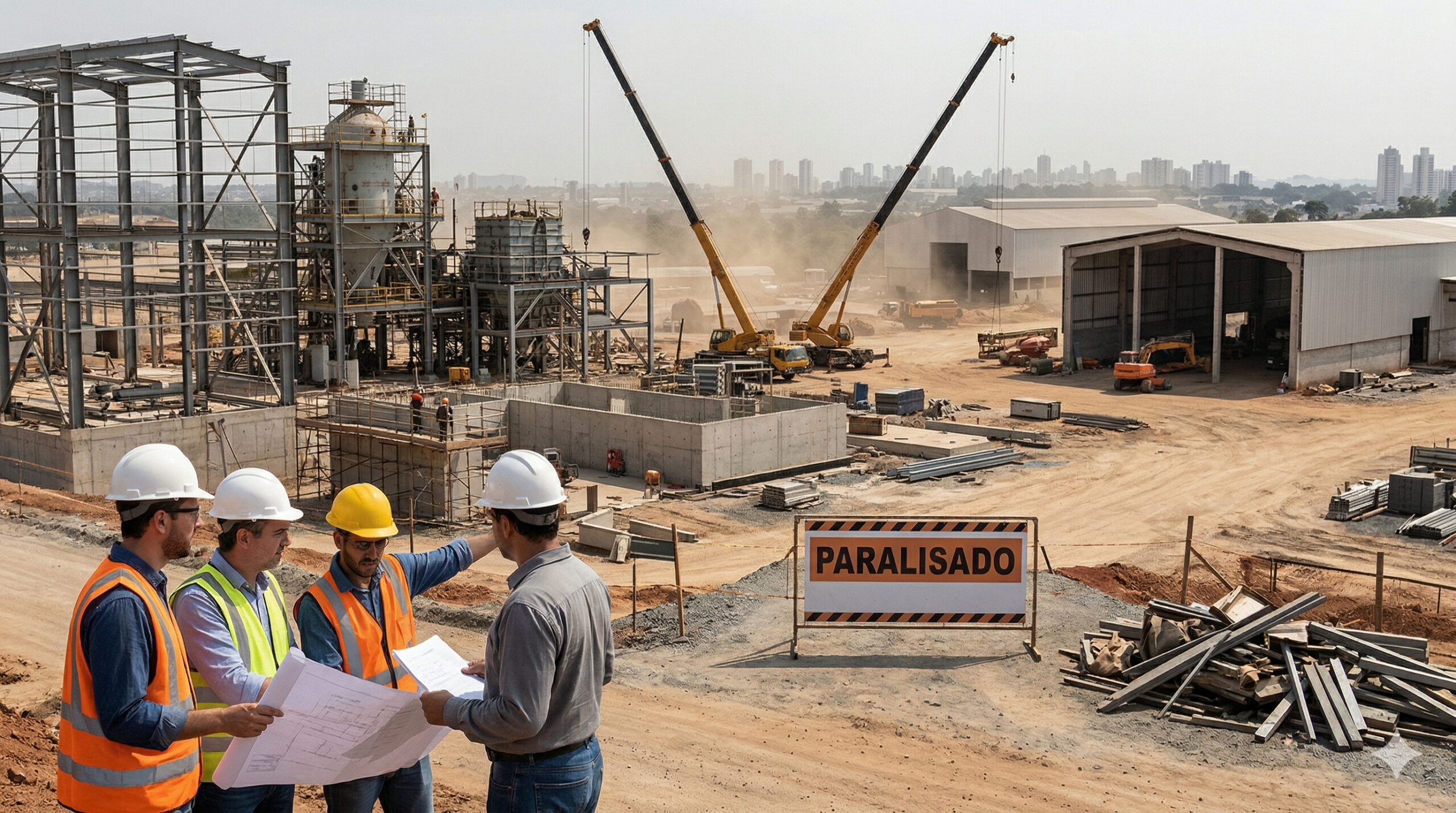
The lack of welders, electricians, and operators becomes a structural threat in 2025, with the construction industry and manufacturing already suffering from delays, cost pressures, and labor shortages in Brazil.
-
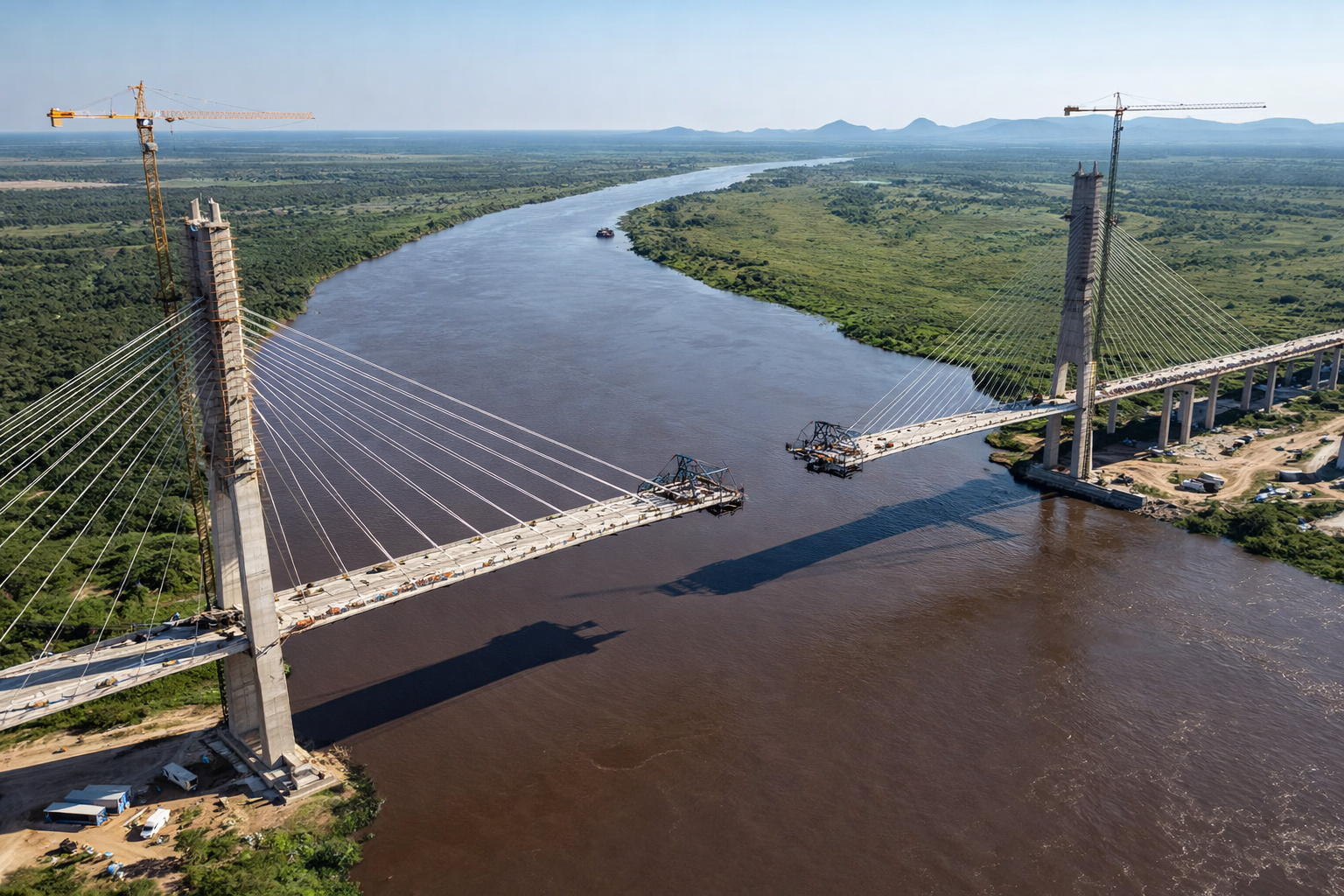
Brazil and Paraguay are just 46 meters away from a historic union on the bioceanic bridge that promises to revolutionize trade between the Atlantic and the Pacific.
-
With 55 km over the sea, a cost of US$ 20 billion, and enough steel to build 60 Eiffel Towers, China’s largest project has connected Hong Kong, Zhuhai, and Macau in a colossal bridge that defies the logic of engineering.

-
A trick with joint compound transforms a Styrofoam ceiling into a plaster-like ceiling: leveled panels, wires and mesh at the joints, sand, paint, and change the environment while spending little today.



These plans envisaged a building with 144.6 meters in length, 86.3 meters in width and a final height that would surpass everything that existed then. Even with rudimentary technologies, the medieval master builders designed a structure capable of supporting immense vertical loads, distributed by slender pillars and external flying buttresses.
407 Thousand Cubic Meters of Built Space
One of the most impressive and technically verifiable facts — is the internal volume of the cathedral, which reaches approximately 407,000 m³. This number represents the three-dimensional space contained by the structure, something rarely mentioned outside technical circles, but fundamental to understanding the scale of the work.
For comparison, this is a volume equivalent to dozens of large-scale modern residential buildings stacked together. All this space needed to be structurally overcome by:
- cross vaults,
- slender pillars,
- and an external system of buttresses and flying buttresses that divert loads to the ground.
Towers of 157 Meters and the Vertical Limit of the Nineteenth Century
The western towers, completed only in 1880, reach a height of 157 meters, which made the Cologne Cathedral, for a few years, the tallest building in the world.
This feat did not occur in the Middle Ages, but rather in the industrial era, when modern lifting techniques, metal scaffolding, and better structural knowledge allowed the original project to be completed.

The most notable aspect is that the towers followed exactly the medieval design, respecting proportions, profiles, and loads predicted centuries before. This required a unique integration of historical Gothic architecture and modern 19th-century engineering.
More Than 10 Thousand M² of Structural Stained Glass
Another construction data with great impact is the area of stained glass: the cathedral has over 10,000 m² of glazed surfaces, forming the largest continuous set of stained glass ever installed in a church.
From a technical point of view, this represents an enormous structural challenge. The more stained glass, the fewer solid walls there are to absorb loads. The weight of the roof and towers is transferred almost entirely to:
- extremely tall internal pillars,
- and external flying buttresses that function as “structural arms.”
The stained glass is not just decorative elements: they define the very constructive logic of the building, pushing Gothic to the physical limits of masonry.
Six Centuries of Interruptions, Resumptions, and Technology Adaptation
Construction advanced rapidly in the first two centuries, but was interrupted in the 16th century, when religious, political, and economic changes made the work unfeasible. For over 300 years, the cathedral remained incomplete, with one of the towers interrupted and parts of the building exposed to the elements.

The resumption in the 19th century was only possible because the medieval project had been preserved in sufficient detail to allow its faithful execution. At the same time, modern engineering introduced:
- more efficient cranes,
- metal scaffolding,
- and structural calculation methods that did not exist in the Middle Ages.
The result was a work hybrid in time, but coherent in space.
A Structure That Survived the War and the Modern City
During World War II, the Cologne Cathedral was hit by several bombings. The urban surroundings were almost destroyed, but the cathedral remained standing, albeit damaged. This practically reinforced the robustness of the structural system conceived centuries earlier.
Today, the building coexists with a modern city around it, with vibrations from trains, heavy traffic, and urban pollution, requiring continuous structural monitoring and permanent restorations — a natural extension of a project that has never ceased to be a construction site throughout history.
A Work That Exceeds the Concept of Building
From an engineering perspective, the Cologne Cathedral is not just a religious temple. It is:
- a long-lasting structural experiment,
- a work that crossed successive technological limits,
- and an extreme example of long-term construction planning.
Few constructions in the world allow us to measure their greatness not only in meters or tons but in centuries of continuous execution, maintaining structural and architectural coherence until the end.
That is why the Cologne Cathedral remains one of the most impressive constructions ever erected by humankind: not for being fast, but for being persistent, technically bold, and structurally gigantic.








Magnífico, sensacional uma obra que atravessou séculos imagino a beleza da obra, fascinante
Estive lá em janeiro antes da pandemia. A catedral é realmente fascinante. Estes dados só a tornam mais admirável. Sem contar as relíquias dos Reis magos.
Muito interessante! Exemplo de capacidade e persistência. Importsnte divulgar noticias positivas!