





 Portuguese
  English
  Spanish
  5 min of reading
  0 comments



Differences Between Types of Gasoline Affect Consumption, Performance, and Engine Maintenance, and New Octane and Ethanol Blend Rules Change the Scenario for Gas Stations in Brazil.
When refueling, the choice between regular, additive, or premium gasoline directly affects performance, consumption, and engine maintenance.
All comply with the regulations of the National Agency of Petroleum, Natural Gas, and Biofuels (ANP), but their composition and octane ratings vary.
Since August 1st, the gasoline sold at gas stations now contains 30% anhydrous ethanol (E30), and the ANP approved raising the minimum RON octane rating from regular to 94, a move aimed at maintaining quality with the new blend.
-
(Video): Italian pilot lands plane on moving train at 120 km/h and achieves unprecedented feat in aviation, even with a narrow runway and without direct visual contact.

-
It seems to have come out of a science fiction movie: A Brazilian city where it rains almost every day, recording over 4,000 mm per year, driven by climatic factors — a direct result of its strategic location in the Amazon.

-
The water crisis that could change everything this year has already begun; it’s not just about the climate, it affects technology, raises product prices, and can halt entire companies without warning.

-
A Japanese mason transforms raw granite into small cups and handcrafted utensils, collects giant stones, cuts with precision, and impresses with detailed manufacturing and finishing.


It is this set of factors that defines which type makes the most sense for each vehicle.
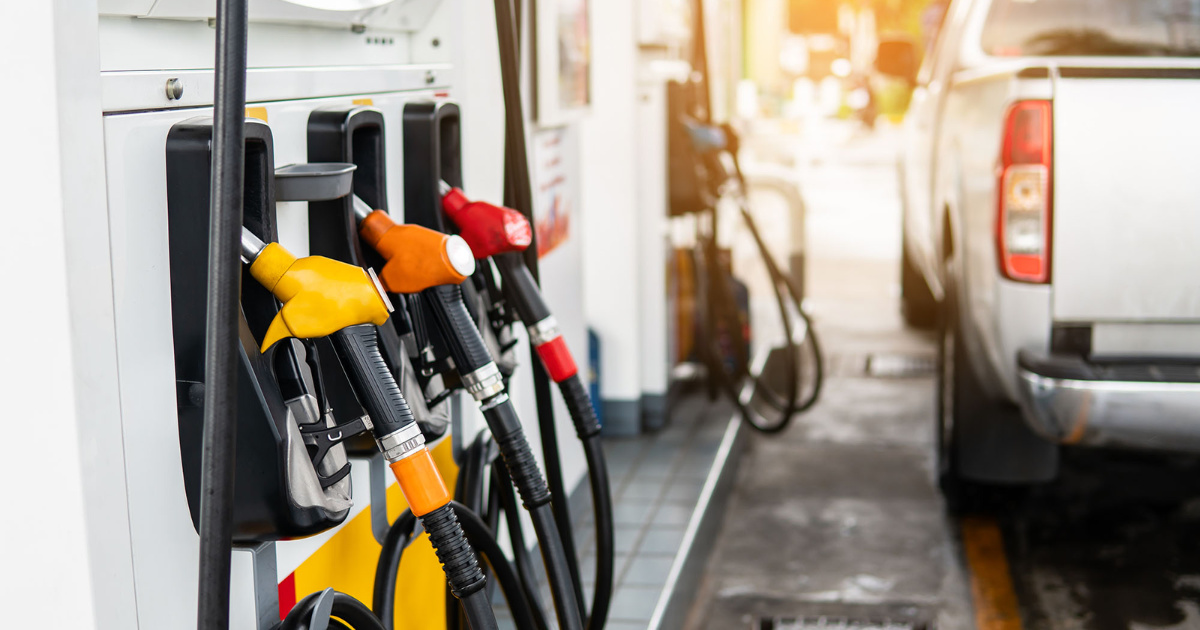
What Changes Between Regular, Additive, and Premium
The regular gasoline forms the basis of the market.
With the mandatory addition of ethanol, it meets the needs of the entire fleet and complies with quality requirements.
In everyday applications, especially in low compression engines, it performs without any significant inconveniences.
The recent shift to E30 does not alter the recommended usage but improves the product’s detonation resistance (octane rating) when specifications are adjusted.
The additive gasoline starts from the same base gasoline as regular but receives packages of additives such as detergents, dispersants, anticorrosives, and, in some cases, friction reducers.
These help keep the fuel system clean, improve atomization and combustion, and over time can reduce small performance losses caused by deposits.
In Ipiranga’s institutional material, the Ipimax line claims savings of more than 4% compared to regular, a benefit attributed to its additive formulation.
This is a manufacturer’s statement, without independent validation presented on the website.
The premium gasoline is distinguished by its higher octane rating, suitable for high compression engines and turbo or sports models, which operate under greater pressure and temperatures in the combustion chamber.
The ANP sets a higher octane standard for this category, and distributors position products with higher numbers.
Petrobras, for example, advertises RON 100–102 gasoline in its Podium line; at Ipiranga, Ipimax Pro is marketed as “above 100 octanes.”
In both cases, these fuels are aimed at engines that truly require this level of detonation resistance.
Octane Rating: Why It Matters
Octane rating is the resistance of fuel to pre-detonation (the “pinging noise”).
The higher the number, the greater the capacity to withstand compression without igniting before the spark.
Brazil began adopting the RON parameter as a regulatory reference starting in 2020.
The regular gasoline was initially set at RON 92, increased to RON 93 in 2022, and with E30, the ANP approved raising the minimum to RON 94 to preserve the quality gains provided by the new blend.
In the case of the premium gasoline, the specification remains at RON 97 or higher, depending on the product.
For the driver, this means less tendency to detonation noises, better power and efficiency utilization when the engine is designed for it.
Historically, discussions in the country used the IAD (Anti-Detonation Index), which is the average between RON and MON.
In this old reference, the regular gasoline was around IAD 87 and the premium around IAD 91.
The regulatory shift to RON was made to better reflect the demands of modern engines and facilitate international comparisons.
Cleaning, Protection, and Emissions
Additives for cleaning and protection do not increase octane ratings when the base fuel is the same, but they prevent the formation of deposits in fuel injectors and valves, which is relevant during intense urban use.
With a clean system, atomization improves and combustion tends to be more complete, which helps stabilize idle and can reduce small fluctuations in consumption over time.
Some premium products also have formulations with lower sulfur, a trait linked to the durability of catalysts and emission control.
The Petrobras Podium claims a sulfur content of ≤ 20 ppm, below the usual limit of 50 ppm in regular gasolines.
Does Mixing Types Make a Difference?
Refueling with differing portions of regular, additive, and premium does not cause immediate damage.
What happens is an average effect: the resulting octane rating lies between those of the mixed fuels, and the concentration of additives dilutes.
In an engine that requires high octane, combining premium with regular can nullify part of the expected benefit.
In the case of additive gasoline, the protection and cleaning tend to be lower if the tank is frequently filled with non-additive fuel.
In emergency situations, there is no problem using what is available and then resuming refueling with the type recommended in the manual.
Regular, Additive, or Premium: How to Decide
The mandatory reference is the vehicle manual, which informs the minimum octane rating recommended by the manufacturer.
If the engine is designed to operate with RON 94 (or equivalent), regular and additive meet this requirement.
In everyday use, the additive gasoline is usually the balanced choice for those seeking preventive maintenance and practicality, as it combines the same octane rating as regular with additives that keep the system clean.
The premium option is indicated when the engine requires higher octane — typical for sports, imported, and turbo models with high compression rates — or when the manufacturer suggests fuel with a higher octane number for better performance and efficiency.
For those who drive little and on short trips, additive gasoline helps minimize deposits typical of cycles with many cold starts.
Those who drive on highways or keep their systems well-maintained may not notice significant differences when switching between regular and additive, provided the gas station quality is reliable.
In engines that ping with insufficient octane fuel, premium gasoline typically resolves the symptom by offering greater margin against detonation.
What Changed in 2025 and What to Observe Moving Forward
With the introduction of E30 and the increase of the minimum RON for regular gasoline approved by the ANP, consumers now have a product with greater detonation resistance at the market’s base level.
Regulations are accompanied by adaptation deadlines for the supply chain, but the direction is clear: more octane and greater renewable blend.
At the same time, premium versions continue to offer octane numbers above the regulatory threshold, designed for engines that exploit this potential.
When choosing, the central point remains the same: follow the manual and refuel at trusted gas stations.
For technical curiosity, Ipiranga itself emphasizes that regular and additive gasoline have equivalent octane ratings, with the only difference being the presence of additives.
Miths aside, the claimed efficiency gain results from the chemical package, not from a higher octane number in the additive version.
Thus, the cleaning programs of additive gasoline tend to make a difference with continuous use, not from a single pass at the pump.
If your car accepts any of the three, it makes sense to prioritize additive in daily use and premium when the engine demands more or when you’re seeking the best performance for trips under load, heat, and altitude.
And you, have you noticed a change in engine performance when switching fuels or only a difference in consumption?






-

-

-

7 pessoas reagiram a isso.