





 Portuguese
  English
  Spanish
  4 min of reading
  0 comments


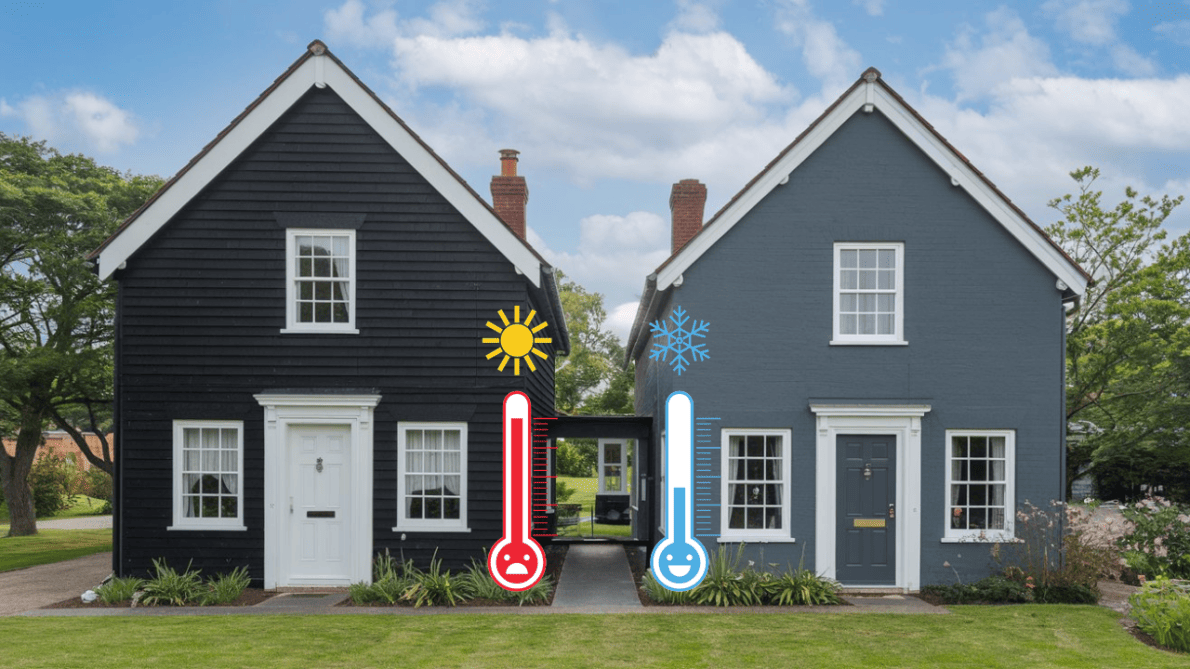
Discover The Sustainable Innovation Of Paint That Changes Color According To Temperature, Designed To Reduce Indoor Heat In Buildings By Up To 7°C And Promote Thermal Comfort With Energy Savings.
In a world increasingly impacted by climate change, with heatwaves and extreme cold becoming more frequent, a new invention draws attention for its simplicity and transformative potential: paint that changes color according to temperature.
The innovation is from designer Joe Doucet, who developed the product based on a personal need and ended up finding a solution with significant environmental impact.
The color-changing paint manages to alter the shade of an external surface from light to dark and vice versa, according to the ambient temperature.
-
The Argentine government celebrates the lowest poverty rate in 7 years, but experts warn that the methodology has changed, real wages have fallen, unemployment has risen, and the number of people on the streets of Buenos Aires has increased by 57% since Milei took office.

-
7.8 magnitude earthquake in Indonesia frightens the population, triggers tsunami alert, and hits an island with over 200,000 inhabitants this Thursday.

-
Google will finally let you change that embarrassing Gmail address you created in your teenage years without losing any accounts, logins, or old emails: the feature is already available in the United States.

-
Heading to Brazil in a Bonanza F33 single-engine aircraft: a couple departs from Florida on a visual flight, makes technical stops in the Caribbean to refuel and organize paperwork, and begins the staged crossing until they reach the country.


This seemingly aesthetic change has a direct effect on the indoor temperature of buildings, potentially reducing indoor heat by up to 7°C.
The idea is that, in heat, the surface reflects more light (becoming light), and in cold, absorbs more heat (darkening), creating a kind of natural thermal insulation.
Idea That Arose From Personal Experience
The inspiration for the creation of thermochromic paint came when Doucet was renovating his own home and sought an exterior color that would provide not only an appealing visual but also thermal comfort.
Annoyed by the dilemma between aesthetics and energy efficiency, he chose not to make an immediate decision. Instead, he decided to investigate how the color of the house could impact indoor temperature throughout the seasons.
During his tests, Doucet discovered that houses painted white remained up to 7°C cooler than black ones in summer, but also up to 4°C cooler in winter.
“Most of the information I found was about what happens to surface temperatures, but not how that transfers to the interior. So, I decided to postpone my decision for a year and conduct a test,” the designer reports.
How The Color-Changing Paint Works
The innovation works from a liquid crystal additive that reacts to temperature. The technology is similar to that used in old “mood rings,” which changed color according to the temperature of the skin of the wearer.

These liquid crystals modify their molecular structure with heat, affecting how light is reflected or absorbed — and thus, the perceived color.
In the case of the paint, below 25°C, the crystals absorb light, making the surface dark. Above this temperature, they become transparent, revealing the base color of the paint — preferably white or light — which reflects heat.
This alternation is almost immediate and results in a building appearing totally dark or light, with no intermediate shades.
Sustainability And Energy Efficiency
One of the major advantages of temperature-responsive paint is that it does not require electricity, sensors, or moving parts.
There’s “no smart technology, no moving parts, just a simple color change that can drastically reduce energy consumption,” explains Doucet.
The product is still in its early stages, but initial tests have shown great effectiveness and durability. Initially, the liquid crystals degraded with exposure to sunlight, especially UV rays.
However, Doucet claims he has developed a protection against this degradation, ensuring the paint’s functionality for at least a year without performance loss.
Versatility And Application
The additive created by Doucet can be incorporated into any type of paint, as long as it has a clear base to ensure efficiency in thermal regulation.
This means that thermochromic paint can be used in different types of constructions — from homes to factories, schools, and offices — expanding its potential impact.
For regions with significant thermal variation between summer and winter, the innovation proves especially effective. In places where the climate is more stable, like areas near the Equator or in consistently cold zones, the application may be more limited, although still relevant from an energy standpoint.
Next Steps Towards The Market
Joe Doucet is now seeking industrial partners to scale up production of the paint and conduct large-scale testing. His goal is to commercially launch the product in the next few years and contribute to a sustainable and accessible solution to the problem of high energy consumption associated with temperature control in buildings.
While awaiting the feasibility of large-scale manufacturing, Doucet decided to paint his own house completely black, opting for an immediate solution in light of his impatience with the development pace of the project. “I’m very impatient. So I went ahead and painted everything black,” he jokes.
A Color For Every Climate
The creation of temperature-responsive paint represents a creative and effective response to present demands and future challenges. In a global context where energy efficiency, sustainability, and innovation go hand in hand, solutions like the one developed by Joe Doucet show that even a “simple” coat of paint can make all the difference.
By adapting to the climate without the need for complex technological systems, thermochromic paint emerges as a viable alternative to make cities smarter, homes more comfortable, and the planet a little more balanced — all with the transformative power of colors.








-

Uma pessoa reagiu a isso.