





 Portuguese
  English
  Spanish
  3 min of reading
  0 comments


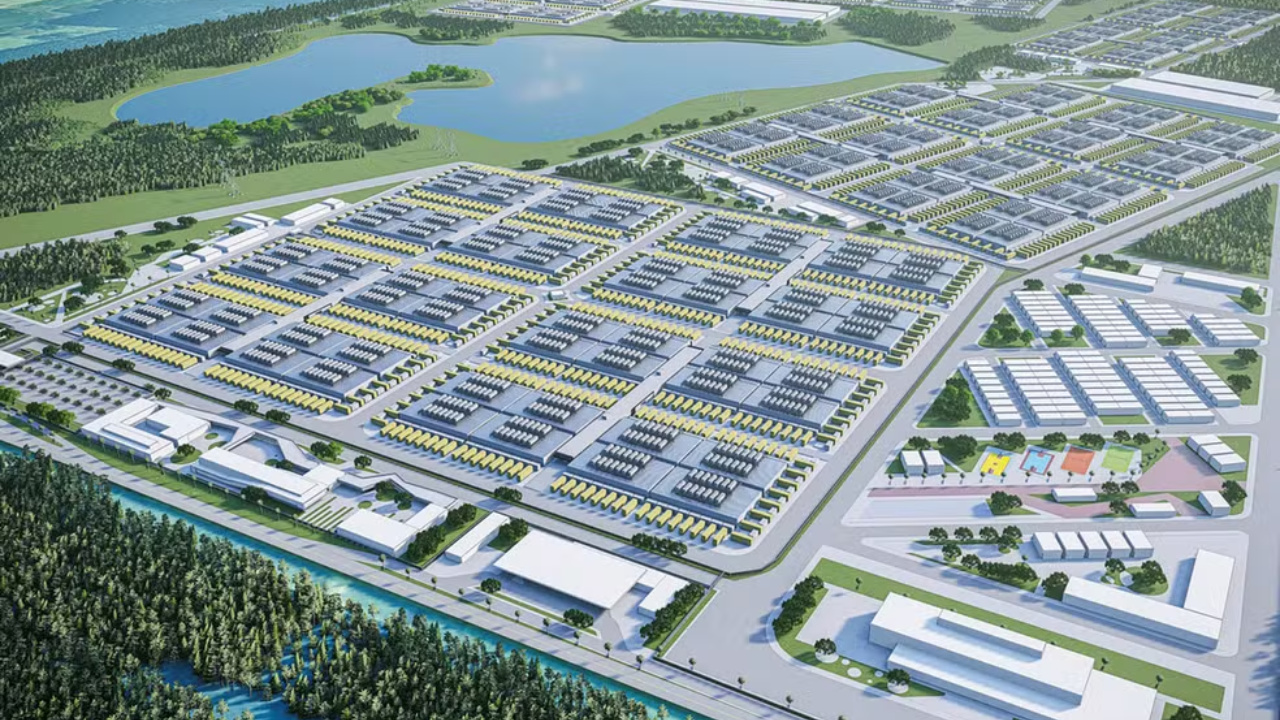
Datacenters Advance Across Brazil, Driven by Clean Energy and Digital Demand, but Raise Criticism about Water Consumption, Environmental Impact and Use of Public Infrastructure.
Datacenters have become one of the most important gears of the modern world. They support artificial intelligence, streaming, digital banking, medical research, and practically all online life.
However, at the same time, these digital giants have come to be seen by parts of society as structures that consume resources at an accelerated pace.
For this reason, Brazil has entered a crossroads. The country has one of the cleanest electricity matrices on the planet. In addition, it has vast potential for solar and wind energy. Still, it faces water challenges and territorial disputes.
-
Motorola launched the Signature with a gold seal from DxOMark, tying with the iPhone 17 Pro in camera performance, Snapdragon 8 Gen 5 that surpassed 3 million in benchmarks, and a zoom that impresses even at night.

-
Satellites reveal beneath the Sahara a giant river buried for thousands of kilometers: study shows that the largest hot desert on the planet was once traversed by a river system comparable to the largest on Earth.

-
Scientists have captured something never seen in space: newly born stars are creating gigantic rings of light a thousand times larger than the distance between the Earth and the Sun, and this changes everything we knew about stellar birth.

-
Geologists find traces of a continent that disappeared 155 million years ago after separating from Australia and reveal that it did not sink, but broke into fragments scattered across Southeast Asia.

In this scenario, datacenters appear both as a promise for the future and as a risk of overload.
“Digital Parasites” or Essential Infrastructure?
The provocation made by neuroscientist Miguel Nicolelis generated national repercussions by calling datacenters “digital parasites.”
According to him, these structures would drain large volumes of energy and water without returning proportional benefits to society.
However, other experts disagree with this view. For them, datacenters are as strategic as ports, highways, and electrical networks.

After all, without these structures, there is no artificial intelligence, data science, telemedicine, or industrial automation.
Thus, the controversy does not revolve around the existence of datacenters, but rather how, where, and with what rules they should operate.
Pressure on Energy and Water Increases Alert
Even being essential, datacenters require enormous amounts of energy to keep servers running 24 hours a day. In addition, they also consume water for cooling the equipment.
In countries with aging networks, this consumption can cause blackouts, increase tariffs, and pressure reservoirs. Therefore, the fear grows that, without planning, Brazil could repeat mistakes seen in Europe and the United States.


At the same time, experts warn that preventing the installation of these structures does not prevent digitalization. On the contrary, the country would only start importing digital services produced in other regions.
Northeast Enters the Global Radar
The Brazilian Northeast emerges as a key piece in this equation. The region concentrates a large part of the country’s wind and solar energy generation. In many instances, there is even a surplus of energy that cannot be channeled to the rest of the system.
In this context, datacenters appear as ideal consumers of this clean electricity that is currently being wasted.
Moreover, cities like Fortaleza already function as hubs for submarine cables that connect Brazil to Europe and the United States, which reduces delays in data transmission.
This combination of renewable energy and international connectivity makes the Northeast one of the most strategic points in Latin America for the installation of large datacenters.
Another central point is sovereignty. Without its own datacenter infrastructure, Brazil relies on servers abroad to store data from companies, governments, and citizens.
This increases costs and reduces control over strategic information.
In addition, by exporting only cheap energy and importing expensive digital services, the country loses economic value. Therefore, attracting datacenters can also mean attracting jobs, research centers, and innovation.
As the Saudi Finance Minister stated in another context: “We are really redefining priorities and reshaping our policies, making sure we improve as we move forward to ensure that the private sector can lead the economy.” The phrase illustrates the type of strategy that many countries are seeking to adopt in the digital sector.
Do you think the cost-benefit of datacenters is still worthwhile in the context of Brazil or will they only increase the pressure on energy and water?






Seja o primeiro a reagir!