





 Portuguese
  English
  Spanish
 5 min of reading
  0 comments



Project Under Testing in Paraná Draws Attention from Brazilian and Foreign Cities by Combining Tires, Virtual Tracks, and High-Capacity Electric Operation. Vehicle Transports Up to 280 People and Can Reach 70 km/h, with Launch Expected in November.
The Urban Digital Tram (BUD), the local version of the ART (Autonomous Rail Rapid Transit), has entered the assembly phase in Paraná and has immediately drawn interest from at least seven Brazilian capitals, as well as foreign delegations.
The vehicle, with tires and guidance by “virtual tracks”, was designed to transport up to 280 passengers and can reach 70 km/h, providing medium to high-capacity performance for urban corridors.
The first stretch will connect Pinhais to Piraquara, in the Metropolitan Region of Curitiba, with initial operation expected to start in November, following the testing and commissioning phase.
-
Friends have been building a small “town” for 30 years to grow old together, with compact houses, a common area, nature surrounding it, and a collective life project designed for friendship, coexistence, and simplicity.

-
This small town in Germany created its own currency 24 years ago, today it circulates millions per year, is accepted in over 300 stores, and the German government allowed all of this to happen under one condition.

-
Curitiba is shrinking and is expected to lose 97,000 residents by 2050, while inland cities in Paraná such as Sarandi, Araucária, and Toledo are experiencing accelerated growth that is changing the entire state’s map.

-
Tourists were poisoned on Everest in a million-dollar fraud scheme involving helicopters that diverted over $19 million and shocked international authorities.


How the Urban Digital Tram Works
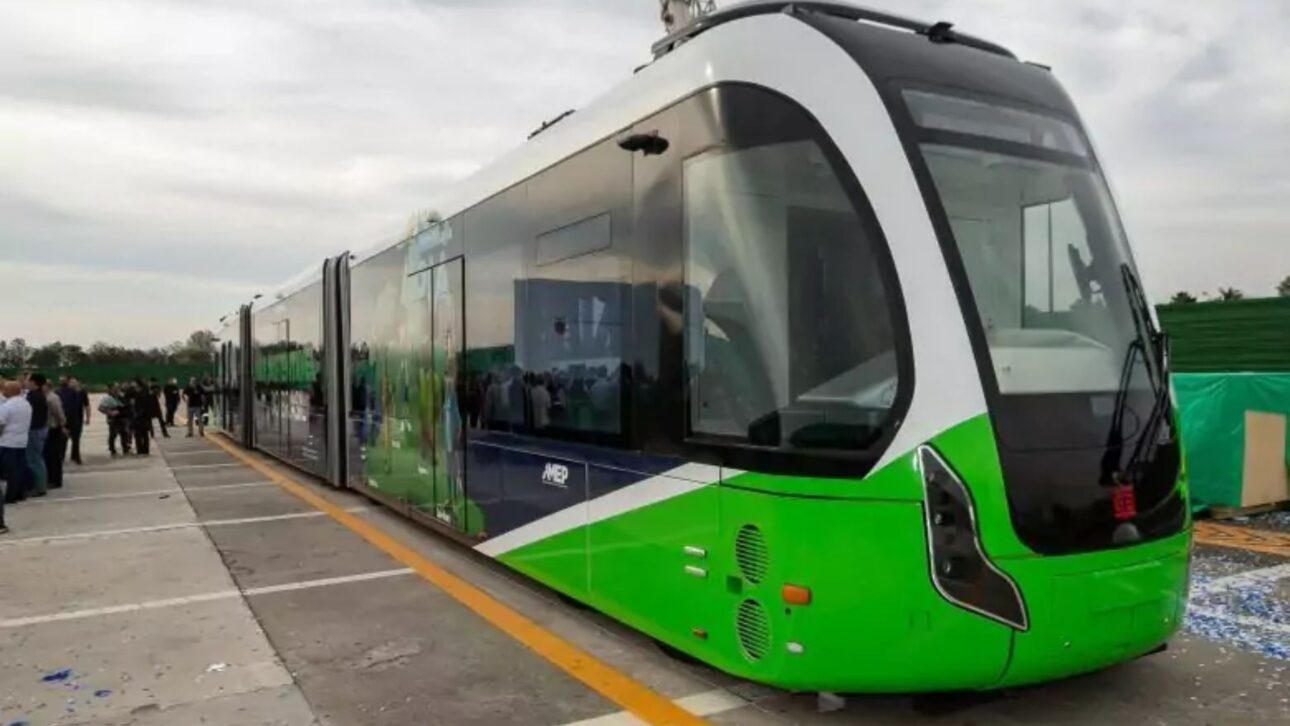
Unlike traditional light rail vehicles on tracks, the BUD runs on asphalt with rubber tires and follows a path defined by digital markings and high-precision sensors.
According to the state government, the virtual guidance maintains alignment even in the rain, under vibrations, or with pavement wear, reducing the need for heavy construction.
The technology, developed by CRRC Nanjing Puzhen, combines principles of railway detection, coordinated axle control, and automatic tracking, aiming to ensure safety and route accuracy.
Infrastructure and Operating Base in Paraná
The implementation began at the Pinhais Autodrome Park, where the vehicle is being assembled and will undergo initial trials.
Meanwhile, construction is progressing on the garage and maintenance base at the São Roque Terminal in Piraquara, a space that will also house the Operational Control Center (CCO).
The center will monitor real-time through cameras and sensors distributed along the route.
According to the government, the direct stretch expected between the terminals is about 10 kilometers long.
Brazilian Capitals and Interested Countries
The project presentation led cities and states such as Florianópolis, São Paulo, Brasília, Belo Horizonte, Rio de Janeiro, Porto Alegre, and Cuiabá to reach out to Paraná to learn details of the system.
Outside the country, there were expressions of interest from Buenos Aires and Córdoba in Argentina, as well as representatives from Costa Rica, Colombia, and Chile.
The purpose of the technical visits is to assess infrastructure requirements, maintenance, integration with existing networks, and the implementation schedule.
Technical Visit and Involved Authorities
On Tuesday (14), a delegation with mayors from Santa Catarina and representatives from the Mato Grosso Government visited the state to observe the assembly and discuss the operational plan.
The group was received at the Palácio Iguaçu by Governor Carlos Massa Ratinho Junior, by the Secretary of Finance Norberto Ortigara, and by the Director-President of the Agency for Metropolitan Affairs of Paraná (Amep), Gilson Santos.
They then proceeded to the Pinhais Autodrome Park to observe the progress of the work.
What the Government and Mayors Say
In an official statement, the governor said: “We are happy to bring this innovation to public transport in South America. We are in the process of assembling the vehicle, and this has sparked curiosity from various states and cities. This excites us, especially as it is an opportunity to offer more convenience and quality of life to workers and to those who use public transport daily.”
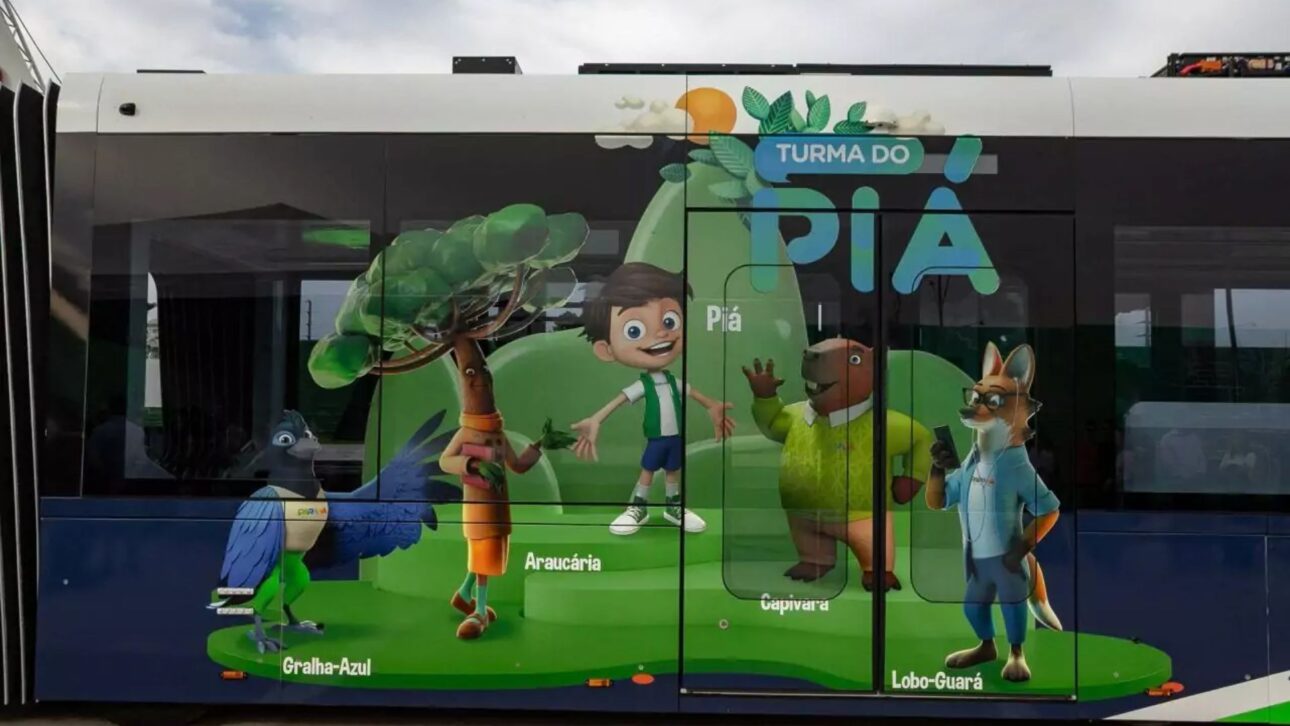
Amep reported that the last assembly parts have arrived and that integration tests precede the operation with passengers.
Among the visitors, the mayor of Balneário Piçarras and president of the Association of Municipalities of the Itajaí River Mouth Region (Amfri), Tiago Maciel Baltt, highlighted that the region is seeking funding from the World Bank for mobility projects and evaluated the BUD as a possible alternative for connecting cities in the Itajaí mouth.
According to him, the Paraná experience helps inform demand studies and cost evaluations in the state of Santa Catarina.
Capacity, Speed, and Vehicle Characteristics
The model being tested in Paraná is approximately 30 meters long, has three axles, and bi-directional operation, which facilitates maneuvers and eliminates the need for complex turnarounds at the end of each trip.
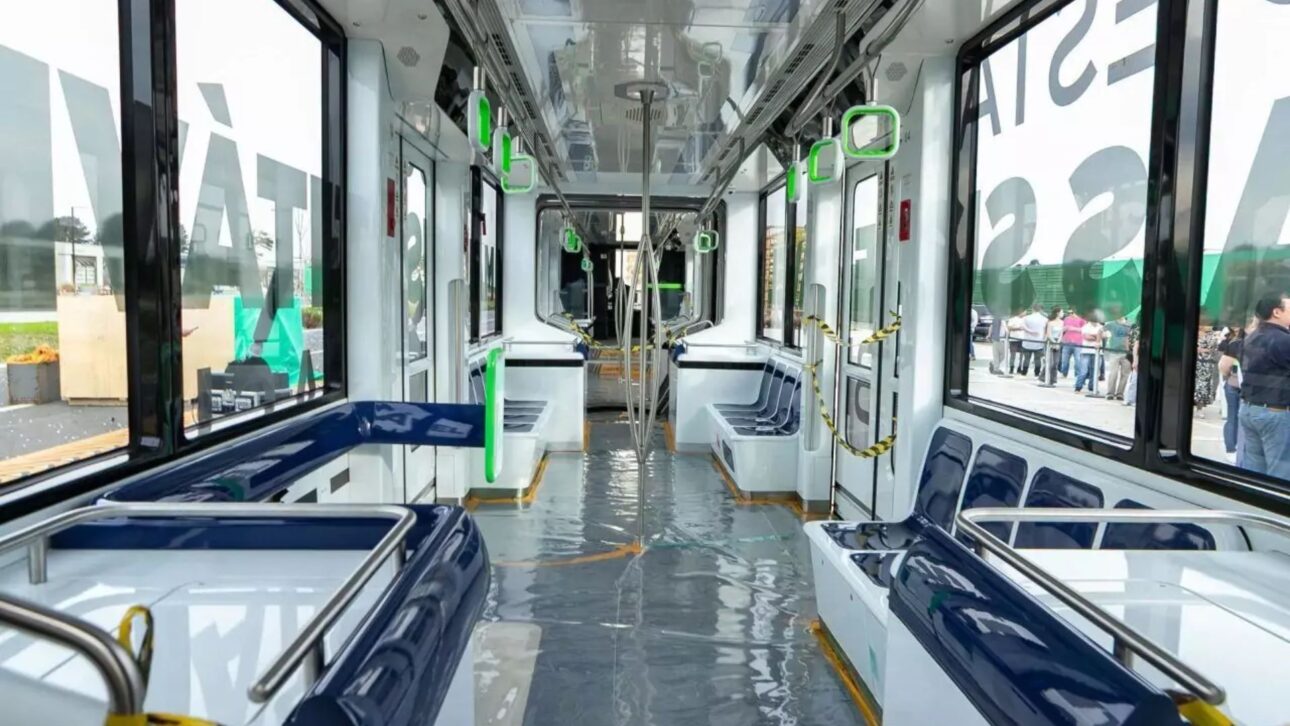
The vehicle is fully electric, equipped with air conditioning, and was designed to transport up to 280 passengers, within a platform aimed at reducing intervals and enhancing comfort.
The reported maximum speed is 70 km/h, suitable for segregated corridors and priority traffic scenarios.
Target Audience and Purpose of the Tests
The Pinhais–Piraquara corridor serves about 10,000 passengers per day with conventional buses.
During the testing phase, current vehicles will continue to operate normally while the BUD undergoes technical validations and safety procedures under the supervision of the CCO.
Only after these stages are completed will the operation with the public be allowed.
The goal is to assess performance, reliability, and the system’s adherence to the daily routine of metropolitan transport.
Virtual Track Technology
For the testing phase, pavement interventions are planned for installation of magnetic sensors that determine the path to be followed by the vehicle.
This solution enables virtual guidance and eliminates the need for track construction.
In summary, it involves applying detection and control resources that approximate the behavior of a train on tracks to the cost and flexibility of a high-capacity bus.
Schedule and Next Steps
According to the Paraná government, the expectation is to begin testing and trips in November, contingent upon the commissioning of rolling stock, system calibration, and team training.
The activities include dynamic tests, checking the digital guidance system, safety validations, and operational adjustments at the CCO and maintenance base of the São Roque Terminal.
Potential and Expansion Perspectives
The proposal attracts public managers by combining a quicker implementation than systems on tracks and a higher capacity than conventional bus lines.
As the BUD operates on asphalt, civil works tend to be less extensive and costly, preserving the possibility of phased expansion according to demand.
Furthermore, the electric operation and automated path control seek to reduce emissions and increase the regularity of intervals, sensitive points in metropolitan corridors.
With the progress of evaluations and the curiosity from other capitals, it remains to be seen which factor will be more decisive for its large-scale adoption: proven efficiency in real operation or reduced cost compared to BRTs and LRTs?









Seja o primeiro a reagir!