





 Portuguese
  English
  Spanish
  9 min of reading
  0 comments


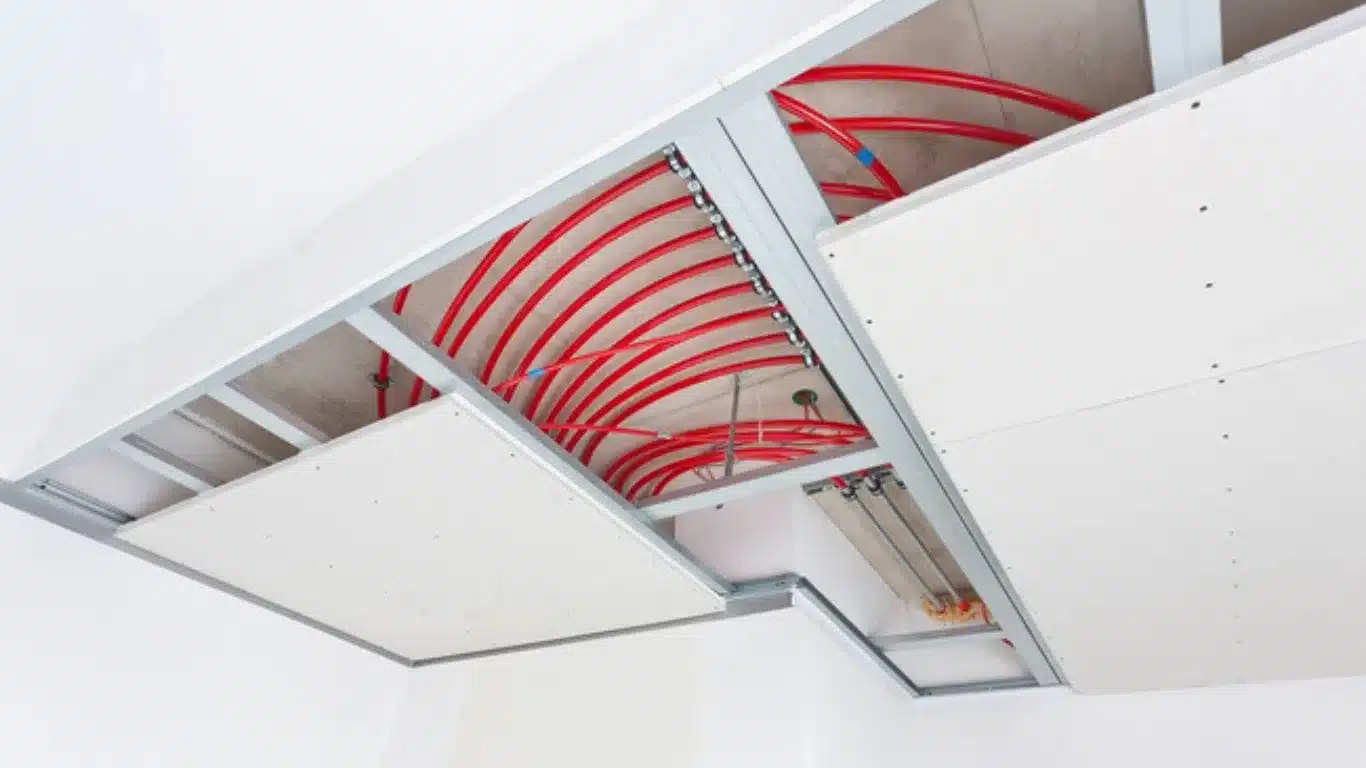
Discover How This Innovative Technology Provides Thermal Comfort, Energy Efficiency, and a Discreet Design, Transforming Modern Air Conditioning
In recent years, with the increasing concerns about energy efficiency and environmental impact, new technologies have emerged to replace traditional air conditioning methods, such as fans and air conditioners. Among these innovations, the radiant ceiling stands out as a modern and efficient solution, capable of offering superior thermal comfort, energy savings, and an aesthetic design that perfectly integrates into any environment.
This article aims to explore in depth the technology of the radiant ceiling, its advantages, operation, and applications, as well as its environmental impact and future in the air conditioning market.
What Is the Radiant Ceiling?
The radiant ceiling is an air conditioning system that uses thermal radiation to heat or cool a space.
-
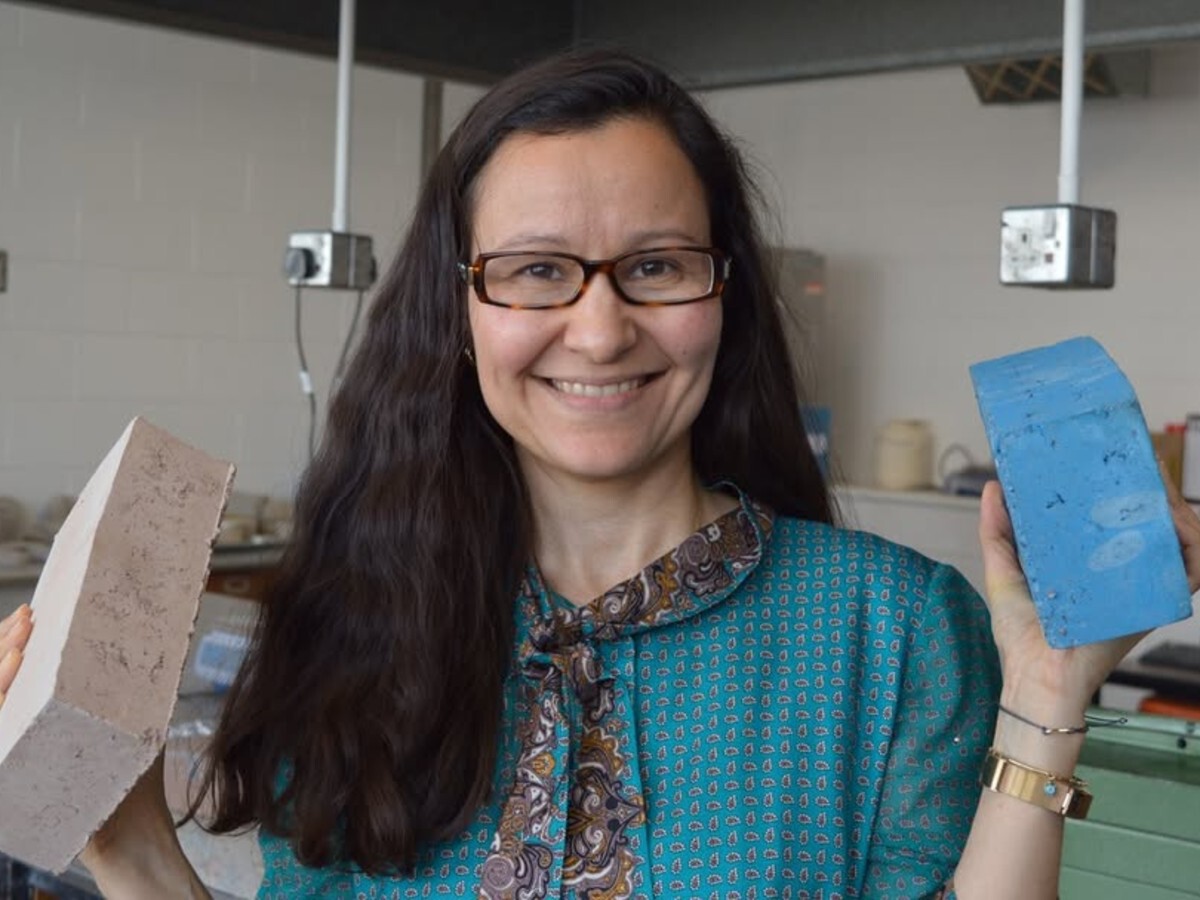
Goodbye to waste: a Brazilian created a revolutionary brick that uses construction debris, has already entered the markets of the United Kingdom and the USA, and promises to shake up the global construction industry.
-
China has created a mass-produced hypersonic missile that costs the same as a Tesla, and this is changing everything in modern warfare because the United States cannot defend itself without spending millions.

-
100% Brazilian technology transforms agricultural waste into a meat-scented ingredient using fungi from the Amazon rainforest. The process does not use excessive water or chemicals, and it also increases the nutritional value of the final product.

-
Psychology reveals that adults who avoid conflicts at all costs are not balanced individuals, but rather children who learned in the worst way that expressing emotions brought punishment and now live paralyzed by the fear of expressing themselves.


It operates by installing radiant plates in the ceiling, which contain pipes through which heated or cooled water circulates.
Unlike traditional air conditioning systems that rely on fans to move air, the radiant ceiling distributes heat or cold evenly across the ceiling’s surface.
This approach results in a comfortable environment, without unpleasant drafts that are often a feature of air conditioners and fans.
How Is the Water Heated or Cooled?
One of the most common questions about the radiant ceiling system is how the water is heated or cooled. This water can be treated in several ways, depending on the air conditioning system in use:
- Heating: To heat the water, the system can use a boiler, which heats the water to a specific temperature before it circulates through the pipes in the ceiling. Alternatively, electric heaters or solar heating systems, which harness the sun’s energy to heat the water, can also be used.
- Cooling: To cool the water, the system can use a chiller, a device that removes heat from the water, keeping it at an ideal temperature for conditioning. Additionally, in colder climates, the water can be cooled through an evaporative cooling system, which uses the evaporation of water to lower its temperature.
These options provide flexibility and allow the system to be adapted to different needs and climate conditions, making it versatile for various applications.
Operation of the Radiant Ceiling
The operation of the radiant ceiling is based on the physics of thermal radiation. When water circulates through pipes installed in the ceiling, it absorbs or dissipates heat, depending on the desired temperature.
In a heated environment, the radiant plates warm the ceiling, which in turn emits heat into the space, providing uniform heating.
Similarly, in hot climates, cooled water circulates, allowing the ceiling to absorb heat from the environment, effectively cooling it down.
This method is highly efficient as it minimizes the need for fans and moving components.
The absence of moving parts not only reduces noise during operation but also decreases maintenance needs, as there are no filters or ducts that require regular cleaning.
Advantages of the Radiant Ceiling
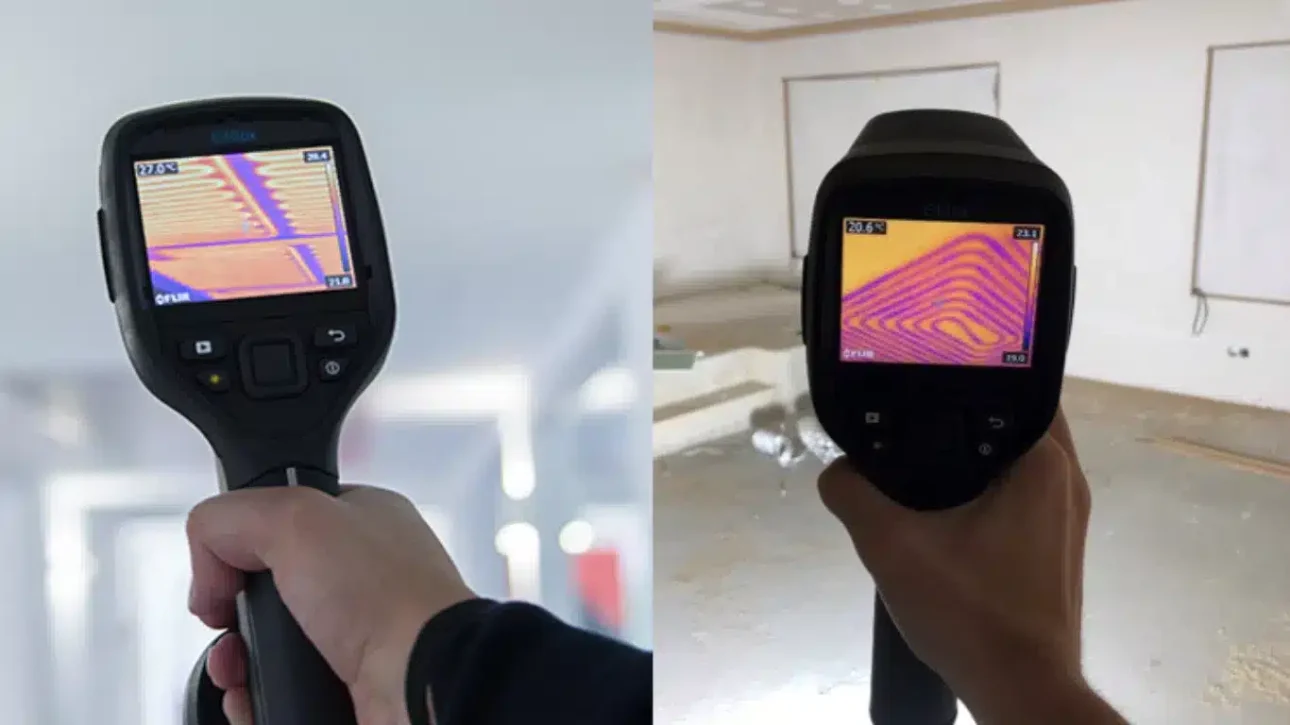
1st Energy Efficiency One of the biggest draws of the radiant ceiling is its energy efficiency. Studies show that this system can reduce energy consumption by up to 30% compared to traditional air conditioning systems. This is due to the fact that the radiant ceiling does not move air, thus avoiding the energy losses that occur in systems using fans.
2nd Superior Thermal Comfort The radiant ceiling provides a level of thermal comfort that is difficult to achieve with traditional methods. By evenly distributing heat or cold, it eliminates hot or cold spots in a space, ensuring that all occupants enjoy a comfortable area. This is especially beneficial in places that require a controlled environment, such as offices, libraries, and meeting rooms.
3rd Absolute Silence Another significant benefit of the radiant ceiling is its silent operation. Unlike air conditioning systems that can be noisy, the radiant ceiling operates in complete silence, which is ideal for environments where tranquility is essential.
4th Aesthetic and Discreet Design The discreet design of the radiant ceiling allows it to integrate seamlessly into any architecture. As the system is embedded in the ceiling, it does not occupy visual space on the floor or walls, allowing rooms to remain organized and aesthetically pleasing. This is particularly important in contemporary interior design projects, where aesthetics are a priority.
5th Low Maintenance With conventional air conditioning systems, there is a constant need for maintenance, especially regarding filter and duct cleaning. However, the radiant ceiling requires little maintenance, as it has no moving components or ducts that accumulate dirt. This results in lower operational costs over time.
Integration with Other Technologies
One of the most impressive features of the radiant ceiling is its ability to integrate with other air conditioning systems and alternative energy sources.
It can be easily connected to radiant floors, conventional heaters, and even renewable energy systems, such as solar panels and geothermal systems.
This flexibility not only increases energy efficiency but also contributes to reducing the environmental impact of air conditioning.
The use of renewable energy is especially relevant, as it allows buildings to significantly reduce their carbon footprint.
The combination of the radiant ceiling with clean energy sources can result in an air conditioning system that is not only efficient but also sustainable.
Applications in Buildings
The radiant ceiling is a viable option for both new constructions and renovations of existing buildings.
To ensure that the system is installed correctly and integrated into the architectural design, it is essential to hire qualified professionals.
The technology is adaptable to different types of construction, from residences to commercial and industrial buildings, providing tailored solutions for each need.
Another common question is whether the radiant ceiling can be installed in existing buildings.
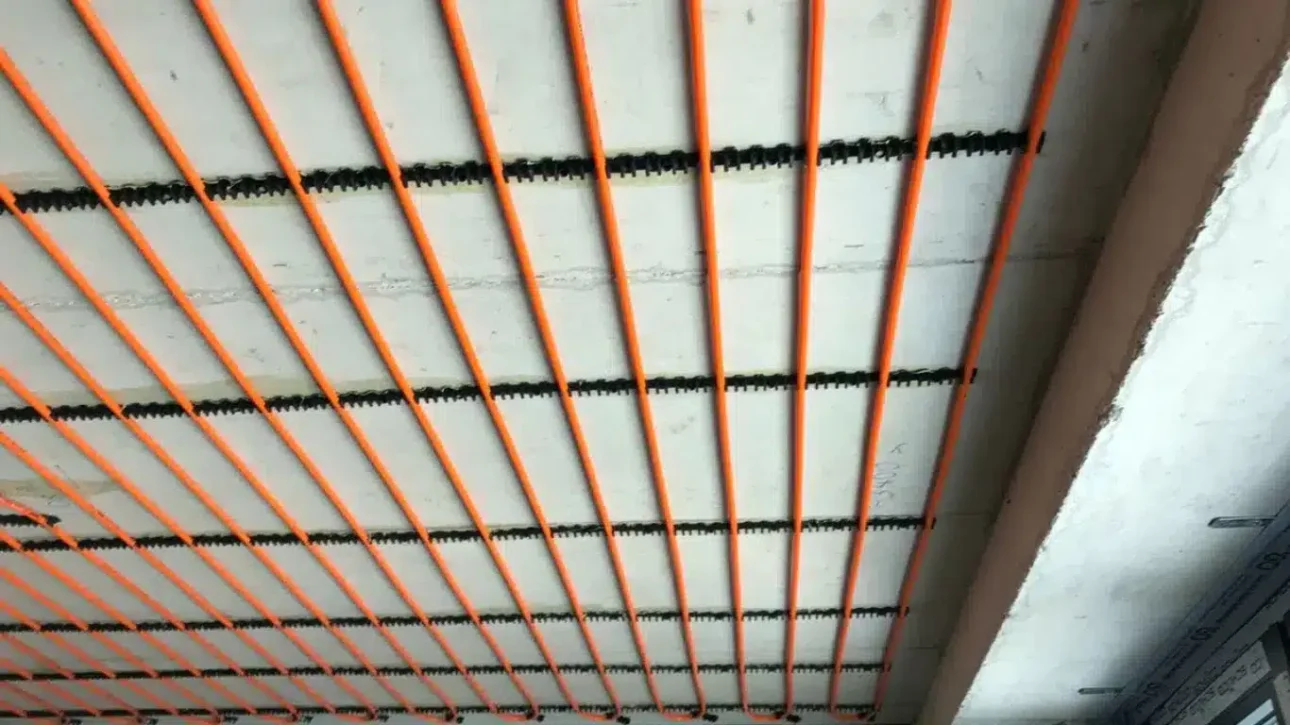
The answer is yes, as long as the necessary adjustments are made. In renovations, it is important to evaluate the ceiling structure and ensure that the plumbing system for the water can be installed without compromising the integrity of the building.
Furthermore, the radiant ceiling can be designed to work in conjunction with home automation systems, allowing users to intuitively and conveniently adjust the temperature and conditioning of their spaces.
The Future of Residential Air Conditioning with the Radiant Ceiling
As awareness of energy efficiency and thermal comfort grows, the radiant ceiling emerges as a viable and desirable alternative for residential air conditioning.
Traditional systems, such as ceiling fans and air conditioners, have their limitations, while the radiant ceiling promises to revolutionize the market with a more advanced and sustainable solution.
Although the cost of installing a radiant ceiling can vary, on average, between R$ 200 and R$ 500 per square meter, this investment can be offset by energy savings and the system’s durability.
Another frequent question is whether the initial investment is worth it. Over time, savings on energy bills and reduced maintenance can lead to a quick return on investment.
As more people become aware of the advantages of this technology, it is expected that the radiant ceiling will become the new standard for air conditioning in homes and commercial buildings.
Final Considerations about the New Technology
The adoption of the radiant ceiling represents a significant change in how we approach air conditioning in our environments.
With its energy efficiency, superior thermal comfort, and reduced environmental impact, this technology not only improves the quality of life for users but also aligns with global sustainability goals.
Moreover, with technological advancements, it is anticipated that implementation costs will decrease over time, making this solution more accessible to a broader audience.
The potential for customization and integration with other technological innovations makes the radiant ceiling an intelligent choice for those looking to align comfort, savings, and environmental responsibility in their homes or workspaces.
As the construction industry evolves and consumers become increasingly demanding regarding the performance and sustainability of their homes, the radiant ceiling is positioned to become a popular and widely adopted choice.
With the commitment to building a more sustainable and efficient future, this technology can undoubtedly play a key role in redefining modern air conditioning.
Therefore, the radiant ceiling is not just an innovation in air conditioning; it is a comprehensive solution that promotes a more conscious and sustainable lifestyle, aligned with the needs and expectations of today’s consumers.
Questions
1st What is the lifespan of the radiant ceiling system? The longevity of a radiant ceiling system can vary depending on the quality of the materials and the precision of the installation. Well-designed and installed systems typically have a lifespan ranging from 20 to 50 years. Regular maintenance and the use of high-quality components can further extend this lifespan.
2nd How does radiant ceiling installation compare to air conditioning systems? The installation of a radiant ceiling can be more complex and time-consuming compared to installing a conventional air conditioner, especially in existing buildings. This is due to the need to embed pipes in the ceiling and, in some cases, adjust the building structure. Installation times can vary but typically take from a few days to several weeks, depending on project complexity.
3rd Is the radiant ceiling suitable for all climate conditions? Yes, the radiant ceiling is a versatile solution that can be applied in various climate conditions. It can be adapted to heat spaces in cold climates and cool them in hot regions. However, the system’s efficiency may depend on the type of insulation and the specific climatic characteristics of each location.
4th What are the operational costs over time? The operational costs of a radiant ceiling system are generally lower than those of traditional air conditioning systems. Energy savings can vary, but many users report a reduction of 20% to 30% in electricity bills. Additionally, as maintenance is minimal—since there are no filters or ducts to clean—this also contributes to long-term savings.
5th How does the radiant ceiling perform in high humidity environments? The radiant ceiling system can work well in humid conditions, but it is crucial to ensure that the materials used are moisture-resistant. Additionally, it is recommended that the air conditioning system be designed to handle humidity, possibly integrating dehumidifiers to maintain comfort in the environment.
6th Can the radiant ceiling be combined with other air conditioning systems? Yes, the radiant ceiling can be easily integrated with other air conditioning systems, such as conventional heaters and air conditioners. This combination allows the system to operate more efficiently and offers greater flexibility in temperature control across different environments.
7th Are there incentives or subsidies available for installing radiant ceiling systems? In many places, there are incentive programs and subsidies offered by governments or environmental entities for the installation of efficient air conditioning systems, including radiant ceilings. These incentives may include tax reductions, direct grants, or low-interest financing, helping to minimize the initial installation cost.
8th How does the radiant ceiling perform compared to air conditioning systems in terms of rapid cooling? The radiant ceiling may not provide the same rapid cooling as a conventional air conditioner, especially in extreme heat conditions. However, in well-insulated environments, it can provide effective and comfortable cooling over time, avoiding temperature spikes that might occur with air conditioning systems.
9th What temperature control and automation options are available? Many radiant ceiling systems can be integrated with home automation solutions, allowing users to intuitively and conveniently adjust the temperature. This may include smart thermostats that connect to the internet and can be controlled via smartphone or voice assistants.
10th What materials are used in the radiant plates and how does this affect efficiency? The radiant plates are generally made of heat-conductive materials, such as aluminum or copper, which ensure a uniform temperature distribution. The choice of material can directly influence the system’s efficiency, with materials of higher thermal conductivity allowing for better heat transfer, resulting in more effective performance.








Seja o primeiro a reagir!