





 Portuguese
  English
  Spanish
  4 min of reading
  0 comments


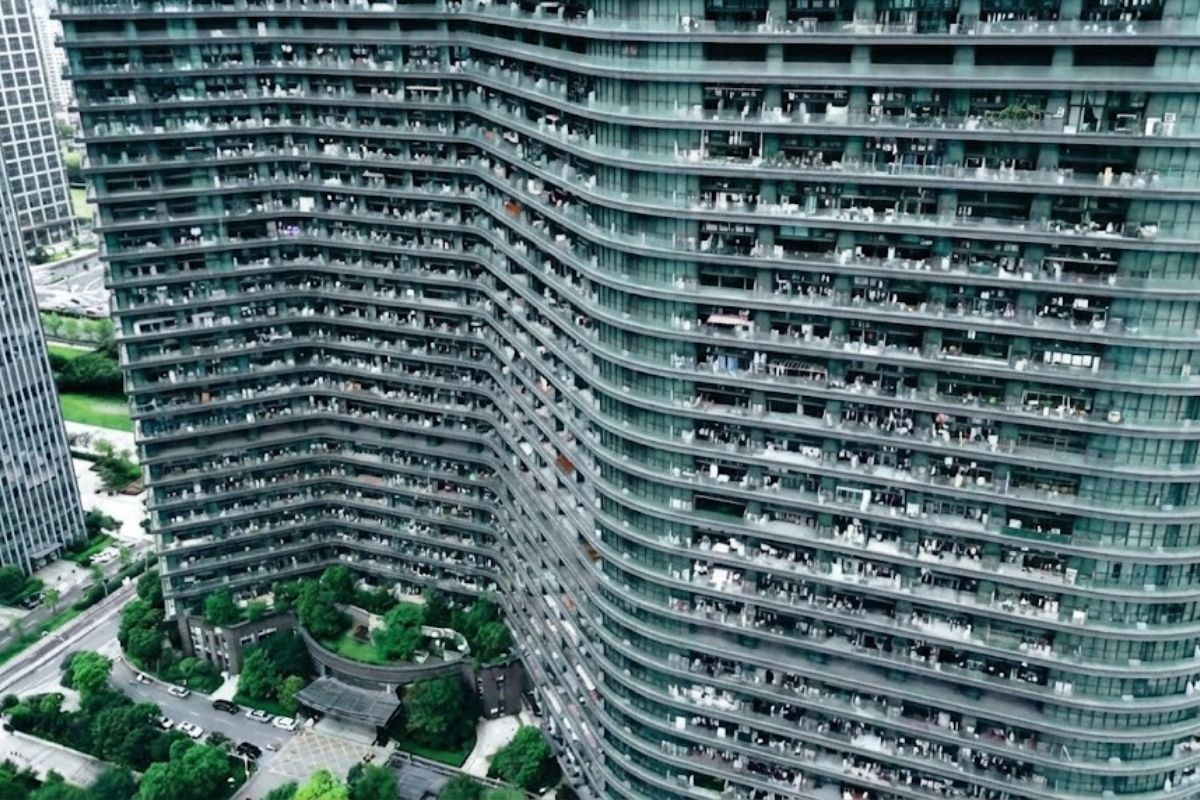
At Regent International in China, Residential Scale Reaches a Rare Level: 204 Meters High, 39 Floors, Apartments of Distinct Profiles, and Internal Infrastructure with School, Commerce, Leisure, and Daily Services. The Result Combines Extreme Convenience, High Density, and New Tensions of Collective Life in the Same Contemporary Urban Building.
In China, few projects explain vertical urbanization as well as Regent International. The complex has become a symbol of unprecedented housing, with estimates ranging between over 20,000 and even 30,000 residents within a single residential structure.
Located in Hangzhou, the development unusually combines height, density, and internal services. The goal is not just to stack apartments, but to organize an almost complete routine at the same address, from the market to leisure, from entering the lobby to commuting by subway in the immediate surroundings.
A Building That Functions as an Entire Neighborhood Within Urban China

Regent International in China stands 204 meters tall with 39 floors, which already places it in a different category when it comes to collective housing. This is not just about physical size, but about social scale: a population equivalent to that of a small city living within the same building.
-
Friends have been building a small “town” for 30 years to grow old together, with compact houses, a common area, nature surrounding it, and a collective life project designed for friendship, coexistence, and simplicity.

-
This small town in Germany created its own currency 24 years ago, today it circulates millions per year, is accepted in over 300 stores, and the German government allowed all of this to happen under one condition.

-
Curitiba is shrinking and is expected to lose 97,000 residents by 2050, while inland cities in Paraná such as Sarandi, Araucária, and Toledo are experiencing accelerated growth that is changing the entire state’s map.

-
Tourists were poisoned on Everest in a million-dollar fraud scheme involving helicopters that diverted over $19 million and shocked international authorities.


This concentration alters the logic of neighborhood. Instead of spread-out blocks, everyday life occurs in internal layers, with continuous flows of residents, visitors, deliveries, and services. The experience of living shifts from being merely domestic to having the dynamics of a vertical urban ecosystem.
Internal Infrastructure: When Living and Consuming Meet at the Same Address

In the model observed in China at this complex, residents find a school, supermarket, swimming pool, gym, café, and beauty salon without leaving the building. Convenience is the main functional asset: reducing short commutes and concentrating daily life within a radius of just a few meters.
At the same time, this integration creates a very unique routine. The boundary between private space and collective space becomes more sensitive because almost everything happens within the same perimeter. The gain in practicality comes with greater dependence on internal management, maintenance, and community rules.
Types of Apartments, Entry Price, and Occupancy Profile

The residential offer in the Chinese development ranges from compact studios to spacious units with balconies, which expands the range of residents. There are reports of initial rental prices around US$ 209 per month, in addition to larger configurations with three bedrooms, two living rooms, and two bathrooms. This diversity suggests a socially mixed occupancy, not restricted to a single profile.

In one of the presented units, the five-meter ceiling height and the balcony of about 40 m² show a spatial standard above average for a densely populated urban context. The contrast between compact units and spacious properties in the same building helps explain why the complex attracts both those looking for entry-level costs and those prioritizing size and views.

Human Scale, Coexistence, and the Limits of the Extreme Vertical Model

When a building in China gathers such a high number of people, the human factor becomes a central theme. The sense of community may be strong, with constant circulation and nearby services, but the same density requires permanent coordination of security, cleaning, the use of common areas, and the organization of flows.
There is also an impact on the perception of privacy and quietness. Even with soundproofing solutions and internal planning, intense collective life is part of the package and can be an advantage for some and a nuisance for others. In this type of housing, the address delivers daily efficiency, but charges for adaptation to the rhythm of a constantly active “internal neighborhood.”
What the Case of China Indicates for the Future of Housing in Large Cities
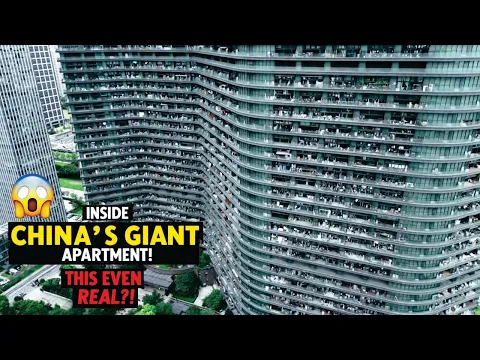

The example from China shows that verticalization can advance beyond the traditional apartment tower. Here, the building begins to concentrate functions that were previously distributed across various streets, creating a hybrid model between a condominium and urban centrality. This is a direct response to densification and mobility costs in metropolises.
This format does not replace all others, but expands the repertoire of solutions for cities under high real estate pressure. The main question shifts from just “how many floors?” to “what quality of life can this urban design sustain in the long term for those who live there every day?”.
The case of Regent International highlights how China has transformed a residential building into a complete urban mechanism, capable of bringing together housing, services, and circulation at a rare scale. It is an efficient model for some profiles and challenging for others, precisely because it pushes the idea of living in apartments to its limits.
If you had to choose, would you be willing to live in such a complex for the convenience, or would you prefer to give up convenience for less density in daily life? And, thinking about your city, what service would need to exist within the building for that choice to make sense to you?










-

-

-

-

-

99 pessoas reagiram a isso.