





 Portuguese
  English
  Spanish
  5 min of reading
  0 comments


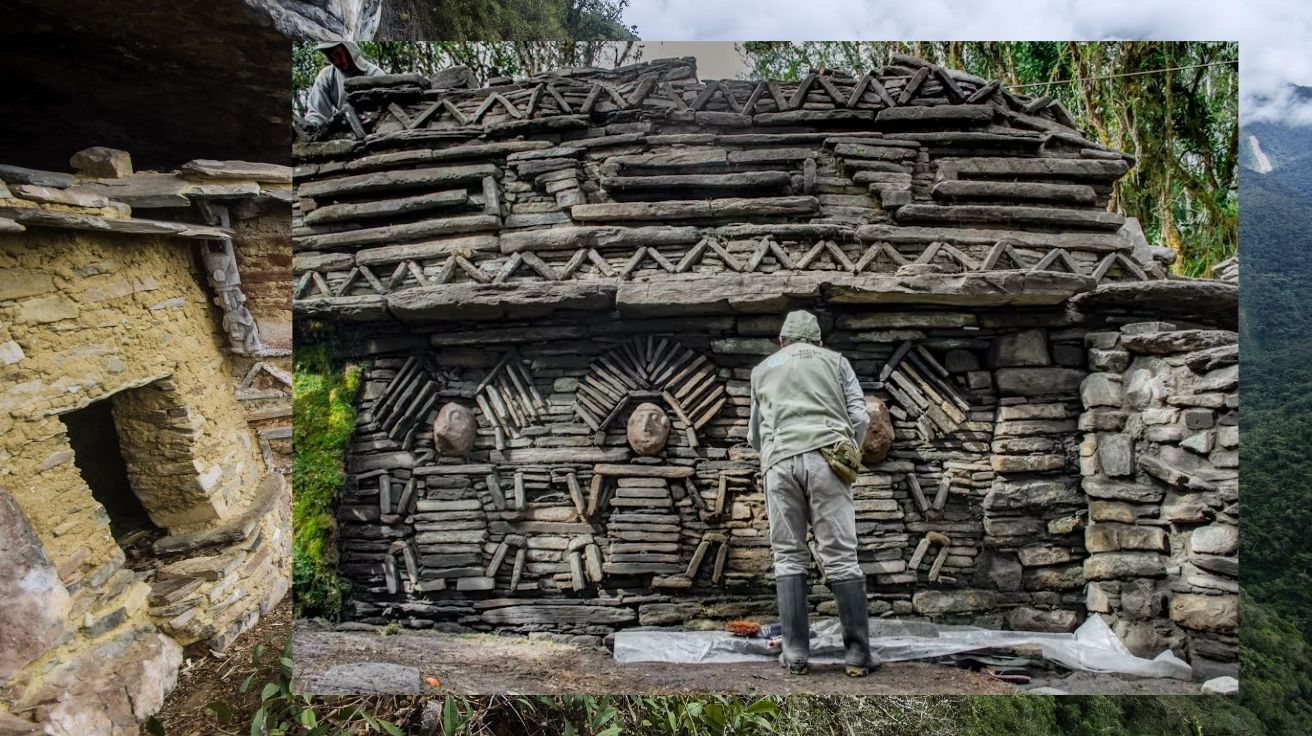
Using Cutting-Edge Technology, Archaeologists Reveal That the Enigmatic Site Gran Pajatén Was Part of a Complex Interconnected System in the Heart of Abiseo River National Park, With Over 100 New Structures Dating Back to the 14th Century
One of the greatest mysteries of Andean archaeology has just gained new chapters. Archaeologists from the World Monuments Fund (WMF) discovered over 100 unknown structures at the archaeological site Gran Pajatén, located in the high cloud forest of Abiseo River National Park, Peru. The revelation, announced in May 2025, more than doubles the number of known constructions from the Chachapoya culture, and changes everything that was known about the occupation of the region.
According to Popular Mechanics and WMF itself, the discovery was made possible through the use of advanced technologies such as aerial and manual LiDAR, photogrammetry, and topographic mapping, allowing researchers to “see” beneath the dense vegetation without damaging the environment. The work revealed a sophisticated archaeological ecosystem, with ceremonial platforms, mosaics, friezes, and even networks of roads connecting Gran Pajatén to other centers of the ancient civilization.
ARTICLE CONTINUES BELOWSee also
While the world looks at oil, the war with Iran is already disrupting helium supply from Qatar, affecting car and iPhone chips, threatening AI expansion, and putting pressure on aluminum packaging at the highest value in four years.

Global warming will expose a treasure hidden under the ice of Antarctica and may spark an international dispute over gold and valuable minerals.

A street vendor from Praia Grande built a robot made of scrap from scooters and washing machines that pulls his popcorn cart on the beach, emits sounds, and interacts with customers, becoming an attraction on the coast of São Paulo.

The specifications of the Xiaomi 18 Pro Max have been leaked, and the highlight is a dual 200 MP camera with a new 22-nanometer technology that promises to consume less energy and capture details in shadows and bright areas using LOFIC HDR.

The Rediscovery of the Cloud Forest Civilization
Known as the “Cloud Forest Peoples”, the Chachapoya lived between the 7th and 16th centuries on the slopes of the Peruvian Andes, at altitudes between 2,000 and 3,000 meters. Their architecture, distinguished by circular shapes, geometric reliefs, and tombs embedded in cliffs, has withstood the test of time and vegetation for centuries.

Gran Pajatén, officially discovered in the 1960s and archaeologically registered in the 1980s, had until then been considered an isolated and enigmatic location, with only 26 known structures. The new evidence doubles that number and demonstrates that the site was part of a complex network of connected settlements.
According to the executive director of WMF in Peru, Juan Pablo de la Puente Brunke, the data reveals that Gran Pajatén was part of an articulated system of pre-Hispanic cities, connected to locations such as La Playa, Papayas, and Los Pinchudos, all situated within Abiseo River National Park, an area recognized as a UNESCO World Heritage Site since 1990.
The discovery also reinforces the urban sophistication of the Chachapoya. Instead of a dispersed people, the data suggests a structured society, with regional hierarchies and infrastructure interconnected by stone roads in the mountains.
The majority of the identified constructions remained hidden beneath dense forest, and their revelation was only made possible through the use of LiDAR scanning technology, which captures topography even beneath the canopy.
Abiseo River National Park, with its over 274,000 hectares, also hosts hundreds of endangered species, such as the spectacled bear and the woolly monkey. Therefore, tourism in the region is extremely restricted, which has also helped to preserve the site at a high level of authenticity.
Cutting-Edge Technology in the Midst of Virgin Jungle
The excavation and conservation project led by WMF was carried out between 2022 and 2024, aiming to document and preserve Gran Pajatén without negatively impacting the environment. The tools used included drones with LiDAR sensors as well as 3D reconstruction software and morphological analysis.
In addition to mapping, the team also performed controlled physical interventions, such as the partial reconstruction of walls, reinforcement of stairways, stabilization of stone reliefs, and sealing joints with a custom-made clay mixture. These actions were led by specialist Ricardo Morales Gamarra and now serve as an international reference for future conservation actions in sensitive areas.
One of the major surprises was the identification of mosaics with human figures, ceremonial platforms, and friezes that reflect the complex symbolism of the Chachapoya. Although they are known for their resistance to the Inca Empire, the civilization was eventually incorporated into Inca rule shortly before the arrival of the Spanish.
Another relevant piece of data was the deepening of the occupation chronology of the site. Stratigraphic analyses indicate that Gran Pajatén may have been used since before the 14th century, making it one of the oldest monumental settlements of the Chachapoya culture.
The study not only reconfigures the understanding of the site’s regional role but also expands the boundaries of what was imagined to be the “Chachapoya territory”, extending the area of influence of these people by hundreds of kilometers.
Even inaccessible to the general public, Gran Pajatén may soon be explored digitally. The president of WMF, Bénédicte de Montlaur, states that the documentation generated will allow the creation of immersive narrative experiences for virtual visitors around the world.
Biodiversity, Cultural Legacy, and the Future of Preservation
The Abiseo River National Park is one of the most biodiverse regions in the world. It hosts 980 species of plants, such as bromeliads, orchids, and ferns, as well as almost 300 bird species and 50 mammal species, including rare animals like the jaguar and the taruca (an Andean deer).
This ecological richness is what justifies the rigor with which the Peruvian government and international entities protect the area, strongly restricting tourist access and prohibiting large unauthorized expeditions. This, in turn, has ensured that Gran Pajatén remained virtually untouched for decades.
The digital exhibition of these findings is being held at the Lima Art Museum (MALI) from May 21 to June 18, 2025. The exhibition is free and allows the public to closely explore the details of this forgotten civilization and the technologies used in the research.
WMF aims to transform the work carried out into a replicable model for other parks and archaeological sites that are difficult to access around the world, merging science, technology, and environmental conservation.
The hope is that, even without physical tourism, the legacy of the Chachapoya can be valued through digital education, allowing more people to learn about the sophistication of this culture that built cities in the clouds even before the arrival of the Incas.
Gran Pajatén, today, represents not only a newly expanded archaeological treasure but also a model of balance between cultural and environmental preservation, with valuable lessons for the future of archaeology in the digital age.








Seja o primeiro a reagir!