





 Portuguese
  English
  Spanish
  5 min of reading
  0 comments


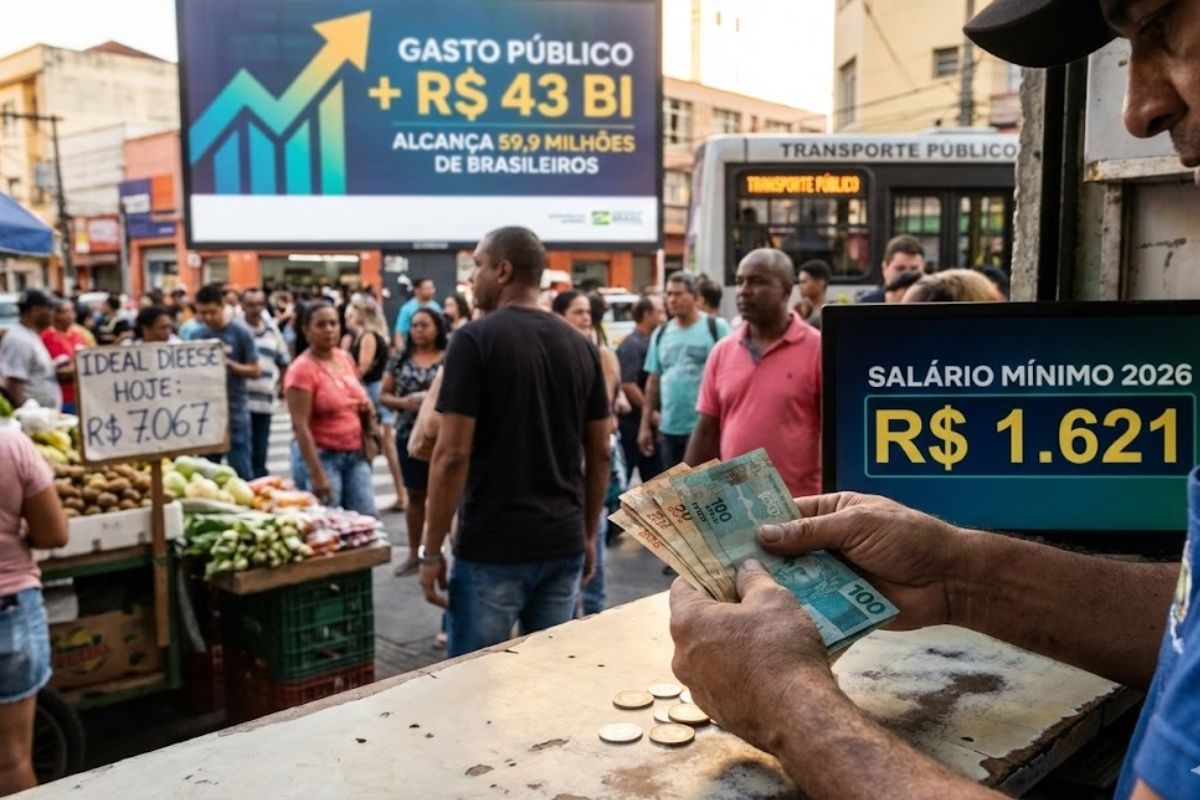
Government confirmed on December 10, 2025, that the minimum wage will be R$ 1,621 starting in January 2026, an increase of 6.79% that references 59.9 million people, raises federal spending by R$ 43 billion and still remains well below the R$ 7,067 estimated by Dieese.
On the morning of December 10, 2025, the Ministry of Planning and Budget confirmed that the minimum wage will be R$ 1,621 in 2026, a value R$ 103 above the current floor of R$ 1,518 and a total adjustment of 6.79%. The change will take effect in January 2026 and will be felt by workers starting with the salary paid in February.
According to the current rule, the minimum wage combines inflation measured by the INPC over 12 months until November, at 4.4%, with a real increase of 2.5% linked to the GDP of 2024, limited by the new fiscal framework law. The GDP of 2024 grew by 3.4%, but the real increase of the floor was capped at 2.5%, the maximum allowed by the rule approved in December of last year.
How Will the Minimum Wage Adjustment Be in 2026
The amount of R$ 1,621 results from the automatic application of the formula that corrects the minimum wage. First comes the accumulated inflation until November, measured by the INPC, of 4.4%, which restores the purchasing power lost over the year.
-
Petrobras sends a message to Brazilian truck drivers after fuel collapse and reveals plan to have 100% domestic diesel.

-
Mothers and daughters come together, create an ‘express’ beauty salon and turn the idea into a network with 21 units, revenue of R$ 16.7 million and 12,000 subscribers.

-
End of the 6×1 schedule: how the reduction of hours can affect service companies, industry, and agribusiness.

-
Brazil Ignores Trump’s threats to BRICS, Buys 42 tons of gold and reduces the Dollar’s share by 6.45% in international reserves.

Then, the real gain is added, tied to the growth of the Gross Domestic Product two years prior.
For 2026, the performance of the economy in 2024 is applicable, when the GDP grew by 3.4%. In practice, however, the law that established the new fiscal framework set a ceiling of 2.5% for this real gain, specifically to try to contain the increase in mandatory spending.
Thus, the government applies the inflation plus 2.5%, reaching the total adjustment of 6.79% and the new floor of R$ 1,621.
This movement maintains the policy of valuing the minimum wage, which again envisions a real increase above inflation, but within limits defined by the fiscal rule to avoid even greater pressures on the federal budget.
Who Lives on Minimum Wage Will Feel the Impact of the New Value
According to a technical note from Dieese published in January, the minimum wage is a reference for 59.9 million people in Brazil.
It is not just about the worker with a signed employment contract who earns exactly a minimum wage, but also those who earn multiples of this value, retirees, pensioners, and beneficiaries of social programs.
Benefits such as INSS pensions, Continuous Cash Benefit (BPC), and unemployment insurance cannot be lower than the minimum wage.
Each increase of the floor spreads throughout this income network, also influencing wage negotiations in sectors that use the minimum as a reference.
Additionally, the new value tends to raise the average wage and the purchasing power of a significant portion of the low-income population, with effects on the consumption of basic items, such as food, transportation, utility bills, and daily-use products.
A significant part of the Brazilian economy directly depends on this money that enters households living on the minimum wage every month.
How Much the New Minimum Wage Will Cost the Public Treasury
The appreciation of the minimum wage has a direct impact on the federal government’s accounts. According to official calculations, each R$ 1 increase in the minimum wage generates an additional expense of approximately R$ 420 million in 2026.
Since the floor will rise R$ 103, from R$ 1,518 to R$ 1,621, the estimated extra cost is around R$ 43.2 billion in mandatory expenses next year.
This figure primarily includes pension, assistance, and labor benefits linked to the floor, such as pensions, BPC, salary bonuses, and unemployment insurance.
With the growth of these expenses, there is less room in the budget for so-called discretionary spending, which includes investments, funding of public policies, and programs considered non-mandatory.
In a scenario of efforts to control public debt and interest rates, this compression of discretionary expenses is seen with concern by economists.
Therefore, some experts advocate that the floor of pension benefits be uncoupled from the minimum wage, returning to being adjusted only by inflation, as occurred during the government of Jair Bolsonaro.
The idea is to preserve the policy of real appreciation of the minimum wage but reduce the cascading effect on all expenses indexed to the floor.
Minimum Wage of R$ 1,621 Is Still Distant from the Value Considered Dignified
On the other side of the debate, Dieese argues that, even with the confirmed increase for 2026, the Brazilian minimum wage remains very far from the level necessary to ensure a dignified life for a family of four.
In November of this year, Dieese calculated that “the adequate minimum wage should be R$ 7,067.18,” the equivalent of 4.66 times the national floor of R$ 1,518 that will be in effect until December 2025.
The calculation considers the constitutional determination that the minimum wage must be sufficient to cover expenses with food, housing, health, education, clothing, hygiene, transportation, leisure, and social security.
Even with the increase to R$ 1,621, the gap in relation to the value indicated by Dieese remains large, reinforcing the perception that the adjustment policy, while important, does not alone solve the challenge of low income in the country.
For millions of families, the new minimum wage helps alleviate the budget, but does not eliminate the strain on basic expenses.
The discussion about what the pace of appreciation of the minimum wage should be, balancing social protection and fiscal responsibility, is likely to remain at the center of economic and political debate in the coming years, especially in a country where nearly 60 million people depend directly on this amount to live.
In your reality, does the minimum wage of R$ 1,621 in 2026 indeed change your daily life or does it remain insufficient to close the monthly accounts?





-

-

2 pessoas reagiram a isso.