





 Portuguese
  English
  Spanish
  4 min of reading
  0 comments


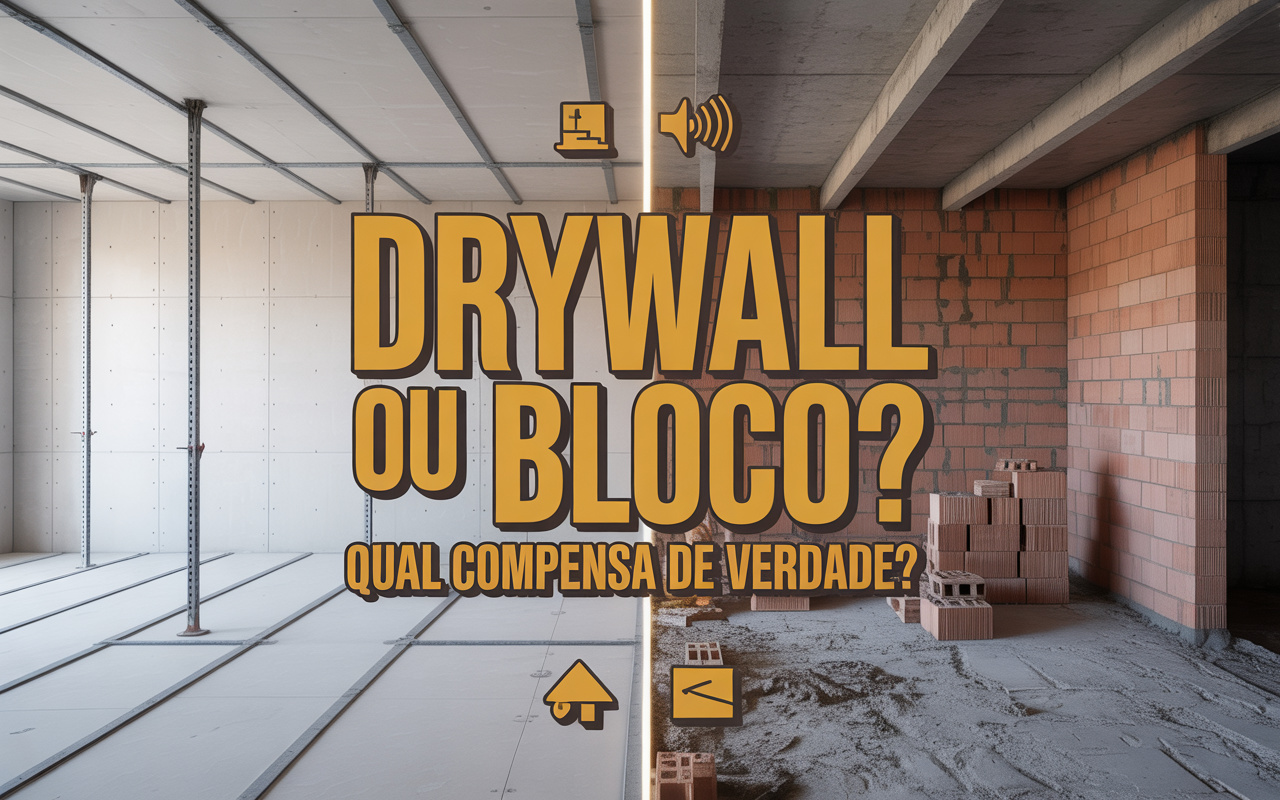
Drywall or Block Masonry? See the Real Comparison of Cost Per m², Construction Time, Strength, Maintenance, Acoustic Insulation, and Thermal Performance.
Those who are building or renovating inevitably come across this question: is it worth more to build walls with drywall or to stick with traditional block masonry? The answer is not just a matter of preference. It involves money, construction time, acoustic performance, thermal behavior, maintenance, and even future headaches. In practice, both systems coexist in the Brazilian market but cater to completely different types of construction.
Cost per Square Meter: Where the Difference Really Lies
On a national average, the real market figures revolve around:
- Drywall installed: between R$ 120 and R$ 220 per m², depending on the quantity of panels, type of metal profile, internal insulation, and region.
- Block masonry (material + labor): between R$ 140 and R$ 260 per m², varying between ceramic block, concrete block, and complexity of the construction.
At first glance, the values seem close, but the cost does not end at the m² of the wall. Masonry still requires:
-
The section of Serra da Rocinha on BR-285 is now open in Timbé do Sul: 50 m tensioned curtains and top-down technique stabilize the slope, with a stairway duct controlling the water.

-
Scientists use sawdust mixed with clay to create a lighter brick, promising efficient thermal insulation and impressing by transforming waste into a solution for construction.

-
With a DNA shape, this bridge in Singapore draws attention in modern architecture and surprises tourists by transforming a simple crossing into an unforgettable visual experience in the urban heart.

-
Giant underwater pipeline begins to take shape with a R$ 134.7 million project at the Port of Santos: the 1.7 km structure uses 12-meter and 700 mm pipes to supply water to 450,000 people in Guarujá.


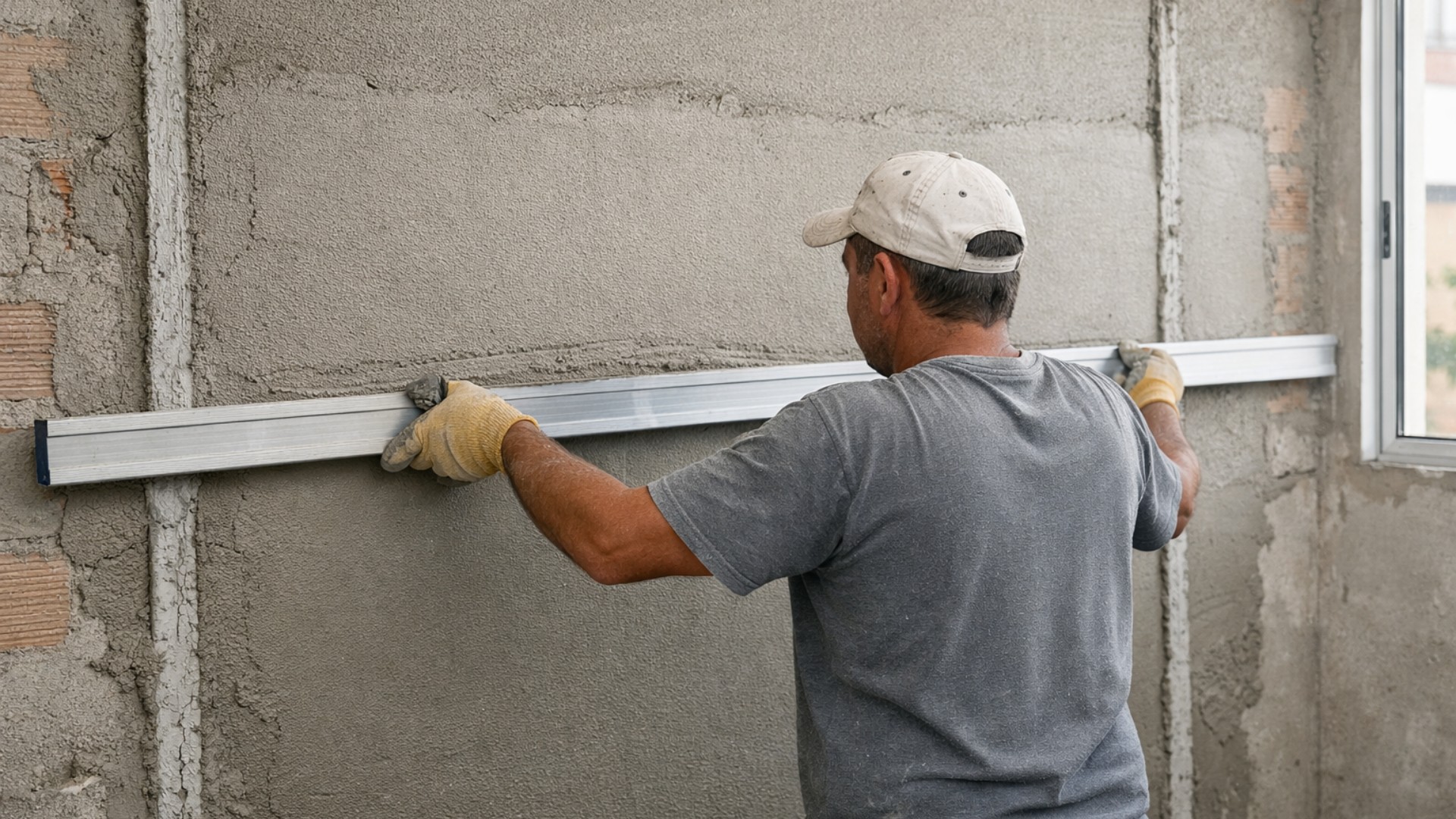
- roughcasting,
- plastering,
- rendering,
- putty,
- greater cement consumption,
- more labor time.


In drywall, the wall is already practically ready for painting, without the three finishing layers of traditional masonry. This is where, in practice, drywall often turns out to be cheaper in the end.
Execution Time: Where Drywall Takes the Lead
In terms of construction speed, there is no fair competition.
- Drywall: a team assembles 40 to 60 m² per day with nearly finished details.
- Masonry: on average, 12 to 20 m² per day, still requiring curing of the plaster before painting.
In fast projects like apartments, quick renovations, offices, clinics, and stores, drywall can shorten the internal sealing phase from weeks to just a few days. This means less equipment rental, less daily labor costs, and less downtime on the job.
Strength: The Biggest Myth About Drywall
This is the point where many people are mistaken. There is a belief that drywall is fragile, but technically that’s not quite right.

A well-executed drywall can support:
- built-in furniture,
- televisions,
- cabinets,
- countertops,
- doors,
- suspended equipment.
As long as the following are used:
- internal reinforcements,
- double panels,
- appropriate anchors.
On the other hand, block masonry is unbeatable when it comes to direct impact. It withstands blows, concentrated loads, and physical abuse with much more tolerance. In industrial environments, garages, outdoor areas, and walls, drywall simply isn’t an option.
Technical summary:
- Drywall: excellent for internal environments and moderate loads.
- Block: superior for impact, outdoor areas, and continuous heavy loads.
Acoustic Performance: Where Drywall Generally Wins
Here comes a surprise for many. Drywall, when fitted with mineral wool inside, isolates sound better than plain masonry.
In practice:
- Drywall wall with fiberglass or rock wool → 40 to 55 dB reduction.
- Simple ceramic block wall → average reduction of 30 to 40 dB.
That’s why:
- studios,
- clinics,
- offices,
- hotels,
- hospitals
prefer drywall with internal acoustic treatment.
Thermal Performance: Which Warms Less?
In thermal behavior, both systems depend heavily on finishing, but there are relevant differences:
- Drywall + thermal insulation: creates an insulating air chamber, reducing heat exchange.
- Ceramic block: also insulates well, mainly due to the air contained in the voids.
- Concrete block: is the one that transmits heat the most.
In warm regions, drywall with internal insulation tends to have superior thermal performance compared to standard concrete blocks.
Structural Weight: Direct Impact on Foundation Costs
This is a technical point that is rarely discussed, but extremely important.
- Drywall: about 25 to 50 kg per m².
- Block masonry: can easily exceed 140 to 180 kg per m² including plaster.
In other words, masonry weighs up to 4 times more. In large projects, this directly impacts:
- the sizing of beams,
- the consumption of steel,
- the size of foundations,
- the total structural cost.
Electrical and Hydraulic Installations: Which Causes Less Rework
In drywall, all infrastructure runs within the wall, without subsequent breakage. Future maintenance is done by opening small sections and easily closing them again.
In masonry, any modification requires:
- breaking the wall,
- redoing conduits,
- plastering again,
- painting again.
In renovations, this makes a huge difference in cost and mess.
Moisture and Infiltration: Where Drywall Requires More Care
Here is the point of greatest attention:
- Regular drywall cannot come into contact with direct water.
- For bathrooms, kitchens, and laundry rooms, it is mandatory to use moisture-resistant panels (RU).
- In outdoor areas, the system is hardly recommended.
Masonry, on the other hand, handles continuous moisture better, as long as the plaster and waterproofing are well done.
Maintenance Over the Years
- Drywall: clean, quick, and localized maintenance.
- Block masonry: more labor-intensive maintenance, with breakage, mess, and debris.
However:
- strong impacts damage drywall more easily;
- infiltration destroys drywall quickly;
- structural cracks appear more in masonry.
Where Each System Makes More Sense in Practice
Drywall is ideal for:
- apartments,
- quick renovations,
- offices,
- clinics,
- stores,
- internal partitions,
- areas that require high acoustic performance.
Block masonry is more suitable for:
- facades,
- walls,
- outdoor areas,
- garages,
- areas with impact,
- structural walls.
After All, Which Is Really Worth More?
The real technical answer is: there is no absolute winner.
- If the priority is speed, clean finish, less weight, and better acoustics → drywall.
- If the priority is brute resistance, outdoor areas, and impact → block masonry.
The most common mistake in construction is trying to use a system outside its correct function. When each is applied in the right environment, both work very well.









-

-

-

-

-

17 pessoas reagiram a isso.