





 Portuguese
  English
  Spanish
  4 min of reading
  1 comment


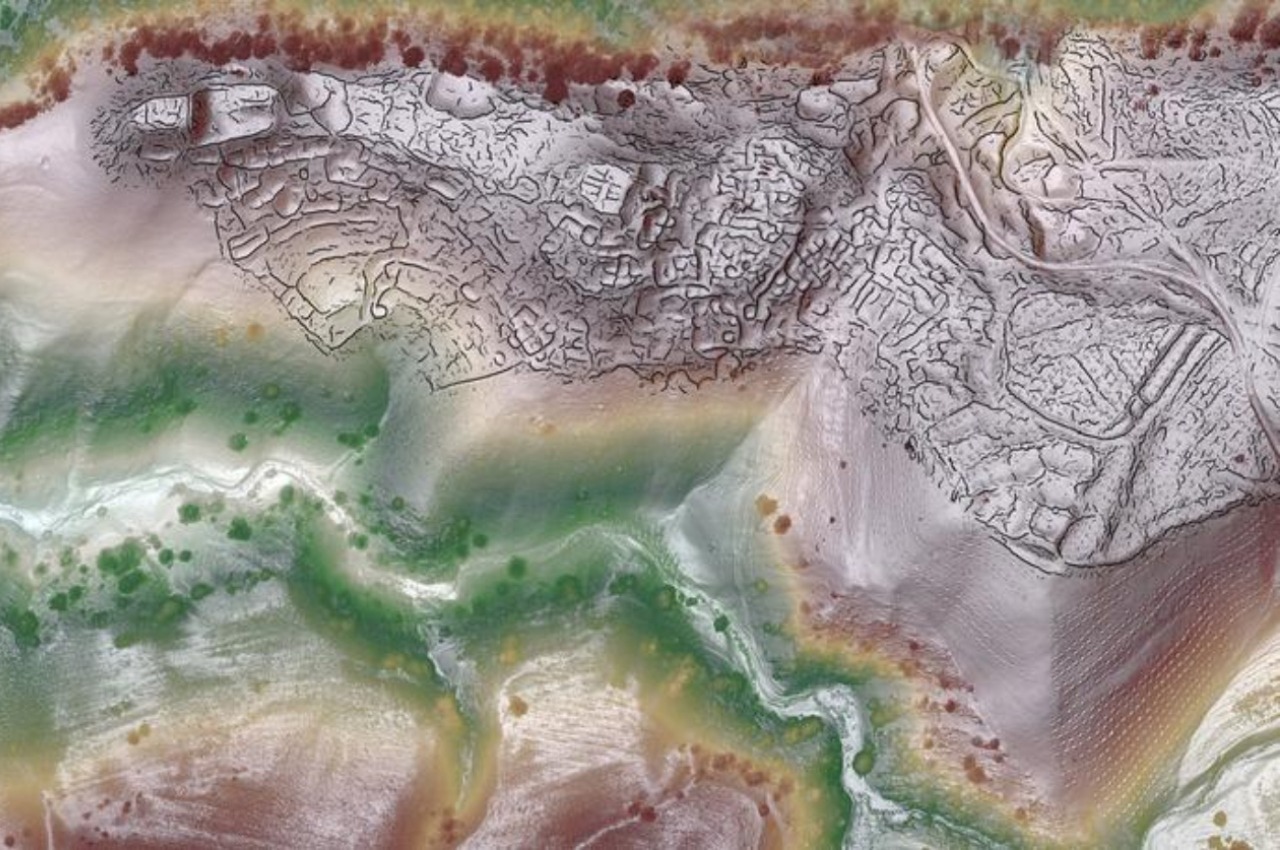


Excavations in Tugunbulak Identify Settlement of 120 Hectares at 2,100 Meters, with Complex Urbanization, Metalworking and Documented Political, Economic and Commercial Connections
An international team of archaeologists has identified, in the mountains of Uzbekistan, a vast high-altitude medieval settlement that may correspond to the legendary Marsmanda, mentioned in the 10th century as an iron production hub, altering the understanding of urbanism, economy and power in the highlands of Central Asia.
The archaeological site, currently known as Tugunbulak, is located about 2,100 meters above sea level and covers approximately 120 hectares, a size comparable to twice the preserved urban area of Pompeii.
The excavations are co-directed by Michael Frachetti from Washington University in St. Louis, Farhod Maksudov from the National Archaeology Center of Uzbekistan, and Sanjyot Mehendale from the University of California, Berkeley.
-
With a cost per shot close to zero, the DragonFire laser could change naval warfare in 2027 and provide British ships with nearly unlimited defense against drones.

-
A British startup creates tires that generate electricity in electric vehicles when passing over potholes, speed bumps, and cracks.

-
Scientists have created robots made with living cells that have their own nervous system, swim on their own, explore the environment, and self-organize without any genetic engineering, and now they want to do the same with human cells.

-
Students create a solar-powered ambulance that operates without a plug, without fuel, and still keeps medical equipment running in remote areas.


The project combines traditional excavations with drone mapping equipped with LiDAR sensors, allowing extensive and subtle structures to be identified across a mountainous landscape that is difficult to visually read.

Extreme Altitude Urban Structure
The surveys revealed a settlement with complex urbanization, including walls, defensive towers, monumental buildings, and hundreds of structures organized on terraces adapted to the steep terrain.
Researchers identified at least four distinct sectors, including a fortified area with multiple robust constructions, suggesting urban planning and defined administrative or military functions.
Selective excavations revealed buildings constructed of rammed earth, with thick walls, associated with industrial furnaces and large volumes of slag, indicating large-scale metal production.
The evidence suggests that metallurgical activity was present since at least the 6th century A.D., a period associated with the expansion of the First Turkish Khanate in the region.

Iron Production and Historical Review in the Medieval City
Archaeological remains suggest that Tugunbulak served as a center for extraction, smelting, and processing of iron, capable of producing weapons, agricultural tools, and possibly low-quality steel.
The significant amount of metallurgical waste indicates considerable industrial capacity, challenging traditional views that describe the nomadic societies of Central Asia as technologically dependent on sedentary urban centers.
For researchers, the site demonstrates that high-altitude pastoral communities mastered complex production techniques and economic organization, integrating technical knowledge, territorial control, and regional circulation.
The team also identified unusual burials, including that of a Turkish warrior buried with a horse and various artifacts associated with military status.
Among the objects found are weapons, jewelry, and coins, one of which has an inscription in Sogdian, dated to the 7th century A.D., reinforcing regional trade connections, as reported by Smithsonian Magazine.
These finds are rare in the region and indicate the presence of military elites connected to Turkish traditions, embedded in broader political and economic networks.

Relationship with the Tashbulak Site
A few kilometers from Tugunbulak, archaeologists had previously excavated the site of Tashbulak, a smaller settlement occupied between approximately 730 and 1050 A.D.
Tashbulak housed an estimated population of around 500 people, with seasonal growth linked to the arrival of shepherds, reflecting flexible population dynamics in the highlands.
The site featured a citadel, metalworking workshops, residential areas, and a large Islamic cemetery, indicating the relatively early adoption of Islam outside major urban centers.
New evidence suggests that Tashbulak functioned as an associated or subordinate settlement to Tugunbulak, possibly occupied by communities with distinct religious practices.
The discovery of Tugunbulak altered the initial interpretation of Tashbulak, revealing that both were part of a larger and articulated urban system in the mountains.
The City of Marsmanda and the Silk Road
Arab historical sources describe Marsmanda as a mountainous city with a harsh climate, known for its meadows and, above all, for its iron production that attracted distant people.
These descriptions coincide with the characteristics identified in Tugunbulak, although definitive confirmation still depends on ongoing additional analyses.
The discovery reinforces new interpretations of the Silk Road, indicating that highland shepherds played an active role in the circulation of goods, technologies, and beliefs.
Evidence of trade in grains, fruits, and other products suggests strong integration between mountain communities and lowland cities like Samarkand.
There is debate regarding the political control of the settlement, between hypotheses of an autonomous Turkish elite or Sogdian dominance with mercenary Turkish warriors.
Regardless, Tugunbulak thrived for centuries before being nearly abandoned around 1050 A.D., possibly due to droughts, deforestation, or regional metallurgical competition.
With information from Aventuras na História.






Muita coisa a ser revelada ainda, legal!!