





 Portuguese
  English
  Spanish
  5 min of reading
  1 comment


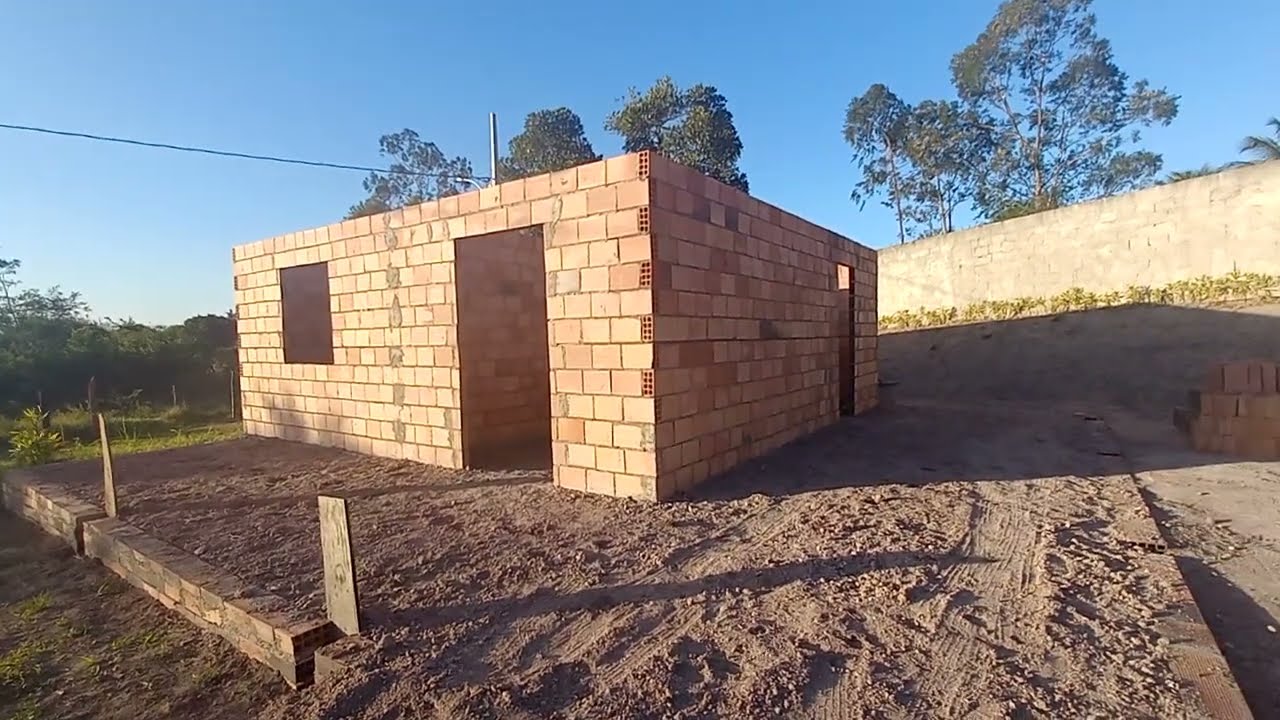


49 m² House Built for About R$ 4,000 Using 3,000 Bricks, 17 Bags of Cement, and Columnless Technique. Simple Method Reduces Costs in Rural Areas.
In a scenario where the average construction cost in Brazil often exceeds R$ 1,500 per square meter using conventional methods, a recent video caught attention by showing the construction of a country house of 49 m² (7×7 meters) with an investment approximately between R$ 4,000 and R$ 5,000 for the structure, using a simple, fast method widely known in rural areas.
The proposal diverges from the traditional urban standard. No reinforced concrete pillars, complex beams, or deep foundations with heavy rebar. The adopted system uses bricks laid down in a perimeter trench, simple structural binding, and maximum utilization of materials available on-site.
The result is a lean, functional construction designed for lightweight roofs, like colonial models or fiber cement and PVC tiles.
-
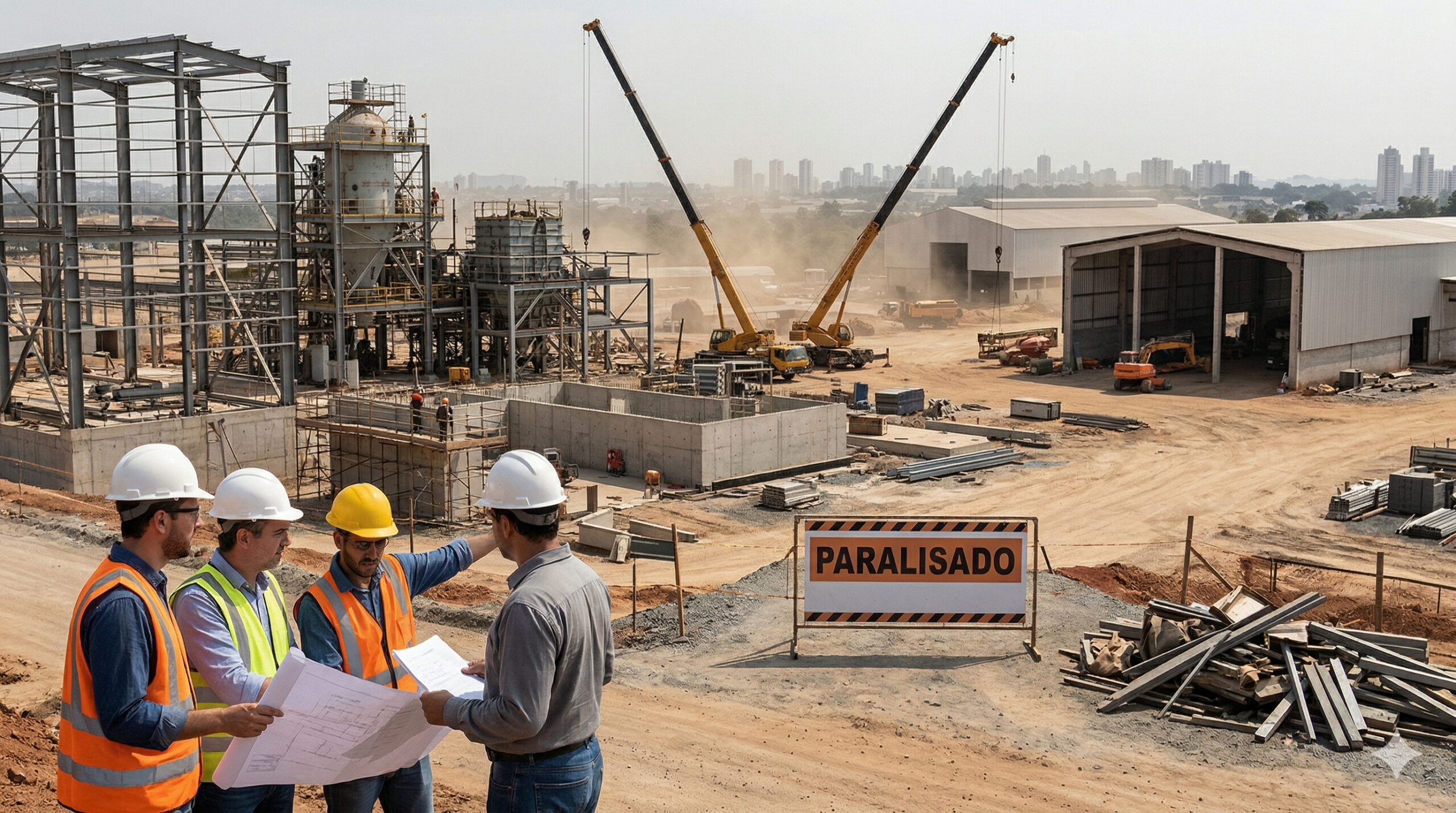
The lack of welders, electricians, and operators becomes a structural threat in 2025, with the construction industry and manufacturing already suffering from delays, cost pressures, and labor shortages in Brazil.
-
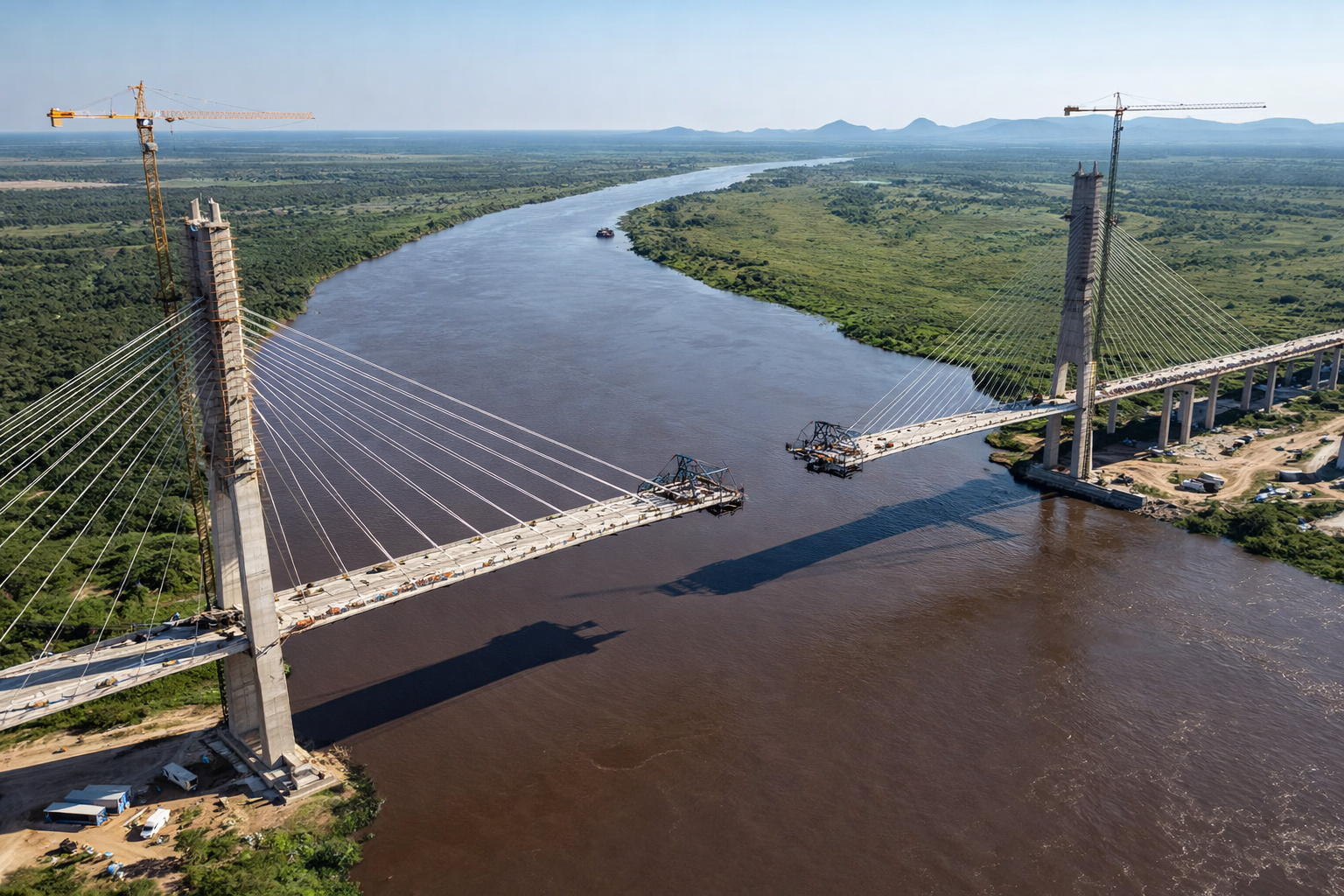
Brazil and Paraguay are just 46 meters away from a historic union on the bioceanic bridge that promises to revolutionize trade between the Atlantic and the Pacific.
-
With 55 km over the sea, a cost of US$ 20 billion, and enough steel to build 60 Eiffel Towers, China’s largest project has connected Hong Kong, Zhuhai, and Macau in a colossal bridge that defies the logic of engineering.

-
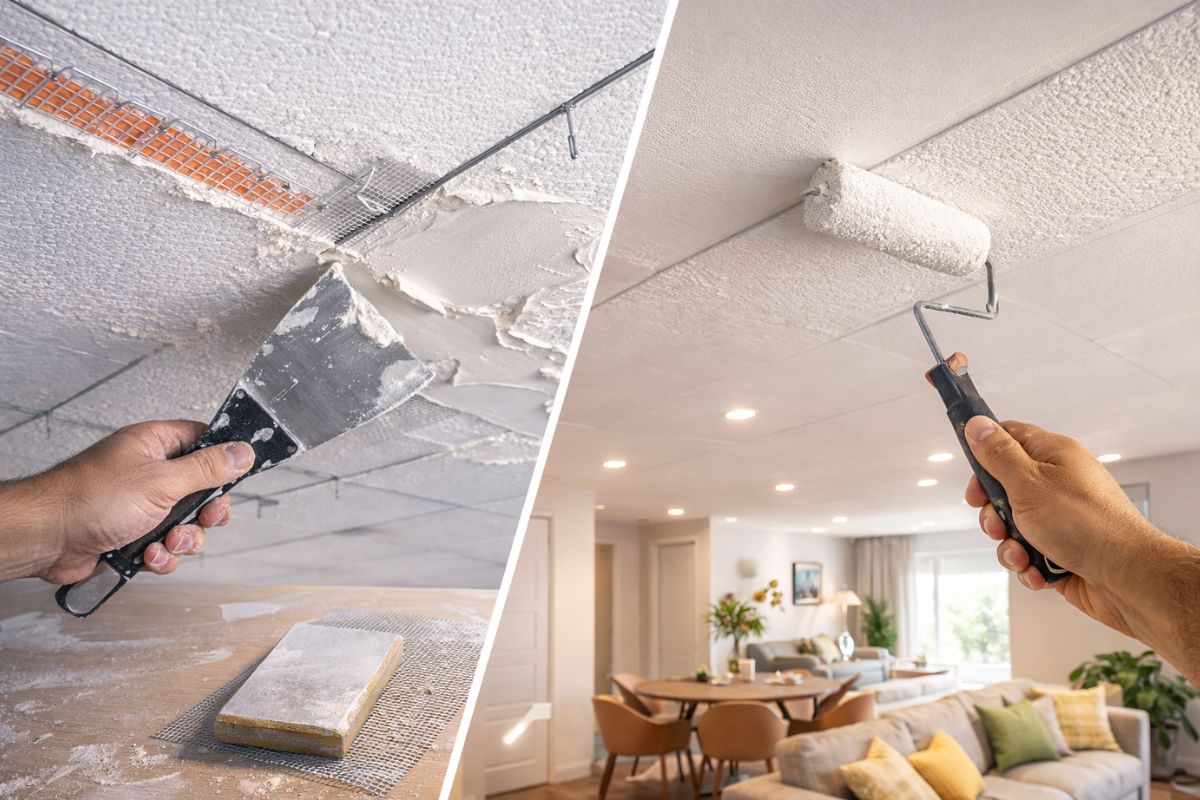
A trick with joint compound transforms a Styrofoam ceiling into a plaster-like ceiling: leveled panels, wires and mesh at the joints, sand, paint, and change the environment while spending little today.
Columnless Structure: How the House Was Built Only with Bricks
The most striking point is the absence of traditional structural columns. Instead of reinforced concrete pillars, the method uses bricks laid in a trench excavated along the entire perimeter of the house.
This trench acts as a continuous base for the walls. The correct placement of the bricks, with binding between rows, creates an integrated structural system where the wall itself takes on a load-bearing function.

This type of construction is common in rural areas, especially in single-story buildings with lightweight roofs. Since there is no heavy solid slab or second floor, the structural loads are lower, allowing simplified solutions.
Stability mainly depends on three factors: soil quality, correct brick binding, and roof lightness.
Simple Trench Foundation Reduces Construction Cost
Unlike deep foundations with isolated footings or reinforced slabs, the method shown uses a continuous excavation around the walls.
After excavation, the bricks are laid directly on this base, creating a simple linear foundation. Since the house has only one floor and a lightweight roof, this solution proves sufficient within this specific context.
The savings come from the reduction in the use of structural steel and traditional reinforced concrete, which account for a significant portion of the cost in conventional urban constructions.
Waterproofing and Containment to Prevent Infiltrations
One of the technical points highlighted in the process was the waterproofing of the base.
The walls received internal plaster, preventing direct contact of the fill with the bricks. In addition, a waterproofing agent was applied to the base up to the second row of bricks, creating a barrier against rising moisture.
This stage is fundamental in constructions without elevated foundations. The lack of proper waterproofing can compromise the durability of the wall due to capillary infiltration.
Even being an economical job, attention to moisture was considered in the process.
Quantity of Materials Used Impresses with Low Volume
The numbers help to understand how the cost was reduced. For a 49 m² house, approximately the following materials were used:
- 3,000 bricks.
- 17 bags of cement.
The sand and clay used in the mixture were sourced directly from the site, resulting in significant savings. This factor is crucial for the final cost.
In conventional urban constructions, the purchase of sand, gravel, and transportation can represent a significant portion of the budget. Utilizing local resources drastically reduces the final value.
Lean Labor Reduces Expenses
Another decisive factor was the hiring strategy. The owner hired a mason for only eight days and acted as a helper during the process. This direct collaboration reduced costs compared to hiring a full crew.
In traditional constructions, labor can represent between 30% and 50% of the total cost of the structure. By shortening the execution time and participating directly in the work, the owner cut significant expenses.
Lightweight Roof Is Essential for the Method to Work
The technique used is suitable for houses with colonial roofs or lightweight tiles, such as fiber cement models (commonly known as Brasilit or Eternit) or PVC tiles.
The reduced weight of the roofing is crucial. If a heavy slab or a heavy roof with robust structure were used, the method would require additional reinforcements.
The structural logic of the house is directly linked to the lightness of the roof.
How Much Would It Cost to Build This House Using Conventional Methods?
If we applied average urban construction values, a 49 m² house could easily exceed R$ 70,000 or even R$ 100,000, depending on the region and quality of finishes.

In this specific case, the amount of R$ 4,000 to R$ 5,000 refers only to the structure up to the point of the slab or initial roofing, excluding fine finishes, complete electrical installations, or sophisticated coverings.
Still, the contrast is significant.
Is Economic Construction a Viable Solution?
The method shown does not replace comprehensive technical standards or detailed structural projects required in regulated urban areas.
However, in rural contexts, with suitable soil and lightweight single-story constructions, the technique has been widely used for decades.
It is important to highlight that each plot has its own characteristics. Unstable soil, areas with high groundwater levels, or regions subject to strong winds require more thorough technical evaluation.
Savings Depend on Three Main Factors
The reduced cost was only possible due to three fundamental conditions:
- Availability of material on the own terrain.
- Drastic reduction of hired labor.
- Simple project, without heavy slab or second floor.
Without these factors, the final amount could rise considerably.
Popular Construction Still a Reality in Rural Areas
Despite the advancement of industrialized construction and complex structural systems in cities, simple methods continue to be applied in Brazilian rural regions.
Self-construction, with occasional support from professionals, is still a common practice. The video reinforces this reality by showing a step-by-step process and offering assistance for inquiries.
The proposal is not to replace formal engineering but to demonstrate that, within certain limits, it is possible to drastically reduce costs.
R$ 4,000 House: Exception or Trend?
The amount draws attention, but does not represent the final total cost of a ready-to-live house with all urban finishes.
This refers to the initial structural phase. Doors, windows, electrical, hydraulic, and finishes would increase the budget.


Even so, the example demonstrates how technical choices directly impact the cost of construction.
In times of expensive materials and tight budgets, simplified solutions continue to spark interest. Economic construction is not a miracle. It is the result of method, adaptation to context, and reduction of complexity.
And, under certain conditions, it can transform an apparently unfeasible project into reality.









Eu gostaria de saber do que deu os 49.0 m2