





 Portuguese
  English
  Spanish
  3 min of reading
  0 comments


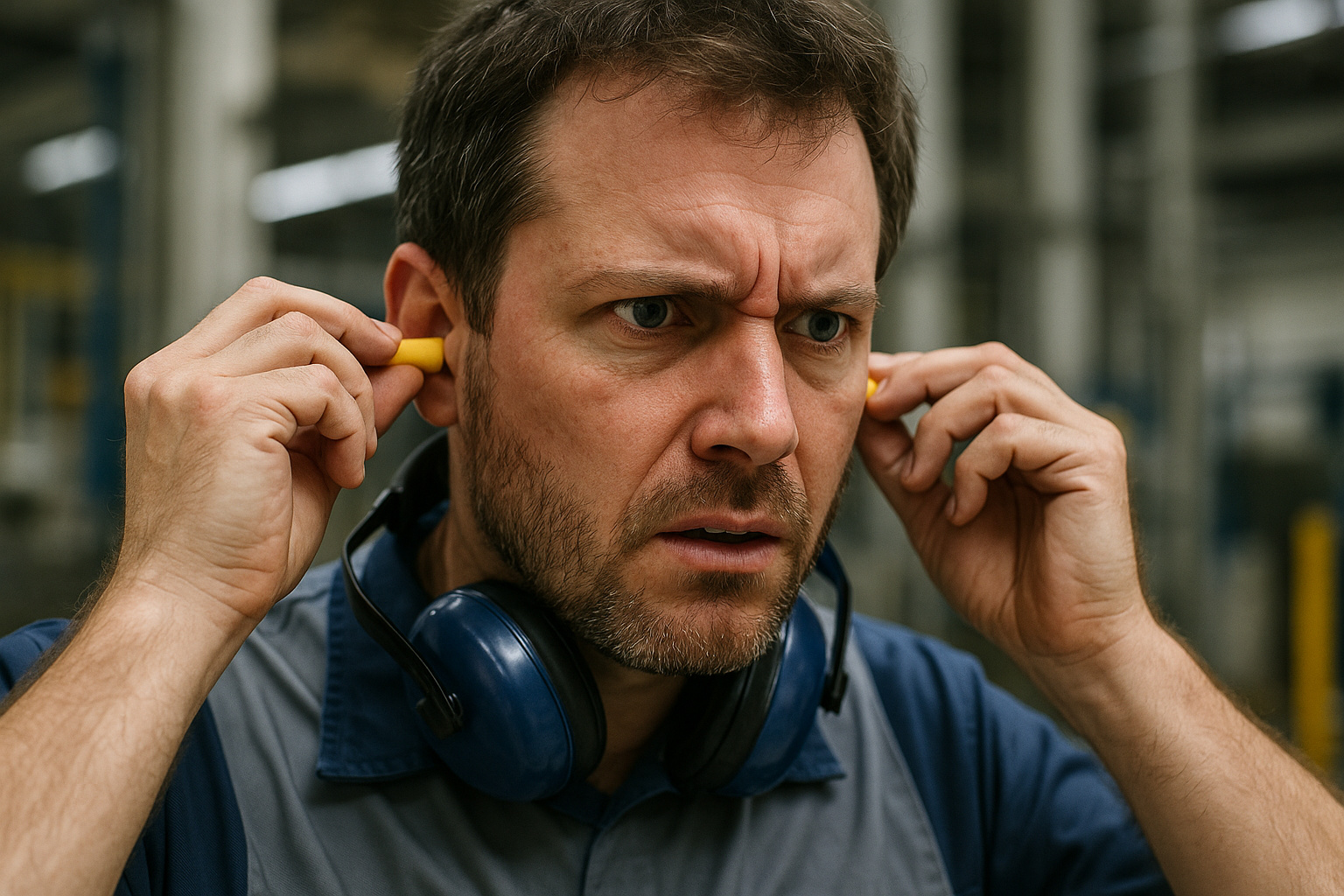
Decision of the 1st Panel of the TST Details How an Expert Report Confirmed the Effectiveness of Ear Protectors, Demonstrated Total Noise Neutralization, and Redefined the Understanding of Unhealthiness in Noisy Industrial Environments
The 1st Panel of the Superior Labor Court (TST) consolidated an important decision on May 27, 2025. The panel recognized that effective ear protectors can neutralize exposure to noise. Accordingly, it removed the risk allowance in the case analyzed. The action had been filed in 2024 by the Union of Workers in the Mechanical and Electrical and Electronic Materials Industry of Espírito Santo against a company dealing with wires, electrical cables, and telecommunications.
The expert report demonstrated that the noise exceeded the limit of NR-15. Nevertheless, it proved that the protectors met the requirements of NR-06. The expert verified the appropriate use of the equipment and identified sufficient attenuation. This result upheld the decision that denied the allowance.
Expert Investigation Confirms Total Noise Neutralization
The rapporteur, Minister Amaury Rodrigues, highlighted the relevance of the Summary 80 of the TST. The text states that unhealthiness ceases to exist when there is effective protection. The minister also cited the understanding of the Supreme Federal Court, defined in 2015 in the ARE 664.335/SC (Theme 555). The STF stated that noise is not completely neutralized solely by the PPE. Nonetheless, it emphasized that each case depends on technical evidence.
-
The Chamber opens a debate on driver’s licenses at 16 years old as part of a reform that includes around 270 proposals to change the Brazilian Traffic Code and may redesign rules for licensing, enforcement, and circulation in the country.

-
The new Civil Code could revolutionize marriages in Brazil with “express divorce” and changes that could exclude spouses from inheritance.

-
Banco do Brasil sues famous influencer for million-dollar debt and intensifies debate on delinquency, risks of seizure, and direct impact on Gkay’s credibility.

-
The Senate approves a bill that criminalizes misogyny, hatred, or aversion towards women, and includes the crime in the Racism Law with a penalty of up to 5 years.

The expert document showed regular certification of the protectors. The measurements followed the criteria of Portaria 3.214/1978. The analysis indicated attenuation compatible with international standards. The rapporteur noted that changing the decision would require a new evaluation of the evidence. This procedure is not allowed by Summary 126 of the TST.
Legal and Operational Impacts Generate Repercussions in the Industrial Sector
The decision drew attention to the topic as it reinforces the importance of technical evidence. The allegation of exposure to noise is not sufficient to justify the allowance. Updated measurements and complete environmental records are necessary. It is also essential to demonstrate guidance and oversight regarding the use of PPE.
Experts from the Ministry of Labor and Employment state that decisions like this raise the level of requirements within companies. They must maintain updated PPE records. They should also document training and inspections. The goal is to prevent labor conflicts.
Work safety technicians remind us that noise remains one of the most common agents in the industrial sector. This reinforces the need for certified and continuously evaluated equipment.
Reflections on Legal Debates and the Routine of Brazilian Factories
The decision reignited discussions about the responsibility of companies in preventing occupational noise. Many employers still face difficulties in demonstrating the effectiveness of the PPE provided. Therefore, experts recommend regular maintenance of equipment. They also advocate for occupational health assessments at defined intervals.
Environmental monitoring must adhere to strict standards. The intent is to ensure real protection for workers. From a legal standpoint, the ruling emphasizes that the allowance depends on reliable technical evidence. Thus, there is no automatic recognition of risk.
Will the Brazilian industrial sector be able to maintain rigorous controls to ensure real auditory protection and avoid new labor conflicts?








-

-

2 pessoas reagiram a isso.