





 Portuguese
  English
  Spanish
  3 min of reading
  0 comments


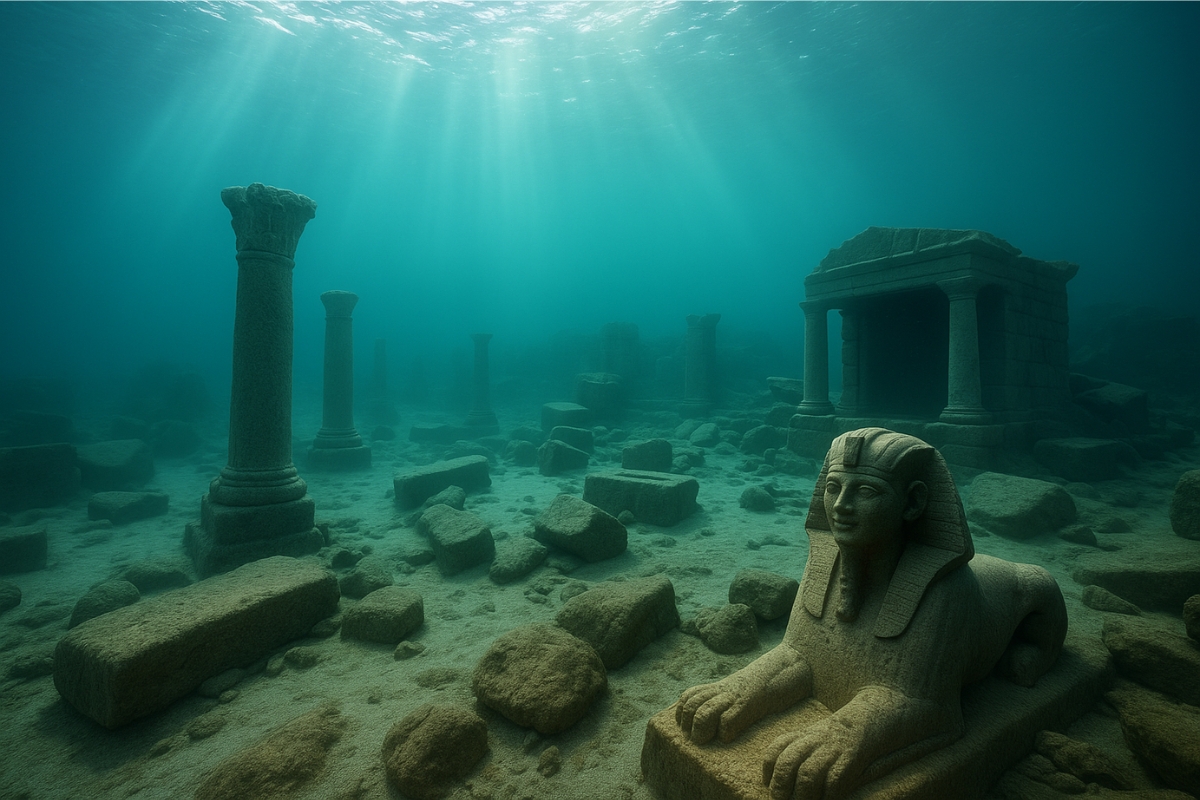
Egyptian Archaeologists Uncover Sunken City Over 2,000 Years Old Near Alexandria, Containing Temples, Sphinxes, and Merchant Ship. The Find Reopens Mysteries About Canopus, Metropolis Swallowed by the Sea
The waters of the Mediterranean have once again revealed a forgotten chapter of history. Egyptian archaeologists announced the discovery of a sunken city over two millennia old off the coast of Alexandria, in northern Egypt. The archaeological site, located in the Bay of Abu Qir, has been described as one of the most significant discoveries of the last decade, containing temples, tombs, statues, and even an almost intact merchant ship.
Ruins of Ancient Canopus Emerge from the Depths of the Sea
According to the Egyptian Ministry of Antiquities, the newly identified city may be an extension of the legendary Canopus, one of the main centers of the Ptolemaic dynasty, which ruled the country from 305 to 30 BC, before the Roman conquest. The area, which also housed the port of Heracleion, was gradually swallowed by the sea after a series of earthquakes and the rise in water levels over 1,500 years ago.
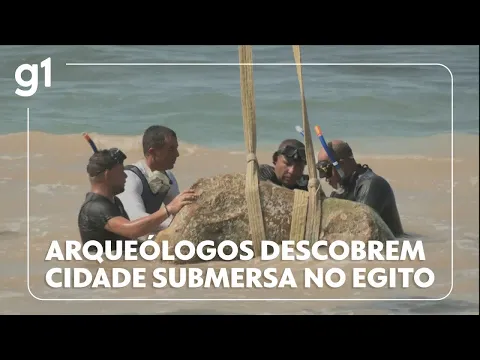

During the underwater excavations, conducted by the European Institute of Underwater Archaeology (IEASM), limestone buildings, rock-carved tanks, and a 125-meter-long dock were found, possibly used as a docking point for small vessels during the Roman and Byzantine periods.
-
At 77, the king of one of the most famous and powerful crowns on the planet is said to be under pressure to leave the throne, while behind the scenes there are already talks of a new coronation that could cost R$ 260 million.
-
Chinese researchers have created bamboo drones that fly with the same precision as conventional models and have released the flight control software for free to the entire world in a technology that could revolutionize sustainable aviation.
-
Russia reveals that it is already conducting 95% of all its business with China without using a single dollar; dedollarization has ceased to be a promise and has become a reality in record time, and the West watches helplessly.

-
While Brazilians work more than 44 hours a week, Norwegians leave the office at 3 PM and are now testing a four-day workweek with full pay and no loss of productivity.

French archaeologist Franck Goddio, who was responsible for the original discovery of Heracleion in the 2000s, stated that the new find “confirms the scale and urban complexity of the cities that constituted the coastal metropolis of the Nile delta.”
Royal Statues and Temples Dedicated to Ramses II
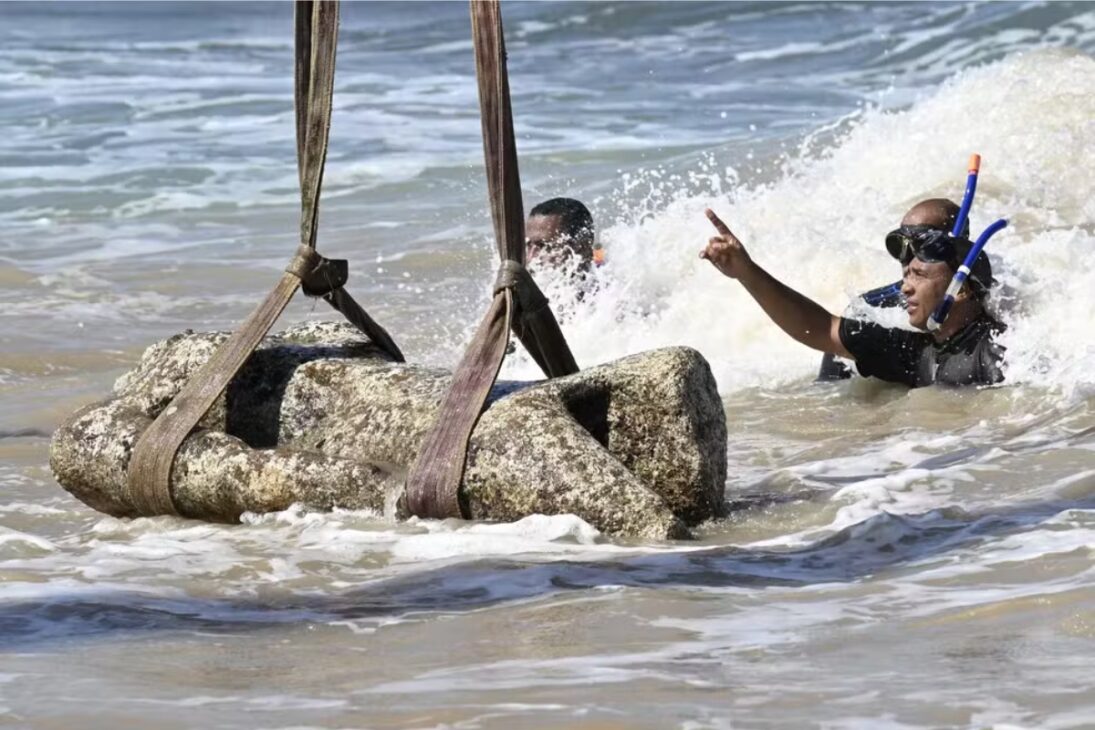
Among the most impressive finds are statues and sphinxes carved from red granite, some depicting pharaohs such as Ramses II, who ruled Egypt in the 13th century BC. Some of the sculptures will remain at the bottom of the sea to preserve the original archaeological context, while others will be displayed in the National Museum of Alexandria.
The archaeologists also identified tanks and rock-hewn deposits used for both freshwater storage and fish farming, an ancient form of aquaculture practiced along the banks of the Nile. The site reveals the technological sophistication of the time and the economic importance of Canopus as a port and religious center.
Additionally, fragments of pottery, stone anchors, and a port crane were found near the sunken vessel, which measured about 20 meters and likely transported granite blocks intended for temple construction.
The Modern Threat: Alexandria May Follow the Same Fate
Paradoxically, the same natural phenomenon that destroyed Canopus now threatens modern Alexandria, one of the most populous cities in Egypt. According to the United Nations Environment Program (UNEP), the Nile delta region is sinking at a rate of about 3 millimeters per year, making it one of the most vulnerable areas to rising sea levels caused by climate change.
Recent studies indicate that by the end of the 21st century, parts of the historic city — including the Qaitbay Fortress, built on the ruins of the ancient Lighthouse of Alexandria, one of the Seven Wonders of the Ancient World — may be submerged if the rate of erosion continues.
Still, Egyptian authorities promise to invest in coastal barriers and expand underwater tourism, transforming the ruins of Canopus and Heracleion into underwater museums accessible to divers, reinforcing Egypt’s role as a guardian of one of humanity’s most fascinating civilizations.








-

-

3 pessoas reagiram a isso.