





 Portuguese
  English
  Spanish
  4 min of reading
  0 comments


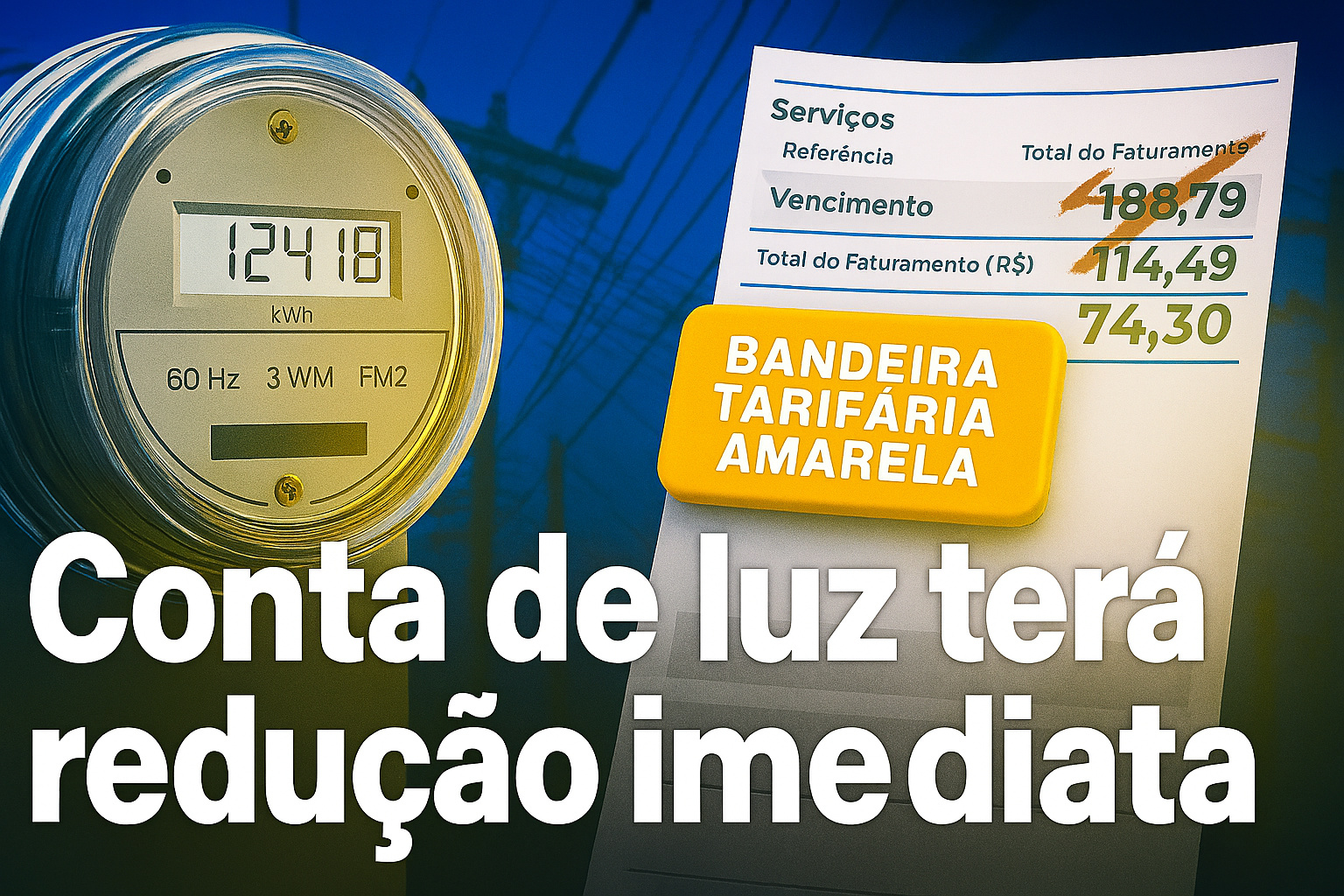
Aneel Confirms Yellow Flag in December and Reduces Extra Charge on Energy. Electricity Bill Becomes Cheaper and Impact Affects All of Brazil.
Relief Comes Sooner Than Expected. On November 28, 2025, the National Electric Energy Agency (Aneel) officially confirmed that the December tariff flag will be yellow, eliminating the extra charge that had been weighing on electricity bills for most of the year. The change applies to all consumers connected to the National Interconnected System (SIN) — residential, commercial, and industrial — and it is already directly impacting the amount paid at the end of December.
In practice, the extra charge drops from R$ 4.46 to just R$ 1.885 for every 100 kWh, a significant reduction occurring precisely in the month when consumption typically increases due to heat, air conditioning use, and the approach of the Christmas season.
The Aneel decision was announced on the official government portal and confirmed by the press, including Agência Brasil and SBT News, which emphasized the immediate impact on Brazilian households.
-
Brazilians paid R$ 18 billion more for energy from the Itaipu plant, reflecting a direct impact on tariffs and generating discussions about costs, transparency, and balance in the national electricity sector.

-
Equatorial adopts new national number for consumer units on electricity bills starting in April, following ANEEL standards and modernizing energy bills in several states.
-
Itaipu Impresses the World: Hydroelectric Plant with 20 Turbines and 14,000 MW Generates Over 2.9 Billion MWh and Leads Global Clean Energy Production

-
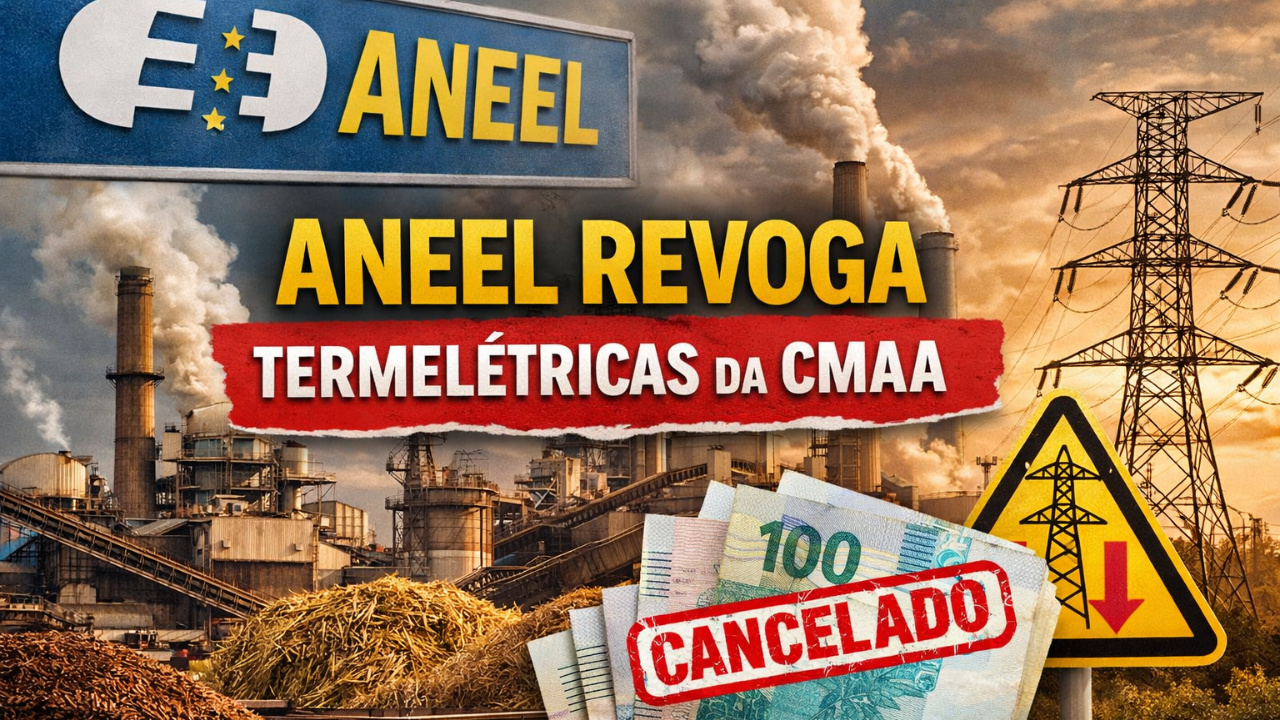
Aneel Revokes CMAA Thermal Power Plants After Network Restrictions and Excess Energy in the System
Why the Electricity Bill Will Decrease in December
The change in the tariff flag is not random. The flag system serves as a thermometer for the energy generation conditions in the country, especially regarding reservoir levels and how much the country needs to activate more expensive plants, such as thermal power plants.

According to Aneel, the decision to activate the yellow flag in December was made because:
- The rainy season started earlier, replenishing hydroelectric reservoir levels.
- The demand for thermal power plants decreased, reducing the final cost of generation.
- Weather forecasts are favorable, indicating stability in supply.
In other words, the country will need to spend less on emergency energy sources — and this is immediately reflected in the rates.
Direct Impact on Consumers’ Wallets
The reduction may seem small, but the impact is significant when added to the monthly consumption of millions of families. Here is a simple example:
- Family that consumes 200 kWh per month:
- Used to pay: R$ 8.92 in extra charges
- Will now pay: R$ 3.77
- Direct Savings: R$ 5.15
- Small business that consumes 600 kWh:
- Used to pay: R$ 26.76
- Will now pay: R$ 11.31
- Direct Savings: R$ 15.45
In sectors with higher energy consumption — such as bakeries, markets, bars, slaughterhouses, and refrigeration stores, the difference will be even greater.
Change May Even Affect the 13th Month of Commerce and Industry
Experts interviewed by the press say that the reduction comes at the perfect time: December is the month with the highest energy load of the year.
The yellow flag reduces operational costs for:
- supermarkets
- shopping malls
- fast-food chains
- bakeries
- hospitals
- schools and universities
This favors profit margins and may even reflect in the payment of the 13th salary for employees and in price adjustments in retail.
What Happens If Reservoirs Remain Full?
Brazil has an unstable history in the electric sector, with oscillations between periods of green flags and critical moments when red flags make energy more expensive.
However, analysts point to an optimistic scenario for the first quarter of 2026:
- The rains at the end of 2025 reached volumes above the historical average.
- Hydroelectric generation is expected to remain stable.
- The ONS projection indicates lower risks for the summer of 2026.
If this scenario confirms, the yellow flag could be replaced by the green flag in the early months of next year, completely eliminating any extra charges.
Why the Electricity Bill Still Burdens Despite the Yellow Flag
The electricity tariff in Brazil is composed of several factors beyond the tariff flags:
- generation cost
- transmission
- sectorial charges
- state taxes (ICMS)
- distribution tariffs
The flag is just one variable within this structure. Nevertheless, its reduction brings immediate impact, especially for low-income consumers and families that depend on essential appliances, such as refrigerators, freezers, fans, or medical equipment.
Experts Advocate for a Review of Tariffs
With the announced change, it reignites the debate over the weight of energy in the family budget. Researchers from USP and FGV argue that:
- the flag model needs to be updated
- sectorial charges should be reviewed
- Brazil should increase the share of solar and wind energy to reduce tariff instability
According to analysts, the tendency is that the growth of distributed generation (solar rooftops) will reduce dependence on flags in the near future.
What Does the Consumer Need to Do?
Nothing. The reduction is applied automatically by the distributor and will appear on the December electricity bill. There is no need to request, register, or perform any type of procedure.
The behavior of the tariff flag in 2026 will depend on:
- rain levels in summer
- activation of thermal power plants
- national consumption
- possible regional water crises
However, with reservoirs in good condition, the chance of a heavy extra tariff in the early months of the year decreases, at least for now.







Seja o primeiro a reagir!